This story was originally published by Yale e360 and is reproduced here as part of the Climate Desk collaboration. For decades, climate scientists have issued warnings about positive global warming feedbacks, vicious cycles in the Earth system in which rising temperatures from burning fossil fuels beget more warming. The best tools we have to understand these feedback mechanisms are […]
On June 26, 2026, the United States, Israel, and Lebanon signed the Trilateral Framework Agreement in Washington, the first directly negotiated Israel-Lebanon peace framework since 1983, driven by a shared determination to end Iranian interference in both countries.
The post Disarming Hezbollah Crucial to Middle East Peace and Lebanon’s Sovereignty appeared first on The Gateway Pundit.
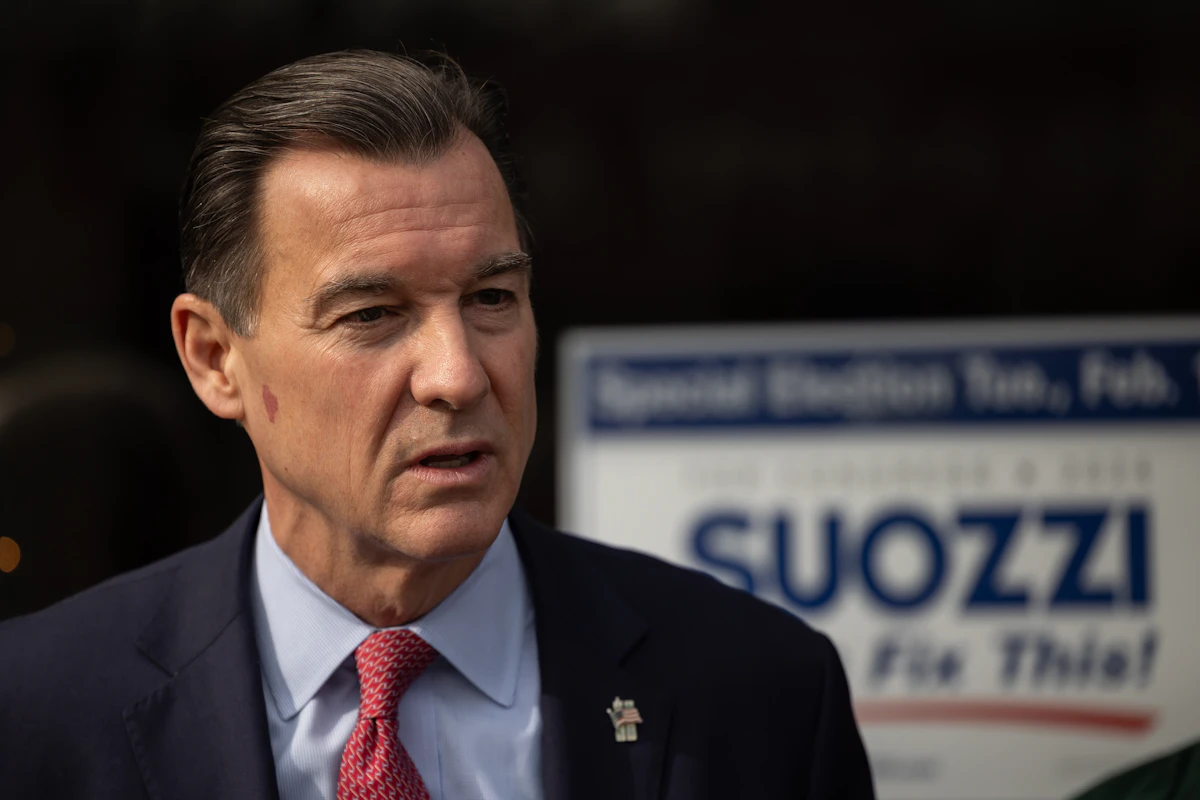
So Democratic Congressman Tom Suozzi of Long Island has come out swinging against the socialists. “We are capitalist, not socialist,” reads a letter that The New York Times reports he and 14 other legislators signed and began circulating last week. This went out Thursday, two days after three self-described democratic socialists backed by New York Mayor Zohran Mamdani won Democratic congressional primaries in the city.The letter, which is on the short and vague side, states two broad principles to which the signatories adhere. The first is “growth, competition, and broad prosperity.” “Growth” and “prosperity” are time-honored centrist buzzwords, as they’re hoisted into use to send the message that these Democrats value economic dynamism more than “fairness,” which is a word that moderates fear signals endorsement of excessive statism, although interestingly, the concept is tucked into the first sentence (“We believe in a growing, fair, and competitive economy…”). The second is “safety, security, and human dignity,” under which the letter lists four components: fiscal discipline, a government that works, free speech, and patriotism.There’s nothing wrong with these things as far as they go. But these platitudes don’t go far enough. In particular, there’s one big missing word. I’ll circle back to that, but first, let’s talk about why these democratic socialists are winning in some places. The first reason is that people are really pissed off at a system they see as totally rigged. Suozzi is roughly my age. He and I grew up in a United States in the 1960s and ’70s that Lord knows had many problems, but that was at least trying to build a robust middle class and was taxing excessive wealth appropriately.The Gini coefficient is a number that measures economic inequality. Like golf, lower scores are better, and the lowest Gini scores, invariably logged by the Scandinavian countries, are in the mid-20s. The highest is always South Africa, in the low-60s.When Suozzi and I were toddlers, the U.S. number was fairly high—around 37. Then came the Great Society—the civil rights, fair housing, and other anti-discrimination laws that first brought large numbers of Black families into the middle class, and other anti-poverty programs. The right has sold middle America on the idea that the Great Society—which I’d hope most Democrats today are proud of, but much of which was, as the word is used today, “socialism”—was a failure. But by the 1980s, right before Ronald Reagan took office, the U.S. Gini number reached its lowest point in modern history, 34.7.Then came Reagan and supply-side economics and the war on the War on Poverty. By the time Bill Clinton took office, the number was north of 40. Today it’s 42 and climbing. We’re worse than Russia and Iraq and about on par with Argentina and Mexico.People aren’t stupid. They may not know what the Gini coefficient is or who Gini was (an Italian economist), but they know what’s been happening to the country and their money in their bones. And they know how they’re being ripped off by corporate actors, as these hidden junk fees become more and more just a fact of life, especially for working-class people paying rent to private-equity landlords or trying to take their kids to a ball game. So, it’s small wonder that more people are voting for the candidates who are saying most emphatically that they’re going to try to do something about all that—specifically, fighting back against the people who’ve been cheating the middle- and lower-classes for years. The second reason socialists are winning elections is that the Democratic base has moved well to the left of where it was even just 10 years ago. Early this year, The New Republic commissioned a poll of 2,400 rank-and-file Democrats. We asked respondents to identify themselves ideologically, giving them five choices: conservative, moderate, moderate-to-liberal, liberal, and progressive. There were little descriptions of each, so it should have been clear to all that “progressive” was the left-most choice.I thought “progressive” was going to finish third. It finished first (within the margin of error): Progressive got 32 percent, liberal 31, and moderate-to-liberal 21. Moderate was way back at 12 percent. Back in the Obama days, moderates were around 35 percent of the party. Indeed, liberal overtook moderate as the top Democratic category only around 2012, according to Pew. So that’s a huge change. Now it’s true that other polls, which unlike TNR’s didn’t offer five categories, show a higher moderate share, but the overall move leftward by Democratic base voters is undeniable. They haven’t done so because they want the government to take over the means of production.
The Trump administration is close to allowing Anthropic to restore access to its powerful Fable 5 model, which has been offline for 15 days because of security fears by the government, a source close to the situation tells Axios.Insiders expect the administration's limits on Fable 5 could be lifted as soon as this coming week, the source said. A second source said conversations are expected to continue over the weekend, and Anthropic expects to restore Fable access soon.Why it matters: For developers and even non-technical early adopters, Fable 5's blackout was unprecedented and deeply jarring — a top-tier model, already in users' hands, pulled offline due to government intervention.The big picture: The progress toward liberating Fable 5 marks a thaw in a bitter four-month standoff between the administration and Anthropic.In another sign of de-escalation, the Commerce Department on Friday allowed Anthropic to restore access to Mythos 5, the company's strongest cybersecurity model, for a limited number of trusted users. Mythos 5 has guardrails to deter its use in cyberattacks or biological terror, and has never been freely available.Commerce Secretary Howard Lutnick said in a Friday afternoon letter to Anthropic, first reported by Semafor, that the company "has worked with the U.S. government to address risks associated with" Mythos 5 and Fable 5. "These efforts," he continued, "have yielded significant progress. In addition, Anthropic has committed to work with the U.S. government on protocols and standards and releases."Fable 5's return is being eagerly awaited by users, who quickly fell in love with the model's deep thinking and quick, sophisticated coding. Developers were wowed by the leap in capability. Every new model, especially open-source ones, is being measured against Fable 5.The Pentagon and National Security Agency still have to give Fable 5 the green light, so the outcome remains unpredictable. But other government agencies have determined Fable 5 can safely return to the wild.Behind the scenes: I'm told that both Lutnick and Treasury Secretary Scott Bessent have helped defuse the fight between the administration and Anthropic. Anthropic "has worked positively with the government," one administration source told Axios. That's quite a change from the furious statement by Defense Secretary Pete Hegseth designating Anthropic a "Supply-Chain Risk to National Security," after he and Anthropic CEO Dario Amodei couldn't agree on how the Pentagon can use Claude.Zoom in: Anthropic had billed it as the most capable model ever released to the public. The "Vibe Check" newsletter from Every, a media and software company, called it "the best coding model in the world" before it was pulled, just three days after launch.In early testing highlighted by Anthropic, the payments company Stripe used Fable 5 to overhaul a 50-million-line codebase in a single day — a job that would have taken its engineers more than two months by hand.When access vanished on June 12, developers found automated work frozen mid-task, and companies raced to swap in rivals, including cheaper Chinese models.The intrigue: Anthropic originally made Fable 5 available at no extra cost on several paid Claude subscription plans through June 22, giving users a short window to test its power before access vanished.It's not yet clear whether Anthropic subscribers will get back the free run of Fable they were promised — or whether it returns locked behind additional fees or identity checks.What we're watching: Both Anthropic and OpenAI are pushing the administration to codify a process for reviewing new models, as envisioned by President Trump in a June 2 executive order that set up a framework for voluntary government vetting of the most powerful new AI models.The companies don't like the current case-by-case approach.When Anthropic suspended access to Fable 5 and Mythos 5 back on June 12, the company called for "a statutory process that is transparent, fair, clear, and grounded in technical facts," and said the administration's decision to restrict those two models "does not adhere to those principles."When OpenAI was allowed to begin a limited preview of GPT‑5.6 on Friday, the company said in a blog post: "We don't believe this kind of government access process should become the long-term default. It keeps the best tools from users, developers, enterprises, cyber defenders, and global partners who need them."Axios' Sam Sabin contributed reporting.Go deeper: Commerce Department greenlights limited return of Anthropic's Mythos.