The Conservative Legal Movement’s New Purity Tests
Source: The New Republic · Bias: Left
Summary
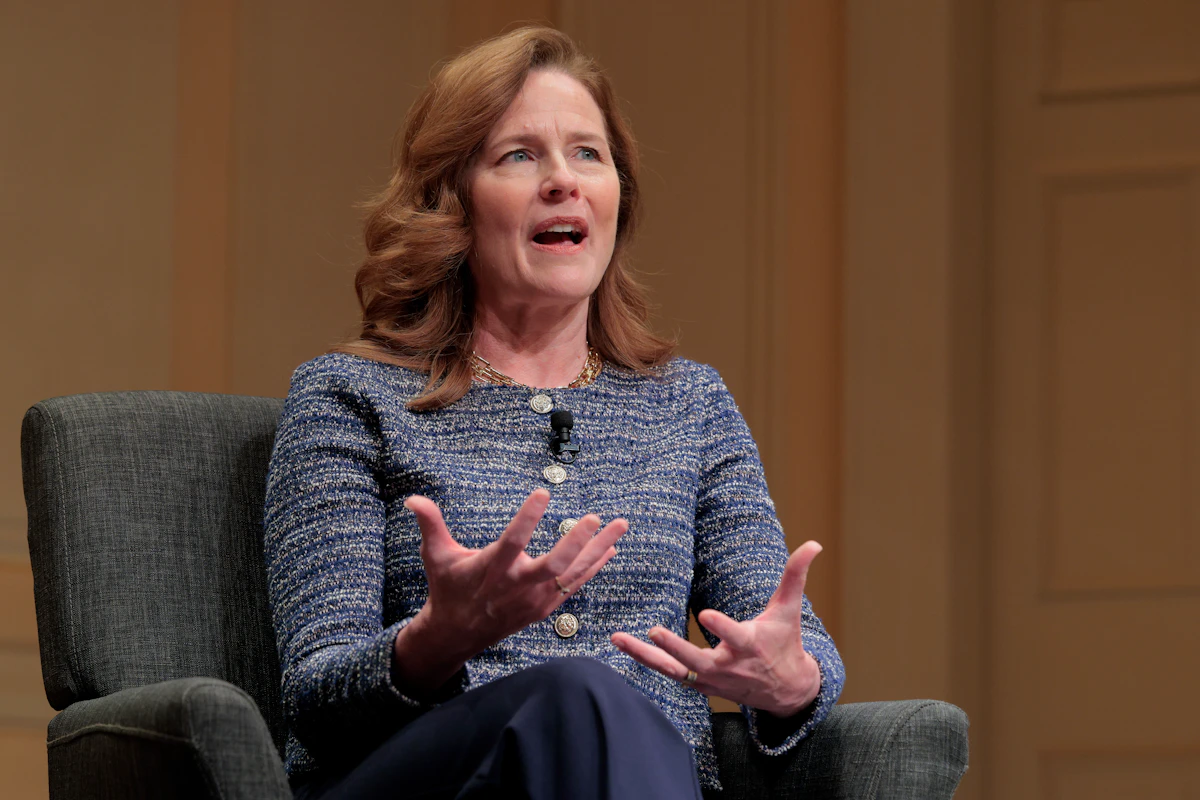
Since it overturned his IEEPA tariffs in Learning Resources, Inc. v. Trump, Donald Trump has clearly had the Supreme Court on his mind. In addition to complaining about “his” justices voting against him even when they “knew where [he] stood, how badly [he] wanted this Victory for our Country,” Trump set off significant speculation when he discussed potentially nominating three more justices. Justices Samuel Alito and Clarence Thomas have both said that they have no plans to retire (though the prospect of an Alito memoir later this year calls his intentions into question), but that has not stopped aspiring MAGA justices and their supporters from jockeying for position and auditioning for the boss.While this response is unsurprising, the conversation surrounding it has revealed a significant shift in Republican views of prospective nominees. The conservative legal movement finally caught the car in Trump’s first term and secured a supermajority of right-wing justices willing to impose their vision on the country. But under Trump, the movement has so thoroughly radicalized itself that even solid conservatives like Justice Amy Coney Barrett supposedly can’t be trusted. Conservatives’ refrain for decades had been “no more Souters,” referring to Justice David Souter, a George H.W. Bush appointee who drifted leftward after joining the court. Now, even though they voted to overturn Roe v. Wade, gut the Voting Rights Act, kill the administrative state, and many more longtime conservative goals, the call has shifted to “No more Souters. No more Robertses. No more Barretts.”Skirmishes are now breaking out over which judges are the true heirs to “heroes of the republic” Alito and Thomas, and even some of Trump’s most extreme lower court nominees are taking heat. Consider Fifth Circuit Judge Andrew Oldham. Oldham is a Federalist Society favorite whom Trump nominated to the country’s most MAGA-influenced appeals court during his first term, and as expected, the judge has turned out to be an aggressive culture warrior and Trump stalwart widely discussed as a potential future Supreme Court nominee. Oldham has built his reputation on extreme opinions attacking administrative agencies, voting protections, abortion rights, and immigrants, often in rhetoric designed more to provoke than persuade. Oldham pushes such far-right legal ideas that even the highly conservative Supreme Court regularly reverses his opinions as steps too far.Despite Oldham’s clear record supporting right-wing priorities, conservative commentators have called him a “meh in robes” and said that his potential nomination doesn’t even pass the “laugh test.” Many prefer Oldham’s Fifth Circuit colleague Judge James Ho. Ho’s jurisprudence—and even more, his public commentary—have made him a favorite among the conservative legal movement’s most combative voices. They see Ho as a champion advancing their broader political and cultural agenda who revels in “sticking it to the libs.” With a straight face, Ho has written actual judicial opinions including warnings against a “woke Constitution,” the idea that anti-abortion physicians can sue over the “aesthetic injury of abortion” because fetuses “are a source of profound joy for those who view them,” and a version of great replacement theory where “adversaries … weaponize mass migration to harm America.” Ho’s appeal to the MAGA legal movement lies precisely in his willingness to turn the bench into another front in the broader political war. They are not satisfied with just winning—they want champions willing to fight dirty and rub it in.That helps explain why the movement Trump unleashed increasingly seems incapable of accepting anything less than Ho-style bombast from its next Supreme Court nominee. The Federalist Society, which guided the movement for decades, was more aligned with the establishment Republicanism that MAGA strangled. It managed to ride the tiger of Trump’s first term and cap off the conservative takeover of the courts, but it has fallen out of favor with Trump and his adherents aligned with Trump’s maximalist (read: unconstitutional) approach to his second term. The confirmations of Justices Neil Gorsuch, Brett Kavanaugh, and Barrett—once seen as the culmination of decades of organizing—have produced impatience rather than satisfaction. If anything, they have intensified the sense that more is possible, and therefore more is required.Republicans no longer even pretend that this is a debate about judicial philosophy in the traditional sense, but Democrats have been incredibly slow to accept the openly cynical view of courts as centers of political power. For years, Democratic officials have treated Republican objections to court reforms like expansion, term limits, and jurisdiction stripping as good-faith concerns about institutional stability, where playing hardball would risk blowback.But the blowback is already here.
Related Coverage
- Lawfare: Kangaroo court picks fight with state’s conservative attorney general (Far Right — WorldNetDaily)
- Luka Doncic weighs in on new-look Lakers roster amid heavy criticism (Right — New York Post)
- Pay-to-play cycle behind GOP's corporate tax cuts exposed in new report (Far Left — Raw Story)
- Conservative Catches CNN Host Abby Phillip in a Glaring Hypocrisy as She Defends Communist NYC Mayor Zohran Mamdani’s Absurd Demand on Air Conditioning (Video) (Far Right — The Gateway Pundit)
- Mamdani mocked by GOP for telling New Yorkers to set thermostats to 78 (Center — The Hill News)
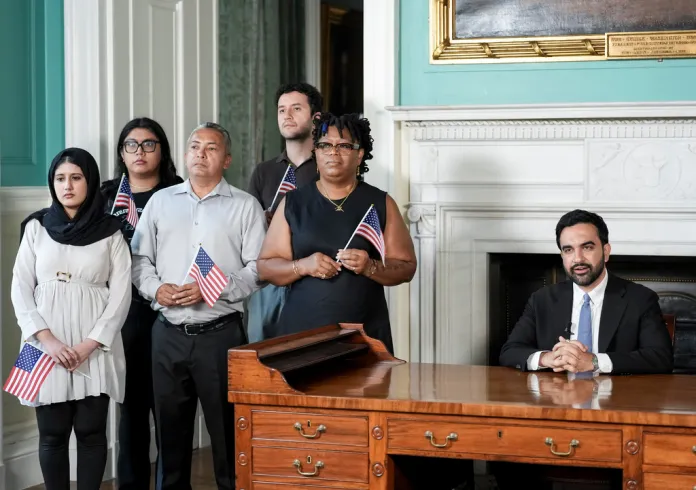
- READ IN FULL: Zohran Mamdani’s America 250 address from George Washington’s desk at New York City Hall (Center Right — Washington Examiner)
- Mamdani Is Telling A Brazen Lie About ‘Capitalist Mismanagement’ Of New York (Far Right — The Federalist)
- WATCH LIVE: Mamdani speaks on New York’s role in America’s founding ahead of Fourth of July (Center Right — Washington Examiner)
Daily Analysis
Read the full Parallax Pulse for May 14, 2026 — an AI-powered analysis of how Left and Right media covered the biggest stories this day.
More Headlines From May 14, 2026
- Federal appeals court probes Trump’s targeting of law firms (Center)
- Kalshi promo code NYPMAX: Trade $10, get $10 for Braves vs. Cubs (Right)
- Clean Energy Is Affordable Energy. So Why Is New York Breaking Its Climate Promises? (Center Left)
- Opinion | A Key to Fed Independence: Its 12 Regional Banks (Center)
- U.S. Border Patrol Chief Resigns in Latest Homeland Security Shake-Up (Center Left)