The Best Way to Fix the Supreme Court’s Attack on Voting Rights
Source: The New Republic · Bias: Left
Summary
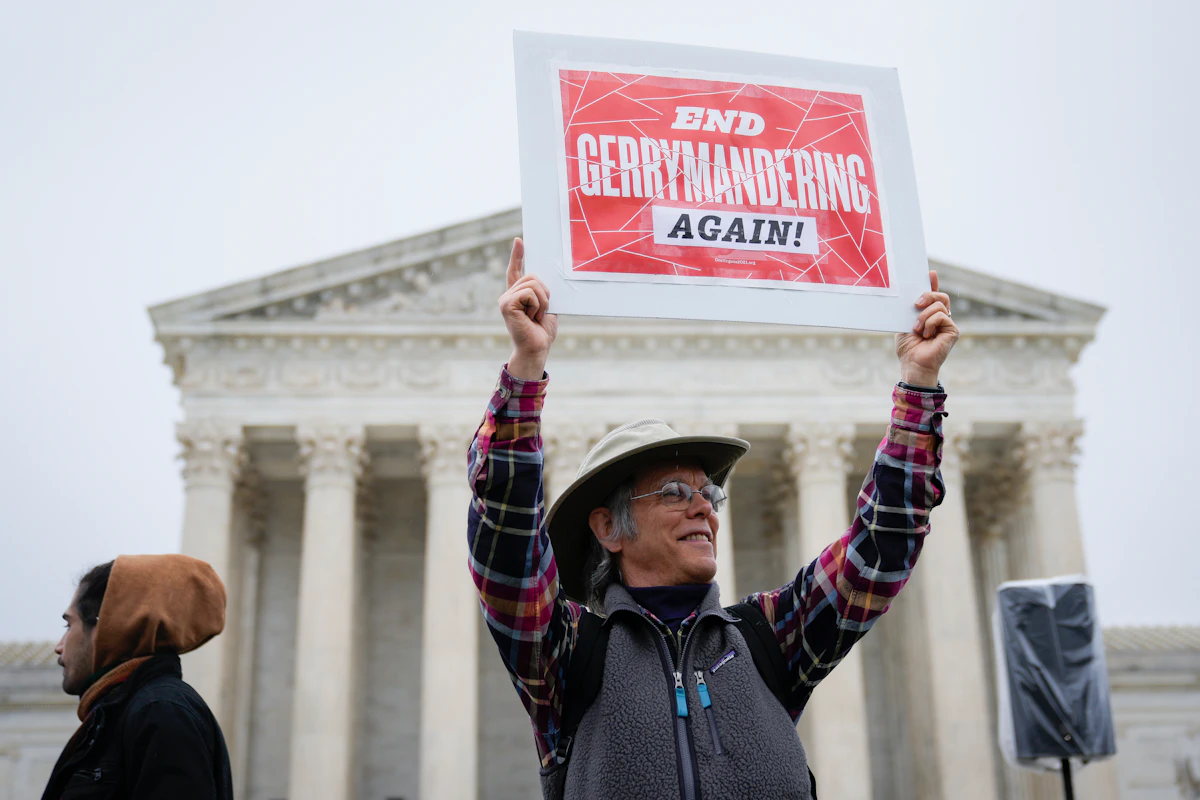
The Supreme Court’s decision this week to destroy what remained of the Voting Rights Act of 1965 compels us to consider structural reforms to the court itself to preserve the republic. By giving a de facto blank check to Republican-led states to racially gerrymander Black Americans out of electoral power, the court has delegitimized itself and damaged the nation’s multiracial democracy.Rick Hasen, a UCLA law professor who specializes in election law, described Wednesday’s court’s ruling in Louisiana v. Callais as “one of the most pernicious and damaging Supreme Court decisions of the last century.” Hasen, whose research was cited in Justice Elena Kagan’s dissent, is hardly a firebrand. He argued that Democrats must now “consider reform of the Supreme Court itself, a conclusion I had been resisting until the Court made this unavoidable.”I agree. On racial and political gerrymandering in particular, however, there is another important reform that a Democratic Congress and president could also implement at the next opportunity: abolishing the House’s current system of single-member districts and electing members by proportional representation instead.Article 1 of the Constitution gives Congress the power to set the “time, manner, and place” of federal elections. States administer elections within the bounds that Congress sets for them. For the first half of the nineteenth century, Congress allowed states a certain amount of discretion to devise their own electoral system, so long as it elected the apportioned number of representatives to the House. (The Senate, which would not become elected until the early twentieth century, is not at issue here.)Many states adopted single-member districts. Under this method, which survives to this day, state lawmakers divide the state into congressional districts, each of which elects a single representative to the House. Like any electoral system, this approach has some benefits—greater regional diversity, direct constituent representation, and so on. It also has some drawbacks. The most obvious of these is gerrymandering. The term derived its name from Elbridge Gerry, an early American statesman who served as governor of Massachusetts from 1810 to 1812. His tenure coincided with the 1810 census and the reapportionment of House seats that occurs every 10 years. To maintain control of Massachusetts’s state legislature, Gerry’s fellow Democratic-Republicans drew an obviously manipulated map to maintain their majority. After Gerry signed the new map into law, Federalist denunciations ensured that the practice became forever associated with his name, to Gerry’s great consternation.This is fairly rote stuff for high school American civics. What is less well known is that single-member districts weren’t the only method of electing House members in the early republic. One common alternative was known as a “general-ticket” election. Under this system, voters would cast votes for as many candidates as there were seats, and the candidates who received the most votes would be elected to those seats.General-ticket voting had problems as well. For one thing, it essentially transformed each state’s House races into a winner-take-all system, with one party often able to win an entire state’s delegation with a simple majority of votes. While Northern and Southern states both used general-ticket elections at first, the method was eventually associated with Southern states that wanted to maximize the Democratic Party’s control of Congress.Some larger states also used what were known as “plural districts.” Under this method, a single district would elect the top two candidates to the House on a general ticket. Some states, like New York and Pennsylvania, mixed plural districts in urban areas with single-member districts for rural ones. Others, like New Jersey, divided themselves into multiple plural districts.Perhaps the best example of the early republic’s patchwork system is the Thirteenth Congress, which served from 1810 to 1812. Connecticut, Delaware, Georgia, New Hampshire, and Vermont used the general-ticket system, with each one resulting in one-party slates. Maryland, New York, New Jersey, and Pennsylvania elected representatives through at least some plural districts, producing a mixture of party representation. Massachusetts, North Carolina, Ohio, South Carolina, Tennessee, and Virginia exclusively used single-member districts, with similarly diverse results.Only in 1842 did Congress begin to standardize House elections. Until the 1920s, lawmakers would adopt a new Apportionment Act after each census to expand the House of Representatives to match the nation’s population growth. The Apportionment Act of 1842 was a milestone because it sought to reduce, not grow, the number of House seats for the first time.
Related Coverage
- Newly released footage shows Florida deputy responding to fatal alligator attack (Far Right — BizPac Review)
- Trump announces pardons for pollution violators prosecuted for "fixing their car" (Center — Politics - CBSNews.com)
- Trump Pardons Six People Pursued for ‘Fixing Their Car’ (Center — Bloomberg Politics)
- Trump Scores Appeals Court Victory in Battle Over National Park Historical Displays (Right — RedState)
- 'You're screaming in front of children!' Right-wing activist all he can handle in Philly (Far Left — Raw Story)
- From Saatva to Casper: The best Fourth of July mattress and bedding sales (Right — New York Post)
- Lawfare: Kangaroo court picks fight with state’s conservative attorney general (Far Right — WorldNetDaily)
- UPDATE: Louisiana Supreme Court Temporarily Blocks Politically Motivated Indictment Against AG Liz Murrill (Far Right — The Gateway Pundit)
Daily Analysis
Read the full Parallax Pulse for April 30, 2026 — an AI-powered analysis of how Left and Right media covered the biggest stories this day.
More Headlines From April 30, 2026
- Pete Hegseth tangles with Senate Democrats: Five takeaways (Center)
- As Iran war nears key 60-day deadline, Congress and Trump face choices (Center)
- Louisiana claims supreme court voting rights decision means it cannot carry out primaries with current electoral maps – live (Center Left)
- How Normie Pundits Paved the Way for the Supreme Court Voting Rights Disaster (Left)
- Florida lawmakers approve new voting maps to favour Republicans (Center)