Adults on Medicaid will be required to work 80 hours per month. The Trump administration says people who are sick will have to prove they are too sick to work to be exempt from the new work rules.
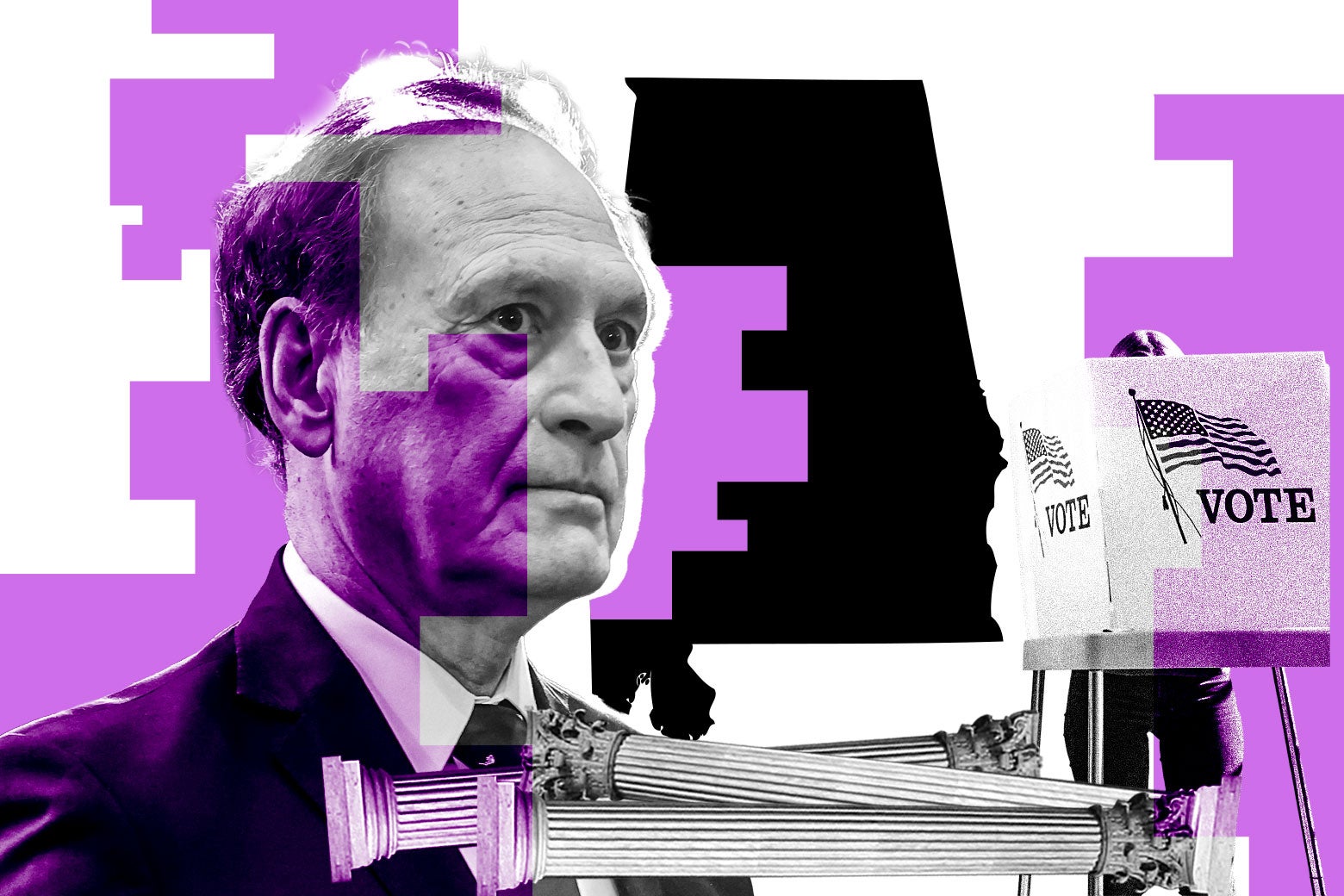
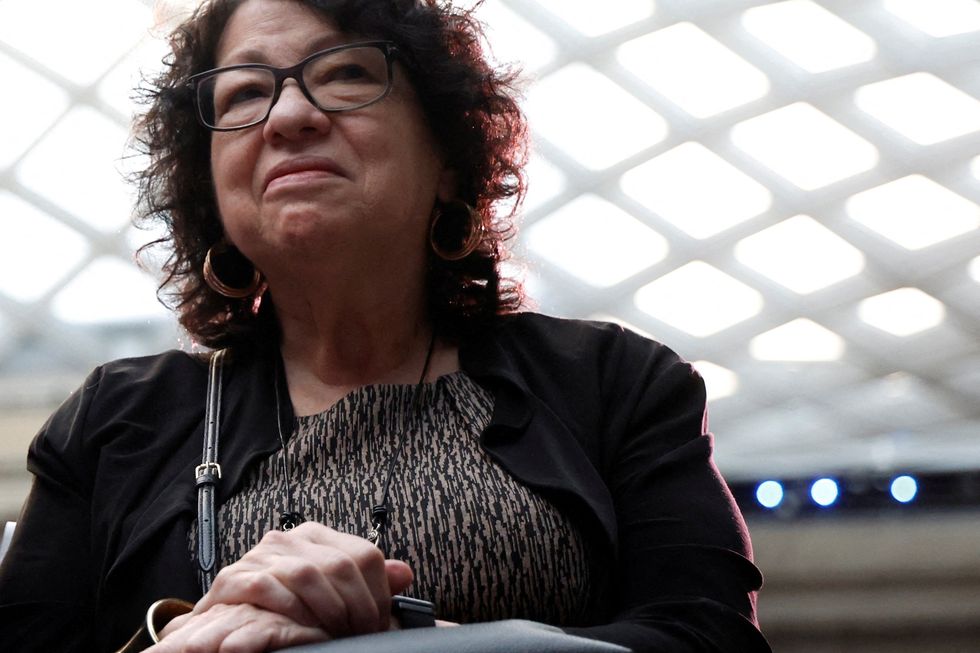
In an unsigned shadow-docket order on Tuesday night, June 2 in the case Allen v. Milligan, the U.S. Supreme Court upheld a congressional map in Alabama that eliminates a largely Black district. This decision follows the High Court's controversial 6-3 ruling in Louisiana v. Callais, decided on April 29. And Slate legal analysts Dahlia Lithwick and Mark Joseph Stern believe that the June 2 order makes Callais even worse.Justice Sonia Sotomayor, in her dissent, was highly critical of the Alabama order — which, she argued, "disregards both democratic values and the rule of law." Lower federal court judges found the Alabama congressional map to be racially discriminatory, but the High Court's right-wing supermajority disagreed."Although the supermajority described its handiwork as a straightforward application of April's decision in Louisiana v. Callais," Lithwick and Stern explain in Slate, "Tuesday's decision dramatically expands the scope of that ruling. It is not a mere aftershock from Callais, but a separate earthquake of the same or perhaps even greater magnitude. Following years of twists and turns in the legal system, this case has become the vehicle by which the Court's conservative supermajority not only applies its own brand-new 'updates' to Section 2 of the storied Voting Rights Act of 1965, but also, sweeps what remains of constitutional protections against discriminatory voting practices out the back door."The legal analysts continue, "It commits these crimes in an unsigned, blithely dismissive order that lacks any substantive reasoning, as it pretends to be honoring some jurisprudential lodestar it celebrates as 'our colorblind Constitution.'"The June 2 order on Alabama, according to Lithwick and Stern, expands "Callais' jury-rigged standards."The Callais ruling inspired plenty of heated debates. While some conservatives and libertarians saw Callais as a victory for fairness, quite a few liberals and progressives countered that it decimated the Voting Rights Act of 1965 and gave the green light to racial discrimination. NAACP President Derrick Johnson is among the critics of Callais and the June 2 Supreme Court order that followed it. Appearing on MS NOW, Johnson told host Ana Cabrera, "It seems the Supreme Court is endorsing racially discriminatory behavior by the state of Alabama."Similarly, Lithwick and Stern view the High Court's Alabama order as a victory for "blatantly racist gerrymanders.""In reality, the Alabama map was determined, over many years and many pages of fact-finding, to have been a product of intentional discrimination," the Slate legal analysts write. "For instance, the state admitted that it had tried to keep residents with 'European heritage' — that is, white people — in the same district while aggressively slicing up non-white communities into different districts. Under the new regime, the Roberts Court's conservatives don't care. In fact, Tuesday's order expressly approved of the state's desire to keep those white voters together while divvying up Black voters to prevent the latter group from electing their preferred representative. It is now open season on minority voters in any state that seeks to crowd them out of their voting booths."
In “yet another deeply alarming appointment,” President Donald Trump has picked major Trump campaign donor Bill Pulte to replace former Congressmember Tulsi Gabbard as director of national intelligence, the nation’s top spy chief who reports directly to the president. Pulte is “not somebody who has any of the requisite experience for this incredibly important office,” says Matt Platkin, a former attorney general for New Jersey. Pulte is also expected to continue in his other high-level positions as chair of the Federal National Mortgage Association (Fannie Mae) and chair of the Federal Home Loan Mortgage Corporation (Freddie Mac) and director of the Federal Housing Finance Agency, where he is accused of abusing his power to pursue political prosecutions against Trump’s enemies.
We also speak to Harvard Law School professor Nancy Gertner, a retired federal judge, about legal challenges to Trump’s mass deportation campaign, particularly involving widespread abuses committed by DHS and ICE. “What we’re seeing now is an effort for the courts to catch up to those abuses, and they are. Legislation is going to be needed to make this even more clear,” says Gertner.
The US Supreme Court late Tuesday gave Alabama a green light to use an aggressively gerrymandered congressional map that a lower court said was “tainted by intentional race-based discrimination.”The unsigned decision, from which the high court’s three liberal justices dissented, enables Alabama’s Republican-dominated government to replace its current congressional map, which has two majority-Black districts, with a map that the US Supreme Court struck down in 2023. That map has just one majority-Black district.In her dissenting opinion, liberal Justice Sonia Sotomayor wrote that “just as Alabama doubled down on racial discrimination, the court today doubles down on chaos.”“In addition to being wrong on the merits, the court’s decision inflicts two grave harms on the public,” wrote Sotomayor. “It debases the democratic process by upending Alabama’s entire election in the name of permitting Alabama to discriminate against Black Alabamians. It also corrodes the rule of law by rewarding Alabama’s gamesmanship and outright defiance of court orders.”The liberal justice noted that in order to switch to the map previously struck down by the high court, Alabama election officials “will have to reassign hundreds of thousands of voters across the state to new congressional districts.”“Three of Alabama’s counties will be particularly hard hit because they are split across two congressional districts,” Sotomayor noted. “These counties have about 600,000 registered voters between them (roughly 15% of the state’s total number of registered voters).”Alabama Gov. Kay Ivey, a Republican, postponed US House primary elections in the wake of the Supreme Court’s April decision in Louisiana v. Callais, which severely narrowed the 1965 Voting Rights Act’s protections against racial discrimination and paved the way for Alabama and other states to impose new maps ahead of the 2026 midterms. “The Supreme Court’s shameful ruling allowing Alabama to move forward with a gerrymander that was drawn with the explicit intent to dilute Black voting power—as found by a panel of judges that included two Trump appointees—is an absolute affront to the founding principles of our democracy, and wipes out whatever was left of the court’s credibility,” said Marina Jenkins, executive director of the National Redistricting Foundation. “This country deserves better, and we must continue to work toward federal legislation that not only bans partisan and racial gerrymandering but also ensures that our rights cannot be undermined by captured courts.”The ruling drew condemnation from the two Democrats in Alabama’s US congressional delegation. Rep. Shomari Figures, who was elected to the US House under the independently drawn map that Alabama Republicans are working to replace, said in a statement that “the Supreme Court has now confirmed that there is no longer a Voting Rights Act in America, and states are essentially free to discriminate against minority voters with no consequences.”“This is a dangerous ruling that sets the state and this nation back decades,” said Figures.Rep. Terri Sewell called the ruling “just the latest in a pattern of outrageous Supreme Court decisions that help Republicans desperately cling to power ahead of the midterm elections while diluting Black voices and erasing decades of hard-fought civil rights progress.”“No matter how hard Alabama state officials may try, they will not succeed in silencing our voices,” said Sewell. “We will not go back to the Jim Crow era. The fight for fair representation continues.”
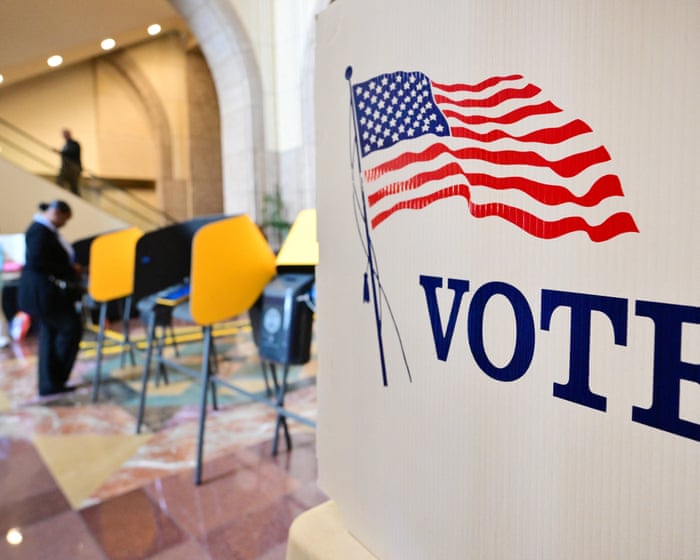
Democrats seek to oust Republicans in New Jersey and Iowa, while other major races remain up in the airVoters in Tuesday’s primary elections across the US chose candidates who could flip critical districts in the US House and Senate in November, setting up a series of high-stakes general election contests in a midterm year expected to favor Democrats.Among the most watched races are: a New Jersey Democrat who could oust a Republican incumbent absent with a mystery medical issue for months; several Iowa Democrats hoping to flip their red-leaning state; and California’s redrawn maps that have given Democrats an advantage in the heavily blue state. Continue reading...
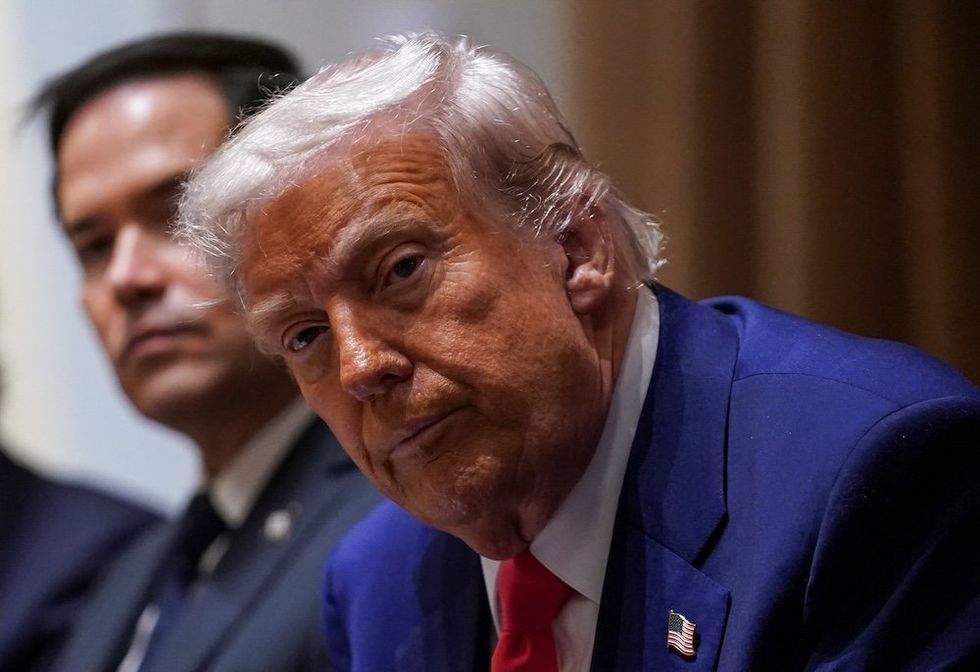
Senate Majority Leader John Thune (R-S.D.) is showing signs of growing frustration with President Trump after 18 months of walking in lock-step with the president's agenda. With few exceptions, Thune has maintained Trump's demands, but as the midterm elections approach, it is becoming increasingly clear that the president is out of touch with his own voters. Axios reported Wednesday that Thune is beginning to break with the president publicly, showing that Trump's influence over congressional Republicans may be coming to an end as the primary campaigns come and go. Trump has invested some effort in eliminating his GOP opposition in the Republican Primaries, but those "lame ducks" are still in office. They're quickly becoming known as the "YOLO Caucus" because they have nothing to lose. Meanwhile, Republicans who have made it through their GOP primaries recognize that Trump doesn't have anything to offer them to help in the general election. Their shift signals that Trump’s influence over congressional Republicans may be waning. Thune has questioned Trump’s appointments and policy proposals in a low-key but unmistakable way, marking a departure from the unified front the Senate GOP has maintained.Politico released an extensive report Tuesday about the headwinds Trump faces in getting anything done. It comes as the Republican Party is desperately trying to score a win. Hardline Trump loyalist Steve Bannon, a former Trump campaign manager, thinks that Trump still holds control over the GOP and needs to clean house with Thune. “Is this how MAGA ends — with a whimper not a bang?” Bannon asked. “Texas shows that the President still has all the juice — it needs to be applied starting with [Senate Majority Leader John] Thune’s removal.”Last week, Thune bucked Trump in the Texas U.S. Senate race, supporting incumbent Sen. John Cornyn (R-Texas). Trump's candidate won. Trump's longshot Director of National Intelligence nominee, Bill Pulte, is another example of the Senate leader moving against the president."We don't need a weaponized DNI, we need professionals there," Thune said on Tuesday after the announcement. The Senator explained that if the White House wants Pulte in the job, "he's got a lengthy road ahead of him."It isn't the only clash the GOP leaders have had with Trump."I'm not a big fan," Thune said about Trump's proposal for a $1.78 billion slush fund. Many of his Senate allies agree with him. "I don't see a purpose for it." He added that the proposal "doesn't pass the smell test."The nonpartisan Senate parliamentarian shut down Trump's demand to fund his ballroom by sneaking it into a bill about immigration enforcement. But Thune said it wasn't the parliamentarian who was the problem. The votes simply weren't there.Meanwhile, Thune is still miffed about Trump choosing Ken Paxton over Cornyn, who has a 99 percent voting record with the president."I think the president has overwhelming support among Republicans across the country," Thune said when chatting with reporters on Tuesday. "We continue to listen to his advice and counsel and do everything we can to help the country succeed, because I think in the end that's what the American people expect, and frankly, that's what our jobs are all about."White House spokeswoman Abigail Jackson told Axios in a statement that there's a nonexistent divide between Trump and Thune and that the media is attempting to drive a wedge between them.