RFK Jr.’s Anti-Trans Policy Has Been Toppled for All the Right Reasons
Source: The New Republic · Bias: Left
Summary
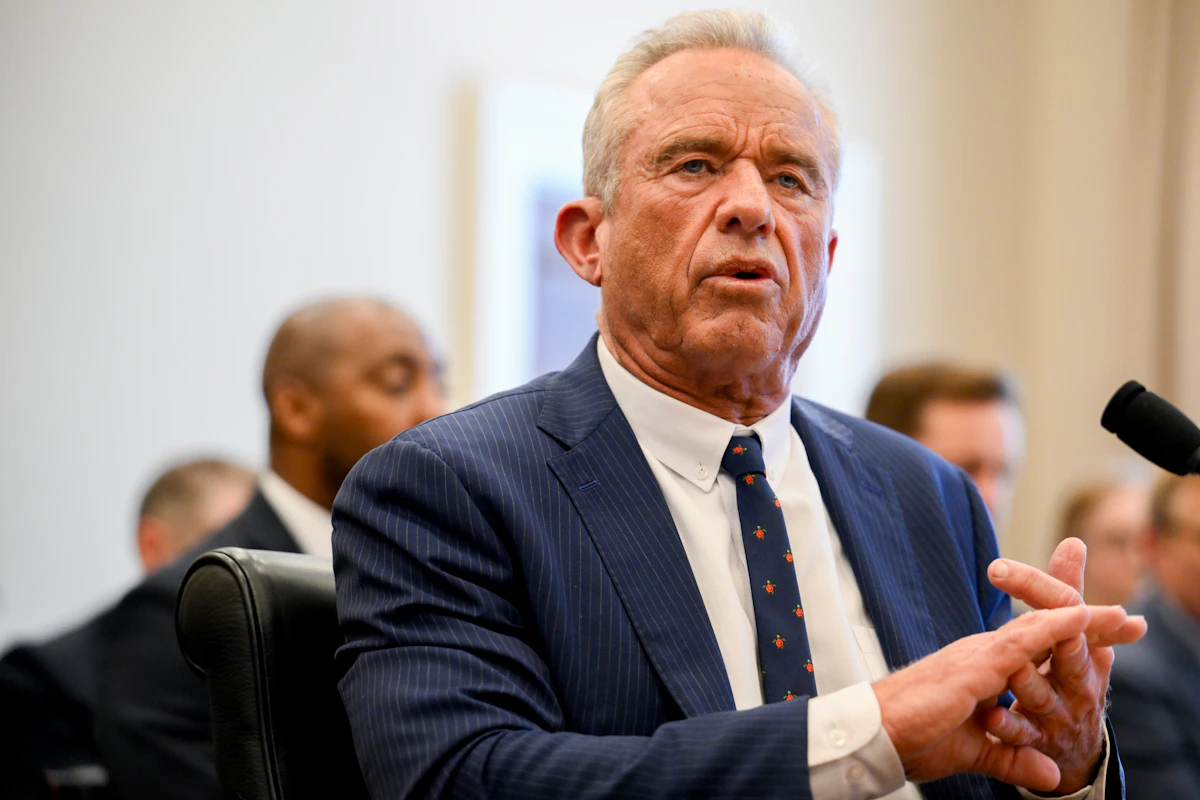
On Saturday, a U.S. district judge, Mustafa T. Kasubhai, blocked a federal policy that forced healthcare providers to follow the government’s agenda and halt gender-affirming care for young people. The ruling began with a short, emphatic declaration: “Unserious leaders are unsafe.” My distinct impression was that if Kasubhai could have left it there, with just those few words, he would have. In a way that sentence said it all, but still, he had to go on. The judge declared that the defendant—Robert F. Kennedy Jr., in his role as director of the Department of Health and Human Services—“lacked the authority” to “unilaterally” define the standards for gender-affirming care, as his policy sought to do, and that the agency lacked the authority to “exclude” providers from federal healthcare programs solely on the basis of their offering gender-affirming care to minors.The order comes in a legal challenge brought by more than 20 states and the District of Columbia, to the so-called Kennedy Declaration, released on December 18, 2025. Kennedy had proclaimed that gender-affirming care for young people—which he mischaracterized as “sex-rejecting procedures”—was “neither safe nor effective,” and threatened to withhold federal health care program funding from any health care institution that offered it. Kasubhai’s ruling applies to those plaintiff states, vacating the policy and barring the federal government from attempting to issue or enforce such a policy again.There was little legal basis for RFK Jr.’s declaration. In response to the legal challenge, lawyers representing HHS raised an increasingly desperate set of defenses, amounting to “It’s not policy, it’s just his opinion,” and arguing that to reject the purported non-policy would amount to suppressing Kennedy’s right to free speech. Kasubhai succinctly dismissed the latter argument: “Defendants cannot bully or gaslight this Court into ignoring the many procedural and legal flaws of the Kennedy Declaration by invoking one of the most sacred principles of our constitutional democracy—the freedom of speech—when that principle comes nowhere close to being implicated.” As for the former claim, lawyers for the defense argued that they didn’t need to show they had the authority to make the declaration because, in the judge’s characterization of their position, “they did not exercise any authority at all.” It’s a wild argument, “based on the bald-faced lie that the Kennedy Declaration amounts to nothing more than one man’s musings on gender-affirming care,” as Kasubhai put it.Who among Trump’s targets hasn’t heaved a sigh of relief at similar opinions, those that read like a righteous rejection of all that Trump 2.0 set out to achieve? To take such comfort in the opinion of the courts can feel naïve, even dangerous, but they are what we have, and sometimes they even live up to their promise to act as a check on unfettered power. “This case demonstrates how disregard for the rule of law does not merely result in an abstract infraction,” the judge went on. “Rather, and tragically, this case is one of a long list of examples of how a leader’s wanton disregard for the rule of law causes very real harm to very real people.” Very real harm to very real people—it feels meaningful to see someone powerful acknowledging that the harm here is not to the rule of law alone, and that the result of putting unserious leaders in the federal government is pain, chaos, and avoidable danger.At the legal news outlet Lawdork, Chris Geidner called the opinion “a good reminder” that there are still “clear-eyed judges willing to call out Trump administration anti-trans attacks for what they are.” That may be all it is. There is a significant chance that the order will not change the conduct of the administration going forward; there is an alarming pattern, after all, in which they openly defy some federal court orders, particularly on immigration. But the ruling may embolden those providing care to understand that just because the administration lawlessly tells them what to do, they do not have to obey.Maybe there’s nothing surprising about a federal judge appointed by President Biden writing what he did. The same judge wrote a personal essay in 2021 about why he began asking people in his courtroom to state their pronouns when they introduce themselves, an essay I only found because it so scandalized an attorney at the foremost anti-trans law group in the United States, the Alliance Defending Freedom, or ADF. In his essay, Kasubhai describes his own desire to do better without becoming an annoying ally, the kind focused more on his own feelings of goodness than on helping people. The ADF lawyer who was so outraged by those adopting such practices, like stating one’s pronouns in courtroom introductions, characterized them as somehow deceptive—which makes sense, coming from a group whose worldview is that trans people do not exist.
Related Coverage
- 'You're screaming in front of children!' Right-wing activist all he can handle in Philly (Far Left — Raw Story)
- Karoline Leavitt warns ‘full-blown Communist revolution’ taking place right NOW (Far Right — BizPac Review)
- Review: Gore Vidal's Burr Is the Anti-Hamilton (Center Right — Reason.com)
- Time for Congress To Make the Right To Carry a National Right (Center Right — RealClearPolitics - Homepage)
- Milton Friedman Was Right About Monetary Fine-Tuning (Center Right — National Review)
- Britain’s Labour Party Is Proving Why America Was Right to Ditch Parliament (Right — PJ Media)
- James Talarico is even more anti-gun than we thought (Far Right — BizPac Review)
- Mom Neglects to Mention a Chilling Detail in Glowing Article About Her Trans Child, Who was at the Center of Landmark Supreme Court Case Involving Boys in Girls’ Sports (Far Right — The Gateway Pundit)
Daily Analysis
Read the full Parallax Pulse for April 23, 2026 — an AI-powered analysis of how Left and Right media covered the biggest stories this day.
More Headlines From April 23, 2026
- DOJ Inspector General to Audit Handling of Epstein Files and Redactions (Center)
- 2 Republicans break with party as GOP defeats budget amendment to lower health care costs (Center)
- Senate Passes Resolution to Fund ICE, CBP and Sets Stage for Reconciliation Vote (Far Right)
- Cotton: Change to marijuana drug classification ‘a step in the wrong direction’ (Center)
- U.S. Soldier Charged With Using Classified Information to Bet on Maduro’s Ouster (Center)