John Roberts Is Trying to Defend the Indefensible
Source: The New Republic · Bias: Left
Summary
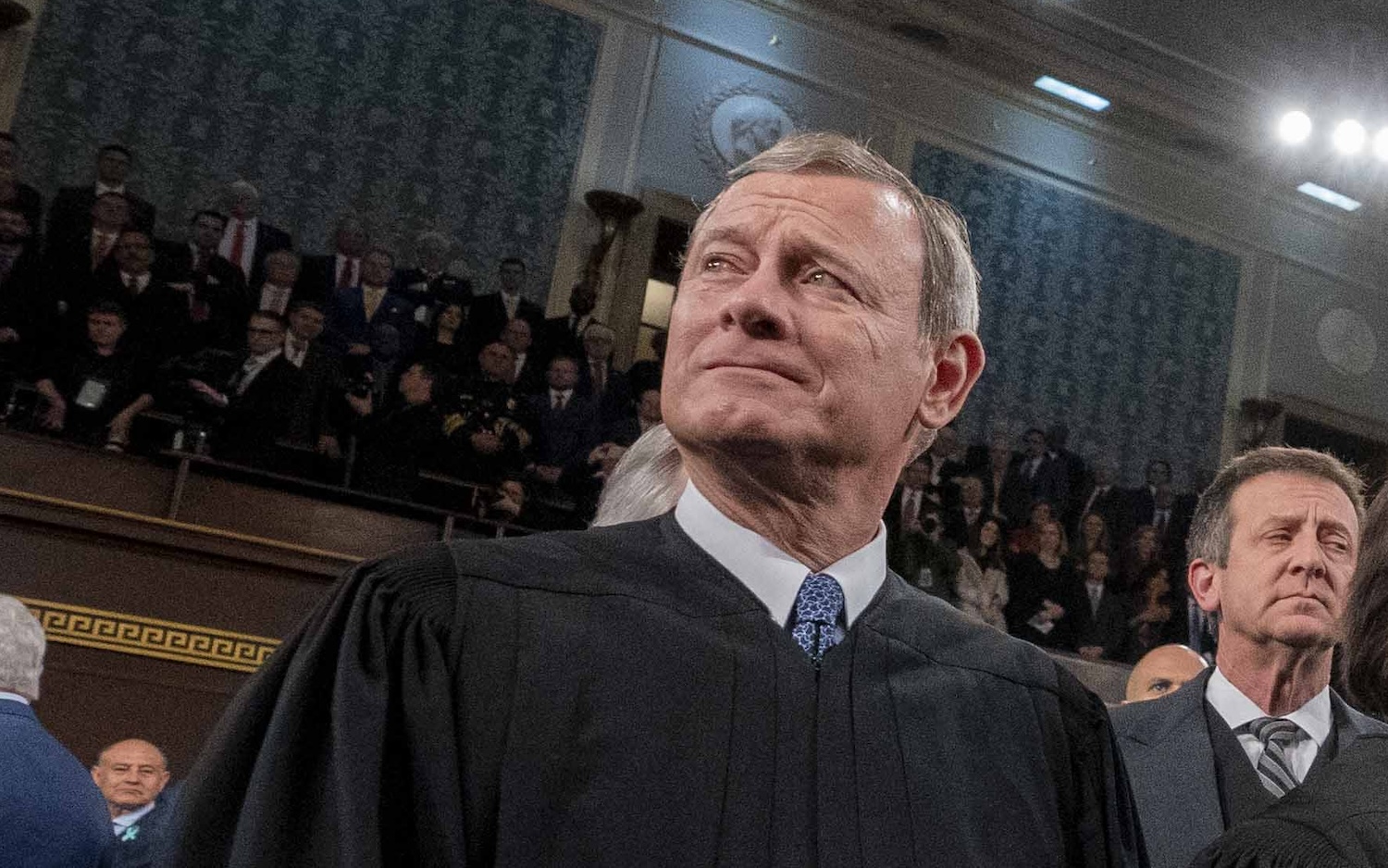
Chief Justice John Roberts and his colleagues have a problem on their hands. Americans have an increasingly low opinion of the Supreme Court. Thanks to its aggressive and corrosive rulings, a growing number of voters and elected officials favor structural reforms to rein in the conservative justices—by expanding its size, narrowing its jurisdiction, and other major changes. The chief justice rose to the court’s defense during a legal conference on Wednesday. “I think at a very basic level, people think we’re making policy decisions, [that] we’re saying we think this is what things should be as opposed to this is what the law provides,” Roberts said, according to NBC’s Lawrence Hurley. “I think they view us as truly political actors, which I don’t think is an accurate understanding of what we do. I would say that’s the main difficulty.” While Roberts reportedly acknowledged that people have a right to criticize the court and its rulings, the chief justice also claimed that the court’s decisions were not political in nature. “We’re not simply part of the political process, and there’s a reason for that, and I’m not sure people grasp that as much as is appropriate,” he told the audience.Let’s start by clarifying the terminology here, since it matters more than it might seem at first glance. There is a strong tendency in American parlance to use the term “political” in a purely pejorative sense, often with the implication of unsavoriness, partiality, or even a whiff of corruption or bias. Sometimes people use it when they actually mean “partisan,” or merely to describe something that expresses an opinion or viewpoint with which they disagree. Politics is merely the term for how we order our lives and our society. In its broadest sense, everything is political. Where you buy groceries or clothes can be a political act. Paying (or not paying) your taxes is a political act as well. Voting and speaking out are obviously political acts, but they are not the only forms of political expression. Abstaining from politics—by which people often mean electoral politics and civic participation—is also itself a deeply political choice.This negative connotation of “politics” is so deeply engrained that it’s not worth challenging people about it in passing conversation. When someone says, “I don’t want to talk about politics,” for example, what they often mean is “I don’t want to be disagreeable in a social setting.” That’s perfectly fine. But sometimes people think “politics” is just what other people are doing or saying, while their own views and beliefs are “common sense.”The problem is that Roberts appears to be transposing that popular understanding onto the three branches of the federal government. In his apparent view, Congress and the presidency—the elected branches—are engaged in the grubby, sordid, and demeaning day-to-day work of politics, which he describes as the “political process.” The Supreme Court, on the other hand, serenely stands above the fray in its marble palace in Washington, D.C.Some legal scholars have described this worldview as “judicial self-aggrandizement.” In 2023, Georgetown University law professor Josh Chafetz argued that the justices “hold themselves out as a pure, reason-based alternative to the messy business of the ‘political branches’” as a means to empower themselves. “In the judges’ presentation, it is not the courts taking power for themselves; the courts are simply neutral conduits for the law, which happens to limit the powers of the other institutions,” he explained.There are strong echoes of this in the Roberts Court’s jurisprudence. The chief justice and his colleagues, particularly the conservatives, have often treated electoral politics as inherently corrupt and self-serving. They have even done so while removing constraints on actual corruption, making the American electoral system less responsive to the public, and imposing subjective judicial vetoes across the nation’s policymaking apparatus.In a line of cases starting with 2016’s McDonnell v. United States, for example, the court has all but recognized a First Amendment right to pay-to-play politics by narrowing federal bribery laws to only “official acts” in their most literal form. The justices could have upheld the conviction on narrow grounds while signaling that more innocuous gifts, like taking someone out to lunch, would not qualify. They chose otherwise.Two years ago in Snyder v. United States, the conservative majority also decriminalized “gratuities”—bribes given to state and local officials after an official act is performed, instead of before it—because it feared that the law could criminalize “gift cards, lunches, plaques, books, framed photos, or the like.” It cited no cases where federal prosecutors had done that, nor did it reckon with the actual facts of the case.
Related Coverage
- Wes Moore: Trump on July 4 has ‘tried to make this moment about him’ (Center — The Hill News)
- Conservative Catches CNN Host Abby Phillip in a Glaring Hypocrisy as She Defends Communist NYC Mayor Zohran Mamdani’s Absurd Demand on Air Conditioning (Video) (Far Right — The Gateway Pundit)
- Justice Department defends decision not to release, unredact more Epstein files (Center — NewsNation)
- Justice Department defends decision not to release, unredact more Epstein files (Center — The Hill News)
- Senator John Fetterman Reveals the One Thing That Would Make Him Leave the Democrat Party (VIDEO) (Far Right — The Gateway Pundit)
- SCOTUS Birthplace Citizenship Decision Is John Roberts’ Roe v. Wade (Far Right — The Federalist)
- MAGA defender stuns CNN panel by twisting himself into 'pretzel' for Trump (Left — Alternet.org)
- Conflicts of interest? Trump only has one interest: himself | Robert Reich (Center Left — US news | The Guardian)
Daily Analysis
Read the full Parallax Pulse for May 8, 2026 — an AI-powered analysis of how Left and Right media covered the biggest stories this day.
More Headlines From May 8, 2026
- NEW: Alabama Asks Supreme Court to Let It Throw Out Current Rigged Congressional Map (Far Right)
- ‘No remedy for Democrats’ after Virginia Supreme Court’s blow to new map (Center Left)
- Pope Leo XIV Marks One Year Since Historic Election as Pontiff (Center Left)
- Gavin Newsom’s Prop 50 gambit comes back to haunt California (Right)
- Southern Republicans redistrict after Supreme Court rules, Dems lose big in Virginia (Center)