How an Alito Retirement Could Allow Trump to Reshape the Supreme Court
Source: The New Republic · Bias: Left
Summary
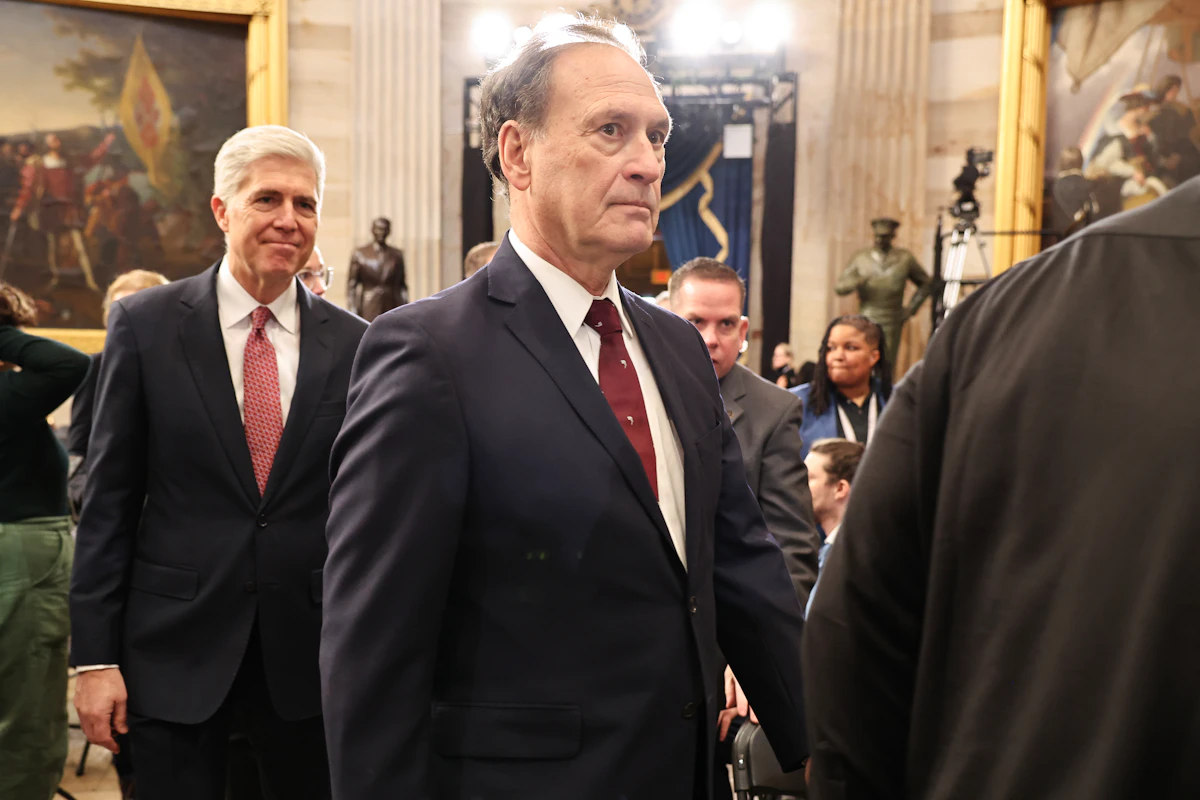
Will there be a Supreme Court vacancy in 2026? The November midterms are inching closer—and with them, the slim but growing prospect of a Democratic Senate majority next January. If any conservative justices want to guarantee that a conservative president nominates their successor, their window to get out while the getting is good is closing fast.Of the court’s two eldest members, it is considered unlikely that Justice Clarence Thomas will step down any time soon. The 77-year-old justice has signaled both publicly and privately that he will not retire from the court while he can still work. In 1993, The New York Times reported that Thomas, who was fresh off his bruising confirmation battle at the time, planned to serve on the court until 2034. “The liberals made my life miserable for 43 years, and I’m going to make their lives miserable for 43 years,” he reportedly told a clerk.Justice Samuel Alito, on the other hand, may be closer to retirement. CNN’s Joan Biskupic reported last December that Alito was “pondering” stepping down. It is well known that the 76-year-old justice’s wife Martha-Ann is eager for him to retire, as she acknowledged in a surreptitiously taped conversation at a Supreme Court event last year. Alito’s planned book release later this year, as well as his recent hospital visit for an unspecified health issue last month, also drew renewed attention to his potential return to private life after a victory lap of sorts.If Alito retires this year, it would not significantly alter the court’s overall ideological balance. Trump would be swapping out one conservative justice for another. At the same time, installing a younger justice would further cement the conservative majority’s long-term grip on the Supreme Court by preventing a vacancy from opening up under a Democratic presidency, barring structural reforms and expansion. Otherwise, the continuation of the conservatives’ 6-3 majority could seriously frustrate liberals’ plans to enact a post-Trump agenda, even with a sizable congressional majority.At the same time, Trump’s second-term Supreme Court nominee could be unlike anyone that he previously appointed to the high court. The Republican Party remains firmly in his grip, with GOP senators confirming a wide range of unqualified and controversial Cabinet officials and agency heads over the past year. Trump’s only failed Cabinet nomination wasn’t even a rebuke to Trump: Senate Republicans simply loathed former Florida Representative Matt Gaetz, his first pick to be attorney general, on a personal level.Though much of the conservative legal establishment’s agenda is now fused with Trumpism, the president may prove to be less deferential towards the movement’s stable of nominees than during his first term. Trump’s second term so far is characterized by rewarding personal sycophants with appointments to high office, demands for personal loyalty from nominees, and an expectation that Supreme Court justices in particular should be more deferential towards him.Who could Trump nominate? During the 2016 campaign, Trump won over legal conservatives like Texas Senator Ted Cruz, a bitter primary rival, by releasing a shortlist of conservative judges and lawyers that he would appoint to the Supreme Court if elected. By 2020, there was no shortlist because Trump’s appointments had proven his fidelity to the conservative legal movement. After 2024, however, Trump’s own personal interests are likely to be forefront in his mind.Beyond their conservative bona fides, the most important quality will be youth. Gone are the days when presidents would nominate 60 or 70-year-olds to the nation’s highest court. Youth is a guarantee of longevity, which in turn promises both jurisprudential impact and ideological control. Trump’s first three choices were in their late 40s or early 50s when nominated, with Justice Brett Kavanaugh marking the upper bound at 53 years old. A child born today can expect them to still be handing down rulings when he or she starts college.Some of Trump appointees to the federal appeals courts could fit that bill. Judge James Ho, who serves on the Fifth Circuit Court of Appeals, has been a reliably conservative vote on a reliably conservative court, though his past writings defending birthright citizenship might hurt his chances. He and two other Fifth Circuit Trump appointees, Andrew Oldham and Kyle Duncan, issued a panel opinion on mail-in ballots—a perennial Trump complaint—that some court watchers read as an audition for a Supreme Court vacancy. All three men are in their mid-50s.Trump’s first-term appellate court picks are the most likely source of future Supreme Court nominees. All three of his first-term picks served on appeals courts, and presidents from both parties tend to prefer them in the modern era. Some potential choices include the D.C.
Related Coverage
- Melania gives Congress private deadline as she works around Trump's team: report (Far Left — Raw Story)
- Trump announces pardons for pollution violators prosecuted for "fixing their car" (Center — Politics - CBSNews.com)
- Trump Pardons Six People Pursued for ‘Fixing Their Car’ (Center — Bloomberg Politics)
- Sources: Trump likely to pardon pollution violators; weighing clemency for Diddy (Center — Politics - CBSNews.com)
- Fox host warns Trump will pay for his 'breathtaking' corruption (Left — Alternet.org)
- Trump Scores Appeals Court Victory in Battle Over National Park Historical Displays (Right — RedState)
- Signs of Victory: I-95 Welcomes President Donald Trump Int'l Airport (Right — RedState)
- Trump’s ‘ramped up’ rhetoric leaves unifying tone of July Fourth speech in question (Center Left — NBC News Politics)
Daily Analysis
Read the full Parallax Pulse for April 8, 2026 — an AI-powered analysis of how Left and Right media covered the biggest stories this day.
More Headlines From April 8, 2026
- Republican Projected to Hold Marjorie Taylor Greene’s House Seat (Center)
- US oil prices fall over 18% after Trump agrees to two-week ceasefire with Iran (Center Right)
- New York Wants a Cut of Counter-Strike's Loot Boxes (Center Right)
- Republican Clay Fuller to replace Marjorie Taylor Greene in House (Center)
- 5 US House races shift toward Democrats: Cook Political Report (Right)