Behind closed doors: How the Supreme Court secretly fast-tracks Trump's agenda
Source: Alternet.org · Bias: Left
Summary
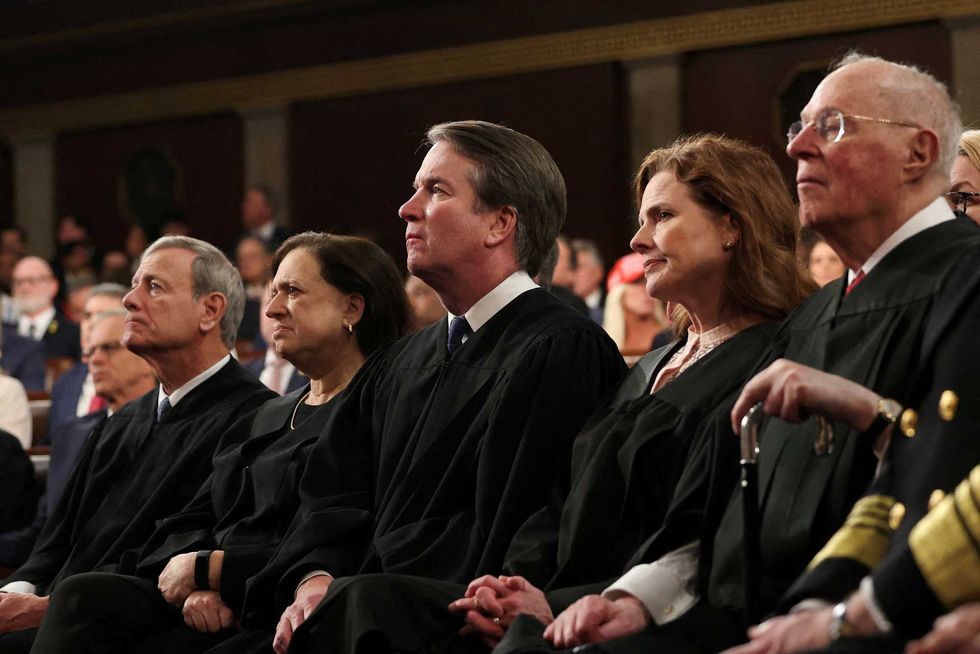
The recent publication of confidential Supreme Court memoranda by The New York Times has brought to light a pivotal moment in the court’s history. “The birth of the Supreme Court’s shadow docket has long been a mystery,” wrote reporters Jodi Kantor and Adam Liptak. “Until now.”Originally coined by legal scholar William Baude, the term “shadow docket” refers to the Supreme Court’s emergency docket, which, as Baude wrote, includes “a range of orders and summary decisions that defy its normal procedural regularity.” That’s law professor-speak for cases that are given abbreviated consideration and accelerated review by the justices, all out of public view – what The New York Times story referred to as the court “sprinting.” These cases aren’t included in the annual list of cases the justices have chosen to consider and that are presented by attorneys in public sessions, called “oral argument,” at the court.During the second Trump administration, such shadow docket cases have proliferated as President Donald Trump has continued to push boundaries, challenge precedents and expand executive power. These cases have typically involved a request by the presidential administration “to suspend lower court orders” that temporarily block “an administration policy from taking effect,” according to liberal legal advocacy group the Brennan Center for Justice at New York University School of Law.The lack of transparency in considering and ruling on the shadow docket, combined with the weight of the issues presented to the court via that docket, mean that the practice has come under strong criticism by many court watchers. Here’s how the process works and what you need to know to evaluate it. Supreme Court Chief Justice John Roberts played a key role in pressing for the court to consider a major case first through the shadow docket. Leah Millis-Pool/Getty Images The merits docketThe emergency docket is different from the court’s merits docket, which is the customary path for cases to reach the Supreme Court. Ordinarily, in federal courts, a case begins in a federal district court. An appeal of the decision in the case is made to a federal appeals court. If a party in the case wants to appeal further, they can aim for U.S. Supreme Court review. That requires filing a “petition for writ of certiorari” to the court. The Supreme Court does not take all the cases for which it has been petitioned. The court holds complete discretion to choose which cases to consider each term and always rejects the vast majority of petitions that it receives. By custom, the court agrees to consider a case if at least four justices vote to grant the writ of certiorari. For the cases that the court agrees to consider, the parties to that case file briefs – written legal arguments – with the Supreme Court. Third parties can also file briefs with the court to assert their own arguments; these are known as “friend of the court” or amicus curiae briefs. The justices then read those briefs and hear oral arguments in the case in a public session, during which they can question attorneys for both sides, before they meet and confer. At the end of this conference, the justices vote on the outcome in the case before assigning an author to draft the opinions.The merits docket – the ordinary process – is methodical. It promotes deliberation and reasoned decision-making resulting in lengthy opinions that explain the justices’ rationale and provide guidance for lower courts in future cases. The emergency docketOn the other hand, the emergency docket is a process whereby the court makes quick decisions without full briefing and deliberation, and it produces orders and rulings that almost always present little to no explanation. As Baude wrote, “Many of the orders lack the transparency that we have come to appreciate in its merits cases.” Most of the court’s rulings and orders in cases on the emergency docket go without explanation. On occasion, however, the court produces short opinions that provide some explanation in emergency docket cases, albeit these are often dissents from the justices who disagree with the ruling.Transparency is important, especially for the Supreme Court, because it builds trust and legitimacy. According to Gallup, as of September 2025, 42% of respondents approve, 52% disapprove and 6% have no opinion of the Supreme Court. A 2025 Pew Research Center poll found that 48% of Americans have a favorable view of the court, down from 70% five years earlier. As a constitutional law scholar, I’ve written elsewhere that the low approval might be attributable to the court’s undisciplined overruling of landmark cases regarding individual rights, such as the abortion rights case Roe v. Wade.
Related Coverage
- Melania gives Congress private deadline as she works around Trump's team: report (Far Left — Raw Story)
- Trump announces pardons for pollution violators prosecuted for "fixing their car" (Center — Politics - CBSNews.com)
- Trump Pardons Six People Pursued for ‘Fixing Their Car’ (Center — Bloomberg Politics)
- Sources: Trump likely to pardon pollution violators; weighing clemency for Diddy (Center — Politics - CBSNews.com)
- Fox host warns Trump will pay for his 'breathtaking' corruption (Left — Alternet.org)
- Trump Scores Appeals Court Victory in Battle Over National Park Historical Displays (Right — RedState)
- Signs of Victory: I-95 Welcomes President Donald Trump Int'l Airport (Right — RedState)
- Trump’s ‘ramped up’ rhetoric leaves unifying tone of July Fourth speech in question (Center Left — NBC News Politics)
Daily Analysis
Read the full Parallax Pulse for April 24, 2026 — an AI-powered analysis of how Left and Right media covered the biggest stories this day.
More Headlines From April 24, 2026
- Bolton lambasts US-Iran peace talks: ‘Nowhere close to a deal’ (Center)
- Justice Department Calls for Expansion of Federal Death Penalty (Center)
- DOJ Drops Fed Probe, Clearing Way for Warsh | Balance of Power: Early Edition 4/24/2026 (Center)
- After 2 failed votes, Mike Johnson unveils new plan to extend key U.S. spy powers (Center)
- Trump Talks Up Iran Blockade as Israel-Lebanon Truce Extended (Center)