
New York Post
Stream It Or Skip It: ‘U.S. Against the World’ on HBO Max, a Five-Part Documentary Series Following the US Men’s National Team in the Leadup to the 2026 World Cup
Go deeper with the USMNT during this summer's World Cup.
Right
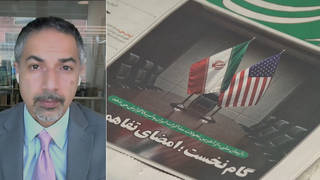
The U.S. and Iran reached a memorandum of understanding on Sunday extending the ceasefire by 60 days. It is set to be formally signed in Geneva on Friday. The text of the agreement has not yet been released, but Iran has agreed to reopen the Strait of Hormuz, while the U.S. will lift its naval blockade. According to Iran, the deal calls for a permanent and immediate cessation of hostilities on all fronts, including in Lebanon. But Israel, which is not a party to the agreement, says it plans to keep troops in parts of southern Lebanon. “The Israelis are trying to destroy this deal, and they will continue to try,” says Trita Parsi, executive vice president of the Quincy Institute for Responsible Statecraft. “It will require persistent, consistent pressure by Trump on the Israelis in order to hold them back.” We also discuss how The Free Press, founded by Bari Weiss, published an article last week claiming the State Department had opened a probe into Parsi that could lead to his deportation. The State Department issued a statement just hours later claiming that it had “no plans to revoke the green card of Mr. Parsi at this time.” “I do believe that there were elements inside the State Department that wanted to move in this direction,” says Parsi. “They thought that this hit piece would help move things forward, but I think, frankly, it backfired.”
Go deeper with the USMNT during this summer's World Cup.
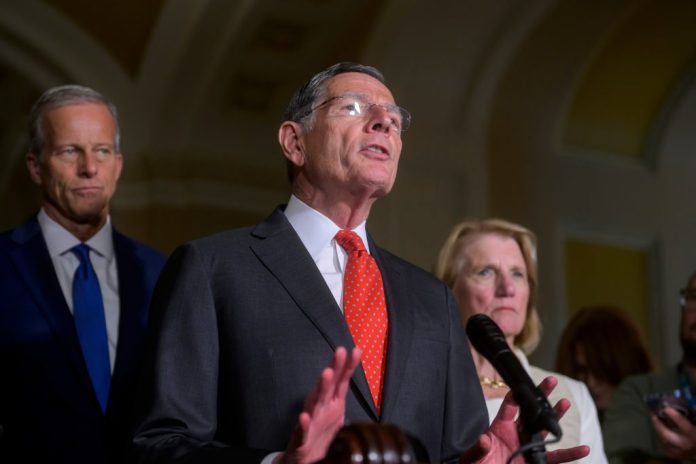
Republicans have a long list of questions about the Iran deal, and they are so far noncommittal about whether it’s even something they can support. That’s not stopping many of them from defending President Donald Trump, though, as Democrats claim the agreement is no better than the one he threw away in 2017, when he […]

President Donald Trump hasn't yet released what he has agreed to on the Iran deal, but there are those in his administration who aren't happy with it and think it's a mistake. According to the Mirror, Trump is pondering firing them. Those include Secretary of Defense Pete Hegseth and CIA Director John Ratcliffe. "The debate has been settled. Anyone who opposed it could pay a personal price," a source told The Mirror.One person who appears to be safe is Secretary of State Marco Rubio, who serves in multiple roles for the president. It's unclear whether Trump would be willing to fire Vice President JD Vance, who has opposed to the Iran war from the start. In April, The New York Times reported that Vance was the most skeptical voice on the strikes. But The Mirror reported that Vance is supportive of the deal. Oddly, Jared Kushner and Steve Witkoff, who have been on the team working on the deal, are also said to support it, the Mirror reported. Since the deal hasn't been revealed, it's unclear if it prevents Israel from defending itself against Hamas in Lebanon. In the past both Kushner and Witkoff have been ardent supporters of Israel's ability to defend itself. The Jerusalem Post reported on Tuesday that Witkoff and Kushner are being seen as "sell-outs" as a result of their support for the deal. Right-wing pundit and close ally of Prime Minister Benjamin Netanyahu, Yinon Magal, host of Channel 14 's The Patriots, blasted Kushner and Witkoff using a slur, saying that Trump's deal makes him look like a “loser.” Magal accused the two men of acting under pressure from Qatar and “selling their brothers in Israel.”"Rubio, Hegseth, and other officials from both the Department of Defense and State have presented an assessment that the current Iranian regime was already in decline due to economic pressure and that turning up the heat on the country would eventually end in a surrender or, alternatively, its collapse," The Mirror claimed. South Carolina Republican, Lindsey Graham, fears that the U.S. and Iran might have "different" views of what the deal is or should be. He wrote on X that he was "pleased to hear the memorandum of understanding with Iran to allow the Strait of Hormuz to open has been agreed to.""I will be watching closely the ensuing negotiations regarding Iran’s nuclear program and other matters," Graham wrote. "I am somewhat concerned that Iran’s view of the agreement seems different than what the American negotiating team is claiming."That said, Graham doesn't appear to want Trump to decide whether the deal is final. "Under our law, any nuclear deal with Iran will be sent to Congress for review and a vote," Graham claimed. "I look forward to reviewing the final product, and I believe it is imperative that the architect of the deal, Vice President Vance, and his negotiating partners be part of the process in presenting the final deal to Congress."
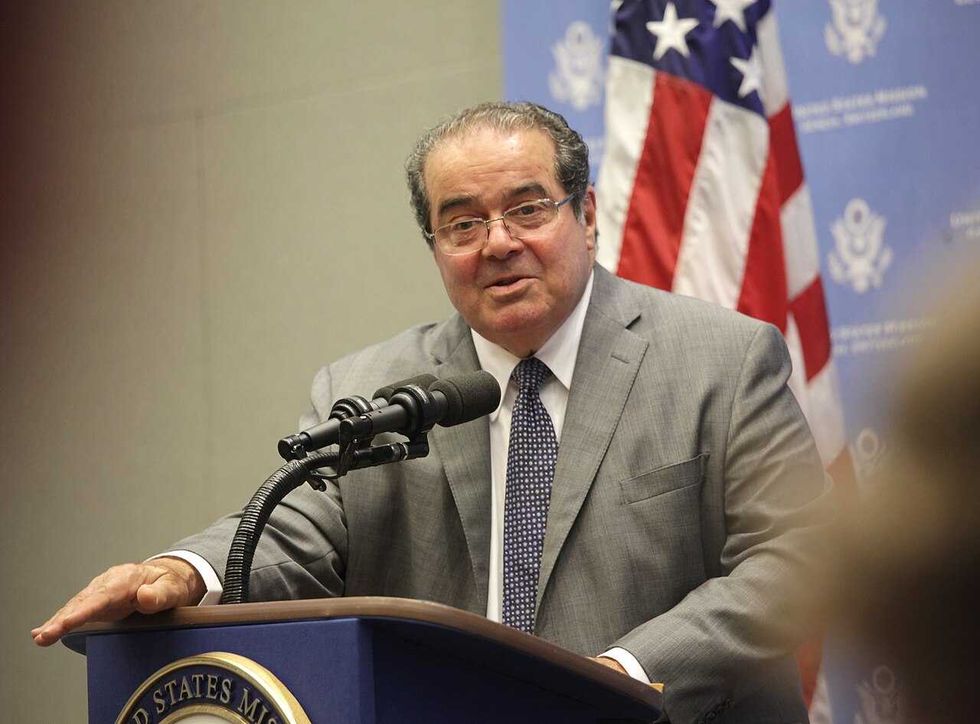
In Trump v. Slaughter — a case that went all the way to the U.S. Supreme Court — President Donald Trump is defending his right to fire Rebecca Slaughter, a former commissioner for the U.S. Federal Trade Commission (FTC). The case is pending, and according to Reason's Damon Root, he may have the late Justice Antonin Scalia to thank if Trump v. Slaughter goes his way."Sometime in the next two or three weeks," Root explains in the libertarian Reason, "the U.S. Supreme Court will decide a case about the president's authority to fire independent federal agency heads 'at will,' rather than 'for cause,' as federal law currently requires. If President Donald Trump wins the case, as many legal observers think he probably will, a 1988 dissenting opinion by a famous conservative justice is likely to play a key supporting role."The 1988 dissent by Scalia was in the case Morrison v. Olson.In that ruling 38 years ago, Chief Justice William Rehnquist and eight other justices examined a president's ability to remove officers of the U.S. from office. Scalia was the lone dissenter, disagreeing with two fellow Ronald Reagan appointees — Justices Anthony Kennedy and Sandra Day O'Connor — as well as Rehnquist and Justices Thurgood Marshall, Byron White, Harry Blackmun, John Paul Stevens and William Brennan Jr."According to the Federal Trade Commission Act," Root notes, "FTC commissioners may only 'be removed by the President for inefficiency, neglect of duty, or malfeasance in office.' Trump, however, purported to fire Slaughter for purely political reasons, which the statute, as written, does not allow. The question now before the Supreme Court is whether that statutory requirement amounts to an unlawful restriction on executive power. A majority of the Supreme Court seems inclined to view the law in that unforgiving light and rule in Trump's favor."Root continues, "If the Court does so, among the legal authorities it is likely to cite is a solo dissent written by the late Justice Antonin Scalia in a case called Morrison v. Olson (1988)…. At issue in Morrison v. Olson was whether the existence of the independent counsel violated the constitutional separation of powers because it placed certain executive authorities beyond the immediate reach of the chief executive."Morrison v. Olson, like Trump v. Slaughter 38 years later, is grappling with how much executive power a president enjoys under the Constitution. "Writing for the majority, Chief Justice William Rehnquist, a judicial conservative who was first appointed to SCOTUS by none other than (President Richard) Nixon, readily affirmed the independent counsel law…. Writing alone in dissent, Scalia offered a very different view of the matter," according to Root. "The Constitution placed the executive power in the hands of the president alone, Scalia argued, and 'this does not mean some of the executive power, but all of the executive power'…. If Trump does prevail in his efforts to fire Slaughter from the FTC, don't be surprised when the long shadow cast by Scalia's nearly 40-year-old dissent is visible in the Court's decision."

The signing of the interim peace deal between the US and Iran will take place on Friday near Lucerne in Switzerland, according to the country’s foreign ministry.
Senate Republicans said they’re pressing the Trump administration for details on the US-Iran interim peace deal and signaled Congress will ultimately vote on the final agreement.
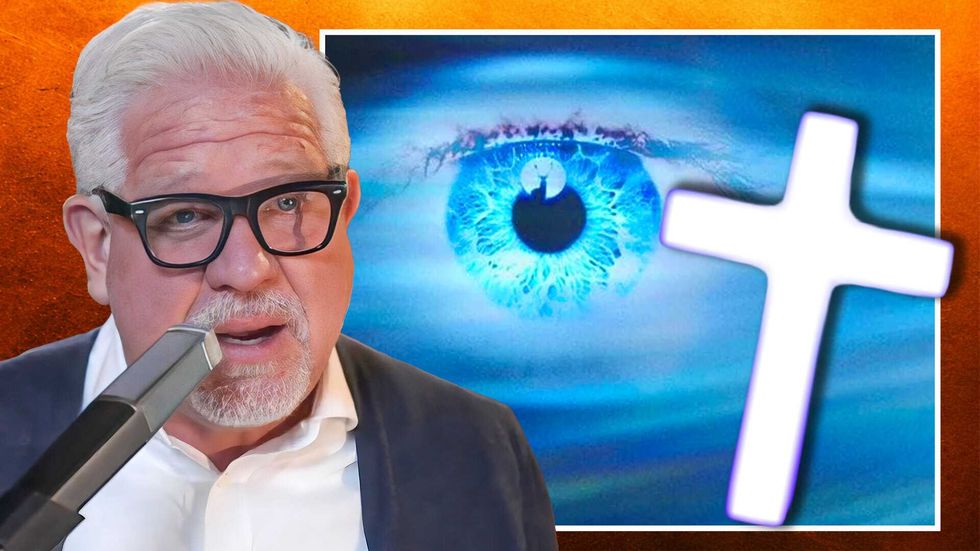
Steven Spielberg’s highly anticipated alien movie “Disclosure Day” hit theaters last Friday. In the weeks leading up to its premiere, a circulating theory — fueled by the government’s ongoing UFO file declassifications — suggested Spielberg collaborated with the government to prepare the public for real alien disclosure.Glenn Beck saw it on opening night, and he says it’s definitely “worth seeing.”But could it actually be predictive programming?On this episode of “The Glenn Beck Program,” Glenn shares his raw thoughts on what “Disclosure Day” really means. Glenn isn’t ready to dismiss the theory that “Disclosure Day” is predictive programming — entertainment designed to plant ideas so that future real-world events feel familiar and less shocking.“The Department of War and the CIA have had an official entertainment liaison office for decades,” he says.“They are brought in to help shape stories, and it's not a shadowy conspiracy ... [Hollywood is] given jets and bases and technical advisers for their movies, and in exchange, they shape the stories for the government, and this is documented policy.”However, there’s another framework worth considering: George Gerbner’s cultivation theory.Gerbner’s theory argues that long-term, heavy exposure to media gradually "cultivates" or shapes people's perceptions of reality, making them believe the world is more like what they see on screen than it actually is.Glenn points out that heavy media consumption is one of the modern era’s defining characteristics, as people are “scrolling and staring and consuming media” essentially “eight hours every day.”“[Gerbner’s] research shows that heavy viewers develop mean world syndrome where everything is a danger. They overestimate the danger, crime, threats. They become more fearful, more dependent, and more open to strong-man measures,” he explains.What if “Disclosure Day” isn’t preparing us for real aliens but rather attempting to scare people into submitting to future government mandates?The most critical question, Glenn insists, is: “Who profits from the fear?”“We've been seeing a steady drum beat of disclosure that is happening. I don't know what's real and what's not,” Glenn confesses.But he does know one thing: “A government who has been denying [aliens] for decades suddenly decides to open the door?”“Why? And who profits from fear?” he asks.To hear more, watch the video above.Want more from Glenn Beck?To enjoy more of Glenn’s masterful storytelling, thought-provoking analysis, and uncanny ability to make sense of the chaos, subscribe to BlazeTV — the largest multi-platform network of voices who love America, defend the Constitution, and live the American dream.

A violent brawl erupted after Iran and New Zealand's World Cup match on Monday as Iranian pro-Shah and pro-regime protesters clashed.