Red state's next move may be to purge Democrats entirely
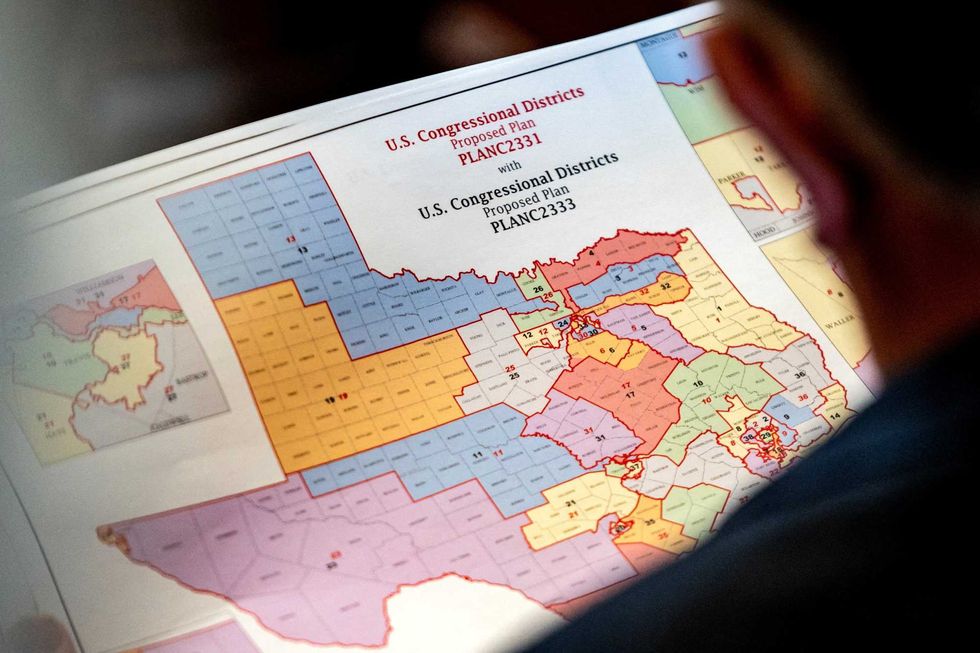
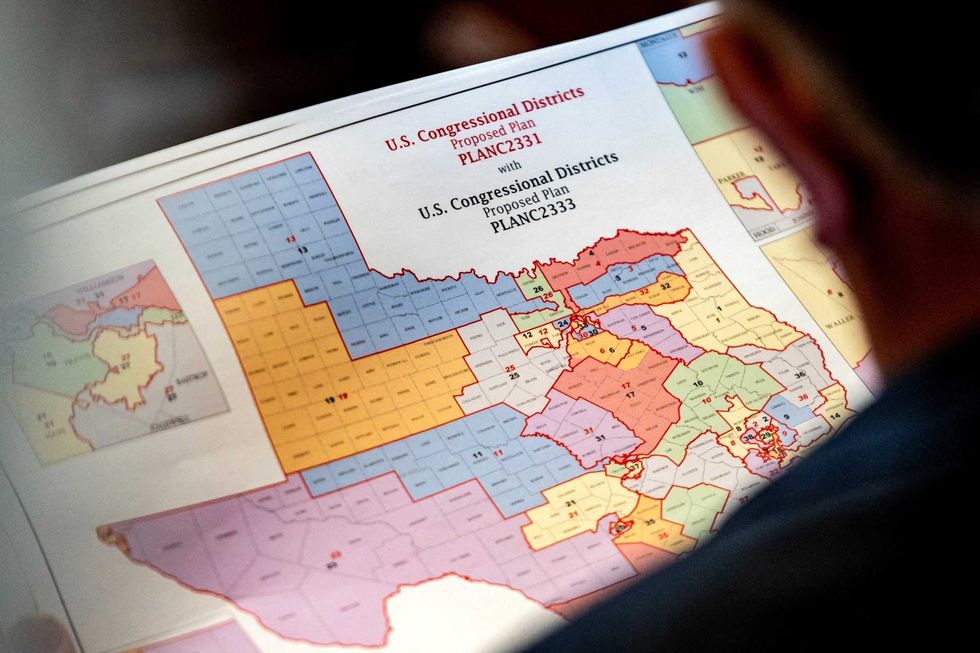
When the Republican-led Tennessee legislature in May carved up the state’s one remaining congressional district represented by a Democrat it was acting openly on a morally gruesome principle.In a state where more than a third of voters are reliably Democrats (per the last two presidential elections) Republicans find it unacceptable that the percentage of congressional House seats held by Democrats treads water at 11% — one of Tennessee’s nine seats. This cannot stand, they mouthfoamingly cogitate, so we must draw new lines that drown the enemy and make it zero.Slicing and dicing Memphis’s majority Black 9th District into three GOP-friendly majority white districts certainly felt like the kind of hasty and shameless racial gerrymander seen in several southern states following the U.S. Supreme Court’s Louisiana v. Callais decision in April.The Republicans who run Tennessee may not have much of a grasp of constitutional law, as they manage to remind us each year with bills that turn laws into lawsuits. But they did show us during the May redistricting special session that they can muster the remedial level of reading comprehension needed to decipher Supreme Court marching orders.The Court’s take in Callais was clear: race-based gerrymandering is not cool but party-based gerrymandering is totally cool. And so followed the marching orders for conservative state houses: draw new districts however you like, even in maps that intentionally dismantle minority representation; just make sure you let the maps do the talking; say nothing out loud through your piehole that would feed your opponents a viable claim about map-drawing motives that are anything but purely partisan.And so as the new congressional map was crammed through the legislature last month we were treated to the mind-numbing spectacle of endlessly parroted versions of map sponsor Sen. John Stevens’s mantra: “This is about allowing Tennessee to maximize its partisan advantage.”Funny thing is, as contrived as it was, I mostly believe it. Sure, racism (along with sexism and homophobia) abounds in the councils of state government here, and the heated fusillade of racial grievance that confronted the new congressional map was plenty justified. But even so I believe this really was about adding a red seat, not a white seat. I have no doubt that Tennessee Republicans would have sold out white Democrats just as readily as they politically dismembered Black Democrats if it would have served their true purpose: finding one more red seat in the U.S. House for their DC overlords.As the GOP adopted the new map neutering Democrats in Memphis, just as they did in Nashville in 2022, I got to thinking: Why stop there? If they can crack blue cities into blue splinters floating in red congressional districts, can they not perhaps do the same with state legislative districts? But then I thought, well, no they won’t go there — there’s no gain.The congressional redraw had concrete value, netting at most just the one seat but in a razor-thin-margin congress where every seat matters. Here In the Tennessee state capitol, on the other hand, the GOP already has veto-proof supermajorities in both houses, so what would be the point?Or so I thought until word last week that that the Tennessee GOP plans to hurl its flaming hatchet of one-party belligerence at that very target: state Senate and House district maps. According to Republican Caucus press secretary Molly Crawford, we can expect legislation proposing new maps as early as next year. The point, I guess, is this: Why settle for margins of 27-6 in the Senate and 75-24 in the House when with some crafty line drawing it can be 33-0 and 99-0. Why, indeed, should there be a single Democrat in Tennessee state government?With map-drawing software it’s a simple matter to ponder the possibilities for this sort of political mayhem. I spent a little quality time the other day with a platform well known to political mapping nerds called Dave’s Redistricting. It took me under an hour to carve Middle Tennessee into senate districts all with populations close to where a senate district should be and each having a Republican partisan edge (based on 2020 presidential voting data). As you can see in my map below I pulled this off by slicing Nashville into slivers of Davidson County that extend way out into the hinterlands (as our congressional districts already do).An election with this map, if the partisan leans held, would cut Nashville’s Democratic representation in the state Senate from three to zero. Performing similar district surgery in Memphis could cut theirs from three to zero. Together that would completely eradicate the Democratic Party from the state Senate —the 33-0 nightmare. Purging the 99-member House of all Democrats would be a bit more challenging, requiring thinner slices and wackier looking districts in more parts of the state.
Compare Perspectives
Live results: DC voters pick next mayor in Democratic primary
Voters in Washington, D.C., are at the polls Tuesday to weigh in on the race to replace retiring Mayor Muriel Bowser (D). City Councilmember Janeese Lewis George, a Democratic socialist, led in polling ahead of the Democratic primary. Former City Council member-at-large Kenyan McDuffie (D) has been trailing in second place. There are no Republicans…
Live results: Democratic primary for open DC seat in Congress underway
District of Columbia Del. Elizabeth Holmes Norton’s retirement from the House kicked off a race for the non-voting seat on Capitol Hill. Democrats Robert White, an at-large councilmember and former mayoral candidate, and Brooke Pinto, a city councilmember, have led the crowded Democratic primary field. Eighty-eight-year-old Holmes Norton, who has represented D.C. since 1991, had faced…
Senate GOP Moves to Blow Taxpayers Dollars on Pointless DOD Move
The Senate is moving to officially green-light Donald Trump’s expensive rebrand for the Department of Defense.Buried deep in the Senate Armed Services Committee’s annual defense authorization Tuesday was a measure to redesignate the Department of Defense as the “Department of War.” The measure would also change the titles and acronyms for the secretary of war, assistant secretary, and under secretary, as well as the names of other programs and offices that use the word “defense.” Another clause would ensure that all laws, documents, and records referring to the department or secretary of defense would be understood to apply to the secretary of war. Of course, the Trump administration has already been using its own made-up name for months. So Pete Hegseth is sure to have his new desk placard already.The Congressional Budget Office previously estimated that a statutory name change implemented throughout the department could cost up to $125 million in taxpayer dollars. Trump has made it clear he’s willing to spend millions to make the United States look tough—but in reality, the president appears to be caving to our country’s purported enemies. As The New Republic’s Indigo Olivier pointed out: Trump’s rebrand may be stupid and expensive, but at least it’s honest.
Blue state’s anti-ICE pledge collapses as GOP warns of new sanctuary ‘confederacy’
Colorado reverses controversial requirement that attorneys certify they would not share court information with federal immigration enforcement agencies.
Court Docs: Alleged UFC Terror Attack Planner Parroted Democrats’ Trump-Epstein Conspiracies
An individual allegedly involved in a thwarted terrorist attack aimed at Sunday’s UFC Freedom 250 event at the White House parroted Democrat conspiracy theories about President Trump protecting child predators connected to sex offender Jeffrey Epstein, according to federal court documents. The revelation came on Tuesday, when Fox News reported on how the FBI and […]
This red state might attempt to alienate its Democratic voters
Tennessee Republicans, having redrawn congressional maps to eliminate Democratic representation, are now targeting state legislative districts for similar partisan gerrymandering. The GOP holds veto-proof supermajorities (27-6 in Senate, 75-24 in House) but plans maps that could achieve 33-0 and 99-0 margins, completely eradicating Democrats from state government, according to reporting by Tennessee Lookout's Bruce Barry.Following the Supreme Court's Louisiana v. Callais decision permitting partisan gerrymandering, but not racial, Republicans have carved Memphis's majority-Black 9th District into three GOP-friendly districts. Republican Caucus press secretary Molly Crawford confirmed redistricting legislation is planned for next year. Using mapping software, Democrats could be eliminated from Nashville and Memphis state Senate representation entirely. The author argues that while Republicans justify moves as partisan advantage-maximization, the result threatens democratic representation for one-third of Tennessee's reliably Democratic voters."Do the one-third of Tennesseans who do not choose Republican government have a right to be represented in their elected legislature? In a functional democracy in a supposedly advanced liberal society, do the two-thirds who are calling the shots have a moral obligation to see to it the one-third are included rather than silenced?" the author writes. These are not hard questions, Barry concludes.Watch the video below. Your browser does not support the video tag.
This Scalia dissent may save Trump in heated Supreme Court battle
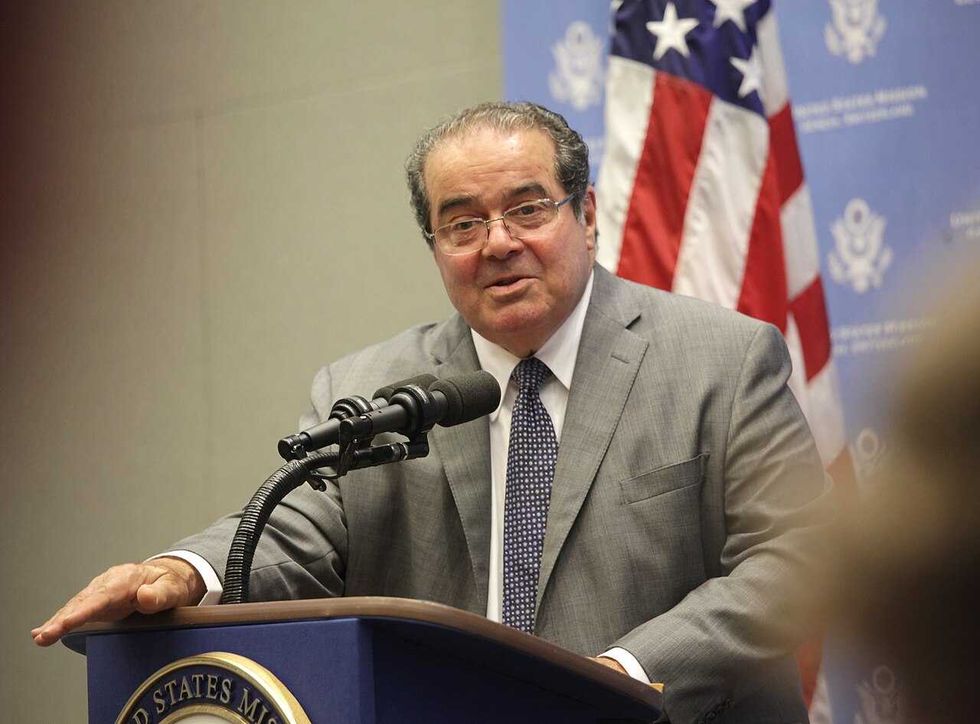
In Trump v. Slaughter — a case that went all the way to the U.S. Supreme Court — President Donald Trump is defending his right to fire Rebecca Slaughter, a former commissioner for the U.S. Federal Trade Commission (FTC). The case is pending, and according to Reason's Damon Root, he may have the late Justice Antonin Scalia to thank if Trump v. Slaughter goes his way."Sometime in the next two or three weeks," Root explains in the libertarian Reason, "the U.S. Supreme Court will decide a case about the president's authority to fire independent federal agency heads 'at will,' rather than 'for cause,' as federal law currently requires. If President Donald Trump wins the case, as many legal observers think he probably will, a 1988 dissenting opinion by a famous conservative justice is likely to play a key supporting role."The 1988 dissent by Scalia was in the case Morrison v. Olson.In that ruling 38 years ago, Chief Justice William Rehnquist and eight other justices examined a president's ability to remove officers of the U.S. from office. Scalia was the lone dissenter, disagreeing with two fellow Ronald Reagan appointees — Justices Anthony Kennedy and Sandra Day O'Connor — as well as Rehnquist and Justices Thurgood Marshall, Byron White, Harry Blackmun, John Paul Stevens and William Brennan Jr."According to the Federal Trade Commission Act," Root notes, "FTC commissioners may only 'be removed by the President for inefficiency, neglect of duty, or malfeasance in office.' Trump, however, purported to fire Slaughter for purely political reasons, which the statute, as written, does not allow. The question now before the Supreme Court is whether that statutory requirement amounts to an unlawful restriction on executive power. A majority of the Supreme Court seems inclined to view the law in that unforgiving light and rule in Trump's favor."Root continues, "If the Court does so, among the legal authorities it is likely to cite is a solo dissent written by the late Justice Antonin Scalia in a case called Morrison v. Olson (1988)…. At issue in Morrison v. Olson was whether the existence of the independent counsel violated the constitutional separation of powers because it placed certain executive authorities beyond the immediate reach of the chief executive."Morrison v. Olson, like Trump v. Slaughter 38 years later, is grappling with how much executive power a president enjoys under the Constitution. "Writing for the majority, Chief Justice William Rehnquist, a judicial conservative who was first appointed to SCOTUS by none other than (President Richard) Nixon, readily affirmed the independent counsel law…. Writing alone in dissent, Scalia offered a very different view of the matter," according to Root. "The Constitution placed the executive power in the hands of the president alone, Scalia argued, and 'this does not mean some of the executive power, but all of the executive power'…. If Trump does prevail in his efforts to fire Slaughter from the FTC, don't be surprised when the long shadow cast by Scalia's nearly 40-year-old dissent is visible in the Court's decision."