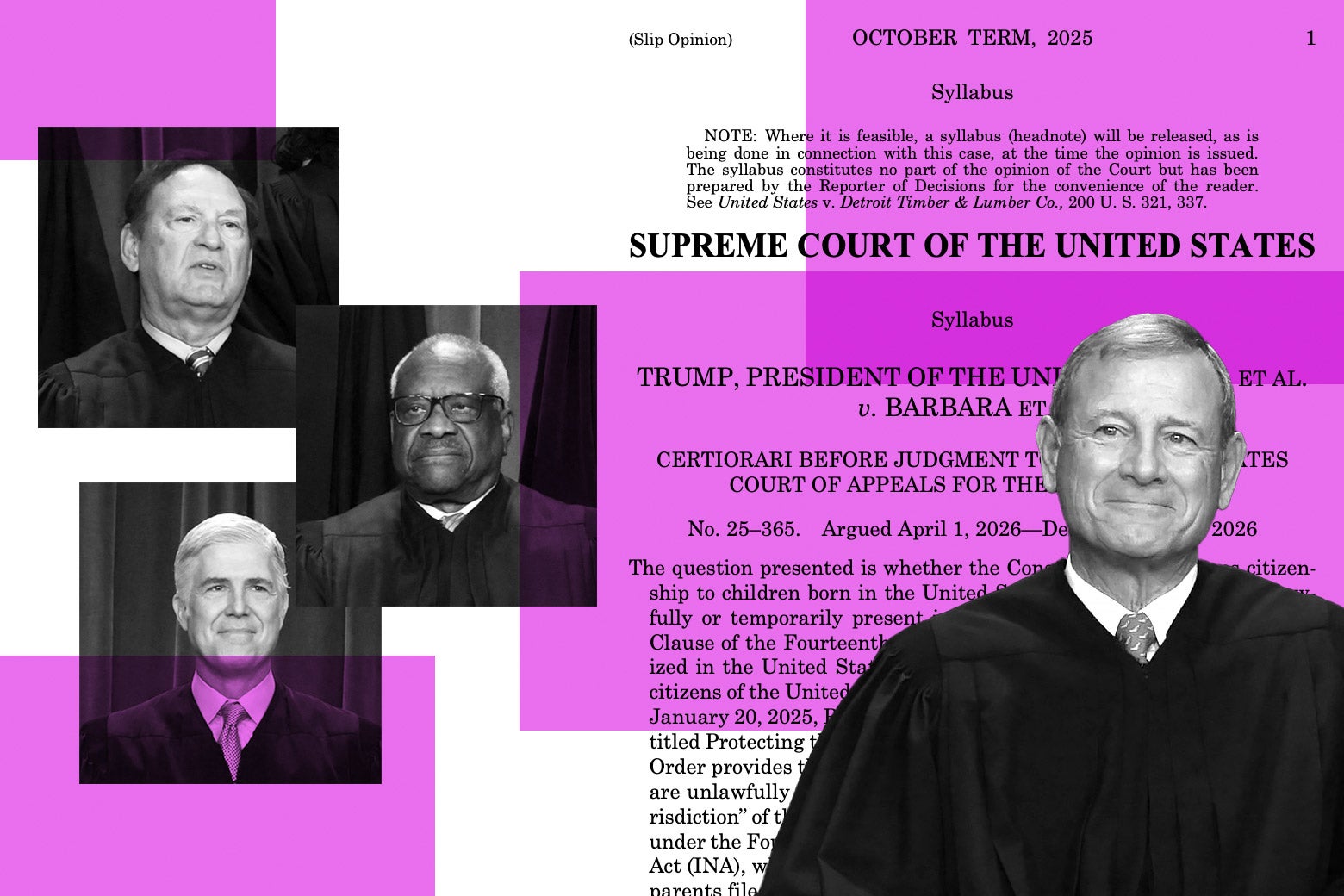
The Supreme Court’s 5–4 Vote in the Birthright Citizenship Case Is a Scandal
It is nothing short of stunning that Trump came one vote away from persuading the court to repeal the bedrock of the Reconstruction Amendments.

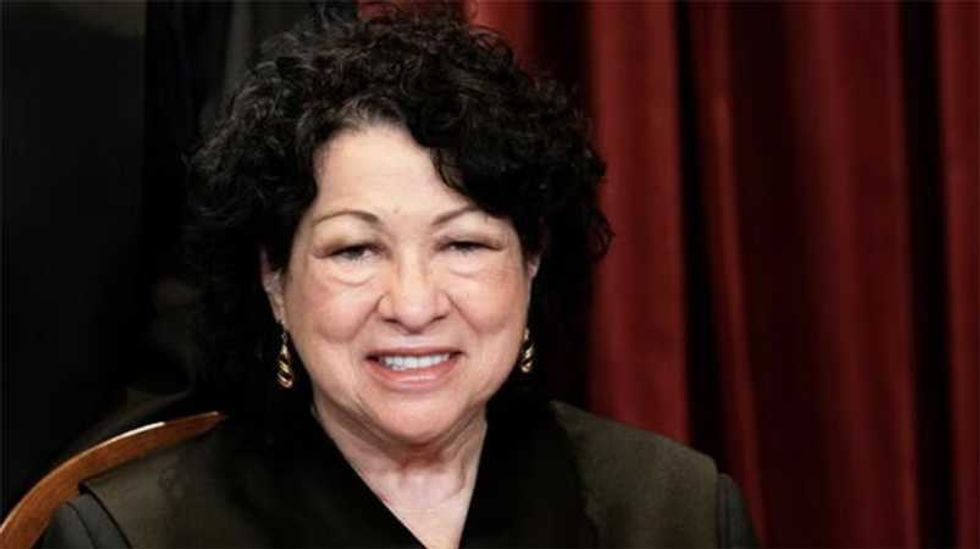
Supreme Court Justice Sonia Sotomayor smacked her conservative colleagues with a stinging rebuke for their decision to gut another campaign finance statute by overturning a decades-old precedent.The court struck down federal limits on how much money a political committee can spend in coordination with candidates in the case National Republican Senatorial Committee v. Federal Election Commission, and Sotomayor ripped the 6-3 conservative majority, questioned their legal reasoning and accused them of flaunting their own power."The majority would much rather explain why it thinks settled law is wrong than go to the trouble of establishing what it should — an unusual need to start all over," she wrote. "So today’s supposed stare decisis analysis mainly just recounts why the majority, had it been the majority in 2001, would have decided Colorado II differently."Sotomayor pointed out that Justice Brett Kavanaugh had essentially rewritten Justice Clarence Thomas's dissent in the Colorado decision upholding restrictions on political campaign spending and turned it into the controlling law."Almost to flaunt the point, the analysis gives pride of place to JUSTICE THOMAS’s dissent in that case; if only the rest of the majority had been there to join him!" she wrote. "Today’s decision thus can join the parade of those recently overruling established law because of a new majority’s new outlook on a consequential matter."Sotomayor noted the court used to insist on a "special justification," above and beyond simple error, to overturn past legal precedent, and she accused her conservative colleagues of skipping past that requirement and changing settled law without even bothering to justify their decisions."Perhaps the majority thinks (I am guessing here, given the majority’s unwillingness to deal in the specifics of campaign finance) that no quid pro quo can occur in the above scenario because the $550,000 payment to the Victory Fund is unaccompanied by directions to use the money for the candidate," she wrote. "If so, that would be wrong."
It is nothing short of stunning that Trump came one vote away from persuading the court to repeal the bedrock of the Reconstruction Amendments.
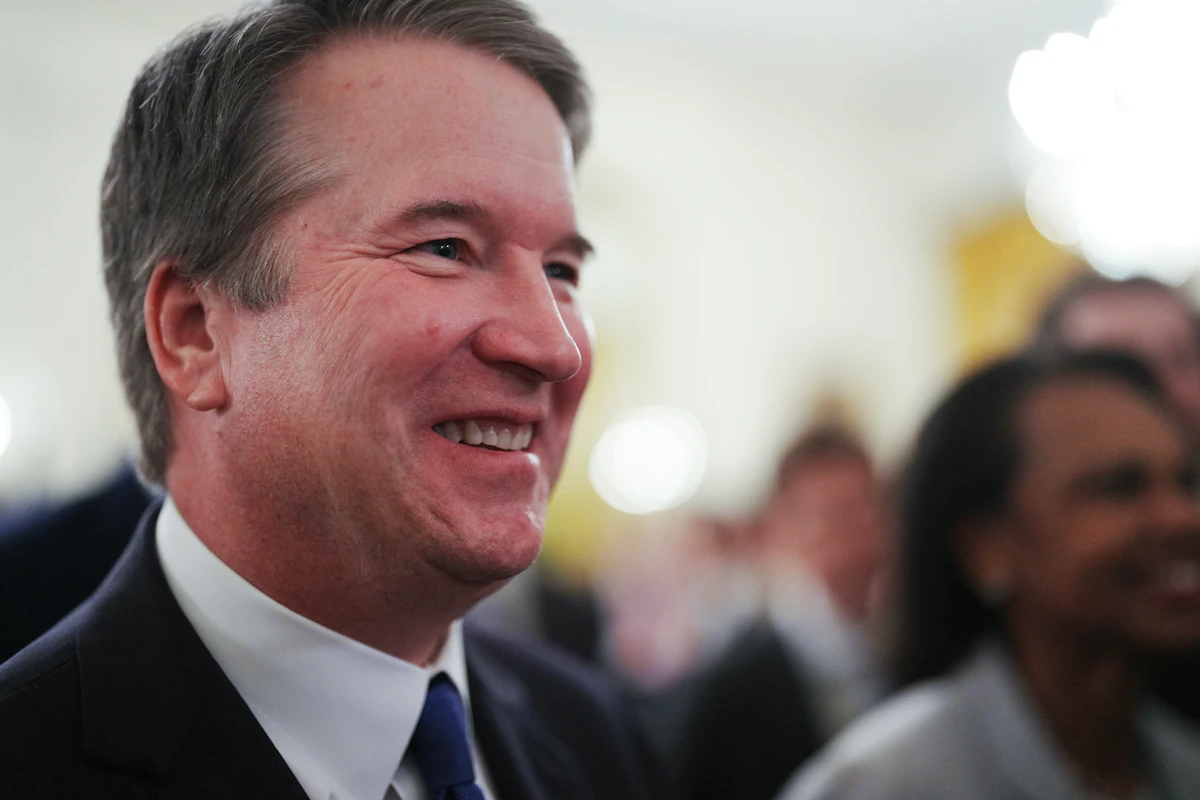
The Supreme Court may have upended the White House’s attempt to rewrite the Fourteenth Amendment, but at least one justice pointed Republican lawmakers in a different direction to unravel the birthright citizenship clause.Justice Brett Kavanaugh, who was appointed by Donald Trump to the bench in 2018, wrote a dissenting opinion in Trump v. Barbara, despite ruling alongside the majority.His rationale: Trump’s plan to strip American-born second-generation immigrants of their citizenship could work if it were enacted through Congress.“In my view, the Executive Order does not violate the Fourteenth Amendment. But the Order does contravene a federal statute,” Kavanaugh wrote, referring to the law specifying birthright parameters. “Congress could—consistent with the Fourteenth Amendment—amend [this law] or otherwise enact new legislation establishing exceptions to birthright citizenship for children born to foreign citizens unlawfully or temporarily in the country. But Congress has not yet done so.”Kavanaugh argued that while Trump’s executive order violated federal law, it did not actually run afoul of the Constitution, even though the federal law echoed the same language employed in the Constitution.The justice noted that Congress had considered numerous amendments to the law over the last 30 years but never actually enacted any of them.Trump has tried and failed multiple times over the last year and a half to strip the constitutionally enshrined right. Mere hours after he was sworn into office, Trump signed an executive order stating that children born to immigrants on temporary visas or who are in the country illegally are not entitled to birthright status. That order was blocked by several judges in different court circuits over the last year.
The 6-3 decision is right, and a contrary ruling would have had horrific effects.
Democratic campaigns fumed Tuesday at the Supreme Court for striking down limits on coordinated spending between political parties and candidates, a conservative 6-3 majority ruling that is set to open the donor floodgates for the midterm elections. Democrats fear it will buoy Senate Republicans in particular, who mounted the legal challenge over First Amendment claims […]
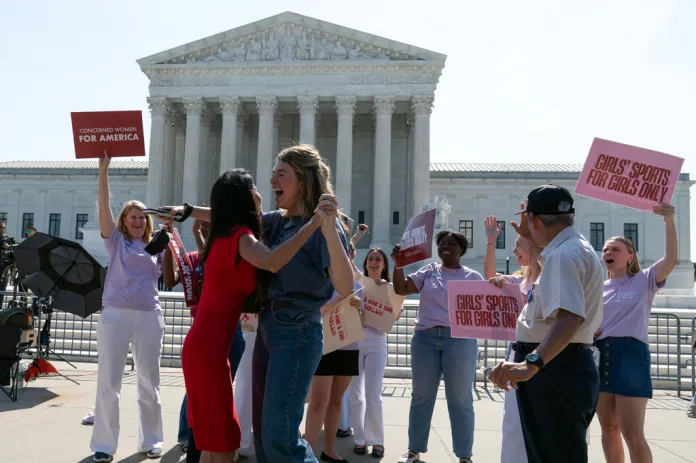
President Donald Trump celebrated two Supreme Court rulings on Tuesday that upheld state laws barring biological males from competing in women’s sports and struck down restrictions on coordinated campaign spending between political parties and candidates, calling the decisions major victories. The court issued a 6-3 decision upholding Idaho’s Fairness in Women’s Sports Act and West […]
A Monday memo from Graham Platner’s campaign shows the Democratic nominee for Senate in Maine is battling an onslaught of outside GOP spending. The memo, obtained by Politico, says Republicans spent $4.3 million on the race between Platner and incumbent Sen. Susan Collins (R-Maine) from last Tuesday through Monday. Collins’s campaign spent $500,000, while PACs…
The Supreme Court ruled 6-3 on Tuesday that states can bar transgender girls from female school sports, upholding laws in West Virginia and Idaho — and the justices spent much of the opinion going at one another.Justice Brett Kavanaugh wrote the majority opinion, holding that neither Title IX nor the Constitution's Equal Protection Clause stops states from limiting girls' teams to students who are female at birth. The decision reversed lower-court wins for Becky Pepper-Jackson, the 15-year-old West Virginia student at the center of the case, and Boise State athlete Lindsay Hecox, whose cases the justices heard in January. Justice Sonia Sotomayor agreed the Title IX claim failed but dissented on the rest, joined by Justices Elena Kagan and Ketanji Brown Jackson.Here are the five sharpest lines the justices aimed at each other.Sotomayor opened fire on the majority's reasoning, writing that it ruled "in an opinion unencumbered by fact or law." She also accused the majority of "moving the goalposts set by precedent," and said its equal protection analysis rested on "contorted logic."Justice Clarence Thomas answered the dissent's premise head-on in a concurrence, writing: "A man does not have a legal right to compete against women just because he believes that he is a woman."Kavanaugh used a section of his opinion answering the dissent of his opinion to fire back at Sotomayor, writing that the court does "not accept the dissent's assumed monopoly on understanding the effects on individuals involved in disputes over transgender athletes." Of her word choices, he added flatly: "that rhetoric is misdirected."Justice Neil Gorsuch, meanwhile, took his own shot in a footnote that opened "Contra JUSTICE JACKSON," rejecting her reading of the court's sex-stereotyping cases.The clash lands a year after the same conservative majority used similar reasoning to let Tennessee's ban on gender-affirming care for minors stand, a decision Sotomayor leans on throughout her dissent to argue the court applied the wrong test. It also caps a term of sharply divided decisions, including another 6-3 ruling a day earlier that drew its own Sotomayor dissent.
The US Supreme Court threw out longstanding federal limits on spending by political parties in coordination with candidates, in a ruling likely to help Republicans in the November midterms.