Supreme Court Voids Political-Party Spending Caps in GOP Win
Center
The US Supreme Court threw out longstanding federal limits on spending by political parties in coordination with candidates, in a ruling likely to help Republicans in the November midterms.
The Supreme Court announced Tuesday it will take up a challenge to a pair of state “assault weapons” bans in its upcoming term, marking the latest major Second Amendment case before the high court. The court said in an order list released midday Tuesday that it would take up Viramontes v. Cook County and Grant […]
Congressional Republicans were divided over the Supreme Court’s Tuesday decision to strike down an executive order seeking to limit birthright citizenship under the 14th Amendment. While many Republicans called for congressional action in response to the ruling, other Republicans celebrated the decision as “well-reasoned.” “This decision affirms that anyone born in the United States is […]
President Donald Trump on Tuesday called on Congress to limit birthright citizenship after the Supreme Court issued a ruling rejecting his push to overhaul the policy. Trump’s position puts him at odds with several leading lawmakers in the Republican Party, who called for a constitutional amendment to limit birthright citizenship after the justices handed down […]
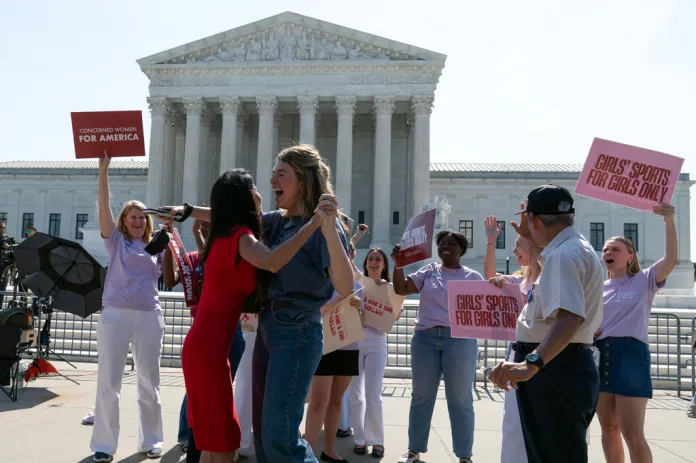
President Donald Trump celebrated two Supreme Court rulings on Tuesday that upheld state laws barring biological males from competing in women’s sports and struck down restrictions on coordinated campaign spending between political parties and candidates, calling the decisions major victories. The court issued a 6-3 decision upholding Idaho’s Fairness in Women’s Sports Act and West […]
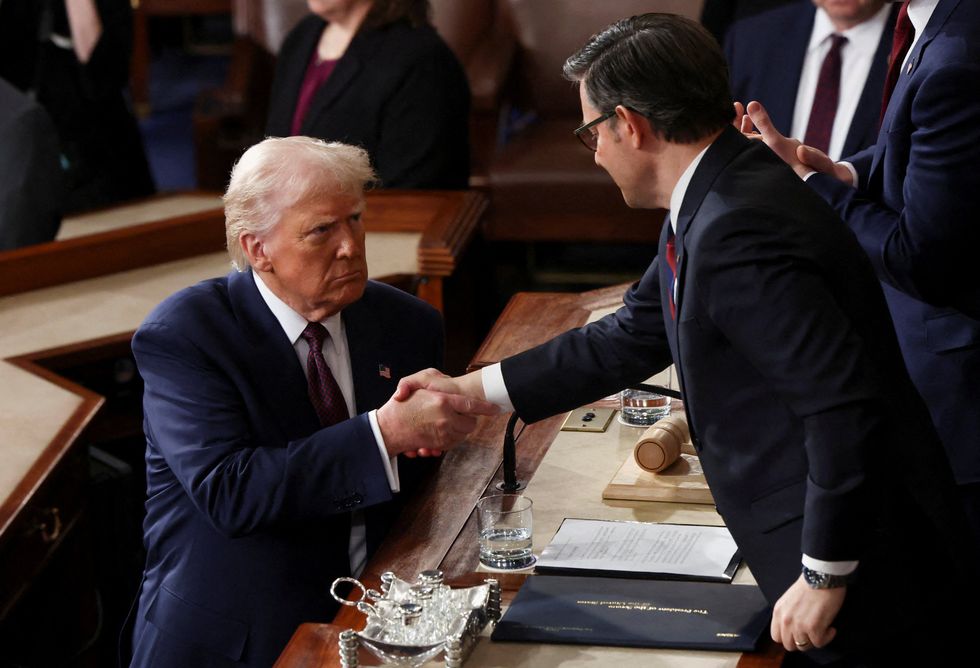
Speaker Mike Johnson was in the middle of a news conference when the U.S. Supreme Court announced its decision on President Donald Trump's executive order eliminating the constitutional right to birthright citizenship. Johnson grumbled audibly and said he was “very disappointed” with the ruling, though he conceded it was a "textualist, originalist view" by the Court since it's plainly enshrined in the 14th Amendment. However, he said that it's time to amend the U.S. Constitution to end birthright citizenship because it has been "grossly abused in recent years.""We have, you know — it's become a tourism — birthing tourism, they call, you know, a trend where people will just come and you just come onto the soil and have your child and then they're able to avail themselves of the welfare state and everything else. It's been abused," said Johnson. A study by the Immigration Policy Institute using data from the U.S. Census showed that approximately 0.7 percent of births in the U.S. "could be attributed to birth tourism." They aren't certain whether or not they are, but that is the maximum amount it could be"And so I'm sure that we'll continue to look at that," Johnson continued. "I mean they I'm sure the conclusion from this opinion is going to be that you got to amend the Constitution to fix that. As we all know, it's a big challenge to amend the Constitution. It's only happened 27 times in our whole nation's history. And the reason is because you got to have two-thirds of the both chambers of Congress and three-fourths of the states to ratify. It's usually, you know, at least a many-year-long process and very complicated. Um we'll see."He closed by saying that "we'll have to deal with it as a Congress." Johnson has failed to pass much legislation since taking over as Speaker of the House. In 2025, the House set a record for the fewest votes and fewest bills passed in recent years, the New York Times reported. Republicans hold the majority in the House, Senate and White House.
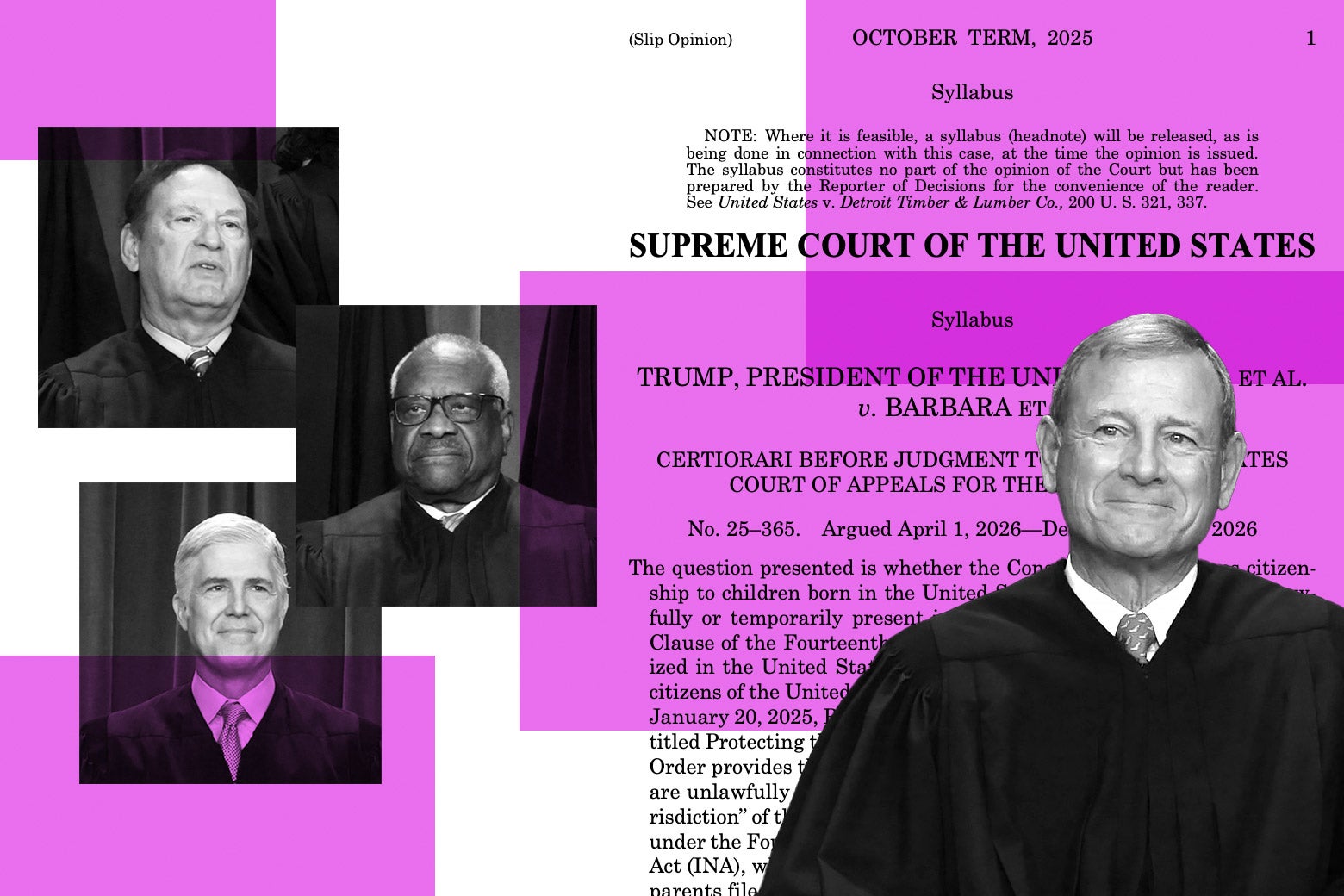
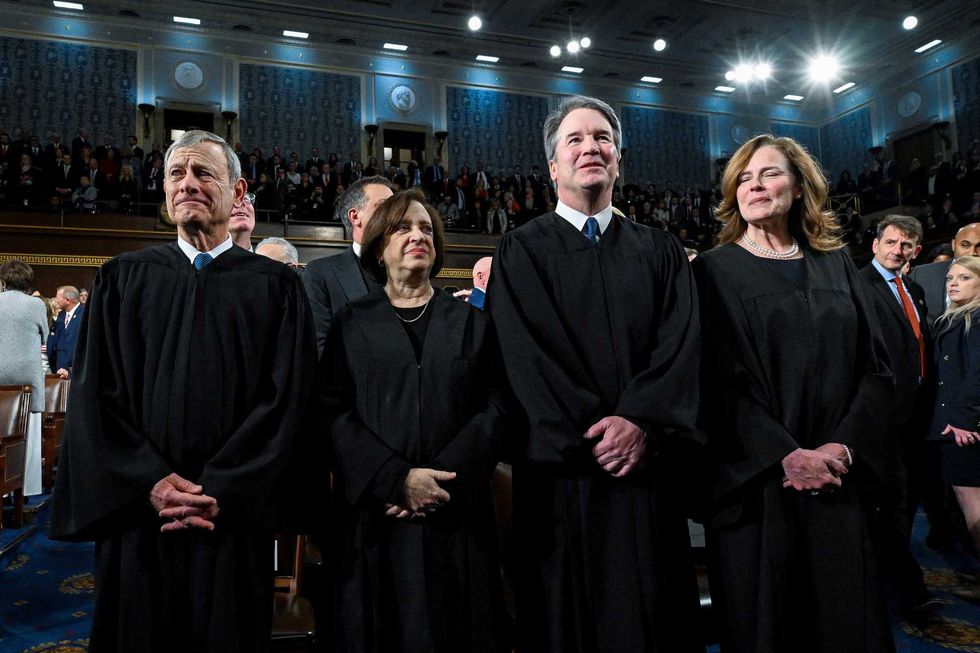
On Tuesday, the Supreme Court handed down one of its most anticipated decisions of the year, rejecting President Donald Trump’s executive order attacking Constitutionally enshrined birthright citizenship. According to CNN legal analyst Elliot Wiliams, “the big shock” wasn’t the decision itself, but the fact that it divided conservatives on the court. The case, Trump v. Barbara, essentially looked at the legality of the 14th Amendment, which was adopted over 150 years ago and was codified by congressional statute in the mid-20th century. Trump sought to bar that right from those born to undocumented immigrants or whose American citizenship has been temporarily suspended. His effort was rejected by the court, with conservative justices John Roberts, Amy Coney Barrett, and Brett Kavanaugh siding with the liberal decision. “The trouble is that there is scant evidence for this dramatically revisionist view,” wrote Chief Justice Roberts of the administration's arguments against the 14th Amendment. While Kavanaugh disagreed with that assessment, he voted to block Trump’s order, citing the federal statute set by Congress. When CNN convened a panel to discuss the ruling, Williams emphasized the conservative split, zeroing in on Kavanaugh’s concurrence in particular. “Brett Kavanaugh's concurrence is fascinating in that the constitutional question, in terms of what the 14th Amendment says,” noted Williams. “That's only five-four on this court. Justice Kavanaugh sort of carves himself out of that and draws this sort of alternative approach of saying that, yes, we don't even need to reach the constitutional question. There's a statutory question and, quite frankly, Congress could have actually effected the same result here that the President tried to do with this executive order. That's the big shock of the day, more than anything else: that the Supreme Court was this closely divided on the effect of the 14th Amendment."According to Williams, “It is a profound decision, both in terms of what it is and means to be an American and also, staving off the absolute legal chaos that would have broken out had they ruled the other way.”He raised the examples of the citizenship of adopted or abandoned children, and other complicated scenarios. “Everybody would have to verify their citizenship and create a generation of legal mess,” said Williams. “And so they staved off a big problem. But the closeness on that constitutional question really stood out to me.”But as the New Republic warns, Kavanaugh’s approach does not necessarily end the threat to birthright citizenship — quite the opposite.As Kavanaugh wrote of his stance, “In my view, the Executive Order does not violate the Fourteenth Amendment. But the Order does contravene a federal statute. Congress could — consistent with the Fourteenth Amendment — amend [this law] or otherwise enact new legislation establishing exceptions to birthright citizenship for children born to foreign citizens unlawfully or temporarily in the country. But Congress has not yet done so.” As the New Republic explains, this may have just laid out a “road map” for conservatives who want to end birthright citizenship, prompting congressional Republicans to attempt a legislative attack. But with their party projected to take major losses in the fast-approaching midterms, their window to take such action is closing fast.