"Farmers of the Sea": PBS Film Profiles Puerto Rican Fishermen on the "Frontlines of Climate Change"
Source: Democracy Now! · Bias: Far Left
Summary
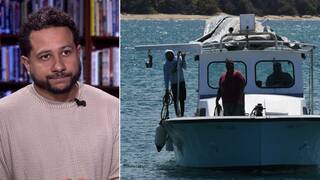
Filmmaker Juan Carlos Dávila’s new film for PBS, Farmers of the Sea, documents climate change’s threats to the fishing industry and food security in Vieques, Puerto Rico. For islands in the Caribbean, explains Dávila, “we are situated geographically in one of the frontlines of climate change. [We’re] not only facing stronger hurricanes now, [but] we could face food shortages, especially the islands that depend so much on the food that comes from the sea.”
"Farmers of the Sea": PBS Film Profiles Puerto Rican Fishermen on the "Frontlines of Climate Change"
Far Left
Filmmaker Juan Carlos Dávila’s new film for PBS, Farmers of the Sea, documents climate change’s threats to the fishing industry and food security in Vieques, Puerto Rico. For islands in the Caribbean, explains Dávila, “we are situated geographically in one of the frontlines of climate change. [We’re] not only facing stronger hurricanes now, [but] we could face food shortages, especially the islands that depend so much on the food that comes from the sea.”
America remains deeply divided over whether the 2020 presidential election was stolen from Donald Trump. Millions believe the system failed them, while the media, intelligence bureaucracy, and the left have treated their doubts as something to suppress rather than investigate.The documents released this week by the Trump administration do not close the case. They reopen it — and make the “nothing to see here” narrative indefensible.Start with communist China.The released intelligence reports that approximately 220 million American voter records are in Chinese hands. Tens of millions of records across 18 states were bought, stolen, or hacked and included names, addresses, phone numbers, party preferences, and other sensitive information.A sovereign nation must know that the people selecting its government are its citizens. That does not prove China changed a single ballot, but it does prove Beijing possessed a political targeting asset. When a strategic rival aggregates enormous datasets and applies modern analytics, it gains the ability to identify, target, and influence American voters at industrial scale. The most disturbing disclosure involves the President’s Daily Brief — the president’s most sensitive and consequential intelligence product. In one released email, an official wrote: “We have deliberately massaged our one pending PDB to avoid any direct links to the election.”In a separate internal chat, a counterintelligence official boasted: “I’m basically running a shadow government across the FBI at this point.”The left has spent years ridiculing concerns about a “deep state” as conspiracy theory. These revelations make that ridicule look increasingly like camouflage.Then comes the voting-system reveal.A Cybersecurity and Infrastructure Security Agency report included in the administration’s document release identifies weak access controls, outdated operating systems, flat networks, inadequate monitoring, and legacy remote-access pathways across state and local election environments. During multiple penetration tests and red-team exercises, CISA assessors gained full control of election-office networks within hours or days.Separately, the report cites research involving one ballot-marking system showing that barcode-encoded votes could be altered without changing the human-readable selections displayed to the voter.The release also includes intelligence concerning methods allegedly developed by Venezuela’s Maduro regime to manipulate electronic totals while concealing the changes.Precision matters. A Venezuelan capability is not proof of an American operation. A demonstrated vulnerability is not proof it was exploited. The documents do not establish that American vote totals were secretly changed in 2020.But they demolish the claim that election technology is immune from manipulation. These are computer systems with software, databases, vendors, administrators, updates, and attack surfaces. Compromise must be anticipated and independently detectable.RELATED: America needs an artificial intelligence coalition, not an AI fortress Burcu demir/Getty ImagesA limited Department of Homeland Security review raises another alarm. The White House says it identified approximately 278,000 potential noncitizen registrations. DHS’ public follow-up described more than 250,000 preliminary potential matches in California, New Jersey, Nevada, and Pennsylvania — only four states.No serious person should dismiss numbers of this magnitude. Biden’s certified Georgia margin in 2020 was 11,779 votes. In 2016, Trump carried Michigan and Wisconsin by a combined 33,452 votes — and Michigan, Wisconsin, and Pennsylvania by just 77,744.The media formula — “the documents do not prove vote totals changed; therefore they prove nothing” — is analytical malpractice. Absence of final proof is not proof of institutional innocence.The proper question is whether this new information raises the probability that foreign influence, intelligence suppression, ineligible registrations, or exploitable technology played a larger role in the 2020 election environment than Americans were told — and whether future elections remain at risk.The answer to both questions is yes.That is why Congress must pass the SAVE America Act before November. The House-passed legislation requires documentary proof of citizenship for federal voter registration and photo identification for federal voting.These are basic risk controls. Pew found that 83% of Americans — including 71% of Democrats and 95% of Republicans — support government-issued photo identification. A sovereign nation must know that the people selecting its government are its citizens. A constitutional republic must demonstrate — not merely assert — that its elections are accurate.Congress should stop stalling and pass the SAVE America Act.
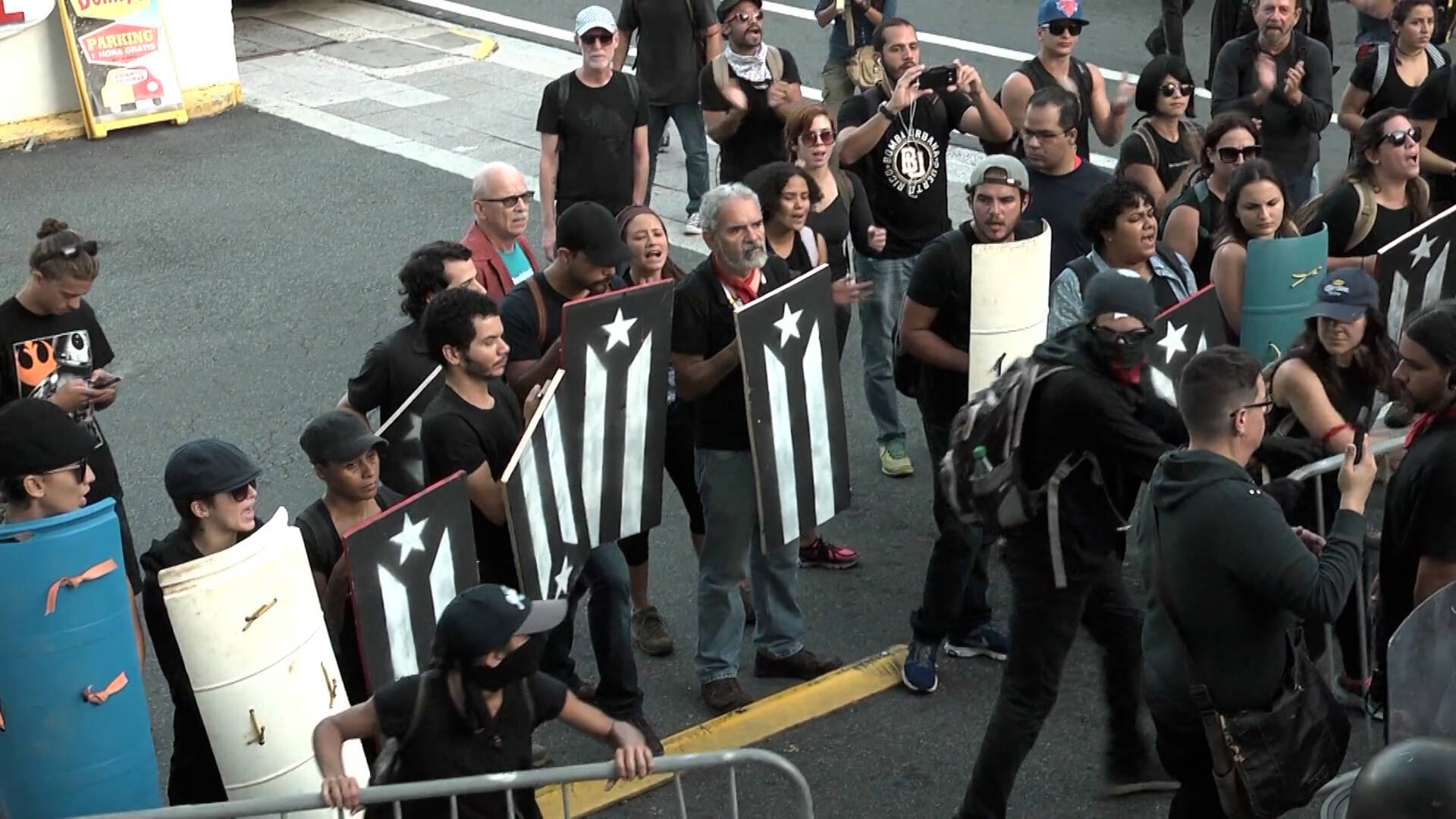
After failing to overturn birthright citizenship at the Supreme Court, Republican legislators are turning to new tactics to disenfranchise people born on U.S. soil. Their latest targets are those born to noncitizen or permanent resident parents in U.S. territories like Puerto Rico, where the Supreme Court has said citizenship is granted by statute and full constitutional protections do not apply. The proposed “End Birthright Citizenship for the Territories Act” would create “a subclass of people who can be discriminated against” and “disregarded as human beings” in the U.S. territories, says Puerto Rican legal scholar Efrén Rivera Ramos, who joins Democracy Now! from Puerto Rico’s capital city, San Juan. While the bill’s sponsor, Republican Congressmember Morgan Griffith of Virginia, says he’s focused only on so-called birth tourism, Rivera Ramos says the language of the law is less clear.
The quasi-colonial status of Puerto Rico is also being highlighted by the 10th anniversary of PROMESA, the Obama-era legislation that created a U.S.-appointed fiscal control board to manage the island’s finances and restructure debt. In practice, PROMESA “has been a failure,” says Rivera Ramos, asserting the anti-democratic structure has imposed austerity measures and done little to address corruption, waste and inefficiency that plague the economy.
Republicans are accusing California's Democrat Attorney General Rob Bonta of "rigging" the 2026 election voter ID ballot initiative after he made a sneaky change to the measure's wording.
The post Republicans Accuse California’s Democrat Attorney General Rob Bonta of “Rigging” Election After Sneaky Change Made to Voter ID Ballot Initiative appeared first on The Gateway Pundit.
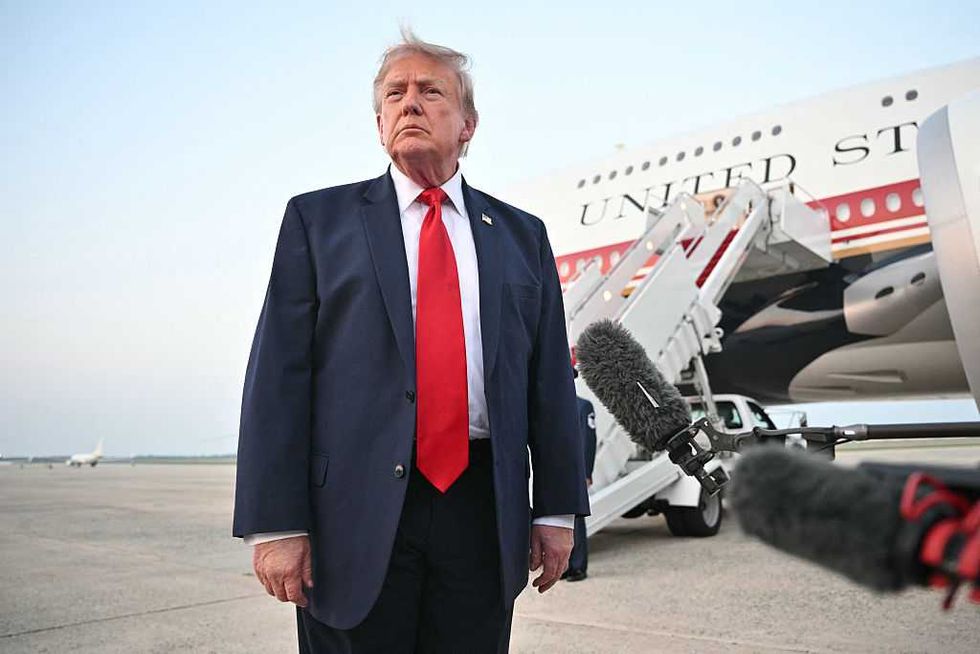
President Trump on Thursday responded to Yemen's Iran-backed Houthi rebel group's attacks on shipping in the Red Sea, threatening to hold both Iran and the Houthis responsible.
The post JUST IN: Trump Threatens “Major Military Punishment” Against Iran and Houthi Rebels After Ships Targeted in Red Sea appeared first on The Gateway Pundit.