Indiana Fever guard and rising WNBA star Sophie Cunningham broke her silence Wednesday night after Seattle Storm minority co-owner Celeste Keaton allegedly berated two teenage girls for supporting Cunningham’s courageous defense of women’s sports.
The post Rising WNBA Superstar Sophie Cunningham TORCHES Seattle Storm Co-Owner After She Curses Out Teenage Girls for Supporting Biological Reality: ‘Truly Embarrassing… Unfortunately Shows the Type of Leader She is’ appeared first on The Gateway Pundit.
A new rule for asylum applications adds to the bevy of changes under the Trump administration to the core program for those fleeing persecution in their home countries.
A new video has emerged showing the tense atmosphere that engulfed the Fever's recent road game in Seattle amid the drama stemming from recent comments made by Indiana star Sophie Cunningham.
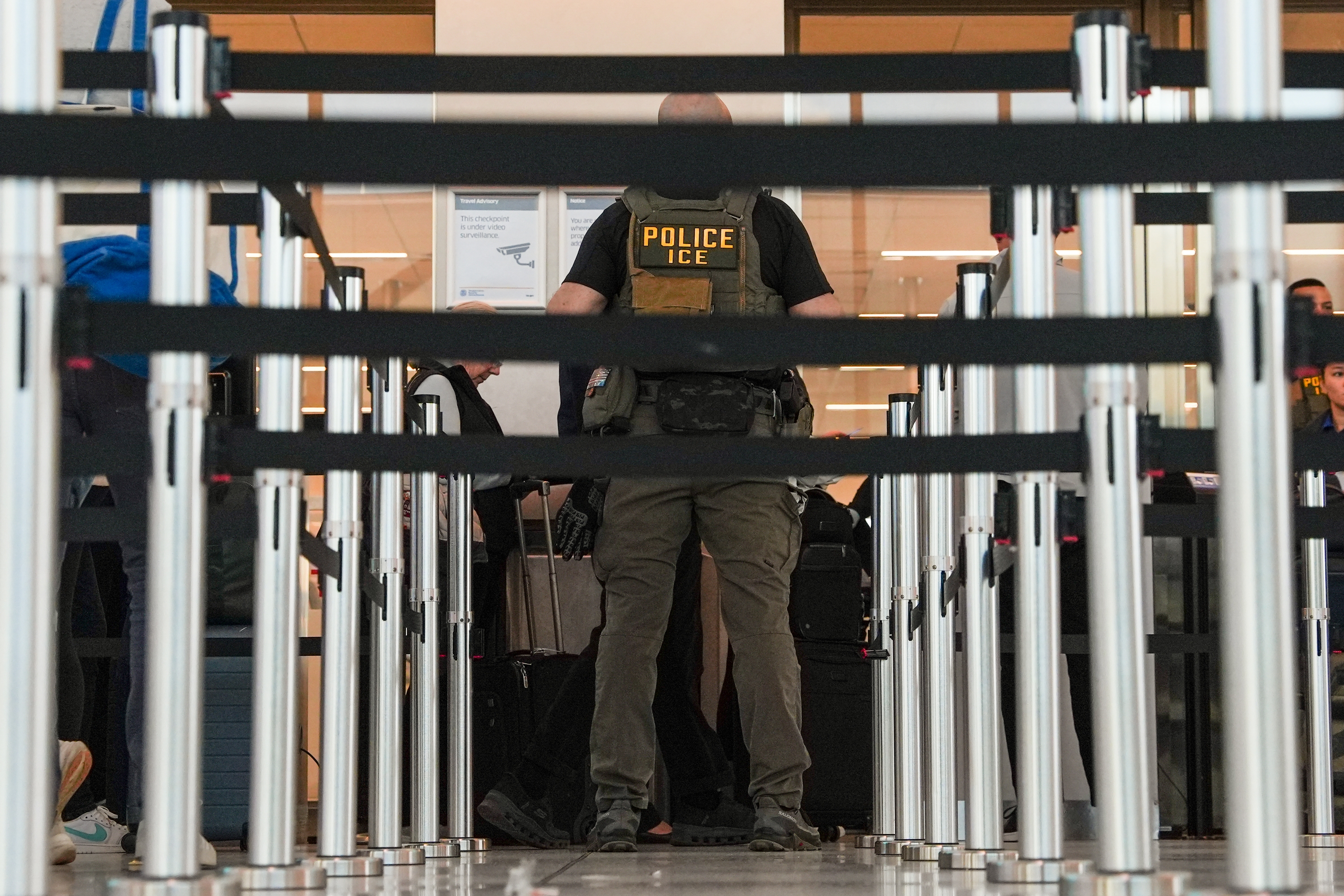
Last summer, we often watched ICE raids unfold live, captured by news helicopters and eyewitness video, as—almost exactly one year ago—agents descended on day laborers, street vendors, garment workers, and farm workers in southern California. Frequently, the raids were preceded by warnings vetted by community-based groups and passed around on Instagram reels, and followed by reports from local outlets, such as L.A. TACO’s accounting of daily arrests. For weeks, for months, we watched as people turned out across cities and surrounding communities. The kinds of resistance now synonymous with cities like Los Angeles, Chicago, and Minneapolis—residents putting themselves between immigration agents and their neighbors, chasing agents from the hotels where they tried to sleep and from the gas stations where they stocked up for their sick road trips—defined the administration’s first year of what it called “mass deportations.” In truth, what we witnessed were just some of the thousands and thousands of violent abductions carried out by federal agents, all in service of a white nationalist agenda eagerly articulated by regime leaders like the White House’s Stephen Miller and lackeys like Border Patrol’s Gregory Bovino.Compared to the open battle the agency engaged in last year, ICE appears now to be attempting to maintain a lower profile. And yet the agency has also arrested and detained more people in recent months than at any time since Trump returned to office. Recent data released by ICE shows that in June, it hit a high—1,300 arrests on average each day. That record was then topped in July, which saw 1,474 average daily arrests over just the first 11 days of the month. “This reverses a trend we saw since the early fall where overall arrest numbers had actually remained fairly consistent or declined,” observed Austin Kocher, assistant research professor at Syracuse University. “The purported shift in ICE tactics—from the manic Kristi Noem months that cost the lives of two U.S. citizens to the less spectacular tactics under Markwayne Mullin—has effectively led to more arrests without as much popular backlash.” There is a difference between a change in ICE tactics and a change in the number of people whom ICE has detained and deported, and understanding the reason for the latter requires us to look beyond ICE for answers. ICE’s purported shift was remarked upon over the winter, when Bovino was benched after immigration agents killed Renee Good and Alex Pretti in Minneapolis. More recently, when immigration agents killed Lorenzo Salgado Araujo in Texas and Johan Sebastián Durán Guerrero in Maine within days of each other, ICE was briefly suspended from traffic stops. But immigration agents themselves have long known—or at least, some of those whose words have made it into the legal record have known—that despite public outcry over ICE operations, not much beyond appearances has really changed. “They just changed the name,” one agent said in a deposition, when questioned about “Operation At Large,” the high-profile nationwide operation last year. “We’re doing the same thing just with a different name.” In addition to proceeding as usual under a slightly altered brand, ICE is now working in even closer collaboration with other federal agencies in order to increase arrests: arresting people who allegedly overstayed visas at airports, with the help of TSA data; and arresting people whose children were previously in migrant shelters, based on tips shared by the Office of Refugee Resettlement. But ICE has been able to arrest and detain more people not only through these kinds of agreements with other federal agencies and offices. Its reach has also been broadened by local, county, and state law enforcement, a network of collaboration that goes back to the agency’s founding, and which has become only more sprawling since ICE was formed. Today, ICE’s partnership with the criminal legal system is fully activated in service of the mass deportations agenda. The sight of singular terrifying raids can sometimes conceal the more fearsome routine violence of anti-immigration law enforcement. This winter, at the height of ICE’s operations in the Twin Cities, about 3000 immigration agents were on the streets. “At the same time, the number of arrests in Minnesota during that operation was less than half the number made through the Miami field office over the same period,” said Silky Shah of Detention Watch Network, in an interview this month with Kelly Hayes of Truthout. The Miami ICE field office continues to make the most arrests in the country, averaging about 120 each day.
Data: China's General Administration of Customs; Chart: Matt Phillips/AxiosThe Iran war has revealed China's enormous power over global oil prices, thanks to its position as the world's largest buyer. Why it matters: China's reaction to the oil shock — by substantially withdrawing from buying on world markets — helped prevent the worst of the price spikes that experts thought would follow from the effective closure of the Strait of Hormuz.Catch up quick: After the U.S. and Israel launched the war on Feb. 28, Chinese crude oil imports dove as prices spiked. At first, the decline in imports didn't surprise analysts. (China has long been known as a price-sensitive buyer.) Yes, but: Few expected that China could maintain this low level of oil buying without deeply damaging its domestic economy. But as the war approaches its sixth month, China has done just that.By the numbers: Through June, Chinese oil imports remain down over 40% from the previous year. "I guess the surprise has been just how low Chinese demand can go," said Michal Meidan, head of China energy research at the Oxford Institute for Energy Studies. "But it's been low without impairing the well-functioning of the economy." How it works: Chinese policymakers have pulled several levers to mitigate the impact of the decline in oil imports, Goldman Sachs analysts say. Chinese officials tapped into domestic reserves of coal, oil and natural gas for supplies. They boosted usage of coal and renewables, where it is less reliant on imports. And China took advantage of its giant fleet of electric vehicles, reflected by the fact that "despite much lower gasoline consumption, traffic congestion remained relatively stable," Goldman analysts say.Big picture: Broadly speaking, analysts say that China has taken such steps almost exclusively for the benefit of its domestic economy. But the benefits of those decisions — basically lower global oil prices — have been broadly shared. What they're saying: "China has been a key player in helping the global economy navigate this crisis," Reid I'Anson, a Houston-based economist at global commodities and shipping consulting firm Kpler, tells Axios."They are the major swing demand setter in the global oil market, for sure," says Jane Nakano, senior fellow in the Energy Security and Climate Change Program at the Center for Strategic and International Studies."China has drastically reduced its net imports of fossil fuels, effectively acting as a shock absorber for global energy prices through reduced demand," Goldman Sachs analysts wrote in a report last week. Caveat: China isn't the only reason that the world economy was able to deal with the energy supply disruptions of the war.Rich nations released large amounts of oil from their own strategic reserves.And U.S. energy companies drastically boosted exports to meet global demand.Connect the dots: Still, China's energy policy — and its ability to keep global prices in check — could be a valuable asset, as it positions itself as a source of stability, often in contrast to current U.S. leadership."China is doing this for China, fundamentally," said Ruby Osman, a senior policy advisor on China at the Tony Blair Institute for Global Change. "But obviously it's not unhelpful for China that it has become a global public good."What we're watching: Any hints that Chinese buyers are flocking back to global markets. Early indications suggest a bit of a bounce in July purchases.
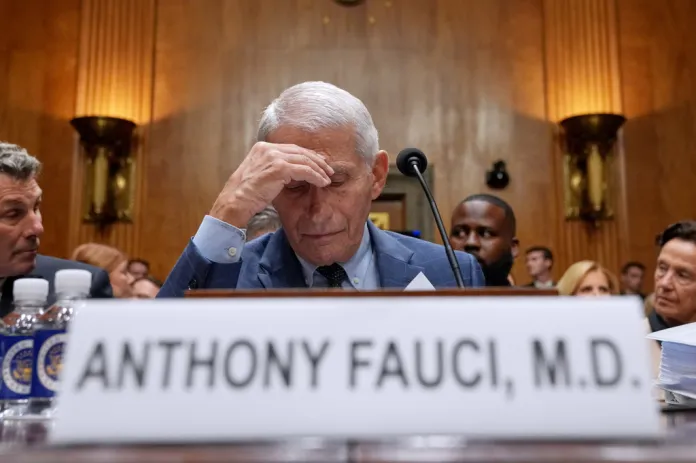
Sen. Rand Paul (R-KY) said he would be “happy” to share the “mountain” of evidence on Anthony Fauci with Florida Attorney General James Uthmeier, who has pledged to probe into the scientist over his handling of COVID-19. Paul spoke with political commentator Benny Johnson following a Senate hearing in which Fauci invoked his Fifth Amendment […]
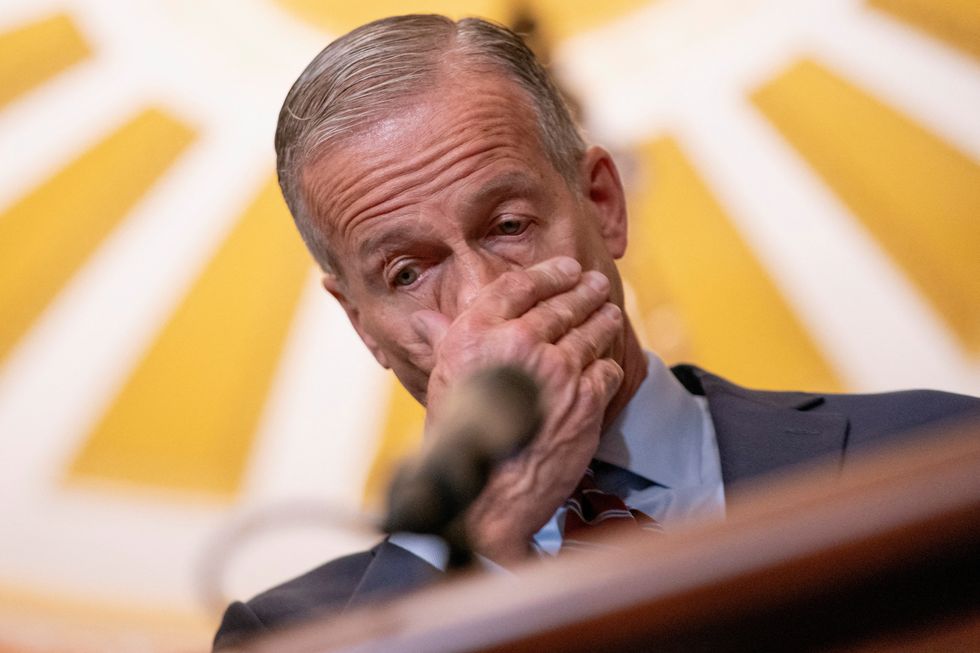
Senate Majority Leader John Thune offered a rare glimpse into the strain of leading a Republican conference under constant pressure from President Donald Trump.The president has put Thune under what Politico calls "vise-like pressure" to kill the filibuster rule and pass his election bill.“He thinks I can wave the magic wand,” Thune told Politico. “I wish it were that easy.”The comment came during a Wednesday interview in Thune's Capitol office, at almost the exact moment Trump was telling reporters in the Oval Office that Thune "has the votes" to eliminate the Senate filibuster and pass a Republican-backed elections overhaul. Thune, unaware of Trump's remarks as he spoke, flatly disputed that characterization, saying he is nowhere near having the support needed to kill the filibuster or move the legislation Trump wants.Thune told Politico he was simply reporting the math of a closely divided Senate. He argued that Trump's active involvement in this year's primaries has also shaped the current makeup of the conference and, by extension, the votes available to him now.Compounding the challenge is the death of Sen. Lindsey Graham (R-SC), who functioned as a trusted go-between capable of leveling with Trump directly. Thune called that loss significant, noting Graham could speak candidly to the president in ways few others could.Thune maintained that his relationship with Trump remains functional, insisting the two "get along" even as he absorbs the brunt of the president's impatience with the chamber's limits. He's simultaneously trying to advance a government funding bill, a Russia sanctions package, judicial and executive nominees, and possible movement on cryptocurrency and college sports legislation — all before senators leave for a five-week recess.Politico then asked the GOP leader about Trump's questioning whether he was “the man for the job” of leading Senate Republicans. Thune gave a surprising answer. "[If Trump could find somebody else to do this job," he said, "it might be a big relief.”