
RedState

Intercept staffers break down the latest election news and the front groups fueling the midterms. The post AIPAC, AI, Crypto and Gambling Are Hiding Their Big Election Spends appeared first on The Intercept.

Over the last few days, everyone and their Mother Jones has been talking about Tina Peters, the convicted election fraudster, and whether Colorado Governor Jared Polis “did the right thing” in commuting her sentence last week. This debate doesn’t fall along party lines so neatly. The Atlantic’s David Graham called it “a serious mistake” that “weakens the rule of law” and “will encourage those who wish to undermine elections.” Polis’s attorney general, a Democrat, and the head of the state’s county clerk association, a Republican, also criticized the move. Mother Jones’s Jeremy Schulman, meanwhile, said it was the right thing to do, arguing that “nine years is an awfully long time. She is 70 and has already been in prison for more than a year and a half.” And Tommy Vietor of Pod Save America said, “I don’t give a shit. I don’t care. I have so much to be outraged or to worry about.”But you absolutely should care—not because of the political or legal ramifications, but because she is not an anomaly. There are dozens, if not hundreds of Tina Peterses out there. And they aren’t in jail. They are your elected officials.Peters’s scheme runs the gamut from shady to very illegal, with some Hollywood espionage sprinkled in. From 2019 to 2023, she was the Mesa County clerk and recorder, a position that oversees local elections, including voter registration, candidate paperwork, polling logistics, and ballot processing. After the 2020 election, she became convinced of the conspiracy theory that the election had been rigged for Joe Biden through Dominion voting machines. In May 2021, she took a colleague’s security badge and gave it to Conan Hayes, a former pro surfer who disguised himself as a computer “nerd” to gain access to a Dominion machine, then copied its hard drive both before and after updating its software. (Peters had turned off the security cameras.) That hard-drive data was then repackaged by Mike “MyPillow” Lindell to further push the aforementioned conspiracy theory. Over the course of six months, leading up to and in the aftermath of the 2024 election, I worked for a nonprofit watchdog cataloging the election deniers and subverters who hold power at state and local levels. Tina Peters was a prominent player, but by no means the only one, or even the most shocking.At the time of the “Threats to Democracy” tracker’s publication, nearly 300 public officials—from election canvassers and county clerks to state legislators and attorneys general—had in some way attempted to overturn the 2020 election results. And that doesn’t account for the hundreds more who denied the results but stopped short of trying to subvert them.Some of these officials spread bad-faith lies about voting machines to their constituents, while others went further. Much further. On December 14, 2020—the day the Electoral College convened to certify the results of the presidential election—Republican officials in seven states that Trump lost signed fake electoral certificates claiming he had actually won. In Michigan, 16 fake electors—including a mayor, a township clerk, and multiple candidates for state office—gathered in the basement of the Republican Party headquarters, signed counterfeit paperwork declaring themselves the official electors, and tried to march on the state Capitol where the real electors were certifying the results. In Georgia, the chair of the state GOP led a secret meeting to do the same thing in the Capitol. Among the 16 fake electors was state Senator Burt Jones, who was elected as the lieutenant governor in 2023. These weren’t fringe actors screaming into the void, but elected officials trying to defraud the American public, con the U.S. Congress, and use the machinery of democracy to break it.Arizona state Senator Wendy Rogers, a Republican who was reelected in 2024, has called for violence against her political rivals at a white nationalist conference, called on Americans to “buy more ammo” while the state’s slate of electors formally cast their votes for Biden in 2020, and tried to decertify the election results years afterward. She currently chairs the Judiciary and Elections Committee in the Arizona Senate.In 2021, in Wisconsin, Racine County Sheriff Chris Schamling recommended criminal charges against five members of the state’s Elections Commission, yet refused to investigate a resident who illegally requested multiple absentee ballots. Schamling is a member of the Constitutional Sheriffs and Peace Officers Association, a group that has worked to undermine election administration across the country, and his office routinely coordinates with Immigration and Customs Enforcement.As the clerk of Macomb County, Michigan, in 2021, Anthony Forlini pursued a forensic audit of the county’s election server based on debunked election fraud claims, and in 2022 he hired a known election denier and “Stop the Steal” agitator to serve as poll recruiter.

The 192-page report does not mention Gaza or Joe Biden’s age. Plus, is the world heading for another Ebola crisis?Don’t already get First Thing in your inbox? Sign up hereGood morning.On Thursday, the Democratic party published a postmortem – spanning 192 pages – of its 2024 election defeat, after an initial decision to withhold the document prompted an angry backlash.What’s in the postmortem? It focuses on key demographics that Kamala Harris lost, including Latinos, men and rural voters in many states. “Harris wrote off rural America, assuming urban/suburban margins would compensate,” the report says. “The math doesn’t work.” The autopsy says that Democrats must focus less on “abstract issues and identity politics”.What does the move tell us? The cancellation, which avoided political embarrassment for Donald Trump, is the latest signal that congressional support for the US president’s war is diminishing.What happens next? The vote has been postponed until lawmakers return from a recess in June, when it appears likely that the resolution could pass. Continue reading...

A new report shows how dangerous groups exploit legal protections.

Under pressure, the DNC finally released its autopsy of the 2024 election, after rampant speculation about what it contained and why it hadn’t yet been made public.
They cost each American household roughly $1,000 in 2025, with more coming in 2026.
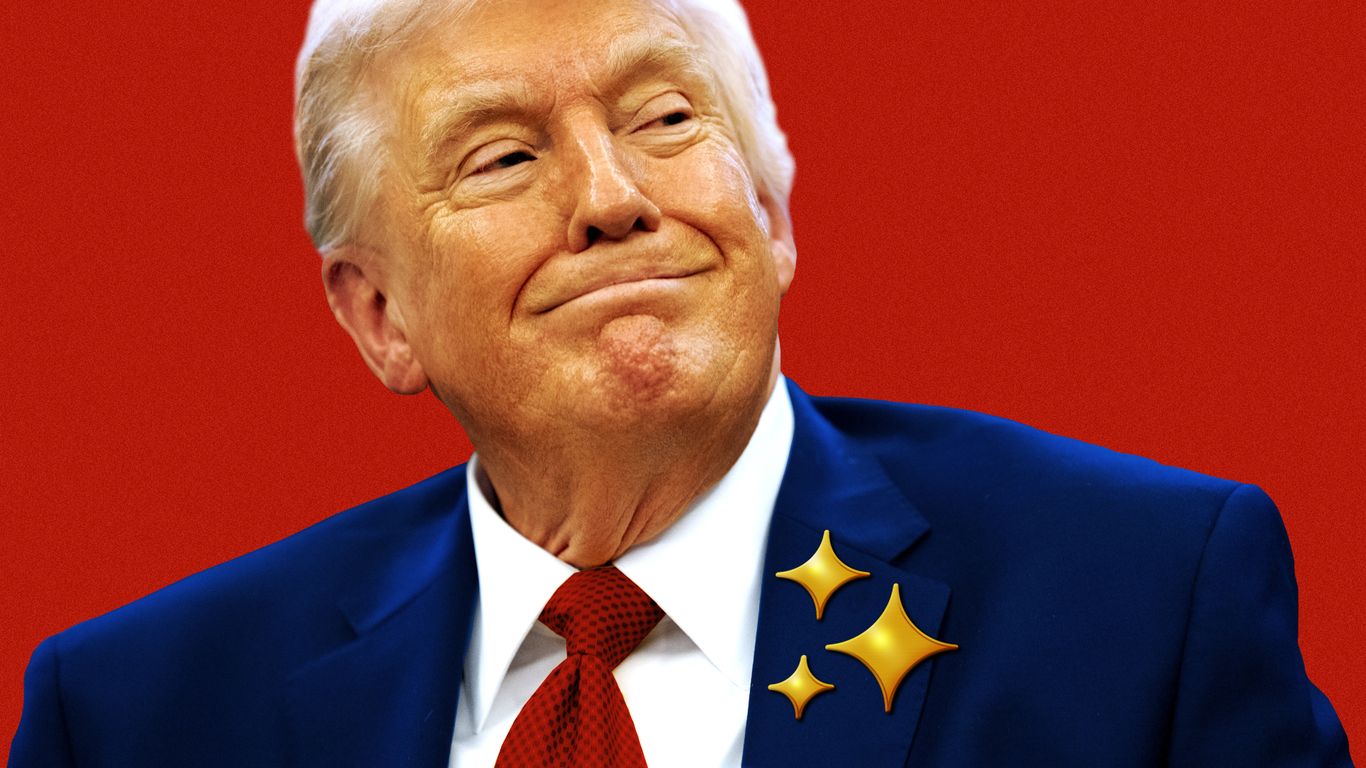
The White House has postponed its planned ceremony for President Trump to sign a new executive order on AI and cybersecurity, per a note seen by Axios.Why it matters: Trump suggested it's because he didn't like the order he was supposed to sign — another setback for an effort that has been stalled by internal disagreements.Driving the news: "I didn't like certain aspects of it, I postponed it," Trump told reporters at the White House."We're leading China, we're leading everybody, and I don't want to do anything that gets in the way of that lead.""I really thought that could have been a blocker and I want to make sure that it's not."Behind the scenes: Major tech, AI and cyber CEOs had been invited to attend the ceremony this afternoon at the White House.Per the note, the event has been postponed to a later date. Editor's note: This story has been updated with Trump's comments.
Everything seemed set for a photo op of tech and AI CEOs who would surround President Trump Thursday as he signed a much-anticipated executive order on AI and cybersecurity.Then it fell apart hours before the signing as a top Trump adviser and some tech executives gave it a big thumbs down — to a president who didn't really want to regulate AI in the first place.Why it matters: Any further delay of the order means more time for infighting and for the text to get bogged down in disagreements among different parts of the government and industry.Behind the scenes: Ahead of the signing, Trump, AI adviser David Sacks, and some in industry discussed the executive order, sources familiar told Axios. The main reason why the executive order signing was delayed was because "he just hates regulation," one source familiar said of Trump, adding that Sacks also "hated it.""The whole thing was unnecessary" and "just something doomers wanted," the source added. Meta CEO Mark Zuckerberg, xAI CEO Elon Musk and Sacks all spoke with Trump between Wednesday night and Thursday morning. The companies did not immediately respond to requests for comment. What they're saying: "I didn't like certain aspects of it. I postponed it," Trump told reporters in the Oval Office on Thursday."I think it gets in the way of — you know, we're leading China, we're leading everybody, and I didn't want to do anything to get in the way of that lead."Those who have been pushing for AI regulation in Washington were relieved that the White House was finally going to make moves on AI and cybersecurity safety. Now it's not clear when — or whether — that is going to happen.Axios first reported details of what was going to be in the executive order this week.The big picture: Trump has been walking a tightrope of allowing American AI companies to flourish without strict rules while weighing growing public anti-AI sentiment, including within his own party.For now, the accelerationists have won out.One government official told Axios: "It could be CEOs, or egos in general. Everyone hates each other in the political tech space."One tech industry source told Axios there were also questions about why the Treasury Department received such a leading role in the coordinating security vulnerabilities in the postponed AI executive order as it was written.Typically, the Cybersecurity and Infrastructure Security Agency and the National Institute of Standards and Technology have taken leading roles in reviewing and testing critical security vulnerabilities — as well as notifying the tech ecosystem about them."It's not clear just objectively speaking why Treasury is involved and what is their substantive expertise in this area," the source told Axios. While there were lingering questions about which AI models would participate in the voluntary testing program, technology companies have been broadly supportive of AI model testing and guardrails.And leading frontier, or cutting-edge, models already do voluntary testing through the Commerce Department's Center for AI Standards and Innovation.Some questions also remained about whether sharing an AI model for up to 90 days ahead of release would prevent companies from also sharing with other allied countries who may want to conduct their own safety tests, the source added.What to watch: The White House's Office of the National Cyber Director has teased in private conversations that it is working on additional AI security initiatives besides the EO that had been expected today, the source said.