69 million women could lose voting rights if Trump's SAVE Act passes Senate
Source: Raw Story · Bias: Far Left
Summary
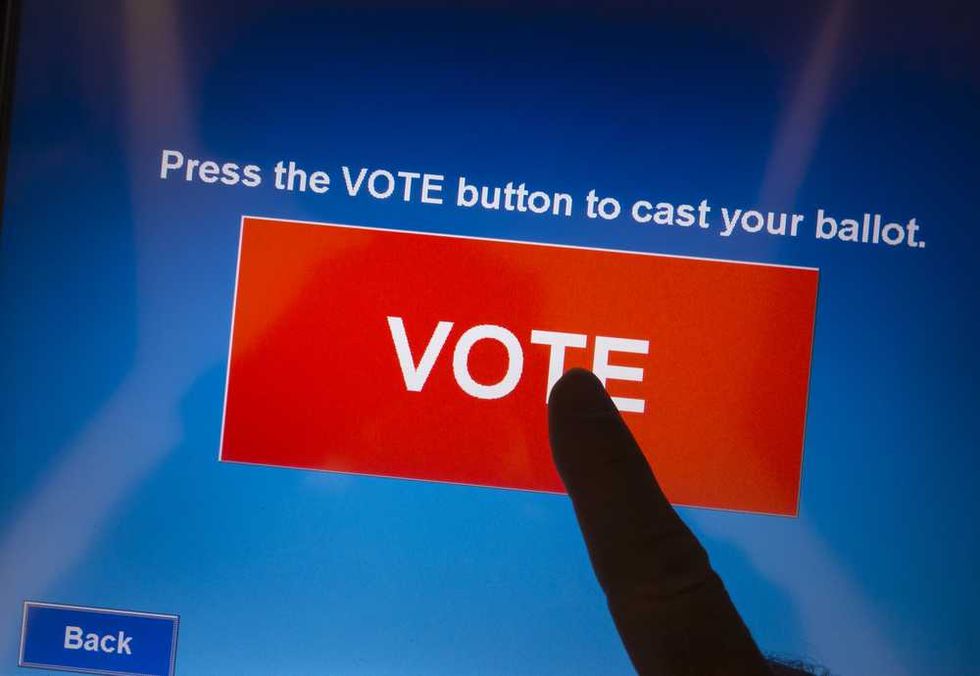
Millions of women could face new challenges to voting under President Donald Trump’s SAVE America Act, which would require voters to prove their citizenship before casting a ballot.The federal legislation would mandate that most Americans show a birth certificate or passport to register to vote. But people with names that don’t match their birth certificate in some instances could have to produce additional documents like a marriage certificate or divorce decree linking their past and current identities.The proposal holds potentially outsized consequences for millions of married and divorced women, transgender individuals and others who have changed their names.As many as 69 million American women have birth certificates that don’t match their current name, according to an analysis by the liberal Center for American Progress.“The fact that the majority of women upon marriage do change their name already means that this is going to be completely unequal in how the law is applied,” said Letitia Harmon, senior director of policy and research at Florida Rising, a racial and economic justice nonprofit.Harmon, 43, has personal experience with the issue because of state proof-of-citizenship laws, which have become more common in recent years.The Florida resident used to live in Kansas, which required individuals to show documents like a birth certificate or passport to register to vote until federal courts struck down the law as unconstitutional. Ahead of the 2014 election, Harmon was unable to locate her birth certificate before the registration deadline and couldn’t vote.More recently, Florida, Mississippi, South Dakota and Utah have all enacted proof-of-citizenship measures this year, in addition to Wyoming in 2025. Florida Republican Gov. Ron DeSantis signed the Florida SAVE Act last week.A dozen years later, Harmon worries she could again face additional hurdles to voting — this time because of multiple name changes. Harmon, who changed her name when she married but later divorced and changed it back, voiced concern that if election officials ever check her registration, it will be flagged.“It’s heartbreaking and it’s infuriating. It feels like we’re going backwards,” Harmon said.Debate in D.C.In Washington, the U.S. Senate has been debating the SAVE America Act, Trump’s signature elections initiative, after a version of the legislation passed the House. The bill doesn’t appear to have enough support to survive a filibuster, but Trump and his allies have pressured senators to end the filibuster to pass it before the midterm elections.Supporters of the bill describe it as an election integrity measure and say it’s necessary to prevent noncitizen voting, though studies have shown that’s extremely rare. The measure reflects a long-running effort by Trump to assert more federal control over elections that includes a campaign by the Department of Justice to obtain sensitive state voter data and an executive order signed last week restricting mail-in voting.Opponents condemn the legislation as unneeded and poorly drafted. If enacted, the bill would take immediate effect, throwing the election process into chaos in a midterm election year as millions of people registering to vote attempt to prove their citizenship. The new requirements would risk disenfranchising American voters struggling to obtain the documents they need in time.Disproportionate effect on married womenCritics have especially focused on the disproportionate effect the legislation could have on women. Eighty-four percent of women in opposite-sex marriages take either their husband’s last name or hyphenate their name, according to a 2023 Pew Research Center survey. By contrast, less than 6% of men took their wife’s last name or hyphenated their name.“Given that 85% of American women change their name when they get married, the impact on women is going to be huge and it’s going to be very problematic,” Maine Secretary of State Shenna Bellows, a Democrat, said in a February interview.The House-passed version of the bill says that when individuals applying to register have names that don’t match the name on their proof-of-citizenship documents, they could provide “additional documentation as necessary to establish that the name on the documentation is a previous name of the applicant” or sign an affidavit affirming that the name on the documents is their previous name.According to the bill, each state would establish a process to carry out this provision, in line with guidance from the federal Election Assistance Commission, a bipartisan independent commission that aids election officials.Affidavit provision unclearSome election and legal experts have said the affidavit provision is unclear.
Related Coverage
- 'Demon in human skin!' Fox News host loses it as Dem threatens to upend Texas Senate race (Far Left — Raw Story)
- Melania gives Congress private deadline as she works around Trump's team: report (Far Left — Raw Story)
- REPORT: Acting DNI Bill Pulte Fires Dozens of ODNI Staff for Politicizing Intelligence, Insubordination, Gross Misconduct (Far Right — The Last Refuge)
- Happy Freedom 250! Acting DNI Bill Pulte Fires More “Deep State” Intel Officials (Far Right — The Gateway Pundit)
- Trump announces pardons for pollution violators prosecuted for "fixing their car" (Center — Politics - CBSNews.com)
- Trump Pardons Six People Pursued for ‘Fixing Their Car’ (Center — Bloomberg Politics)
- Sources: Trump likely to pardon pollution violators; weighing clemency for Diddy (Center — Politics - CBSNews.com)
- Fox host warns Trump will pay for his 'breathtaking' corruption (Left — Alternet.org)
Daily Analysis
Read the full Parallax Pulse for April 10, 2026 — an AI-powered analysis of how Left and Right media covered the biggest stories this day.
More Headlines From April 10, 2026
- WATCH LIVE: Artemis II astronauts return to Earth (Center)
- Trump claims Iran has 'no cards' in unhinged Truth Social post (Left)
- Voters split on Trump's threats to pull out of NATO over Hormuz fury (Right)
- Trump Says Netanyahu Promises to “Low-Key It” Now (Left)
- Vance leads ‘high stakes’ US peace talks, will meet directly with Iranians in Islamabad (Far Right)