Thursday's Summary
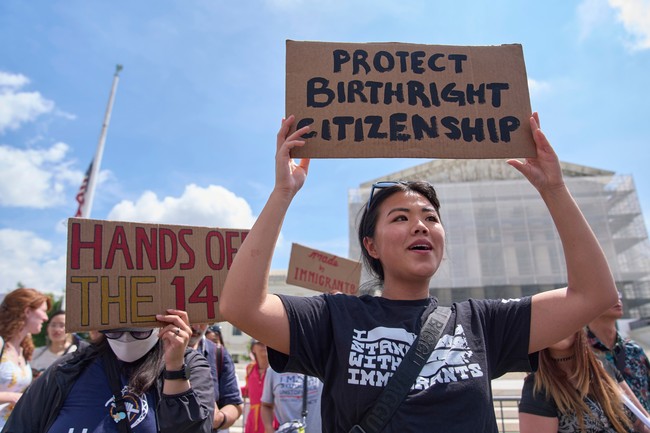
This briefing analyzes the news climate of the previous 24 hours, ending 2026-07-01. The day’s media cycle is dominated by the conclusion of a transformative Supreme Court term, with coverage bifurcated between the legal implications of executive power and a high-stakes ruling on birthright citizenship.
How the coverage differs
The primary point of divergence lies in which Supreme Court ruling is viewed as the "headline" of the term. Left-leaning outlets have prioritized the implications of Trump v. Slaughter and the general broadening of presidential power, a topic that received significantly less attention in right-leaning media. Conversely, right-leaning outlets have focused almost exclusively on the birthright citizenship ruling and its impact on immigration, an issue that left-leaning sources treated more as a standard end-of-term update rather than a "devastating" event.
Even where the two sides overlap on the "High Consensus" story of the Department of Justice's response to the birthright citizenship ruling, the framing differs. Left-leaning and mainstream sources report the DOJ’s crackdown as a direct policy response to the Court’s decision. Right-leaning sources, however, amplify Vice President JD Vance’s assertion that the ruling contains a "silver lining," suggesting that the legal loss actually provides the political and administrative momentum necessary to launch a more aggressive offensive against birth tourism. While the Left views the ruling as a preservation of the status quo, the Right frames the aftermath as the start of a new phase of executive enforcement.


DOJ to Prioritize ‘Birth Tourism’ Probes Following Supreme Court’s Birthright Citizenship Decision
The same day as the Court's ruling, the DOJ told staffers that it will “prioritize the investigation and prosecution of birth tourism schemes.”

Birthright Citizenship Lives To Die Another Day
The Supreme Court's decision upholding birthright citizenship is a victory that may contain the seeds of a future defeat.
Left-Leaning Media's Perspective
- The expansion of executive authority. Left-leaning outlets are sounding alarms over the decision in Trump v. Slaughter, arguing that the ruling significantly increases the power of the presidency and could "turbocharge" the executive branch's ability to bypass traditional checks.
- End-of-term ideological assessments. Coverage has focused on the Court's broader trajectory, noting that while the justices rejected some specific Trump-era initiatives, they successfully secured long-sought conservative wins that will have a lasting impact on American law.
- The Court’s relationship with public opinion. Analysts are highlighting a ruling regarding sports, suggesting the Court is strategically positioning itself to align with the center of American public opinion to maintain institutional legitimacy despite more controversial rulings elsewhere.

The Supreme Court Rules That Sports Are Different
The justices position themselves at the center of American public opinion.

Takeaways From a Transformative Supreme Court Term
The justices rejected some of President Trump’s signature initiatives, but delivered lasting, long-sought conservative wins.
Supreme Court ruling in Trump v. Slaughter turbocharges presidential power
The recent SCOTUS case greatly increased the power of the executive branch
Right-Leaning Media's Perspective
- The "devastating" birthright citizenship ruling. Right-leaning media is heavily criticizing the Supreme Court’s decision to uphold birthright citizenship, framing the ruling as a significant setback for border security and national sovereignty.
- The Department of Justice’s immediate pivot. Outlets are focusing on the DOJ’s announcement of a "major crackdown" on "birth tourism" following the ruling, highlighting expert estimates that tens of thousands of births annually are attributed to these schemes.
- Persistence in immigration policy. Narrative threads across these outlets emphasize that "it’s not over," pointing to the DOJ’s prioritization of birth tourism investigations as a way to achieve immigration goals through administrative and criminal enforcement rather than constitutional change.

DOJ vows ‘birth tourism’ crackdown after Supreme Court rules against Trump in birthright citizenship case
Between 26,000 and 33,000 US births annually could be attributed to birth tourism, according to experts.