Wednesday's Summary
This briefing analyzes the news climate of the previous 24 hours, ending June 30, 2026. The media landscape is currently dominated by a pair of landmark Supreme Court decisions: one upholding the constitutionality of birthright citizenship and another allowing states to restrict transgender participation in women’s sports. While both sides are navigating a flurry of judicial activity, the focus remains sharply divided between celebrating constitutional protections and debating the perceived loyalty of the Court’s conservative wing.
How the coverage differs
The coverage of the birthright citizenship ruling reveals a stark contrast in how the two sides perceive the Supreme Court's conservative majority. Left-leaning outlets frame the 5-4 split as a narrow but essential victory for long-standing constitutional norms, often focusing on the human impact on "Dreamers." Conversely, Right-leaning outlets are experiencing an internal rift: libertarian-leaning sources represent the ruling as legally sound, while populist outlets view it as a deep political betrayal by Trump’s own appointees.
While the birthright citizenship story dominated the narrative on the Left, the High Consensus story regarding the Supreme Court's ruling on transgender athletes provided a counterbalance in the broader media ecosystem. While both sides reported on the Court allowing states to ban transgender participation in girls' and women's sports, Right-leaning outlets have used this as a "silver lining" or a primary victory for female school and college sports, whereas Left-leaning outlets reported it more clinically or as a secondary development to the citizenship news. Essentially, the Right is balancing a major legal loss on immigration with a major legal win on gender policy, while the Left is focused almost exclusively on the victory for birthright citizenship.

Trump calls Supreme Court's birthright citizenship ruling "too bad," asks Congress to intervene
The Supreme Court gutted one of President Trump's signature policies, rejecting his effort to end birthright citizenship. Jan Crawford has more details.

States can ban transgender participation in girls and women's sports, Supreme Court rules
The Supreme Court justices weighed in on whether states can ban transgender athletes from competing in female school and college sports. Jan Crawford has more.
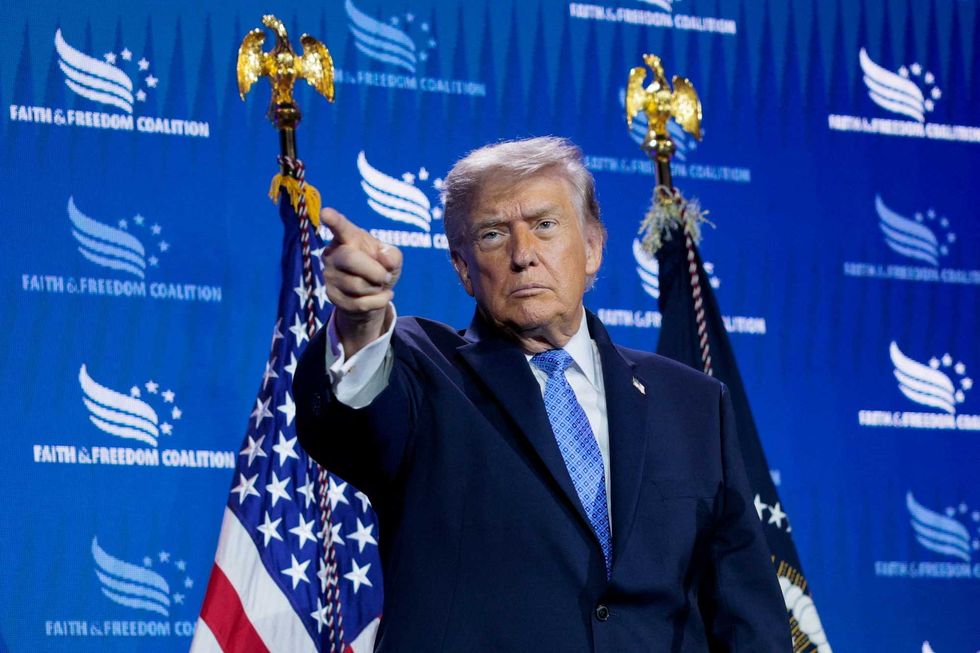
Trump made his Supreme Court defeat 'all the greater' with surprising move: WSJ
President Donald Trump lost big at the Supreme Court on Tuesday as a majority of the justices struck down his executive order abolishing birthright citizenship in the United States — but it's possible there's an alternate reality in which he could have won this, the conservative Wall Street Journal editorial board wrote.Specifically, they argued, Trump could have tried a much less sweeping change to America's citizenship system, and gotten a more favorable result out of it."An interesting counterfactual is how the Justices might have come out on a narrower order, if Mr. Trump had tried to end birthright citizenship for transients alone," wrote the board, which has been forecasting Trump's loss on this issue for months. But instead, "he took the advice of those who recommended an expansive constitutional challenge because he thought the issue was a political winner, and his defeat is all the greater for it."With Chief Justice John Roberts issuing an absolute judgment in favor of constitutional protections for birthright citizenship, this is no longer possible without an amendment to the Constitution.A key consequence of the ruling, noted the board, is that "today’s 'Dreamers' will give birth to citizens, rather than a second generation living in limbo" — which is for the better, the board argued. "The ability to assimilate newcomers has always been an American strength, while falling birthrates will soon make that an even greater American advantage."As for the specter of "birth tourism," the board concluded, "If [it's] as big a problem as Mr. Trump says, he can make a sustained case for a constitutional amendment."
Left-Leaning Media's Perspective
- The Constitutional Shield: Coverage highlights the Supreme Court’s 5-4 decision as a "devastating blow" to the administration’s immigration agenda. Outlets emphasized Justice John Roberts' majority opinion, which defined citizenship as the "right to have rights," framing the ruling as a definitive affirmation of the 14th Amendment.
- Trump’s Legislative Pivot: Reports focused heavily on President Trump’s immediate reaction on Truth Social. After the ruling, the President characterized the decision as "too bad for our Country" and called on Congress to abolish birthright citizenship through legislation, a move the Left views as a continuation of his "anti-immigrant" rhetoric.
- Fact-Checking the Administration: Many reports centered on debunking the President's recurring claim that the U.S. is the only country to offer birthright citizenship. Outlets frequently pointed to Canada and Mexico as examples of the dozens of other nations with near-identical rights.
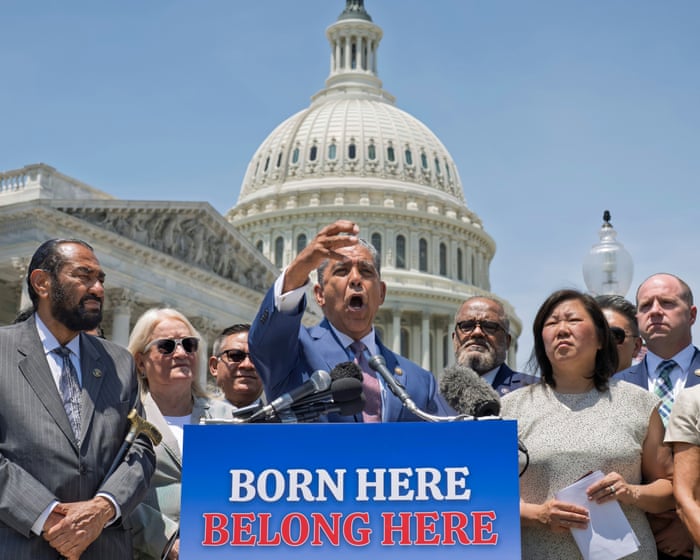
Trump news at a glance: Trump threatens to abolish birthright citizenship through Congress after supreme court rules against him
President calls ruling ‘too bad for our Country’ but says Congress should ‘start today’ to end matter – key US politics stories from Tuesday, 30 June at a glanceThe US supreme court has upheld birthright citizenship, which provides nearly all people born in the country with citizenship, ruling against a central piece of Donald Trump’s anti-immigrant agenda.Trump called the ruling “too bad for our Country”, but said the US Congress should now take up the matter legislatively, suggesting another avenue to keep the issue alive. Continue reading...
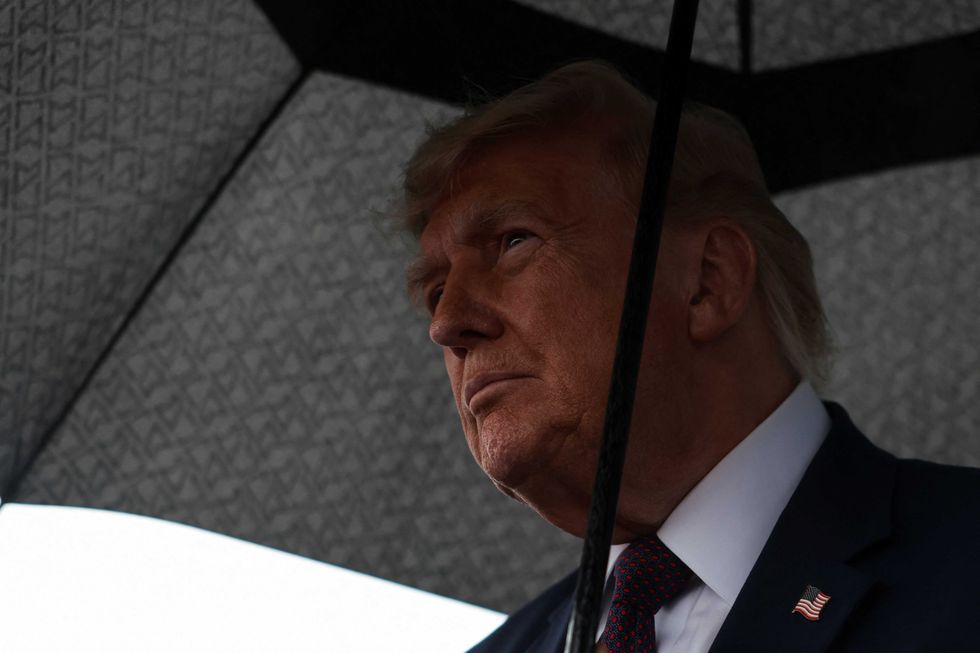
Trump breaks silence after Supreme Court rejects birthright citizenship order
The Supreme Court dealt a devastating blow Tuesday to the Trump administration’s attempt to eliminate birthright citizenship, but less than an hour after the justices handed down their decision, President Donald Trump was already musing on how to sidestep the court’s ruling.“The Supreme Court upheld Birthright Citizenship, which is too bad for our Country, but we can easily make it up in Congress through Legislation, with the support of the President, that has now been determined during this process,” Trump wrote on his social media platform Truth Social.“No long and unwieldy Constitutional Amendment is necessary! Congress should start TODAY to work on ending expensive and unfair to our Country, Birthright Citizenship. They will have my Complete and Total Support!”Enshrined in the U.S. Constitution under the 14th Amendment, birthright citizenship grants all people born in the United States or its territories full U.S. citizenship, regardless of their parents’ citizenship status. Trump, with the strong support of his White House deputy chief of staff, Stephen Miller, has long targeted birthright citizenship in an effort to see it overturned as part of his broader immigration crackdown agenda.In his attempts to argue on behalf of eliminating the constitutional right, Trump has falsely claimed on numerous occasions that the United States was the only country to enjoy such a right, despite dozens of countries having near-identical rights, including the United States’ neighbors Canada and Mexico.
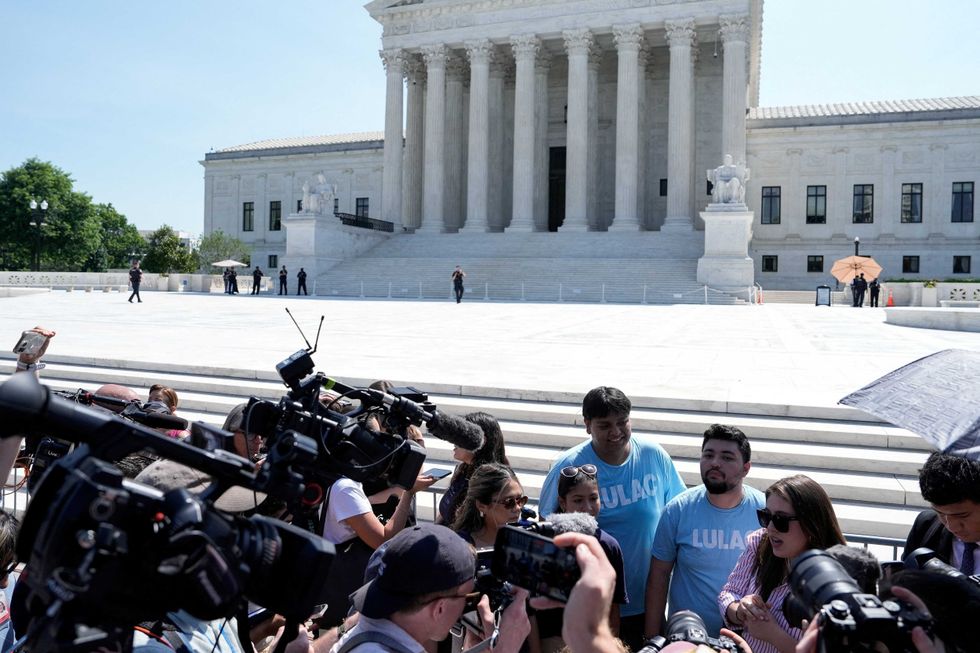
Supreme Court rules against Trump in major citizenship rights case
The Supreme Court ruled 5-4 against President Donald Trump's efforts to eliminate birthright citizenship, a constitutional right established in 1868. Justice John Roberts wrote for the majority, "Citizenship, then and now, was the right to have rights — to freely participate in our political community," in Tuesday's ruling. Trump, pressured by White House Deputy Chief of Staff Stephen Miller, had long sought to overturn the constitutional protection, according to Bulwark Media. Miller called last week for a unanimous Supreme Court ruling in favor of elimination, claiming anything less would "mean a nonfunctioning democracy," Yahoo News reported. The decision was forecast months earlier, after Trump stormed out of the courtroom during an April birthright citizenship hearing. William Baude, professor at the University of Chicago’s Constitutional Law Institute, predicted the court's ruling against Trump as recently as last weekend. Trump has repeatedly and falsely claimed the U.S. is the only country with birthright citizenship, despite similar protections existing in dozens of nations, including Canada and Mexico, according to The Washington Post.Watch the video below. Your browser does not support the video tag.
Right-Leaning Media's Perspective
- The "Betrayal" Narrative: Popular headlines and conservative commentators expressed outrage at the ruling, specifically targeting Chief Justice Roberts and Justice Amy Coney Barrett for siding with the liberal wing. Some populist segments of the base have gone as far as labeling Barrett a "DEI hire" following the decision.
- The "War Zone" Perspective: High-engagement content from populist outlets framed the ruling as a battle in a broader cultural and legal war. Live broadcasts and podcasts have been used to mobilize the "MAGA base" against the court's decision, describing it as a rejection of an executive order intended to prioritize citizens over those illegally present.
- Strategic Criticisms: Some right-leaning intellectual circles, such as the Wall Street Journal editorial board, argued that Trump’s legal defeat was self-inflicted. They suggested that by pursuing a sweeping constitutional challenge rather than a narrower order targeting "transients," the administration essentially forced a broad ruling that now makes future changes impossible without a Constitutional Amendment.

Supreme Court Rules Against Trump in the Birthright Citizenship Case
The 6-3 decision is right, and a contrary ruling would have had horrific effects.

Trump's own Supreme Court pick branded 'DEI hire' by furious MAGA base after birthright citizenship betrayal
The decision struck down a Trump executive order seeking to prevent the children of temporarily or illegally present people from attaining citizenship.

Watch Live: Supreme Court Strikes Down President Trump’s Executive Order On Birthright Citizenship Roberts and Barret Side with Liberals and More! The WAR Zone Podcast With Wayne Allyn Root Presented by The Gateway Pundit
CLICK HERE TO WATCH RIGHT NOW! The post Watch Live: Supreme Court Strikes Down President Trump’s Executive Order On Birthright Citizenship Roberts and Barret Side with Liberals and More! The WAR Zone Podcast With Wayne Allyn Root Presented by The Gateway Pundit appeared first on The Gateway Pundit.