Friday's Summary
This briefing analyzes the news climate of the previous 24 hours, ending July 2, 2026. The media landscape is currently dominated by the immediate legal and political fallout following several high-profile Supreme Court decisions, with outlets on both sides of the aisle focusing on how the executive branch and state legislatures will navigate a shifting constitutional framework.
How the coverage differs
The most striking divergence appears in the framing of the Supreme Court's birthright citizenship decision. Left-leaning outlets reported it as a settled constitutional fact that the administration is now trying to circumvent through aggressive visa enforcement. In contrast, Right-leaning outlets characterized the ruling as a "mistake" and a national security risk, focusing on how the decision might be exploited by foreign adversaries. While the Left focused on "birth tourism" as a matter of administrative overreach, the Right focused on it as a necessary policy response to a judicial failure.
The reporting on E. Jean Carroll also showed a sharp split in emphasis. While both sides reported that the Supreme Court declined to hear Donald Trump’s challenge to a $5 million judgment, the Left focused on the financial specifics—noting that the debt has grown to nearly $5.8 million with interest—and Trump's attempts to delay payment. Conversely, the Right and consensus outlets highlighted a simultaneous Justice Department criminal investigation into whether Carroll committed perjury during the initial trial. One side framed the story as a matter of a defendant evading legal obligations, while the other framed it as a potential case of witness misconduct.

Trump Tries to Ignore Supreme Court on E. Jean Carroll
Donald Trump is still trying to stiff E. Jean Carroll, according to the columnist’s attorney.Roberta Kaplan, Carroll’s lawyer, wrote in a court filing Tuesday that Trump’s legal representative had called her the day prior asking for another delay to the $5 million sum Trump owes the writer. Later Monday, Kaplan said she informed Trump’s team that “Carroll does not consent,” and asked whether Trump would comply with the immediate disbursement of funds.Carroll has a long and unfortunate history with the president. Trump was found liable by a jury in May 2023 for having sexually assaulted Carroll in the mid-1990s, for which she was awarded $5 million in damages. He subsequently lost his defamation case against her the following January, when a judge ruled that Trump had continued to defame the advice columnist by denying the assault on the basis that she wasn’t his “type,” and by accusing her of making up the allegations against him for the benefit of her book. A jury awarded Carroll $83.3 million in that case.But Carroll hasn’t yet seen a dime from either case. In May, a federal appeals court allowed Trump to continue staving off his payments until the Supreme Court decided whether or not to pick up the case. The court made their decision Monday, rejecting Trump’s challenge and allowing the verdict to stand.In a separate filing Tuesday, Kaplan asked a judge to implement an expedited payment schedule for the sum that Trump owes Carroll. She referred to a June 2023 filing in which both parties agreed that Carroll could collect if the Supreme Court refused to hear the case.Kaplan added that, by this point, the $5 million sum had accrued an additional $779,783 in interest, raising Trump’s initial debt to nearly $5.8 million.Nonetheless, Trump has continued to make a target out of Carroll. In May, the Justice Department opened a criminal investigation into the writer, probing whether Carroll committed perjury in her previous cases against Trump.

The Supreme Court’s birthright citizenship mistake
'The political branches can no longer avoid confronting the immigration system'
The <em>Other</em> Case for Birthright Citizenship
The legal arguments are clear. Now proponents need to start defending the practice on policy grounds.
Left-Leaning Media's Perspective
- Enforcement Against "Birth Tourism": Outlets highlighted statements from Acting Attorney General Todd Blanche regarding the administration's plan to use federal prosecutors and the FBI to target "birth tourism." The narrative focuses on the Department of Justice’s intent to scrutinize visa applications to prevent individuals from traveling to the U.S. solely to secure birthright citizenship, despite the Supreme Court recently upholding the constitutional guarantee of that citizenship.
- Mail-In Voting Protections: Progressive coverage emphasized a 5-4 Supreme Court victory for voting rights, which ruled that mail-in ballots postmarked by Election Day must be counted even if they arrive later. However, this was coupled with warnings about the "SAVE America Act," which critics frame as a voter suppression effort emboldened by conservative judicial rhetoric regarding mail-in fraud.
- Trump’s Presidential Power Rhetoric: Reports focused on the President’s remarks at the Theodore Roosevelt Presidential Library in North Dakota, where he tied recent SCOTUS rulings on birthright citizenship to his broader platform on executive authority and immigration control.
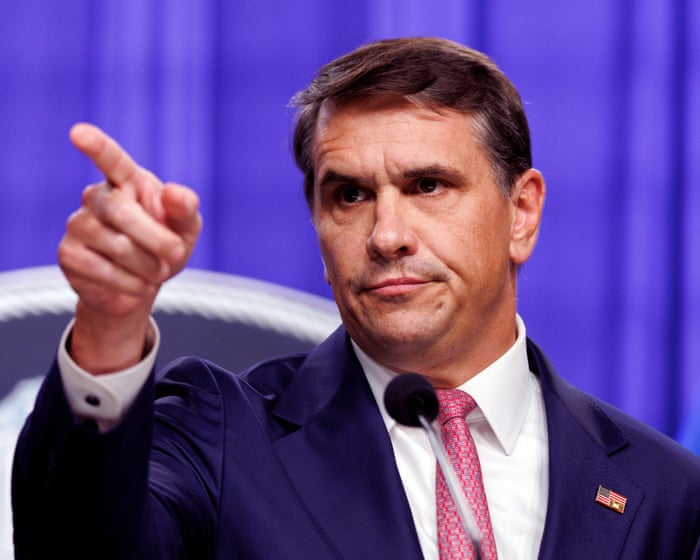
‘Birth tourism’ in Trump administration’s sights after supreme court setback | First Thing
Federal prosecutors to focus on issue despite court backing constitutional guarantee of birthright citizenship. Plus: Greek priest whose metal music has become cult smashGood morning.The acting attorney general, Todd Blanche, has said federal prosecutors and law enforcement officers will focus on combating so-called “birth tourism” – which involves tourists, temporary visitors, or undocumented immigrants traveling to the US primarily to give birth and and secure birthright citizenship for their children.What did Blanche say? “There’s other things … the federal government can do in the visa process, and the application process, to try to minimize or limit the opportunity of folks coming here not to visit, and not to do what they’re saying they’re doing on the tourist visa, but just to have a baby that can then be a US citizen. What we have to do as Department of Justice is make sure our agents … and the FBI are focused on stopping that.” Continue reading...
Supreme Court Approves Mail-In Voting, But Trump Keeps Pushing Extremist SAVE Act Ahead of Midterms
President Donald Trump has received another setback in his ongoing quest to control U.S. elections. In a 5-4 split, the Supreme Court ruled that mail-in ballots do not need to be received by Election Day to be counted, as long as they were postmarked by then. Although a “rare victory for voting rights,” the conservative justices’ assertion that voting by mail is prone to fraud — a disproven theory that Trump blames his loss in the 2020 election for — is “very disturbing,” says Ari Berman, the national voting rights correspondent for Mother Jones. “My fear is that this is going to embolden Republicans to double down on their efforts to try to get rid of mail voting, including the SAVE America Act, Trump’s sweeping voter suppression bill, which he seems desperate to go to any lengths to try to pass,” says Berman, who also comments on the court’s decision to strike down a federal law limiting campaign spending.
Trump discusses SCOTUS decisions on birthright citizenship and presidential power
While delivering remarks at the opening ceremony of the Theodore Roosevelt Presidential Library in North Dakota, President Trump discussed the Supreme Court decisions on presidential power and birthright citizenship.
Right-Leaning Media's Perspective
- Birthright Citizenship as a "Loophole": Conservative media heavily featured arguments that the Supreme Court made a fundamental error in its birthright citizenship ruling. Key figures, including Senator Eric Schmitt, warned that the decision creates a national security vulnerability, specifically suggesting it provides a "citizenship loophole" for foreign nationals from countries like China.
- Victory in Transgender Sports Ruling: Significant attention was paid to a Supreme Court decision allowing states to bar transgender athletes from competing in girls' sports. Outlets noted a perceived silence from Democratic leadership on the ruling, framing the lack of a legislative response as a sign of political retreat on the issue.
- Calls for Legislative Action: Commentators argued that since the Supreme Court "failed" to address birthright citizenship as they had hoped, the responsibility now shifts to the political branches to confront and overhaul the immigration system through direct policy changes.

Ben Shapiro: The Supreme Court’s birthright citizenship mistake
Op-ed views and opinions expressed are solely those of the author. The Supreme Court has now settled, at least for the foreseeable future, one of the most […]

'It's insane': GOP senator says Supreme Court birthright ruling hands China a citizenship loophole
Sen. Eric Schmitt warns the high court's birthright citizenship ruling leaves America vulnerable to China.
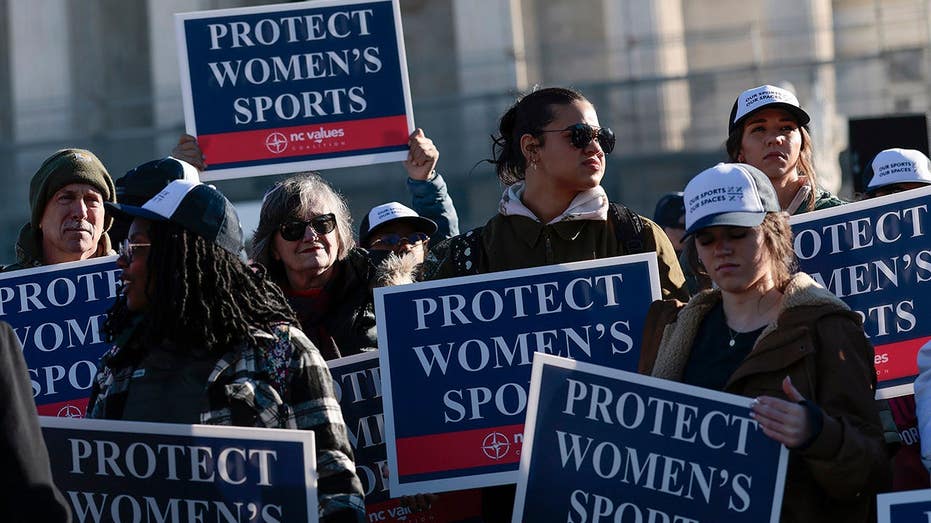
Democrats stay quiet on next steps after Supreme Court transgender sports ruling
Democrats remain largely silent on legislative next steps after the Supreme Court ruled states may bar transgender athletes from girls sports teams.