

Published 4/11/2026, 3:02:28 PM UTC
Thursday's Summary
This briefing analyzes the political news climate of the previous 24 hours, ending on 2026-04-08, with a particular focus on the recent ceasefire between the United States and Iran.
How the coverage differs
A significant point of divergence revolved around the origin and nature of the ceasefire. Left-leaning outlets heavily emphasized reports that President Trump's administration had privately "begged" for the ceasefire due to economic pressures, directly contradicting Trump's public statements and painting his threats as empty. This framing positioned the ceasefire as a result of U.S. weakness or a "cave," with Trump's claims of Iranian desperation being false.
Conversely, Right-leaning outlets did not feature any reporting on the U.S. initiating peace talks. Instead, their focus was predominantly on the immediate fragility of the ceasefire, with reports highlighting Iran's alleged breaches and the continued closure of the Strait of Hormuz, often while questioning the clarity of Trump's strategic objectives. While "High Consensus" sources acknowledged the ceasefire's fragility and the rapid shift in Trump's rhetoric, left-leaning narratives focused on the pre-ceasefire deception, whereas right-leaning narratives concentrated on post-ceasefire instability and Iran's actions. The shared observation of a fragile truce, as seen in "High Consensus" reports, was framed by the right as a consequence of Iran's actions or a lack of clear U.S. strategy, while the left's exclusive reporting on Trump's "begging" was a narrative completely absent from right-leaning coverage.

Trump mulls punishing NATO countries that didn’t assist Iran war effort: report
President Trump is reportedly weighing a plan to punish NATO allies that refused to assist the US in the war with Iran.

4 big questions hanging over Trump’s ceasefire with Iran
Within 24 hours this week, President Trump jumped from threats to wipe out Iran’s civilization to announcing that Tehran had presented a plan that led him to agree to a 14-day ceasefire — less than two hours before his deadline to attack Iranian infrastructure. About 24 hours later, the ceasefire…

Live updates: Trump holds troops near Iran until it complies with ‘real agreement’
President Trump said he’ll hold U.S. troops “in, and around, Iran” until the Islamic complies with the real agreement reached between the two countries. “If for any reason it is not, which is highly unlikely, then the “Shootin’ Starts,” bigger, and better, and stronger than anyone has ever seen…
Left-Leaning Media's Perspective
- Reports emerged suggesting President Trump's administration, not Iran, had been privately seeking a ceasefire for weeks, prompted by economic strain from the Strait of Hormuz closure.
- This narrative directly contradicted President Trump's public claims that Iran was "begging" for a deal, portraying his repeated threats as ultimately lacking genuine intent.
- Commentary indicated that despite Trump's declarations of having met military objectives, many of his stated goals for the war remain unresolved after five weeks of conflict.
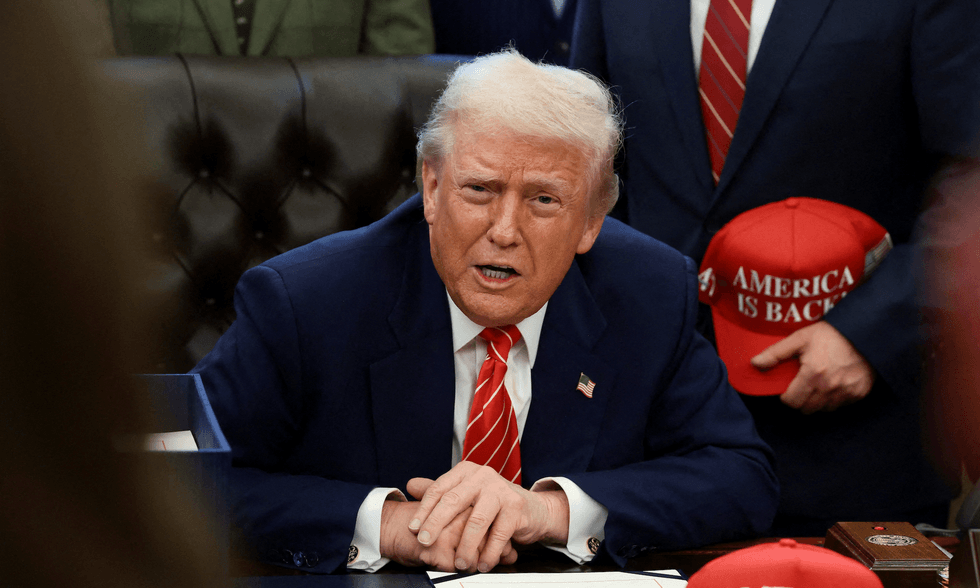
Trump — not Iran — was 'begging' for a ceasefire: report
President Donald Trump, not Iran, is the one who was “begging” for a ceasefire, and had been for weeks before he announced a “double sided” end to hostilities late Tuesday evening, according to The New Republic, citing a report in the Financial Times.That report reveals that “the Trump…
Donald Trump just caved big time on Iran
This week marked the third time in which Donald Trump vowed to imminently blow up Iran’s power plants if it didn’t reopen the Strait of Hormuz. Given that Iran ignored him the first two times and he merely pushed back his deadline, Trump’s latest threat had no teeth at all. Even after Trump vowed…

What Trump Has Accomplished in Iran After 5 Weeks of War
President Trump said that “we have already met and exceeded” his military objectives. But his goals are largely unresolved.
Right-Leaning Media's Perspective
- Concerns were raised regarding the clarity of President Trump's objectives and the overall strategy for the war in Iran, with some commentary suggesting he risked "losing the plot."
- Reports highlighted immediate challenges to the ceasefire, including claims from Iran's Parliamentary Speaker that the U.S. had already breached the agreement amidst fresh bombing and the continued closure of the Strait of Hormuz.
- Analysis characterized the ceasefire as "tenuous" and a "fragile truce" that was being tested less than 24 hours after its implementation, a sentiment echoed by Vice President JD Vance.

Trump Risks Losing the Plot—and the War—in Iran
The president needs to be clearer about the conflict’s objectives and endgame.

Iran says Trump BREACHED ceasefire after president claimed victory as fresh bombing rocks the Middle East and Strait of Hormuz is closed
Iran's Parliamentary Speaker is claiming that the US has breached the ceasefire agreement even as Donald Trump says the truce is in effect.
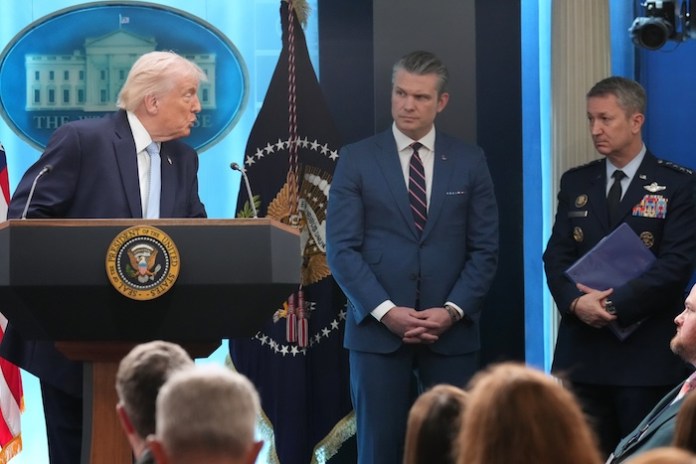
How Iran has changed from the start of the war until the ceasefire
The United States and Iran have agreed to a very tenuous ceasefire that appears to be holding less than 24 hours after its implementation, though hurdles have already emerged. Vice President JD Vance characterized the deal as a “fragile truce” on Wednesday, and within the first day, it has already…