The United States has now gone 13 consecutive months with zero illegal aliens released into the country at the border, according to the Department of Homeland Security and Customs and Border Protection.
The post Trump Hits Historic Border Milestone: 13 Straight Months with Zero Illegal Aliens Released into the U.S. appeared first on The Gateway Pundit.
DHS Secretary Markwayne Mullin was on "Sunday Morning Futures" with host Maria Bartiromo to talk about Iranian nationals and their attempt to cross the northern border to illegally enter the United States.
The post DHS Secretary Markwayne Mullin Warns Iranians Attempting to Sneak Across the Northern Border into the US (VIDEO) appeared first on The Gateway Pundit.
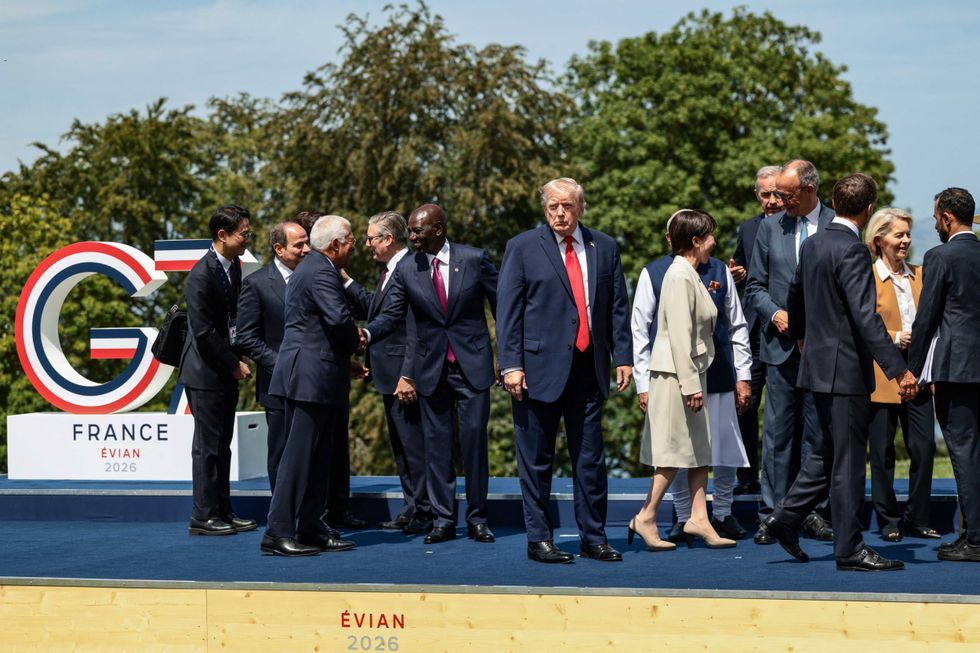
Sen. Chris Murphy says a single image from this week's G7 summit captures one of his deepest fears about the growing power of the tech industry: the chief executives of major artificial intelligence companies seated at the table alongside presidents and prime ministers, as if they were heads of state themselves."At the G7, the CEOs of the big AI companies sat at the table like heads of state, alongside presidents and prime ministers," the Connecticut Democrat wrote, sharing a photo of the summit's main session. His reaction was blunt: "This is the nightmare scene."For Murphy, the optics were not a harmless photo op but a visual representation of how far corporate influence has crept into the highest levels of government. The concern is that companies building the most powerful AI systems are no longer simply lobbying governments from the outside, but are being granted a seat among the elected leaders who are supposed to regulate them.Murphy paired the warning with a call for governments to push back against what he described as the "state-like power" of these firms. He floated several possible responses, suggesting officials consider "taking ownership shares, breaking them up into smaller entities, or imposing a regulatory structure that controls their power over citizens." The range of options, from partial public ownership to outright breakup, signals how seriously he believes the threat should be taken.The senator has emerged as one of the more vocal critics in Congress of concentrated corporate and technological power, and his framing fits a broader unease on the left about the cozy relationship between the tech sector and the current administration. The sight of AI executives integrated into a gathering traditionally reserved for the world's most powerful elected officials, in his telling, is evidence that the balance has already tipped too far toward private industry.His underlying argument is that state-like power demands a state-like response. If a handful of companies can shape economies, information, and security on a scale once reserved for governments, Murphy contends, then leaving their authority unchecked is itself the danger. The photo, to him, is less a snapshot of cooperation than a warning about who is really sitting at the table when the world's decisions get made.At the G7, the CEOs of the big AI companies sat at the table like heads of state, alongside presidents and prime ministers.This is the nightmare scene.Governments need to have a response to the state-like power of these companies, whether it’s by taking ownership shares,… pic.twitter.com/aPdK7FFRaE— Chris Murphy 🟧 (@ChrisMurphyCT) June 21, 2026
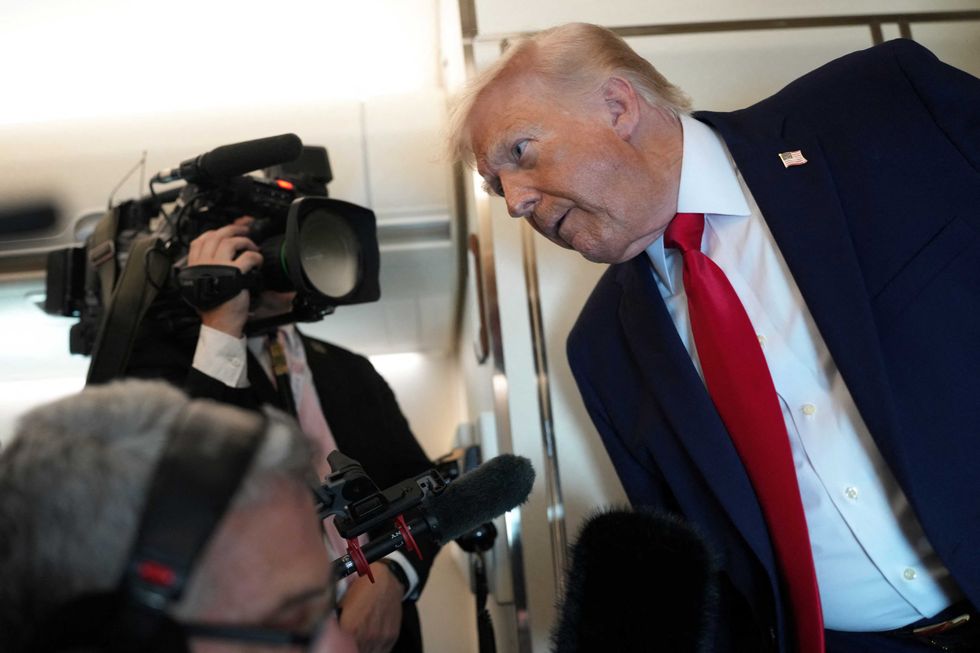
After issuing a plethora of fresh threats Sunday morning, President Donald Trump was issued a warning of his own from Iranian Parliament Speaker Mohammad Bagher Ghalibaf, who hours later warned Trump to “be careful” with his words amid the delicate ceasefire between the United States and Iran.As relayed by Fox News’ Trey Yingst, Trump threatened to “take over” both Iran and the Strait of Hormuz, while also issuing a vague threat that appeared to suggest he may order the assassination of Iranian peace negotiators, Ghalibaf included. In a statement published on social media, Ghalibaf hit back at Trump and urged him to tread carefully.“Don't they think to themselves that if their threats had any effect, they wouldn't have reached the point of despair today? We don't count on the threats of the Americans,” Ghalibaf wrote in his statement, according to an English translation from Hebrew by Google Translate.“They better be careful with their statements, our armed forces are ready to respond in another way. Whatever they say, we are the ones who will act.”Trump’s threats Sunday morning have already had an impact on the negotiations being held in Switzerland. An Iranian news outlet reported that the Iranian delegation left the negotiation venue in protest of Trump’s threats, and MeidasTouch, a progressive media outlet, argued that Trump was “single-handedly destroying the entire peace process.”🚨🚨 BREAKING: Iran's negotiators have LEFT the venue in protest of Trump's threats, per Tasnim.Trump is single-handedly destroying the entire peace process.— MeidasTouch (@MeidasTouch) June 21, 2026
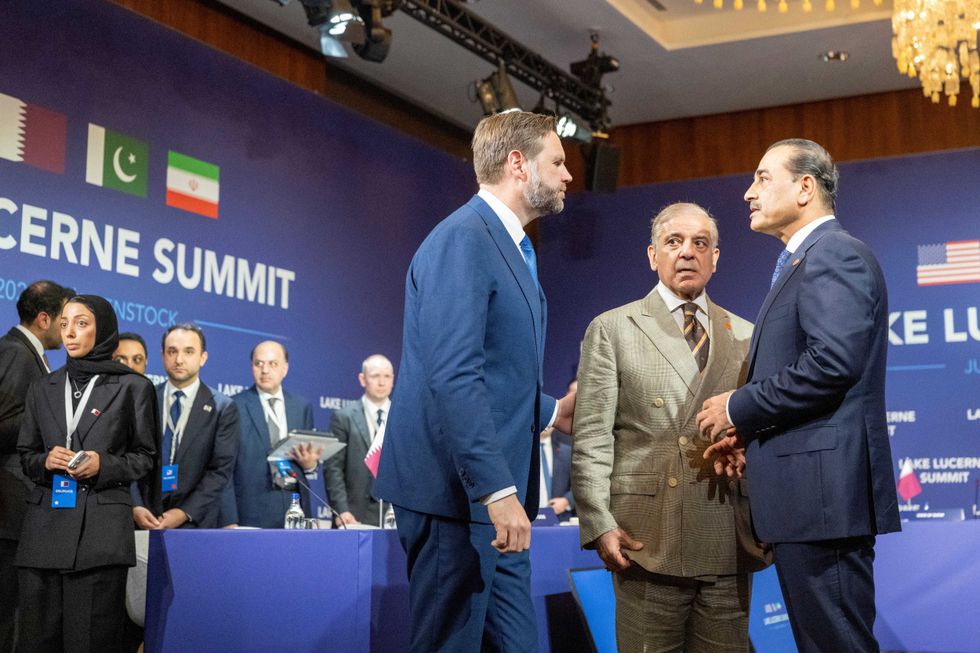
The ongoing peace talks in Switzerland between American and Iranian officials got off Sunday to a rocky start, according to one Emirati political analyst who went on to describe the spectacle as nothing short of “humiliation” for Vice President JD Vance, who’s leading the U.S. delegation.“This was humiliation. No one in modern history has made America wait and beg for negotiations. This was the moment JD Vance should have returned to Washington. The Islamic regime did this on purpose,” argued Emirati political analyst and author Amjad Taha in an analysis published on social media.Taha flagged several key details from the meeting between the two delegations that made it, he argued, “easy for the world to draw its own conclusions” on “who looked confident and who looked desperate.” Chief among them was the U.S. delegation entering the venue “well before the Iranians,” according to Taha.“In diplomacy, the side with leverage doesn't wait in the room,” Taha wrote. “You claim to be leading and winning, yet you arrived first. First mistake.”Taha also flagged a telling moment from Iranian Foreign Minister Abbas Araghci, who Taha claimed “entered last and refused to shake hands,” a claim supported by reporting from the Iranian news outlet Tasnim News Agency.Ron Filipkowski, the editor-in-chief of the progressive media organization MeidasTouch, reacted to Taha’s analysis with a bleak assessment of the United States’ global standing.“The US has never looked smaller or weaker on the world stage,” Filipkowski wrote in a social media post on X to his more than 1 million followers.The US has never looked smaller or weaker on the world stage. https://t.co/HPfRhyBbJa— Ron Filipkowski (@RonFilipkowski) June 21, 2026
Talks in Switzerland between the US and Iran were still ongoing despite Iranian media reports that negotiators had left the venue, according to people familiar with the matter.