Why Democrats’ total control in Virginia is starting to backfire
Far Right
Virginia Democrats may shut down their own government. Virginia faces a government shutdown if the Democrat-controlled General Assembly fails to pass a budget by June 30, the […]
District of Columbia Del. Elizabeth Holmes Norton’s retirement from the House kicked off a race for the non-voting seat on Capitol Hill. Democrats Robert White, an at-large councilmember and former mayoral candidate, and Brooke Pinto, a city councilmember, have led the crowded Democratic primary field. Eighty-eight-year-old Holmes Norton, who has represented D.C. since 1991, had faced…
Voters in Washington, D.C., are at the polls Tuesday to weigh in on the race to replace retiring Mayor Muriel Bowser (D). City Councilmember Janeese Lewis George, a Democratic socialist, led in polling ahead of the Democratic primary. Former City Council member-at-large Kenyan McDuffie (D) has been trailing in second place. There are no Republicans…
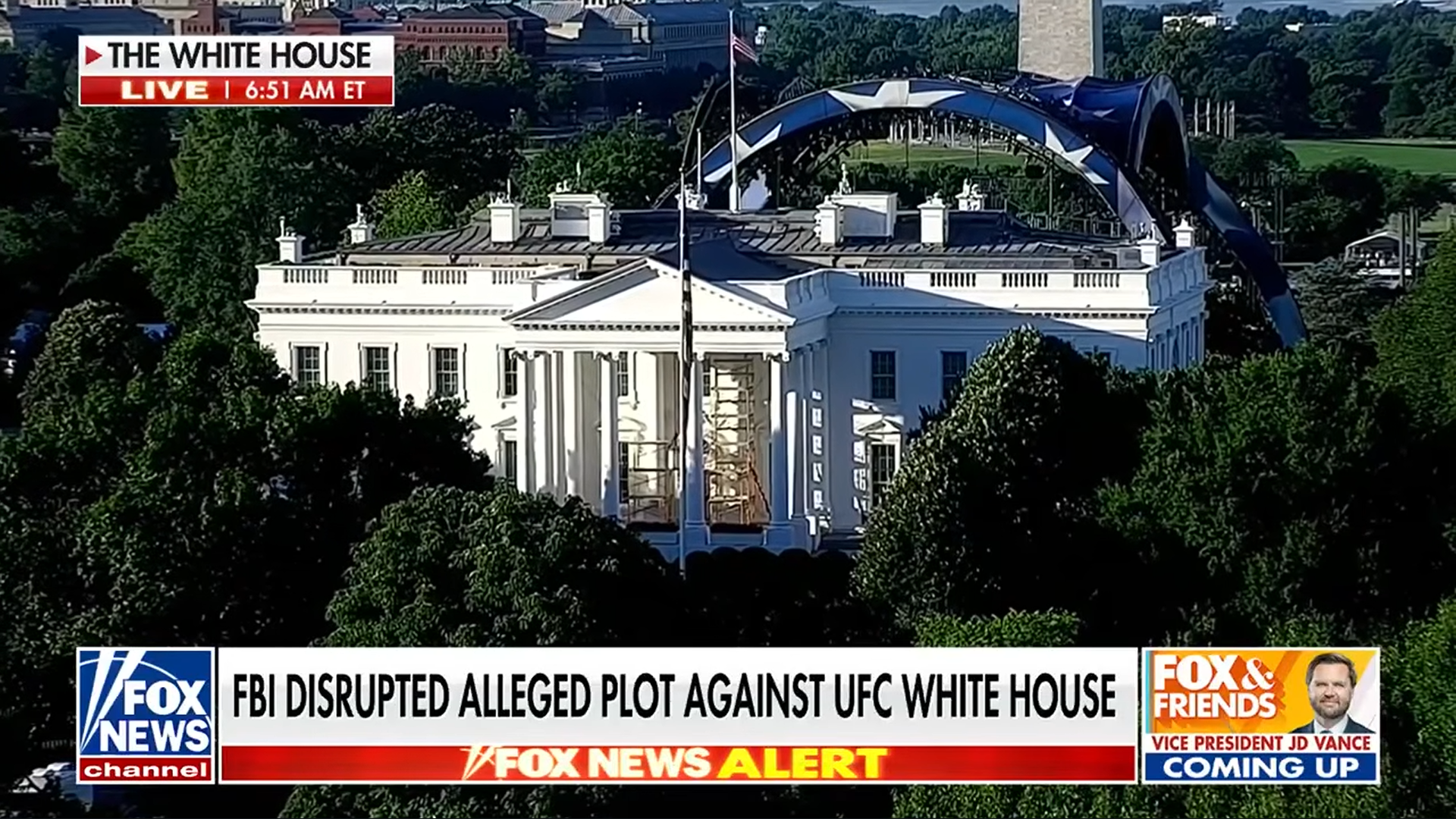
An individual allegedly involved in a thwarted terrorist attack aimed at Sunday’s UFC Freedom 250 event at the White House parroted Democrat conspiracy theories about President Trump protecting child predators connected to sex offender Jeffrey Epstein, according to federal court documents. The revelation came on Tuesday, when Fox News reported on how the FBI and […]
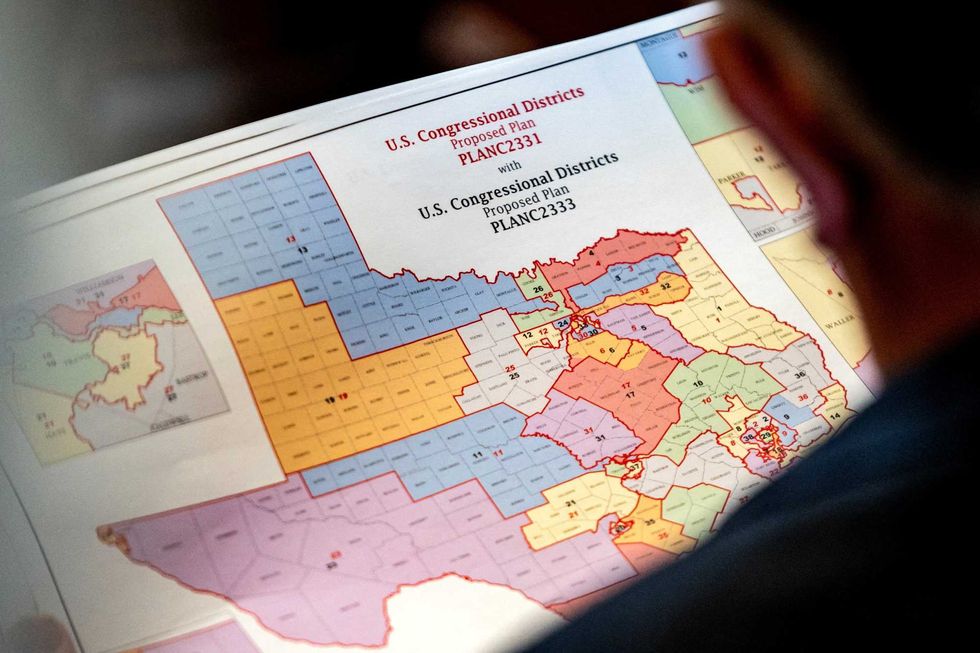
Tennessee Republicans, having redrawn congressional maps to eliminate Democratic representation, are now targeting state legislative districts for similar partisan gerrymandering. The GOP holds veto-proof supermajorities (27-6 in Senate, 75-24 in House) but plans maps that could achieve 33-0 and 99-0 margins, completely eradicating Democrats from state government, according to reporting by Tennessee Lookout's Bruce Barry.Following the Supreme Court's Louisiana v. Callais decision permitting partisan gerrymandering, but not racial, Republicans have carved Memphis's majority-Black 9th District into three GOP-friendly districts. Republican Caucus press secretary Molly Crawford confirmed redistricting legislation is planned for next year. Using mapping software, Democrats could be eliminated from Nashville and Memphis state Senate representation entirely. The author argues that while Republicans justify moves as partisan advantage-maximization, the result threatens democratic representation for one-third of Tennessee's reliably Democratic voters."Do the one-third of Tennesseans who do not choose Republican government have a right to be represented in their elected legislature? In a functional democracy in a supposedly advanced liberal society, do the two-thirds who are calling the shots have a moral obligation to see to it the one-third are included rather than silenced?" the author writes. These are not hard questions, Barry concludes.Watch the video below. Your browser does not support the video tag.
The Trump administration has made exporting American AI a key part of its plans for global AI dominance, but ad hoc policy decisions around the most advanced AI are threatening that effort.Why it matters: A flagship U.S. program designed to boost AI exports could be undermined by the very administration that created it."The government's willingness to arbitrarily and abruptly remove America's best models from all foreign use shows that the strategy behind the AI Export Program is no longer relevant to decision makers in the U.S. government," Dean Ball, a former AI adviser in the Trump administration, told Axios.Driving the news: The Trump administration slapped export controls on Anthropic's newest model Fable 5 due to disagreements over whether it is safe for deployment, causing Anthropic to pull access to it entirely.Administration officials and Anthropic staff continue to hash out their disagreements this week, with no solution yet.The big picture: The American AI exports program is a relatively new initiative that President Trump created in a July 2025 executive order.It's meant to bundle the infrastructure, tools and models into ready-to-deploy AI systems for allies and partners, and has been touted as a key part of the White House's AI policy goals, as Axios has previously reported.Those who are selected for the program will get expedited export control license reviews, prioritized access to U.S. federal credit programs, government-to-government advocacy abroad and dedicated interagency coordination.What they're saying: A tech industry source told Axios that there are "downstream consequences" to using export controls as a means of enforcing tech policy, setting new precedents for future oversight and licensing of tech releases."Fueling perceptions that the US government could disable overseas access to an AI model or system only makes it more difficult to promote American AI exports," the source said. "Global customers will have a harder time committing to purchasing US-made AI."Other tech industry sources told Axios the Anthropic export control issue creates uncertainty by complicating relationships with allies at a time when there is a major focus on exporting U.S. technology abroad. "Given the interconnected nature of the AI tech stack, restrictions aimed at one layer or at one company in the stack can create unintended impacts for other parts of the stack," one of the sources said."It definitely has a flavor of picking winners and losers, and the hope is that the U.S. government, in its efforts to promote American companies abroad, is going to do that consistently across the board, rather than picking up individual companies to prioritize over others," said Paul Lekas, vice president of public policy at the Software and Information Industry Association.Yes, but: Other AI companies looking to participate in the American AI exports program may avoid the problems that have befallen Anthropic. The upside of joining the program hasn't gone away, said Joseph Hoefer, AI principal at Monument Advocacy. But companies will have to build contingencies in case a layer of their "tech stack" suddenly becomes unavailable due to a decision by the administration."This could turn out to be a one-off: a specific action, in a specific situation, that the administration resolves and doesn't repeat," he said.The other side: The White House defended the move as part of an effort to "balance" AI innovation and national security, per spokesperson Kush Desai.The Commerce Department's International Trade Administration did not respond to requests for comment.What's next: Applications for the American AI exports program are due June 30, and how the White House handles its dispute with Anthropic could shape whether companies feel confident participating.
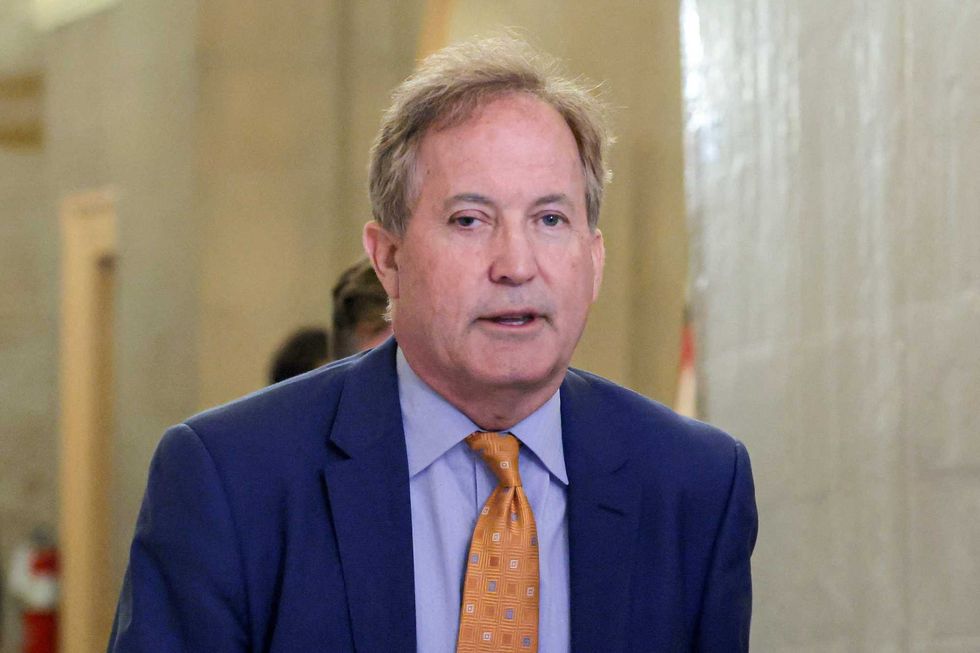
Texas state Rep. James Talarico, the Democratic nominee for U.S. Senate, responded to his Republican opponent’s “barbecue debate” challenge issued on Monday with a challenge of his own, one that put the Trump-backed candidate’s controversial record in the spotlight.Texas Attorney General Ken Paxton challenged Talarico Monday to a debate to be held at a barbecue restaurant, a debate designed to verify whether Talarico actually enjoys barbecued meat as he’s claimed. The unorthodox challenge comes as Republicans take continued potshots at Talarico's masculinity.Talarico’s response was far less lighthearted.“I’ll meet Paxton at any time and any place if he will answer Texans’ questions about why he let admitted child sex offender Adam Hoffman walk free,” Talarico said, according to Texas Tribune reporter Alejandro Serrano.Talarico was referencing the controversial plea deal Paxton’s office offered Hoffman, a former Texas attorney who was originally facing life in prison for “sexually abusing a young boy” over a three-year period, a plea deal that would see him instead plead guilty to “two misdemeanors and serve a total of just one day in jail,” the Texas Tribune previously reported.The plea deal was so controversial that Republican Texas state Rep. Jeff Leach, who’s endorsed by Trump, suggested Texas voters abandon Paxton in the upcoming general election.Despite the plea deal offered by Paxton’s office, Hoffman was ultimately sentenced to 60 days in jail, but has since been released. He also won’t be required to register as a sex offender.“A real and dangerous predator – a present threat to Texas children – as free as you and me,” Leach said the day before Hoffman’s release in a statement published on social media. “A slap on his wrist and a spit in the face to his victim. Why?! How?! Because that’s the deal he made with Ken Paxton. Vote accordingly.”