Thune tells Hannity his ‘side of the story’ on SAVE Act, so now what?
Source: BizPac Review · Bias: Far Right
Summary
Senate Majority Leader John Thune appeared doubtful on Monday that cancelling the Senate August recess to debate and vote on the SAVE America Act would serve any […]
Thune tells Hannity his ‘side of the story’ on SAVE Act, so now what?
Far Right
Senate Majority Leader John Thune appeared doubtful on Monday that cancelling the Senate August recess to debate and vote on the SAVE America Act would serve any […]
US Secretary of State Marco Rubio is again taking aim at Cuba. This time, however, the Trump administration is framing Havana as a decades-long sponsor of terrorism and espionage that has helped cultivate the “radical left” in the United States.As part of this, the administration is making pains to link Cuba with the Democratic Socialists of America (DSA), which is growing politically in the US, thanks to Zohran Mamdani’s win as New York City mayor and other victories.And it comes against the backdrop of fear-mongering by US President Donald Trump about the prospect of communism threatening the US again. He has specifically linked Democrats to communism, as well.So, why is the Trump administration making this spurious argument, and why now? What the administration is allegingLast week, the US State Department published a nearly 100-page report titled “Cuba: The Capital of 21st Century Communism”. The report’s core claim is that Cuba has spent over half a century influencing and aiding the domestic left in the US. Among its more extraordinary allegations:the far-left Weather Underground had direct contact with Cuban officials and Cuban spies in the 1970s, who helped facilitate the group’s bombings in the USdelegations of other “American radicals” travelled to Cuba during that decade to learn urban terrorism and guerrilla tactics Cuban intelligence today treats infiltrating US universities as a top priority leftist activists in the US and elsewhere routinely make “revolutionary tourism” excursions to the island, and the DSA specifically maintains a “fierce, almost religious commitment to the cause of the Cuban regime”.That framing collapses under scrutiny. The report anchors its argument in a handful of genuine espionage and terrorism cases. But it then tries to connect these with more innocuous activities: attending a Cuban-organised trip, expressing solidarity with Havana, or opposing the US embargo on the island. This echoes a long US tradition of using national security as a premise to target leftist movements. This includes everything from the targeting of civil rights and labour organisers during the McCarthy era to the Cold War surveillance of anti-war activists.Equally telling is what the report leaves out: six decades of documented US covert action against Cuba, including assassination plots and support for armed exile groups.The report also came just days after Rubio convened delegations from dozens of countries in Washington for a conference on “resurgent far-left political terrorism”. At the event, he said the threat of far-left violence “can no longer be denied” and that it was “time to crush this evil forever”. And in May, the White House released a new counterterrorism strategy that called “violent left-wing extremists” one of three terror threats facing the US (alongside narcoterrorists and Islamist terror groups). There was no mention of neo-Nazi or other far-right groups. Why now?Viewed against this wider context, the State Department report dramatically amplifies the Trump administration’s pressure campaign on Cuba. In the past few months, Washington has imposed an oil blockade on Cuba, expanded economic sanctions against the island, directly sanctioned President Miguel Díaz-Canel and members of former leader Raúl Castro’s family, and secured a criminal indictment against Castro himself.This economic warfare has pushed the island towards humanitarian collapse. UN experts have condemned it as a serious violation of international law.Trump has repeatedly floated a “friendly takeover” of Cuba, and his officials have not ruled out direct military action if Havana does not yield. Rubio’s report and recent statements now provide the ideological framework to justify such an action.What is driving the timing of this coordinated campaign is harder to explain. However, two factors appear to be converging. First, the administration is seeking a foreign policy “victory” after the costly and inconclusive war with Iran. The other is the midterm elections in November. A hardline stance on Cuba could help the Republican Party shore up support with its base. It also allows the party to frame the US left as being aligned with foreign forces and supporters of “communism”.The more consequential question is what could come next. The administration has created a premise for action on several fronts: further measures against Havana, including a possible military operationexpanded moves against US left-wing organisations, such as targeting their tax-exempt status or fundingdesignating left-wing groups as terror organisations, and increased pressure on European governments to act against their own leftist organisations.The brunt of the Trump administration’s actions, however, will be felt by the Cuban people themselves, who have long been scapegoats and collateral damage of their powerful neighbour to the north.
In an interview posted on Monday, conservative host Ryan Girdusky spoke with Maggie Haberman and Jonathan Swan about their latest book, Regime Change. Girdusky argued that as people age and particularly as they reach 80, those "around them start dying.""What effect did that have on Trump's just opinion of legacy and his overarching idea of, like, what his life would be?" Girdusky asked the reporters."I mean, look, it's not like Donald Trump sits around doing sort of therapy sessions with people, but he makes — he makes comments to advisors that — and to various people and associates and confidants that they all interpret as him thinking about his own mortality," said Haberman.She said that they didn't include it in the book but that Trump was seeing the late President Jimmy Carter lying in state and commented, "about how that would be him in, you know, twenty years or something like that." "Obviously that would be a very long lifespan for him," she added, as Trump would be 100 at that age. She said that Trump claims to have a "longevity gene in his family." Still, it's something he's been thinking about "for a while." "When Ivana Trump died, it affected him pretty deeply, according to everybody around him," Haberman continued. "His sister was a complicated relationship. But he is talking about it a lot. You even heard him talk about it with Lindsay Graham the other day, just sort of drifting into it at a defense industry event with Dave McCormick and Pennsylvania. So getting things done and how limited his time on this Earth is, let alone in office and in power, is significant."Girdusky said that Trump has "scaled back public appearances" since the 2024 assassination attempt, but even prior to the shooting in Pennsylvania, Trump's public events had shrunk from multiple times a week to at most once a week. Axios reported that in 2016, Trump held a whopping 72 rallies, and in 2024, during the same period, that number shrank to 24. There were just a few months left in the election after the assassination attempt. They went on to describe just how small Trump's world has become. Girdusky said he remembered the first term in which Trump would respond to people's comments on Twitter and now he hardly has contact with anyone outside of a very small group of advisors. Swan described Trump playing music on his iPad while eating at the patio at Mar-a-Lago with a steady stream of elderly, mostly Florida, residents coming up to him to tell him how amazing he is. Even as he was making decisions about the Iran war, Swan said that having people in the room like the secretary of energy or Treasury secretary would likely have been helpful in warning him of what could happen with gas prices and the economy if he went to war with Iran. Another point they didn't detail in the book is how many people are using their relationship with Trump for financial gain. "And you're right, we didn't get into that specific area of money-making in Trump 2.0 because, frankly, if we spent everything we included on the ways everybody is making money around him, the book would have been two thousand pages long," Haberman said. She noted that he talked about "draining the swamp" in 2017, but never did it then anyway. Now it's far worse. "Lobbyists had a lot of access to him. A lot of people who had, you know, clients facing any number of issues had access to him. You know, we had — there was a whole controversy around vaping, and I think it was twenty nineteen, and that was people hiring various folks who were close to Trump, perceived as close to Trump on this. Now, it is there are so many different ways to either get close to Trump or to put money directly into the Trump family's bank accounts," Haberman added. Meanwhile, the Trump Library is becoming another source of donations to Trump. The influencer culture, she said, is another matter because a lot of that surrounds the crypto industry, which Trump once said he didn't believe in. "But just the scale of moneymaking and the way in which you can get to the president and see a specific outcome is unlike anything that we have seen," Haberman said. "Which is not to say that other presidents have not had donors who you know, bring specific policy matters to them and so forth. But it's what you were saying about the gatekeeping piece."Swan said that he sees many conservatives in the Trump circle who are making more money than they've ever made while their credibility erodes. When it comes to people like Stephen Miller, Swan said that he's very good about disappearing when things are going badly. So, Trump naturally never associates Miller with positivity over negativity.
Sen. Rand Paul has released a tranche of Dr. Anthony Fauci's diary entries from the COVID-19 pandemic. Fauci is set to appear before a Senate committee Wednesday on the origins of the coronavirus.
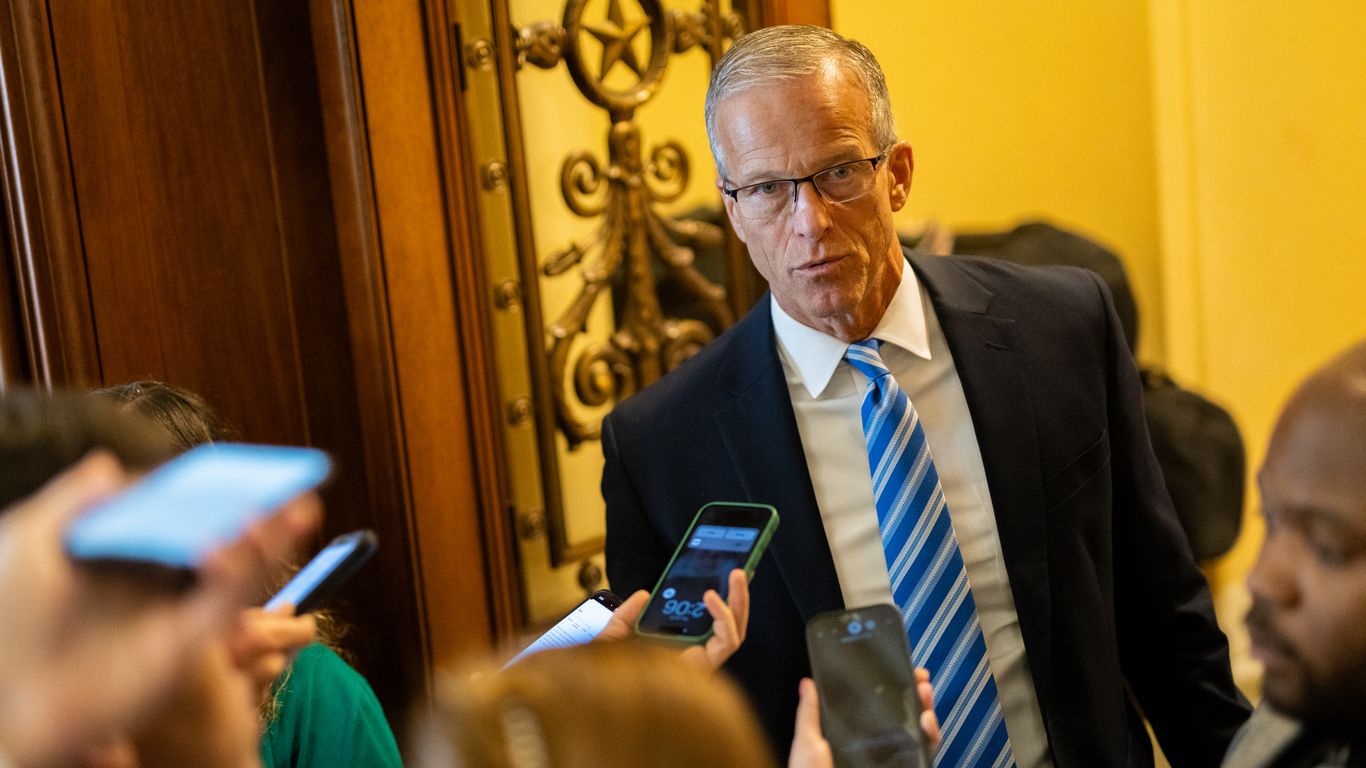
Senate Majority Leader John Thune is pulling off something today's Republicans rarely attempt: telling President Trump "no."Why it matters: Pressure from Trump and the MAGA base is piling up on Thune (R-S.D.), especially over a voter ID bill, but he has an important insurance policy: GOP senators have his back."I think he's got strong support. I read all the stories, but I think mostly that's made up by reporters," Sen. Mike Crapo (R-Idaho) told Axios. "Leaders absorb some of the punishment, but I think he's doing great. No one could do a better job than he is right now," Sen. Roger Marshall (R-Kan.) told Axios."His cred in the conference has never been stronger," Sen. Kevin Cramer (R-N.D.) told Axios.Catch up quick: Trump's frustration with Thune over the inability to pass the SAVE America Act or nuke the filibuster is, again, bubbling over."Thune should not allow the United States Senate to 'leave town' until it passes The Save America Act or, far better still, TERMINATES THE FILIBUSTER," Trump demanded on Truth Social on Monday morning.Thune has snapped back, reiterating that it is a matter of math. There are not enough votes to pass SAVE, end the filibuster or justify canceling the August recess."Give me a rationale or a path to getting success, staying here through the month of August," Thune told reporters Monday about the calls from Trump and a few GOP senators to cancel recess to pass SAVE. "You could stay here til Christmas."What to watch: Trump has not called for Thune's ouster. He even told reporters Monday that their relationship is "fine." But the building anger has fueled widespread speculation in D.C. that the president could eventually go there.Even if he does, it would not carry the same weight as a threat to Speaker Mike Johnson's leadership in the House.For one, Senate leadership elections are conducted by private ballot, giving more cover to senators who may not want to publicly cross Trump.What we're hearing: Many Republican senators are quick to share their support for Thune behind closed doors, even if not all are willing to publicly do so right now.Thune "is not in jeopardy," a GOP senator told Axios, requesting anonymity to speak candidly. "He is not the problem.""We have a bunch of people across Capitol Hill that are obsessed with social media fame," another senator told Axios, referring to those questioning Thune's leadership.Senior GOP aides for other senators also tell Axios the problem is really "squeaky wheels" getting more attention and that the situation could ultimately benefit Thune within the conference.The other side: A conservative corner of the conference is certainly growing frustrated with Thune. Seven senators are now calling to delay the August recess until SAVE is passed: Mike Lee (R-Utah), Rick Scott (R-Fla.), Ashley Moody (R-Fla), Jim Banks (R-Ind.), Tommy Tuberville (R-Ala.), Bill Hagerty (R-Tenn.) and Darline Graham (R-S.C.)But even some of them admit Thune's leadership is not at stake."I wouldn't say that, because his job lies with us," Tuberville said when asked about any risk to Thune's position as leader. "But a lot of people are getting a little bit frustrated." The bottom line: "I've been somewhat disappointed more Republican senators haven't been bold enough to speak out," Cramer said.— Axios' Kate Santaliz contributed to this story.
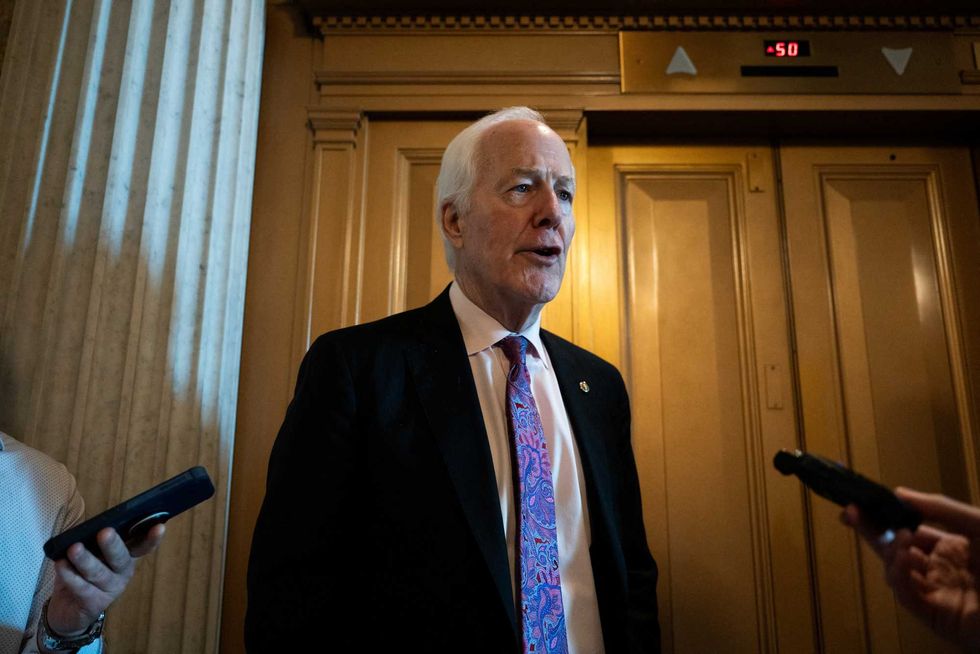
Sen. John Cornyn (R-TX) slammed President Donald Trump's demand for the Senate not to take a recess until the SAVE America Act is passed.On Monday, the senator, who was recently ousted from the Texas Republican primary runoff following Trump's endorsement of his opponent, Ken Paxton, called this whole plan an "act of futility," NOTUS' Igor Bobic reported.“Unfortunately, with the assistance of some senators, he's raising expectations among Republican voters," said Cornyn. "They're bound to end up being disappointed, which strikes me as a bad approach 99 days before the midterms.”Trump has been obsessed with passing the SAVE America Act for months. The legislation would impose draconian nationwide restrictions on voting rights, including proof-of-citizenship and voter ID requirements so strict that even REAL ID driver's licenses wouldn't be acceptable in most states.The passage of the bill was a significant flash point in the Texas Senate primary, even though both Cornyn and Paxton supported the legislation; Paxton vowed to drop out of the race if Congress passed the legislation before the date it was held, as a ploy to pin its failure to pass on Cornyn as the incumbent.Senate Majority Leader John Thune (R-SD), for his part, has also poured cold water on the scheme to hold back the Senate from recess, reminding Trump and the general public that the votes just aren't there to change Senate rules to stop a Democratic filibuster.
Senate Majority Leader John Thune issued a reality check to President Donald Trump on Monday, as the president continues to demand that senators rewrite their own rules.Trump has been demanding several changes to force his agenda through, including the elimination of the legislative filibuster, which has been a consistent obstacle to his SAVE America Act package of voting restrictions, as well as eliminating "blue slips" that allow senators to unilaterally reject certain executive and judicial nominees from their home states.These rules have often frustrated presidents in both parties, although ironically, the filibuster has historically benefited Republicans more than Democrats, since a greater percentage of their agenda can be passed through federal courts and budget bills.There's still not the appetite to make those changes, said Thune — even on the GOP side.According to Semafor's Burgess Everett, Thune told reporters he has "sat down with about 20 Republicans, and on getting rid of the legislative filibuster, getting rid of blue slips, and there were 15 nos. So I mean, this is not an open question. It's just a fact, and the facts don't change."Thune added that if Trump wants these changes in the Senate to be on the table, he would have to do the heavy lifting of getting those senators to change their minds."If [Trump] can change the facts and start moving some of those senators who are no's into yeses, then we have a different conversation,” Thune told Everett.Trump's most recent rant against the filibuster came earlier in the day, when he proclaimed on his Truth Social account that Thune shouldn't allow the Senate to adjourn until the changes are made, because "the Dumocrats will do it on day one, and can’t believe how lucky they got with this Senate leadership. Remember, stupidity always brings LOSING & DEATH!"