Conservative commentator John Podhoretz called a pastor "actively evil" for expressing concerns about his interracial family while the future of birthright citizenship was still uncertain.Right-wing pastor Joel Webbon posted the concerns on June 29 on X alongside a photo of his multiracial family, which includes a Black daughter."Because of an interracial family, my grandchildren may not get to have a country," Webbon wrote. "Adopting children of another race/nationality is biblically permissible, and in some cases, may be even commendable. The real problem is that women make great mothers, not civil magistrates."He posted the day before the U.S. Supreme Court upheld birthright citizenship in a 6-3 ruling, with Justice Amy Coney Barrett, who has also adopted Black children, casting one of the deciding votes.After the court upheld birthright citizenship, Podhoretz lashed out."Wow. You are actively evil, and the fact that you minister to a flock is a tragedy for your community and all of humankind," he wrote on X."What's crazy is that this is obviously extremely racist but it's also still euphemism," The Atlantic staff writer Adam Serwer wrote on Bluesky. "What he means is if he ever has to see someone who isn't white he 'doesn't have a country,' it is not about rights or citizenship but race purity which even edgelords are still queasy about expressing directly.""…Their model of 'rights' is 'we are oppressed when denied the right to be a racial overclass,'" he continued.Webbon, who hosts the Right Response Ministries podcast, has previously argued that interracial marriage falls outside God's "normative design."
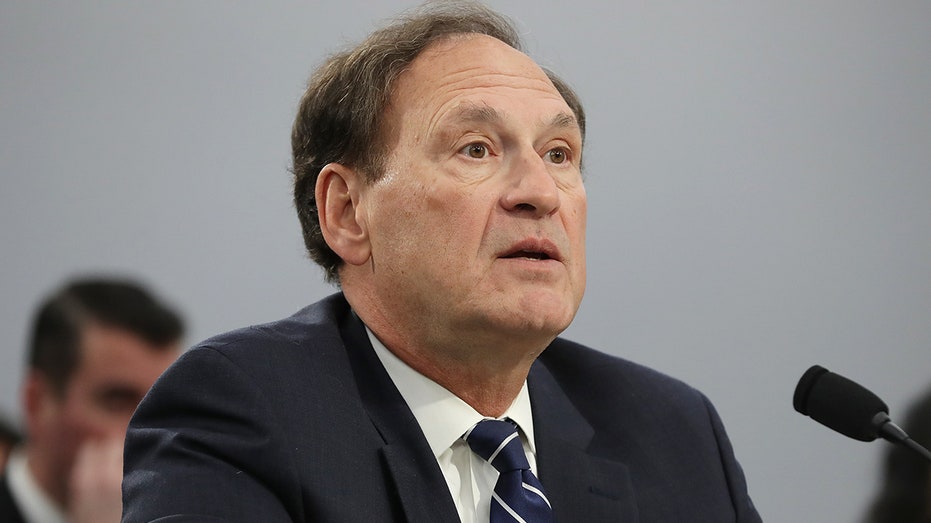
Justice Alito warns the Supreme Court's birthright citizenship ruling threatens national security by extending citizenship to children of birth tourists.
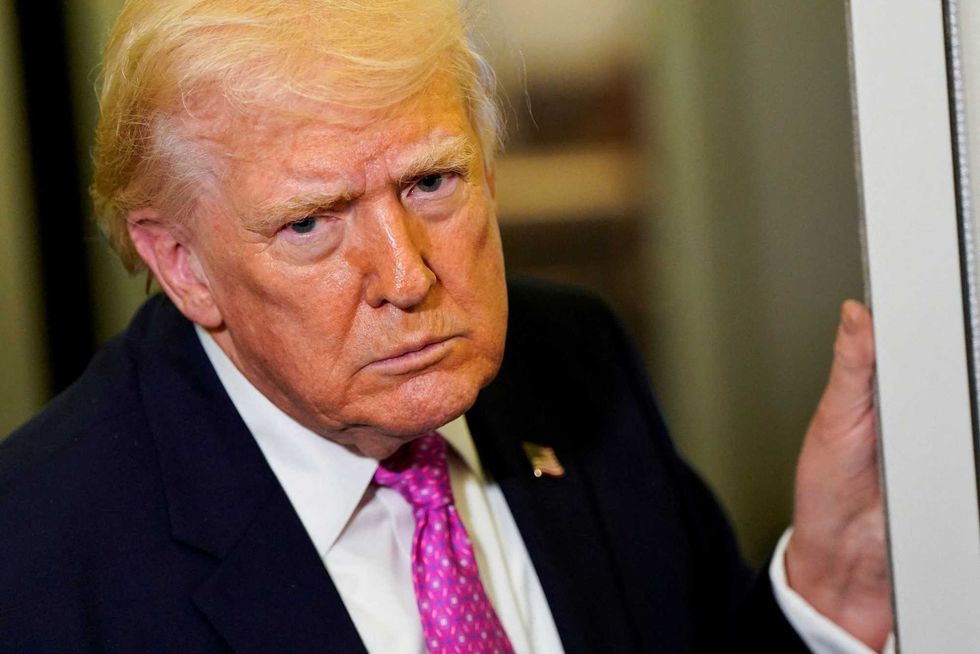
A Republican lawmaker who usually supports President Donald Trump publicly split with his own party leader on Monday over housing affordability.“He's calling a bill that would address housing affordability — one that you support — a yawn,” CNN’s Jake Tapper asked Rep. Mike Lawler (R-NY) on Monday. “Your thoughts?”Lawler separated from the president on this issue.“Obviously I disagree,” the New York Republican told Tapper. “This is an issue that I have been leading on since coming to Congress. Six of my bills are included in the overall bill, and I think housing affordability is one of the biggest issues that we could tackle as a country.”After criticizing Trump’s Democratic predecessor, former President Joe Biden, by saying that under his administration “mortgage interest rates reached a 30-year high, we have cut that in half,” Lawler added that “there is more work to do. We need to increase supply, we need to increase access to capital, and we need to reduce overall costs. And that's what this bill does. It's the first bipartisan housing bill in 36 years that really tackles the issue in a substantive and serious way.”He concluded, “I'm proud of the work that we did, and I certainly encourage the President to sign it.”Earlier on Monday, Trump supporters and former White House deputy press secretary Hogan Gidley defended the president’s statement on MS NOW, only to be met with laughter.After playing a clip of the president speaking with reporters, Hunt then turned to Hogan Gidley, a former White House deputy press secretary for Trump, who defended the president’s dismissive remarks about affordable housing.“It is a political win, and I think he is going to take the victory lap in some form or fashion,” Gidley explained. “I do think, though, he is focused on making sure that our elections have some semblance of faith, trust and confidence, which they have been losing in this country for decades. You'll remember around 65 percent of Republicans did not believe that Joe Biden won the election.”Later Gidley said that Trump is “not obsessed” with false claims of voter fraud, prompting more laughter.Republican lawmakers have complained that Trump is burdening them with an “impossible task” by insisting that they pass the SAVE America Act, which would rewrite election laws in a manner that critics claim would disenfranchise millions of voters, as a prerequisite for signing affordable housing legislation. While the SAVE America Act does not have the votes to both pass and survive a filibuster, affordable housing is a popular issue."You know, I have people telling me I need to implement the SAVE Act immediately in North Carolina, in a state that has voter ID," Sen. Thomas Tillis (R-NC) told host CNN’s Jake Tapper. "[Why] do I, over the next four months, have to try to pursue the impossible task of implementing a bill that simply can’t be implemented in that timeframe?"He added, "Why are we doing more things that undermine our confidence in elections rather than getting the strong message out that will win for Republicans this year?... Win by the good results that Republicans have produced and stop undermining the confidence in the elections. This is a bedrock of our 250-year history of success as the democracy that changed the world. Let’s not mess with that between now and November."Speaking to AlterNet earlier in June, Dan Vicuña, the Senior Policy Director for Voting and Fair Representation at the good government nonprofit Common Cause, said that Trump’s ultimate goal is to rig the 2026 midterm elections by disenfranchising Democratic voters.“What they all add up to is a desire to avoid any accountability to the voters in the midterm elections — to ensure, to preordain the outcome of a midterm that he thinks is going to go badly for him,” Vicuña explained to AlterNet. “We know, from the Big Lie of the 2020 election to spurring on a violent revolt to overthrow a free and fair election, that he has no respect for democratic norms, for the voice of the people. This is entirely about his own power and his own ego. He will even invest in protecting that ego and protecting his power at the expense of the needs of the public. People are suffering with high gas prices and affordability issues, and he does not care. All that matters is protecting his power, and he has no interest in whether he does that through democratic means.”Vicuña added, “I think some of these attempts to federalize, to nationalize elections are clearly illegal. You've seen some of that overreach already struck down — attempts to order independent agencies to force a strict voter ID requirement on people. That has been rejected. Common Cause is in court challenging the latest executive order to turn the United States Postal Service into some election administration agency and to create a further bureaucratic layer to make it more difficult to vote by mail. In terms of the president's authority to order around USPS, it's illegal.
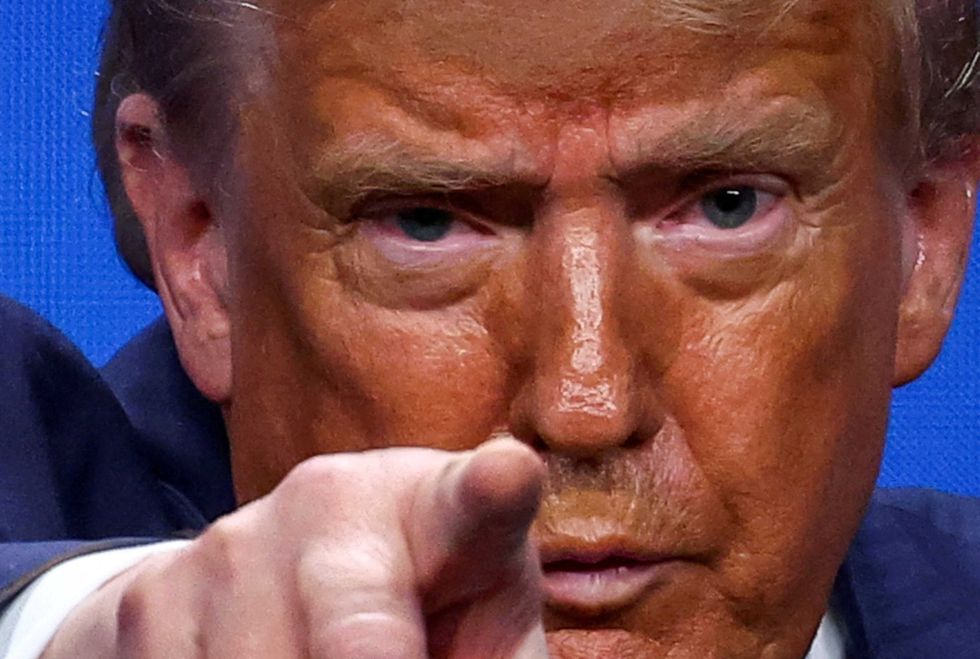
A defamation lawsuit President Donald Trump filed against the BBC is producing what one observer called an "unintended consequence" — potentially opening the president up to broad discovery about the period surrounding January 6, according to journalist and commentator Aaron Parnas.In his newsletter, the Parnas Perspective, Parnas reported that Trump's $10 billion suit against the British broadcaster appears to be backfiring by giving the BBC an opening to demand records tied to one of the most heavily scrutinized stretches of his presidency.According to new court filings described by Parnas, the BBC is seeking Trump's phone logs, calendars, schedules, diaries, and communications from the period running from around the 2020 election through January 20, 2021. The broadcaster argues that the material is relevant to its defense in the case.Trump's attorneys are pushing back hard, Parnas reported. They have accused the BBC of attempting to use the defamation suit to put January 6 itself on trial, and argue that the discovery demands reach too far.Parnas summed up the irony at the heart of the dispute, noting that a lawsuit Trump brought in pursuit of billions in damages is now exposing him to potentially sweeping discovery about a period he has long sought to keep out of the courts.The dynamic Parnas described is a familiar risk in defamation litigation, where a plaintiff who goes to court seeking damages can find the discovery process turned around to scrutinize his own conduct and communications.It remains to be seen whether the court will grant the BBC's discovery requests or side with Trump's attorneys in narrowing them. For now, as Parnas laid out, the suit has handed the president's legal opponents a potential avenue into records he has fought for years to shield from public view.