Systemic Failures Resurface at Cannon Air Force Base, Leading One Service Member to Contemplate Suicide
Far Right
A troubling pattern of systemic failures emerges at Cannon Air Force Base, as a recent account from a service member reveals neglect and harassment within the ranks, raising serious questions about the treatment of service members during critical times.
The post Systemic Failures Resurface at Cannon Air Force Base, Leading One Service Member to Contemplate Suicide appeared first on The Gateway Pundit.
A federal judge wrote that the phrase, which also led to charges against the former F.B.I. director, James Comey, did not appear to constitute a true threat.
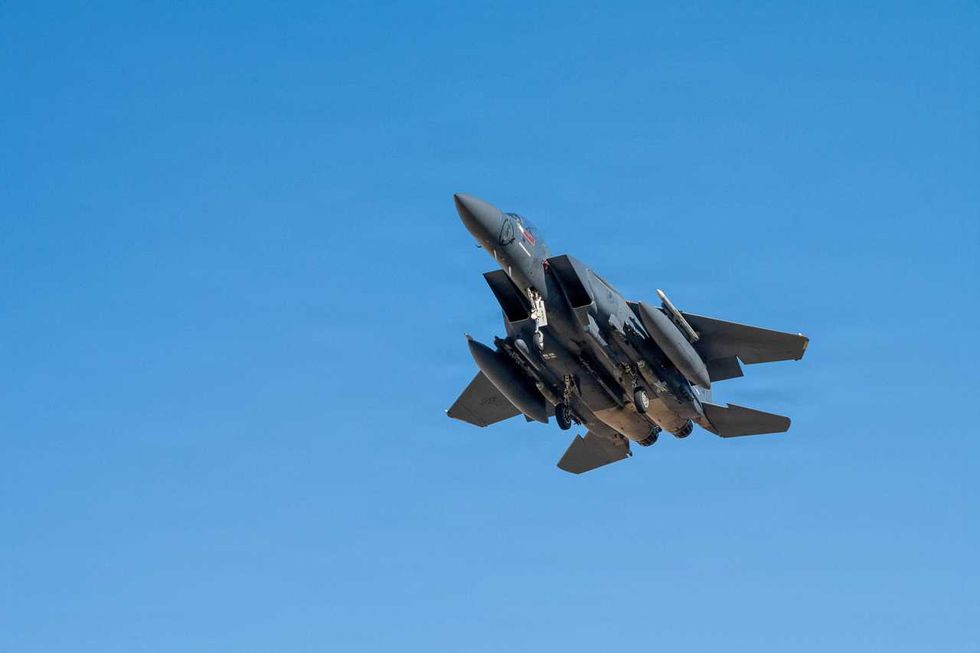
According to satellite imagery and video analysis, Iran has attacked at least 20 American military facilities across the Middle East, with some experts estimating as many as 28 bases targeted. The report by BBC Verify significantly exceeds public U.S. acknowledgment of the attacks. Strikes have hit key installations across eight countries: Saudi Arabia, United Arab Emirates, Qatar, Kuwait, Iraq, Jordan, Bahrain, and Oman, causing hundreds of millions of dollars in damage. Notable losses include three THAAD anti-missile batteries, each costing approximately $1 billion, and forming a complex regional defense network that cannot be quickly replaced. At Prince Sultan Airbase in Saudi Arabia alone, 42 aircraft have been destroyed or damaged since February, including F-15s, F-35s, Reaper drones, and an A-10 attack plane worth up to $700 million. Iran's tactics evolved from mass missile barrages to precise strikes targeting high-value assets. The Pentagon declined to dispute the BBC's findings, while the U.S. requested satellite imagery restrictions on the region.Watch the video below. Your browser does not support the video tag.
Gregory Allen, Founder and CEO of Decision Tree Research joined Balance of Power to discuss the competition between the US and China on the AI race. He also discussed the news that Anthropic has confidentially filed for IPO. (Source: Bloomberg)
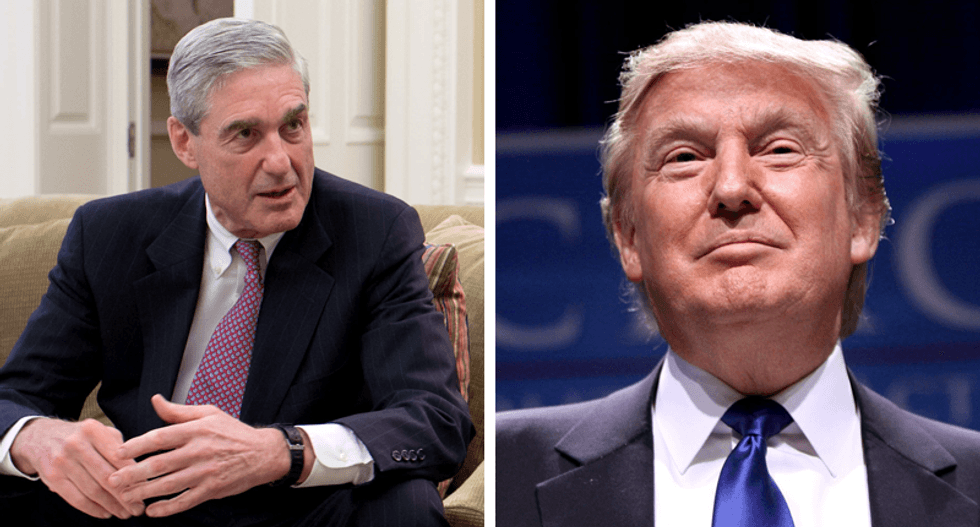
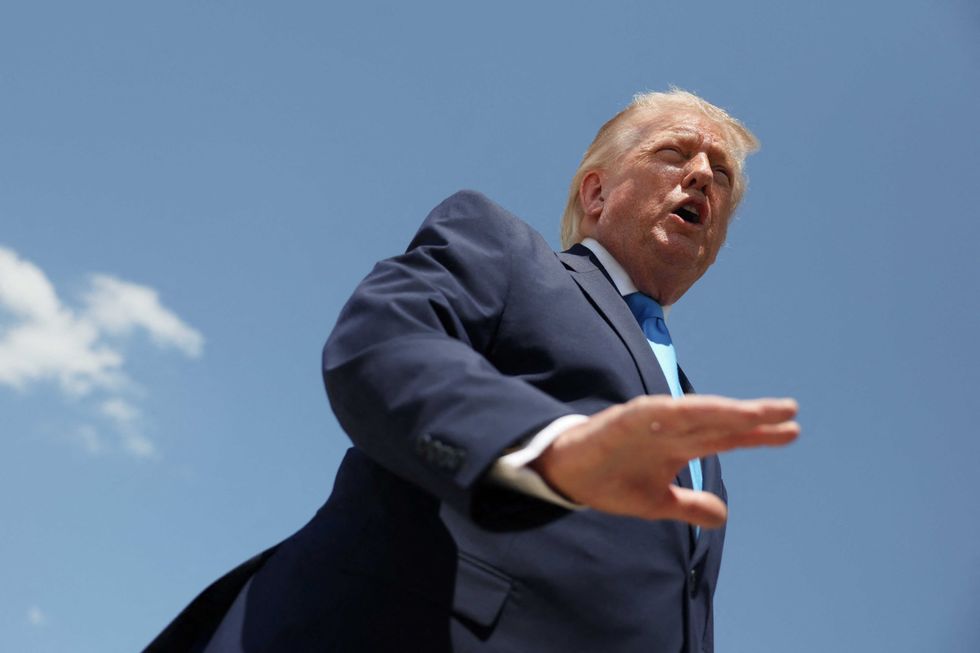
One of President Donald Trump’s former advisers told AlterNet on Monday that, although he had hoped to receive compensation from the temporarily-cancelled $1.8 billion “anti-weaponization” fund, he believes the president made an early mistake which would have made the fund unnecessary.“Trump had the full authority to fire Mueller,” Sam Nunberg, a political advisor to Trump's 2016 presidential campaign who was subpoenaed for Special Counsel Robert Mueller's Russia investigation, told AlterNet. “Frankly, he should have done it during the transition — he was advised to, and he didn't. And there was no conspiracy or collusion with the Russians. So it was absolutely ridiculous to have done that.”Nunberg added, “And the way it was handled — I forget the guy that did it, it wasn't [Attorney General Jeff] Sessions, it was his deputy, Rod Rosenstein — the manner in which it was announced was, you know, absolutely — the government should have — and I believe in this — especially this president would understand that anyone would at least at a minimum deserve legal fees returned. In general, if somebody's a victim of lawfare, yeah, I think they should be compensated.”Regarding reports that he had applied for compensation from the fund, Nunberg said that “there was no fund” and, when asked by The Wall Street Journal about whether he’d apply, he had merely said that “it was more that if they were going to start a fund, and it could have been applicable to the Mueller investigation, I would have put in an application.”He also argued that people investigated by Mueller deserve compensation for being allegedly targeted by the government.“I certainly think that the Mueller investigation, at a minimum, everyone who was either investigated or a witness should be compensated, because that investigation never should have been initiated,” Nunberg said. “I don't necessarily fault the rank-and-file staff, but once they opened that investigation, it was really — any association with Donald J. Trump meant you were going to have to hire a white-collar attorney.”He elaborated on how it personally impacted him, explaining that he had “to inform my clients, as a fiduciary duty, that I've been called into the investigation. Things like that. I thought it was extremely unfair. It was arbitrary. It didn't have to be started.”He also argued that people should be eligible for this kind of compensation regardless of their political views.“If it's a political witch hunt, yeah. I think there should be some kind of compensation fund for it, and I don't care what party the people are from,” Nunberg said.When it came to the news on Monday that the fund was temporarily cancelled, he expressed appreciation for it existing in the first place, telling AlterNet that “I would say that I appreciate the fact that the president was willing to make this part of his settlement with the IRS. He didn't have to do that.”At the same time, he offered a criticism of how the fund was created.“I think there should have been some general guidelines when the fund was announced and/or filed with the judge, some general guidelines about who the potential recipients should have been,” Nunberg told AlterNet. “It could have been handled better by the Justice Department.”Trump’s $1.8 billion fund was controversial because Trump created it as a settlement between the Internal Revenue Service (IRS), which he sued for $10 billion because a contractor there leaked his tax returns during his first term, and the Justice Department that he himself controls. When the jurist in charge of the case, Judge Kathleen M. Williams, ordered the IRS, Justice Department and Trump legal team to appear before her court on May 20th to ensure that any proposed settlement was legal, all parties involved rushed to arrive at a settlement before the judge’s deadline.When news of the fund was released, it faced numerous legal challenges and bipartisan congressional scrutiny. Legal scholars argued the settlement violated the separation of powers, with some adding it could have been construed as illegal self-dealing.
Los Angeles Mayor Karen Bass is promising to lead a resistance against federal immigration agents during the 2026 FIFA World Cup. Los Angeles is set to host eight World Cup matches, including the US Men’s National Team's opening match next Friday.
The post (VIDEO) “Damn Right” – LA Mayor Karen Bass Vows to Lead Resistance Against Immigration Agents During World Cup appeared first on The Gateway Pundit.
Iran has struck at least 20 American military facilities across the Middle East since the start of the war, according to a new satellite imagery and video analysis — significantly more than the United States has publicly acknowledged.The attacks have targeted key bases across eight countries, including Saudi Arabia, the United Arab Emirates, Qatar, Kuwait, Iraq, Jordan, Bahrain and Oman, causing damage that analysts say runs into the hundreds of millions of dollars, according to the analysis by BBC Verify – and some experts put the number of bases hit as high as 28.Among the most significant losses are three Terminal High Altitude Area Defense — or THAAD — batteries, among the most sophisticated anti-missile systems in the American arsenal. The U.S. is known to operate only eight such batteries worldwide, each costing approximately $1 billion to manufacture, and a former senior Irish defense official told BBC Verify the batteries form the core of a "highly complex" regional defense network that cannot be "quickly or easily replaced."At Prince Sultan Airbase in Saudi Arabia, satellite images show damaged refueling and surveillance aircraft, smoking craters and what analysts identified as a destroyed E-3 Sentry surveillance plane that could cost up to $700 million to replace and the report showed least 42 aircraft in total — including F-15s, F-35s, 24 MQ-9 Reaper drones and an A-10 attack plane — have been destroyed or damaged since February.Analysts say Iran's tactics evolved significantly as the conflict progressed, shifting from mass missile barrages designed to overwhelm defenses to smaller, precisely targeted strikes on high-value assets. Experts told BBC Verify that American forces "appear to have been guilty of a degree of early-war complacency" in failing to relocate aircraft as Iranian tactics sharpened.The Pentagon has not disputed the BBC's findings, with a defense official declining to comment citing "operational security." The U.S. also requested that Planet, a major satellite imagery provider, impose an indefinite restriction on new images of Iran and much of the Middle East.With the fragile U.S.-Iran ceasefire again under strain, analysts warn that depleted air defense stocks leave American bases across the Gulf increasingly vulnerable should fighting resume.