Shock claims over how Iran players were treated in Los Angeles
Far Right
Members of Iran’s World Cup team have alleged that they were kicked out of the “oppressive” U.S. right after their first World Cup game Monday evening. “They […]
Republicans have a long list of questions about the Iran deal, and they are so far noncommittal about whether it’s even something they can support. That’s not stopping many of them from defending President Donald Trump, though, as Democrats claim the agreement is no better than the one he threw away in 2017, when he […]
President Donald Trump hasn't yet released what he has agreed to on the Iran deal, but there are those in his administration who aren't happy with it and think it's a mistake. According to the Mirror, Trump is pondering firing them. Those include Secretary of Defense Pete Hegseth and CIA Director John Ratcliffe. "The debate has been settled. Anyone who opposed it could pay a personal price," a source told The Mirror.One person who appears to be safe is Secretary of State Marco Rubio, who serves in multiple roles for the president. It's unclear whether Trump would be willing to fire Vice President JD Vance, who has opposed to the Iran war from the start. In April, The New York Times reported that Vance was the most skeptical voice on the strikes. But The Mirror reported that Vance is supportive of the deal. Oddly, Jared Kushner and Steve Witkoff, who have been on the team working on the deal, are also said to support it, the Mirror reported. Since the deal hasn't been revealed, it's unclear if it prevents Israel from defending itself against Hamas in Lebanon. In the past both Kushner and Witkoff have been ardent supporters of Israel's ability to defend itself. The Jerusalem Post reported on Tuesday that Witkoff and Kushner are being seen as "sell-outs" as a result of their support for the deal. Right-wing pundit and close ally of Prime Minister Benjamin Netanyahu, Yinon Magal, host of Channel 14 's The Patriots, blasted Kushner and Witkoff using a slur, saying that Trump's deal makes him look like a “loser.” Magal accused the two men of acting under pressure from Qatar and “selling their brothers in Israel.”"Rubio, Hegseth, and other officials from both the Department of Defense and State have presented an assessment that the current Iranian regime was already in decline due to economic pressure and that turning up the heat on the country would eventually end in a surrender or, alternatively, its collapse," The Mirror claimed. South Carolina Republican, Lindsey Graham, fears that the U.S. and Iran might have "different" views of what the deal is or should be. He wrote on X that he was "pleased to hear the memorandum of understanding with Iran to allow the Strait of Hormuz to open has been agreed to.""I will be watching closely the ensuing negotiations regarding Iran’s nuclear program and other matters," Graham wrote. "I am somewhat concerned that Iran’s view of the agreement seems different than what the American negotiating team is claiming."That said, Graham doesn't appear to want Trump to decide whether the deal is final. "Under our law, any nuclear deal with Iran will be sent to Congress for review and a vote," Graham claimed. "I look forward to reviewing the final product, and I believe it is imperative that the architect of the deal, Vice President Vance, and his negotiating partners be part of the process in presenting the final deal to Congress."
The signing of the interim peace deal between the US and Iran will take place on Friday near Lucerne in Switzerland, according to the country’s foreign ministry.
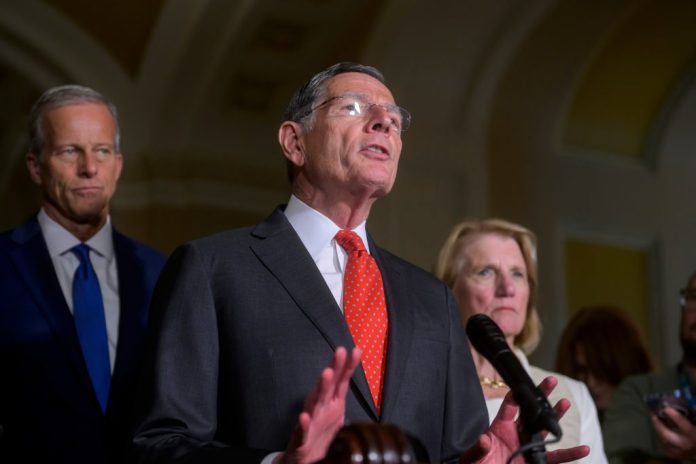
Senate Republicans said they’re pressing the Trump administration for details on the US-Iran interim peace deal and signaled Congress will ultimately vote on the final agreement.
President Trump on Tuesday said he plans to read the memorandum of understanding "word-by-word" to reporters during a press conference amid criticism of the deal. Trump told reporters that he expects the next stage of negotiations to "go pretty quickly," confirming that the deal outlines a 60-day ceasefire to continue talks.
The post WATCH: Trump Says He’ll Hold a Press Conference to Read Entire Text of Memorandum of Understanding With Iran “Word-by-Word” appeared first on The Gateway Pundit.
Lamenting a lack of transparency ahead of a scheduled public deal signed with Iran, one host on “The Five” articulated arguments against the president. “You have to […]
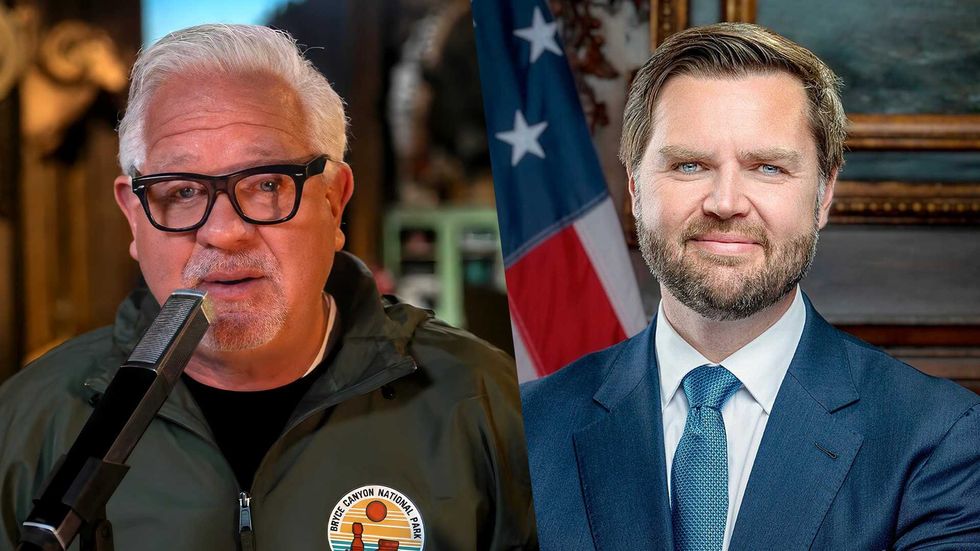
The United States and Iran announced a preliminary framework agreement intended to end the recent war, reopen the Strait of Hormuz, and lift the U.S. blockade of Iranian ports. The agreement reportedly includes a 60-day ceasefire period for negotiations over Iran's nuclear program. A formal signing ceremony is scheduled for June 19 in Geneva, Switzerland.Critics and analysts across the political spectrum, however, have expressed skepticism because many key provisions remain undisclosed. Israeli officials and other observers have raised concerns that unresolved issues — including Iran's regional proxy networks and the specifics of future nuclear restrictions — have been left for later negotiations.To get clarity on these matters, Glenn Beck spoke with none other than Vice President JD Vance. Glenn begins with several frank questions: “How do you negotiate with an apocalyptic, end-times-twelver regime, and what makes you confident that we can, as the president has said on the outset, get no support for proxies, end of the missile program, and no nukes? Do we have those, and how do you lock them in with — to be honest — crazy people that think they’re living in the end times?”“One of the most important lessons that [Trump] has given me in international negotiation or anything is you don’t trust anybody,” says Vance.“I don’t trust the words; I don’t trust the commitments, though they have committed to stop funding terrorism and to stop building or buying a nuclear weapon. Those commitments are there, but I trust people’s actions,” he adds.This philosophy, he claims, underpins the entire peace deal.“The way that we set up that deal, given the president’s directives, is if they perform the things that they say they’re going to perform, then they get a lot of relief, and if they don’t perform any of those things, then they get nothing,” says Vance, claiming that regardless of how Iran reacts, the United States is still in “a great position.”“We got the Strait of Hormuz open; oil is now down below $80 today. We have their military still destroyed, their defense industrial base still destroyed, their nuclear program still destroyed,” he declares.If Iran “[behaves] like a normal country,” the United States will treat it “like a normal country,” he adds, and if it doesn’t, Iran will suffer while the U.S. remains strong.“The United States still has all the cards, and there’s no skin off our back for entering into this negotiation,” says Vance.Glenn reiterates his initial question: “And no support for proxies, end of the missile program, and no nukes for sure?”“Correct, Glenn, and if they don’t do that, they don’t get any of the benefits of the bargain,” Vance confirms.But as a Christian, Glenn can’t help but wonder about the fate of the Iranian people.“It is hard to watch a regime slaughter its own people who are — just to use an American term — ‘yearning to breathe free.’ We hoped that we would be able to have, you know, a free people in Iran by the end of this. It doesn’t look like that is part of the plan at all. Can that be done without ... regime change?” he asks.“We’ve given the Iranian people an opportunity here. [Iran’s] military is substantially weaker. I mean it’s effectively gone. … If the Iranian people want to rise up and make, you know, their own country or make their own political future, then obviously the president of the United States would be happy to deal with whatever new government they produce, but we’re not going to force that on anybody,” Vance explains.“We will empower people on the ground who yearn to breathe free, but we’re not going to force them to ... elect their own government. What we’re going to do is pursue our best interests,” he continues.The U.S., Vance says, entered this war with Iran with clear goals: to prevent Iran from obtaining a nuclear weapon and to allow it a “conventional military” that could not “threaten its allies in the region.”“And that’s what we got,” he states.To hear more, watch the full interview above.Want more from Glenn Beck?To enjoy more of Glenn’s masterful storytelling, thought-provoking analysis, and uncanny ability to make sense of the chaos, subscribe to BlazeTV — the largest multi-platform network of voices who love America, defend the Constitution, and live the American dream.