
New York Post
Lakers hire Yao Williams II as new VP and head of global partnerships
The Lakers continue to revamp their business operations staff.
Right

New York City Mayor Zohran Mamdani kicked Pride Month off with a bang in an X post on Monday. It’s the wonderful time of year when corporations […]
The Lakers continue to revamp their business operations staff.
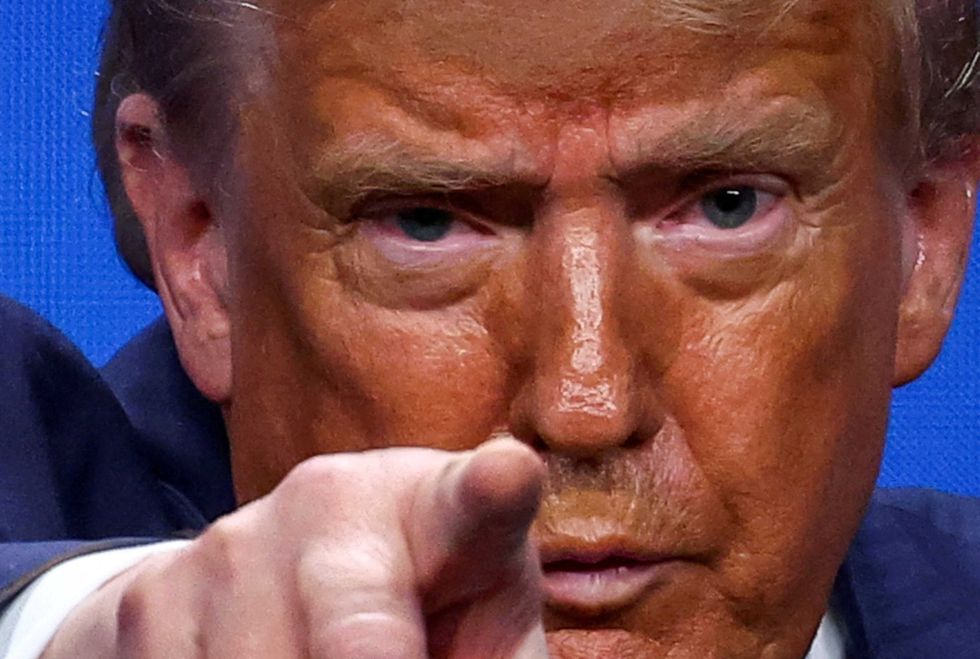
On Tuesday, President Donald Trump announced that Bill Pulte, a “home-building heir” who currently oversees the Federal Housing Finance Agency, would step in as acting Director of National Intelligence to replace Tulsi Gabbard. The decision has drawn swift bipartisan criticism over Pulte’s total lack of experience and what is viewed as an effort to “weaponize” the U.S. intelligence apparatus. "We don't need a weaponized DNI, we need professionals there," declared Senator Majority Leader John Thune (R-SC). “If he's somebody we want in that position permanently, he's got a lengthy road ahead of him.”Fears over weaponization stem from Pulte’s previous efforts to target Trump’s enemies. As the head of the FHFA, he used his position to suggest criminal charges for mortgage fraud against the likes of New York Attorney General Letitia James, Senator Adam Schiff (D-CA) and Federal Reserve board member Lisa Cook — all of whom drew the president’s ire over various incidents.With all this in mind, Senator Mark Warner, a top Democrat on the Senate Intelligence Committee, shared Thune’s sentiments, blasting at length: “This appointment speaks volumes about what this president expects from the nation's top intelligence official. Rather than selecting a respected national security professional capable of delivering independent judgments, the president has chosen an official who has demonstrated not just willingness but eagerness to use the authorities of government to pursue political retribution.”“Americans have already seen Mr. Pulte use the powers of his office at the Federal Housing Finance Agency to pursue the president's grievances and lend credibility to dubious prosecutions of President Trump's perceived political opponents,” Warner continued. “Elevating him to oversee the Intelligence Community makes clear that this president is not looking for an intelligence leader who will follow the facts or speak truth to power, but rather someone who will be willing to shape intelligence around the president's wishes, regardless of the cost to the American people.”What’s more, Warner took issue with Pulte’s bona fides, or lack thereof, arguing, "The concern is not only that Mr. Pulte lacks the ‘extensive national security experience' required by statute for the job, which was created after intelligence failures led to the deaths of thousands of Americans on 9/11. It is that he appears to have been selected precisely because the White House believes he will provide the narrative it wants, not the intelligence we need. Americans have every reason to worry about what happens when the official charged with overseeing everything from counterterrorism to foreign election threats is chosen for his willingness to advance the president's political agenda rather than his experience. That is how intelligence becomes politicized, how inconvenient facts disappear, how agencies charged with protecting our democracy instead become tools to manipulate it, and how Americans are left more vulnerable to a terrorist attack."Senator John Cornyn (R-TX) put it more simply: “I see no evidence of any qualifications for that job.” And Senator Angus King (Independent-ME), who serves on the Senate Intelligence Committee, rounded things out, “By any objective assessment — in terms of experience, expertise, background — this appointment makes no sense.”Journalist Chris Hayes summed up the collective assessment well, posting, “This is so utterly insane I’m at a loss. But it makes sense if you want to turn the entire U.S. intelligence apparatus into a tool for domestic persecution and domination.”
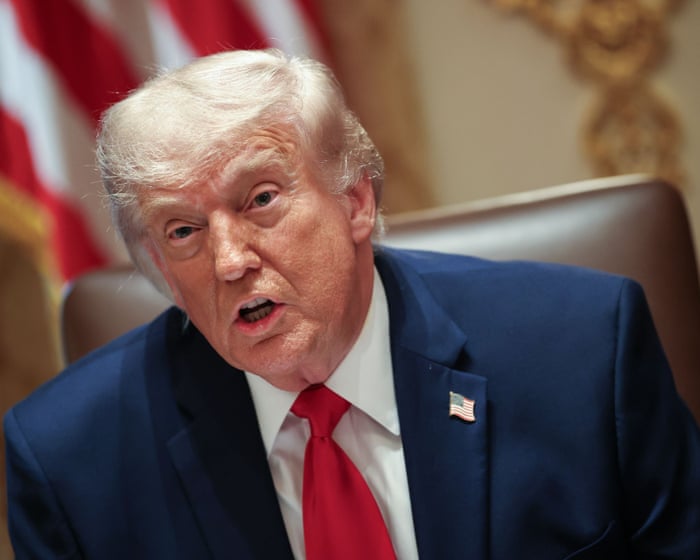
Under new rules, tech companies will be asked to share AI models with government for review before public releaseDonald Trump signed an executive order to create a voluntary framework for the federal government to vet powerful new AI models before they are released. Tuesday’s highly anticipated order represents an attempt by the president to tighten his grip on cybersecurity and national security threats posed by AI, tacking against his earlier deregulatory stance.Under the new rules, tech companies would be asked to share their AI models with the government for a voluntary review, up to 30 days before a public release. The Trump administration says doing so will allow them to improve national security, particularly with regards to cybersecurity. Continue reading...
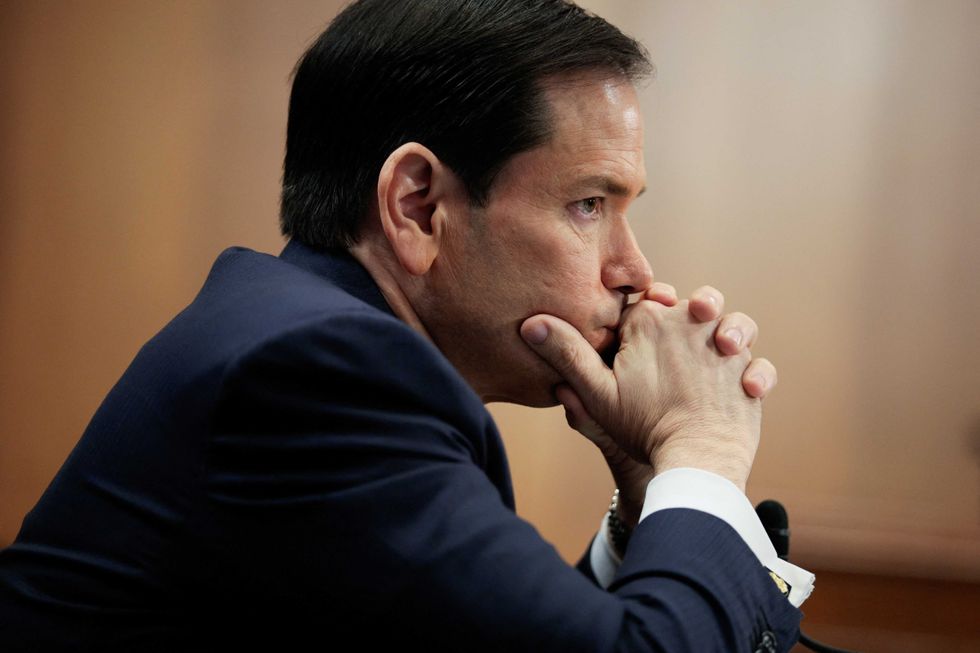
Secretary of State Marco Rubio was pressed Tuesday over the Trump administration’s refusal to grant lawmakers access to an official government memo on the U.S. war against Iran, one that Sen. Tim Kaine (D-VA) suspected may have “something in there you don’t want us to see.”Rubio testified Tuesday before the Senate Foreign Relations Committee, his first appearance before the body since the war against Iran was launched in late February. Kaine, a member of the committee, asked Rubio why the Trump administration has, to date, refused to share with lawmakers the written opinion from the Office of Legal Counsel (OLC) on the war against Iran, despite having done so for other recent conflicts.“We can agree with it or not, but the administration presented a legal opinion from the [Justice Department on Operation Southern Spear] that we could review. Absolute Resolve, the effort against [Venezuelan President Nicolás] Maduro, the administration presented a legal rationale that we could review,” Kaine said. “Now, we could review both in classified, they've not been made public. We're 92 days into a war against Iran and the administration will not let Congress look at the OLC legal opinion justifying the war.”Kaine pressed Rubio for answers given the $1.5 trillion defense spending request Congress is being asked to approve, a request that represents an approximate 40% increase of the previous year’s defense spending. He also argued that the Trump administration’s hesitancy to share the OLC opinion on the war against Iran gave lawmakers cause for concern.“Mr. Secretary, you know what kind of thinking we do. If you showed us the legal rationale for two wars and you won't show us the legal rationale for the third... is there something in the rationale they don't want us to see?” Kaine said. “Is there a dissenting opinion that says it's not legal? Are there conditions like you can't strike civilian infrastructure like schools and bridges? Are there factual assertions like the war will be over in two days, or Iran will never close the Strait of Hormuz? By not sharing the legal opinion, you give us the opinion that there's something in there that you don't want us to see.”Kaine then asked Rubio if he would use his “influence” in the administration to press for the OLC legal opinion to be shared with lawmakers.“I can certainly inquire as to why it has not been available,” Rubio said before stumbling his words. “I don't think there's a reason why... I... I am not aware that... I'm – in fact, my understanding is that they have provided documentation to the committee.”Kaine interjected, clarifying that the Trump administration had provided “documentation” to lawmakers but not the OLC legal opinion. Kaine also asserted that Rubio, as a former U.S. senator himself, would “not accept” being denied access to a critical government memo.“Alright, well let me take that back and ask the Office of Legal Counsel,” Rubio conceded. “I'll take that back.”"You give us the opinion that there's something in there that you don't want us to see."Sen. @timkaine presses SOS @marcorubio on why the OLC legal opinion on the Iran war has not been shared with lawmakers."Is there a dissenting opinion that says it's not legal?" pic.twitter.com/vPnGdRufdL— Alexander Willis (@ReporterWillis) June 2, 2026
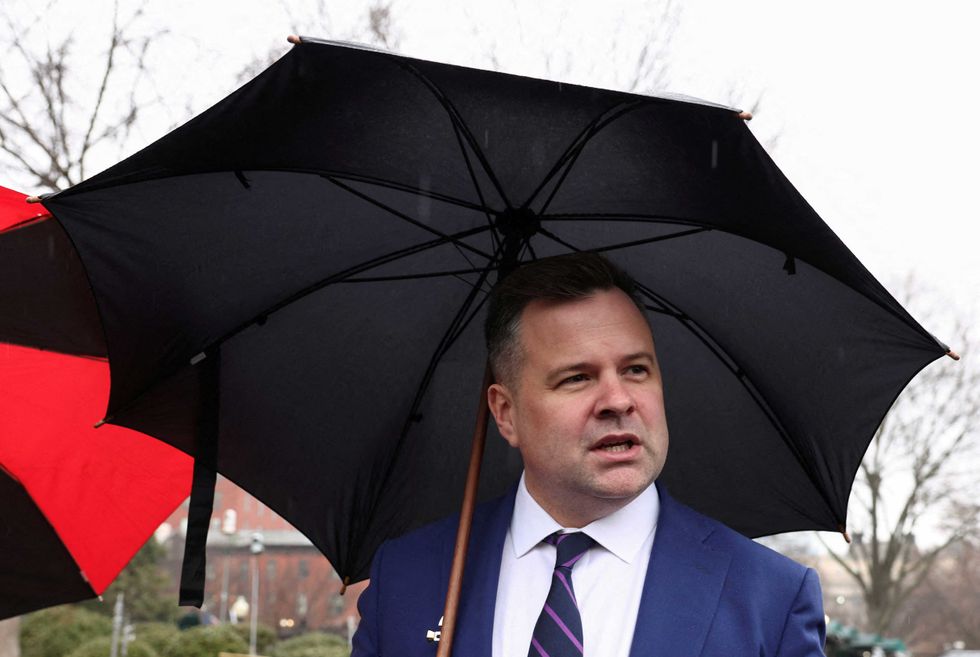
On Tuesday morning, the New York Times' Maggie Gallagher reported that President Donald Trump had appointed MAGA loyalist Bill Pulte as acting national intelligence director despite the fact that he "has no known background in intelligence, military or national security." According to journalist Derek Thompson, the Pulte appointment is a glaring example of Trump's willingness to promote his loyalists to key positions that they are woefully unqualified for.Linking to Gallagher's reporting on Pulte on X, formerly Twitter, Thompson (known for his writing for The Atlantic) tweeted, "'Late Kakistocracy' is that phase of democratic decline where the regime starts running out of ppl who will work for it, and so the folks who aren't qualified for their current positions are promoted to even larger positions for which they are even more unqualified."The term "kakistocracy" comes from two Greek words: "kákistos" (worst) and "krátos" (rule). And together, they mean "government by the worst people." Trump's Pulte appointment follows the resignation of Tulsi Gabbard, a former Democratic congresswoman turned MAGA Republican, as national intelligence director. Gabbard said she was stepping down to care for her husband, Abraham Williams, who was diagnosed with a rare form of bone cancer.Pulte's focus in the second Trump administration has been housing. In 2025, he became director of the Federal Housing Finance Agency (FHFA) as well as chairman of Fannie Mae and Freddie Mac. But none of his previous experience in the administration, according to Gallagher, pertained to national security.Gallagher reported, "Mr. Pulte has no known background in intelligence, military or national security, but he is a Trump loyalist who has been among the most aggressive advocates for prosecuting Democrats and others perceived by Mr. Trump as having crossed him…. Mr. Pulte will continue to run the housing agency while taking on the position of director of national intelligence."In order to take over the national security director position permanently, Pulte will need to be confirmed by the U.S. Senate."On paper, the director of national intelligence, a role created after the September 11 terrorist attacks, is among the most powerful of Cabinet positions, responsible for coordinating the work of the CIA and a host of other agencies," Gallagher noted. "But Mr. Trump has never seen it as an important role, his advisers have said previously, and in his first term, he believed the staff working for that office were leaking information about him."Gallagher added, "The fact that Mr. Pulte will serve in an acting role, as opposed to facing Republican senators during a confirmation hearing for the job, could give him a freer hand in focusing on priorities the president cares about, including looking for evidence that his election loss in 2020 stemmed from fraud, something that Ms. Gabbard was already pursuing."

Donald Trump has revealed who will replace Director of National Intelligence Tulsi Gabbard following her planned resignation, and the left is very unhappy. The post NEW: Leftists Melt Down as President Trump Reveals His Bold Pick to Replace Tulsi Gabbard as Director of National Intelligence appeared first on The Gateway Pundit.
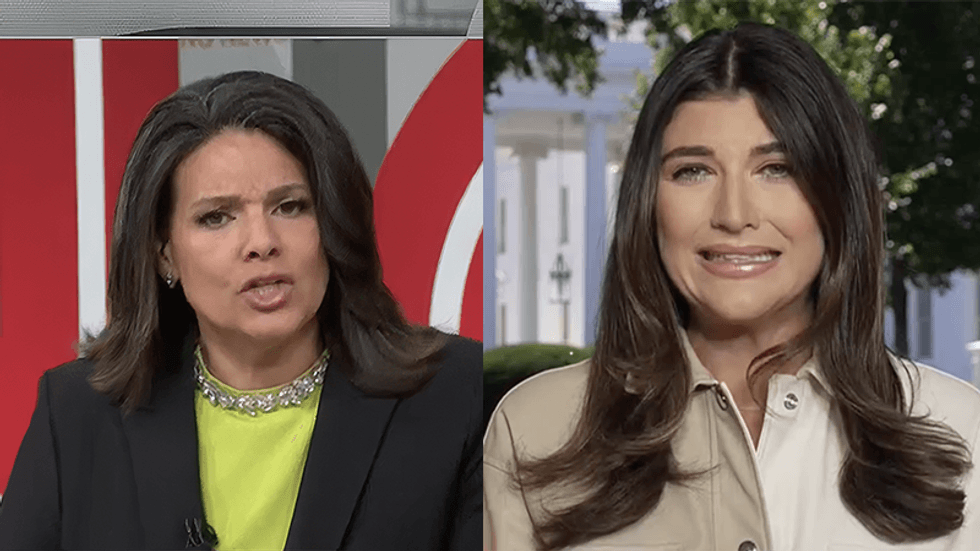
CNN co-host Sara Sidner was bewildered on Tuesday after President Donald Trump announced Bill Pulte would take on the role of Director of National Intelligence while also serving in his current role as director of the Federal Housing Finance Agency. Trump announced on Truth Social that Pulte would take over after Tulsi Gabbard announced her resignation. Pulte is known for helping Trump find a way to target New York Attorney General Letitia James, a March report revealed. He sifted through James' mortgage application, searching for errors. He then claimed she "committed insurance fraud" and bank fraud when she listed two residences as her primary residence. The charges were ultimately dismissed without prejudice. He targeted a member of the Board of Governors at the Federal Reserve, Lisa Cook, using the same tactic. Gabbard had been using her office to question the 2020 election and "examine" voting machines in Puerto Rico. Trump argued that because Pulte is an expert at "the safety and soundness of the Markets," he is perfect for the top national security official in the country. He will oversee all of the intelligence community in government, including the FBI, CIA, Defense Intelligence Agency (DIA) and the National Security Agency (NSA). The post also advises the National Security Council and the Department of Homeland Security on intelligence matters. Still, Trump said Pulte would do the job and "remain" in his current jobs, including as chairman of Fannie Mae and Freddie Mac. Pulte's responsibilities will be key given that the U.S. is at war with Iran. "I just want to confirm that he's going to take this director of national intelligence job and do the other jobs that are full-time work as well. Did I hear you right?" asked Sidner. "That is what the president said. We have to see, though, how this is going to work," said White House correspondent Alayna Treene. - YouTube youtu.be

Republican senators are still unconvinced that President Trump is dropping his $1.8 billion anti-weaponization slush fund—and want assurance that Trump won’t use taxpayer funds to pay off his allies. Without it, their own immigration reconciliation bill may also be in jeopardy. On Monday, the Department of Justice announced that it’d be holding back on its plans for the fund after a federal judge ordered them paused until June 12. While the administration promised to abide, Republican senators are unconvinced it’s a permanent end. “If it means it’s completely pulled, then that would satisfy me, but I haven’t heard anybody say that that is actually what is happening,” Senator Lisa Murkowski told Politico. Senator Shelley Moore Capito called for “more investigation” into the fund, while Senator James Langford urged the Trump administration to “say what they actually mean” regarding the fund. “The reconciliation bill looks like a broken arm with the bones sticking out,” Senator John Kennedy added. “They have to abide by the district court decision—that’s in the Constitution. I’d have to know more about their position on the weaponization fund to know whether it would be enough to dislodge the reconciliation bill.”The continued questions about the slush fund suggest that there is much more internal discord among the GOP Senate than initially thought—and less inherent rallying around President Trump. This all comes as acting Attorney General Todd Blanche prepares to testify before the House Appropriations Committee Tuesday, where he will most surely be asked about the future of the slush fund.