Mike Johnson signals House will forge ahead after GOP holdouts threatened obstruction of votes
Far Right
House Speaker Mike Johnson told “Sunday Morning Futures” host Maria Bartiromo that the House of Representatives would be returning to Washington, D.C., to continue “good work” on […]
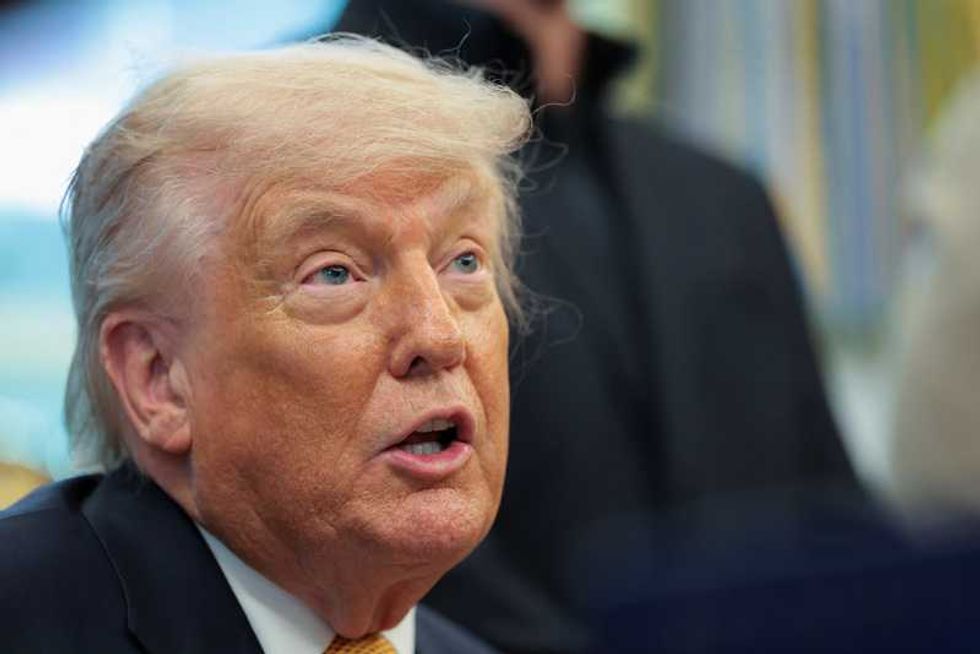
A Republican senator stepped up to correct President Donald Trump after he became confused over the bill that he has said is the "No. 1 priority."Sen. Bill Cassidy (R-LA) posted the correction on X on Monday after Trump called him out directly as one of five Republican senators blocking the Safeguard American Voter Eligibility Act, Trump's top election-overhaul bill."all Dumocrats, and our five Republican Senate Hold Outs, Lisa Murkowski, Susan Collins, Thom Tillis, Bill Cassidy, and Mitch McConnell must vote to SAVE OUR COUNTRY," Trump posted on Truth Social after the U.S. Supreme Court ruled against him on mail-in ballots."Mr. President, I don't know which version of the SAVE America Act you're referring to, but I am a cosponsor and support the latest version," Cassidy fired back on X."I don't know which staffer misled you, but thank you for your attention to this matter!!""Btw, it's irresponsible to postpone signing the Housing bill due to the SAVE Act," Cassidy added. "We need to start delivering relief to people for the high cost of housing ASAP!!"Trump had told House Republicans in March that passing the SAVE America Act was the "No. 1 priority" for Congress and vowed he would "not sign anything" until it passed — including a bipartisan housing bill already on his desk.That housing bill remains unsigned.
In a blow to the integrity of U.S. elections, the Supreme Court upheld state laws permitting election officials to accept postmarked ballots after Election Day on Monday. The ruling was 5-4, with Chief Justice John Roberts and Justice Amy Coney Barrett joining the court’s liberal justices in the majority. The dispute in Watson v. RNC […]
Congressional Republicans are redoubling their support for the SAVE America Act, a bill that has left Washington in gridlock for months, after the Supreme Court ruled states can count mail-in ballots that arrive after Election Day. The 5-4 decision in Watson v. Republican National Committee rejected a GOP-led push to end laws that permitted mailed […]
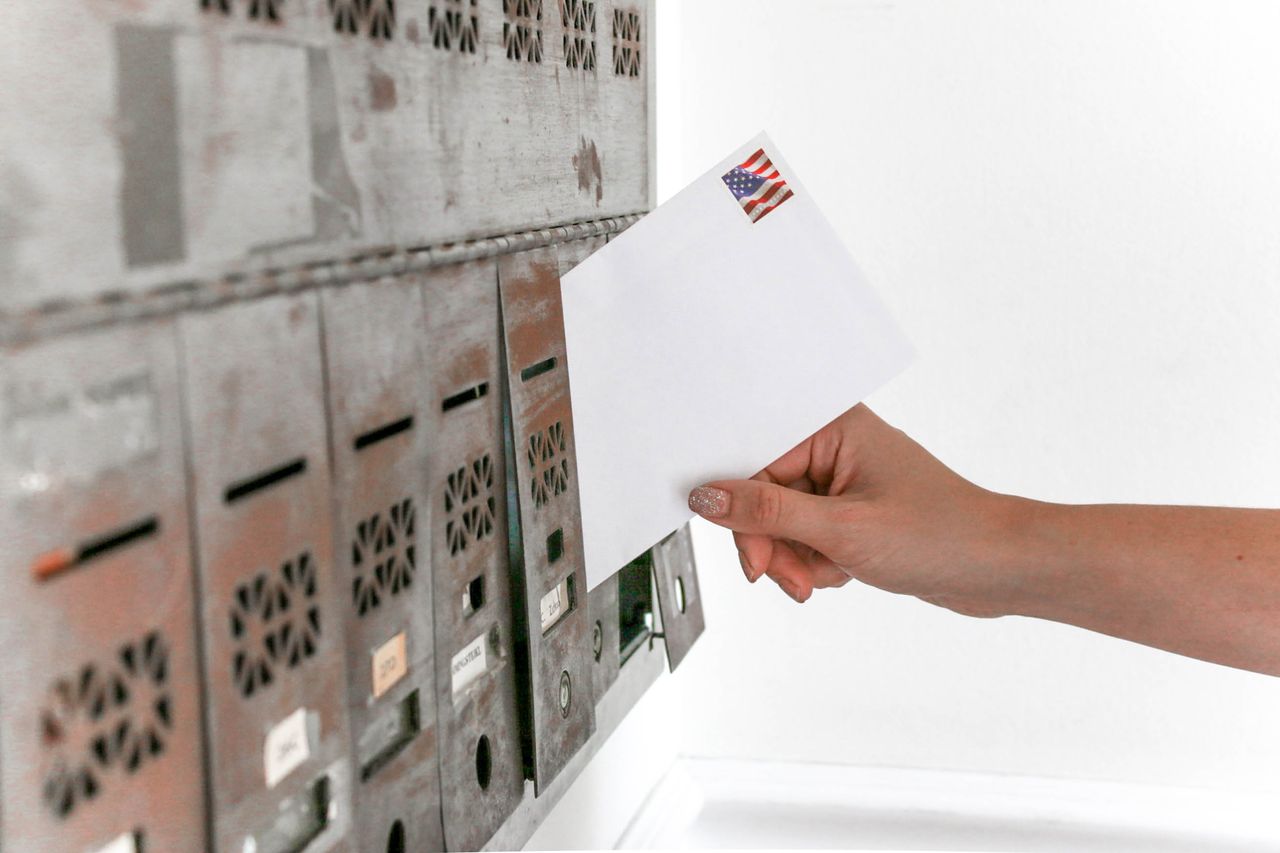
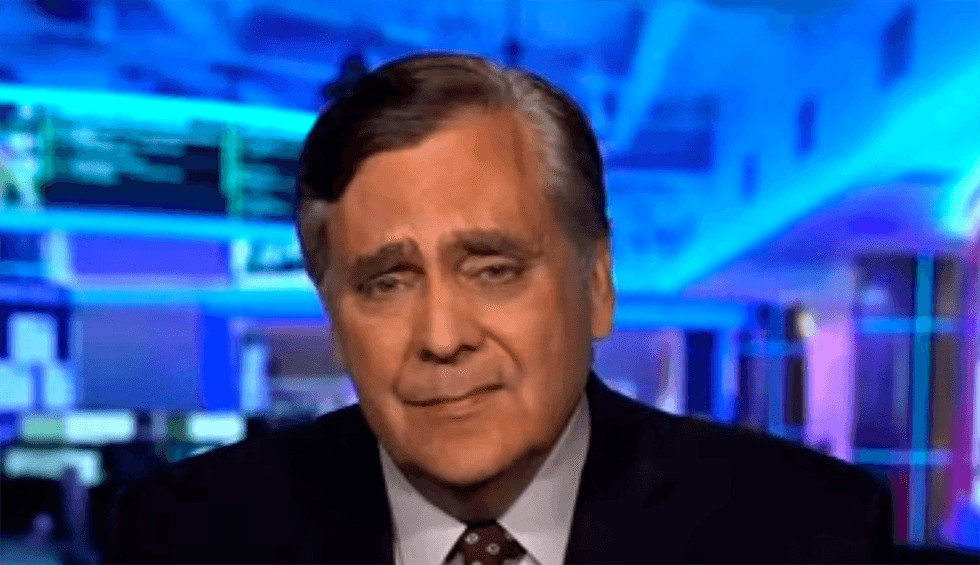
President Donald Trump suffered a major setback in his efforts to federalize voting in the upcoming midterm elections, according to a right-leaning legal scholar.“I think this is a significant loss for Republicans who have wanted to try to rein in the way that we do our elections,” Jonathan Turley told Fox News’ Dana Perino on Monday. The George Washington University Law School professor was discussing the Supreme Court’s 5-4 ruling permitting states to count mail-in ballots after Election Day, even though Trump — who believes mail-in ballots are predominantly used by Democratic voters — tried to ban counting any of them after Election. “California, of course, is the nightmare where you can go for weeks without a decision.”He added, regarding right-wing Justice Samuel Alito’s lashing out at the decision, “And just as Alito really lashes out and says this undermines the integrity of the process, the faith in the process of voters — and that is a sentiment that is shared by many — what the court is saying is that you can’t use this federal law to achieve that purpose, that there is room at the elbows here for states like Mississippi to count ballots that had been postmarked before Election Day.”The Supreme Court’s decision breaks a recent pattern of the judges siding with Trump and Republicans, especially on cases involving race, a trend that has caused many critics to accuse the jurists of partisanship given that six of them are Republicans and three are Democrats. In the mail-in ballot case, two conservative judges — Chief Justice John Roberts and Judge Amy Coney Barrett — joined the three liberal judges to create the narrow majority.“The ruling, authored by Justice Amy Coney Barrett, is a setback for President Donald Trump, who has frequently criticized mail-in voting, claiming without offering evidence that it is rife with fraud,” NBC News explained. Journalist Jamie Dupree pointed out that, despite Trump’s hope to reduce Democratic votes by suppressing mail-in ballots, “that issue is now off the table for the 2026 midterms.”This is not the only way that Trump has attempted to guarantee he retains control of the Senate and House of Representatives by federalizing the midterm elections. He also suggested he would purge voters from the rolls using DOGE and state-shared voter files, advocated strict voter ID laws, threatened to send ICE and radical groups to polling locations and implemented partisan gerrymandering. The last move was made possible when the Supreme Court overturned large portions of the 1965 Voting Rights Act.“What they all add up to is a desire to avoid any accountability to the voters in the midterm elections — to ensure, to preordain the outcome of a midterm that he thinks is going to go badly for him,” Dan Vicuña, Senior Policy Director for Voting and Fair Representation at the nonprofit good government group Common Cause, told AlterNet earlier this month. “We know, from the Big Lie of the 2020 election to spurring on a violent revolt to overthrow a free and fair election, that he has no respect for democratic norms, for the voice of the people. This is entirely about his own power and his own ego. He will even invest in protecting that ego and protecting his power at the expense of the needs of the public. People are suffering with high gas prices and affordability issues, and he does not care. All that matters is protecting his power, and he has no interest in whether he does that through democratic means.”Regarding the attempts to federalize elections, such as by his recently-overturned attempt to impose deadlines on mail-in ballots, Vicuña suggested those efforts are illegal.“I think some of these attempts to federalize, to nationalize elections are clearly illegal,” Vicuña argued. “You've seen some of that overreach already struck down — attempts to order independent agencies to force a strict voter ID requirement on people. That has been rejected. Common Cause is in court challenging the latest executive order to turn the United States Postal Service into some election administration agency and to create a further bureaucratic layer to make it more difficult to vote by mail. In terms of the president's authority to order around USPS, it's illegal. In terms of USPS's authority to become some sort of national election administration agency, it far exceeds the legal authority that Congress gave to the postal service. The statute describing what kind of work the postal service would do is about postal service work — processing mail and selling stamps. It has nothing to do with election administration.”
The committee took statements from individuals, combed through federal campaign finance filings and examined congressional financial disclosures as part of its investigation.
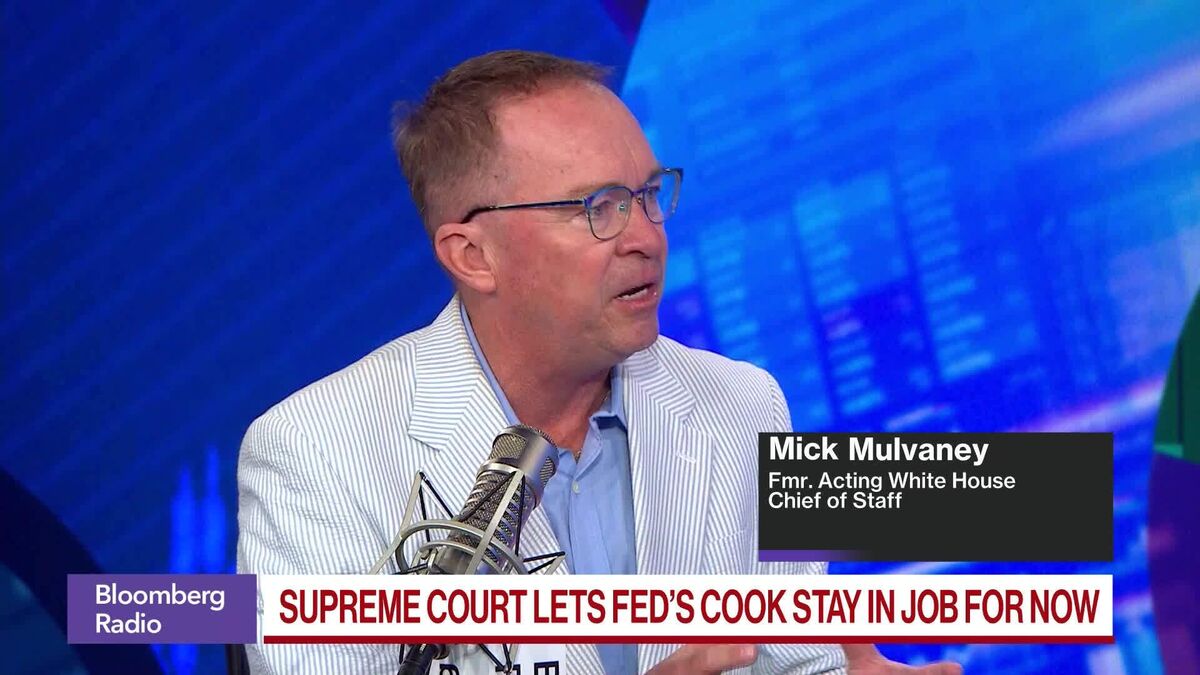
The US Supreme Court ruled that federal law permits mail-in ballots to arrive after Election Day in a decision that preserves grace periods in 30 states. Mick Mulvaney, Former-Acting WH Chief of Staff (Trump's First Term), Co-Founder of the Freedom Caucus, Former-OMB Director joins Balance of Power to discuss the latest news from the Supreme Court as well as the latest from Congress. (Source: Bloomberg)
Tensions boiled over among House Democrats Sunday after Republican Kentucky Rep. Thomas Massie’s proposed an amendment to nix $3 billion in military aid to Israel. During a […]
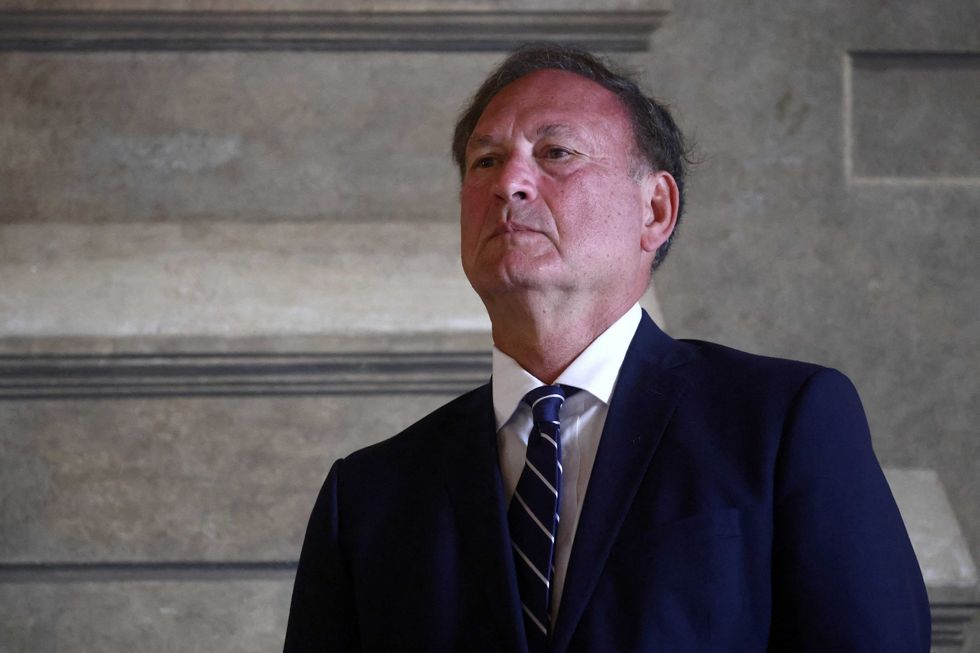
Justice Samuel Alito's legal reasoning in a landmark voting rights case was mocked as "braindead" and blamed on his presumed consumption of conservative media.The U.S. Supreme Court upheld a Mississippi law by a 5-4 vote allowing election officials to count mail-in ballots that are postmarked by Election Day but received up to five days after it, and Justice Amy Coney Barrett authored the majority opinion finding that grace periods still met statute's requirement that voters make their choice by election day."That occurs so long as election day is the deadline for individuals to vote — as it is in Mississippi," Barrett wrote. "But the election-day statutes do not set a deadline for ballot receipt, so they do not prevent Mississippi from counting ballots postmarked before election day yet received afterward."Alito authored the dissent, where he complained that "majority's holding spawns a slurry of troubling election-law questions and risks further undermining Americans' confidence in election integrity," and one particular argument stood out to critics."What the election-day statutes demand is that this authoritative choice be made on election day," Alito wrote. "If ballots received after election day are added to the set of ballots that dictate the election’s outcome, the electorate’s choice does not occur on election day, and the federal election-day statutes are violated."Many legal experts disagreed and faulted Alito's logic in the case."Alito’s dissent in the vote counting case makes perfect sense if you think of it from the perspective of a braindead Fox News viewer who thinks Dems are 'cheating' when more vote get counted and a Republican lead in the count is erased," argued writer Adam Serwer."Alito sounds a little bit like someone who fell in love with the chatbot here," pondered reporter Ted Mann. "The votes are inanimate. The voters are not.""Alito's argument – that counting ballots after Election Day means 'the electorate’s choice does not occur on election day, and the federal election-day statutes are violated' – is some of the dumbest reasoning I have ever seen," opined MS NOW's James Downie. "The 'choice' doesn't occur at the time of counting!""If you vote in person at 8:59 PM on Election Day but you ballot isn't counted until one or two days later, the choice was still made on Election Day," noted author and podcaster Doug Gordon. "Why would a ballot postmarked on Election Day but not received until one or two days later be any different? (Answer: Because Alito has brain worms.)""Alito 100% thinks that the 'blue shift' in vote counting represents a dynamic change in the outcome," wagered New York Times columnist Jamelle Bouie. "To borrow from @kalimurray.bsky.social this is not a smart man.""I would love Alito to explain to me how he thinks elections worked in the 1790s," challenged civil rights lawyer Johsua Erlich.