John Roberts: Presidents Have Executive Power. Also John Roberts: No, They Don’t
Far Right
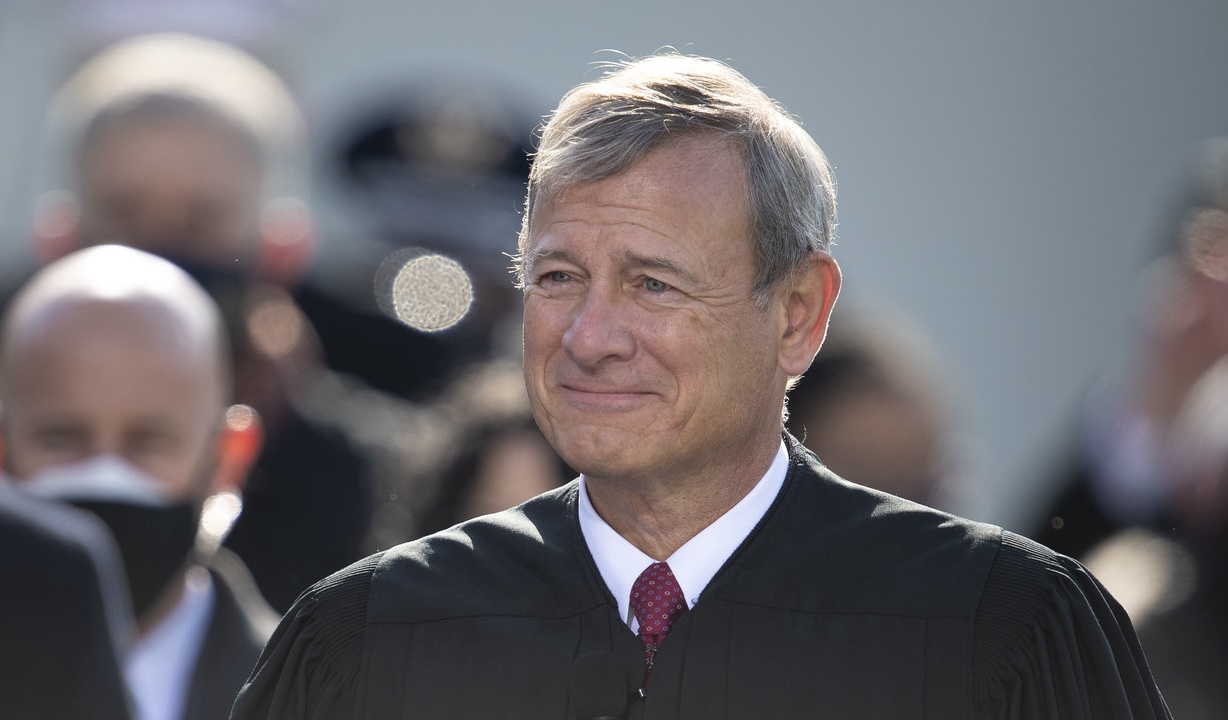
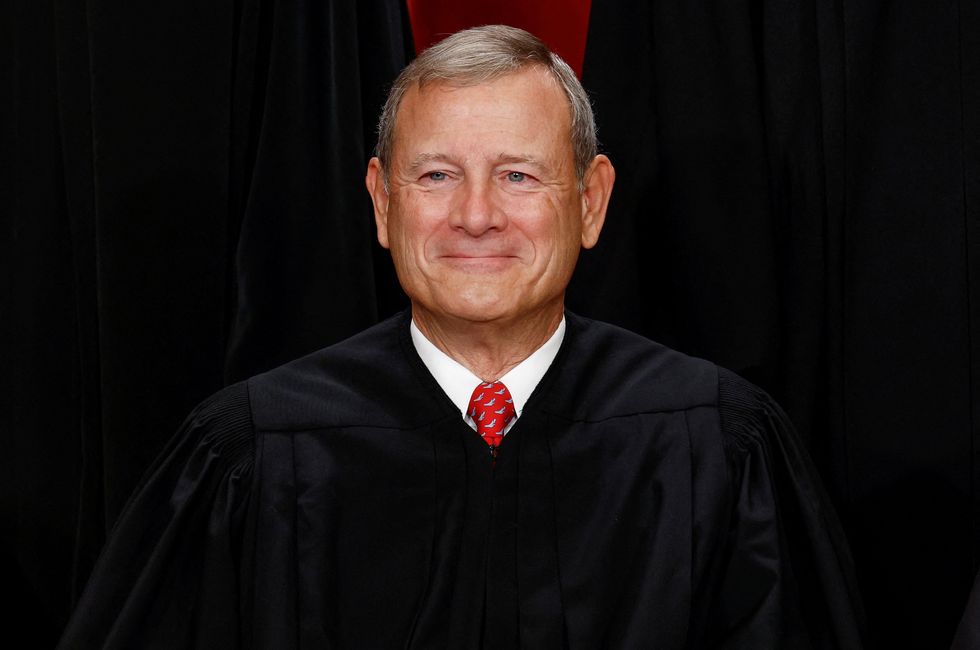
Taken together, Cook and Slaughter reveal a chief justice once again attempting to split the baby between constitutional principle and institutional pragmatism.
Washington Examiner columnist Joe Concha firmly asserted that he does not believe a socialist will win the presidential election in 2028, saying there is “no shot whatsoever” of that happening. Despite various socialist candidates securing the Democratic nominations in primaries across the country, Concha said left-wing candidates are successful only in blue states or cities, […]
The Supreme Court just took "one more big step toward autocracy," Slate legal writer Mark Joseph Stern argued Monday, and he warned Congress was left in the rubble.Stern wrote that the court's two same-day rulings on presidential firing power are "almost comically irreconcilable." In Trump v. Slaughter, the 6-3 conservative majority overturned Humphrey's Executor, a unanimous 91-year-old precedent, and held the president can fire the heads of independent agencies at will, clearing President Donald Trump's removal of Democratic FTC Commissioner Rebecca Slaughter.Yet in Trump v. Cook, the same chief justice led a 5-4 ruling shielding the Federal Reserve and blocking Trump from ousting board member Lisa Cook. Roberts, Stern wrote, "barely bothered" to explain the contradiction."On what basis could Roberts and Kavanaugh possibly allow Trump to purge Democratic appointees from the rest of the administrative state while zealously protecting members of the Fed?" asked an indignant Stern.The Slaughter ruling, he said, strips independence from agencies overseeing nuclear energy, consumer safety, unions and much of the economy, handing Trump sweeping control. He called the impact "gobsmacking."The biggest winner, he argued, is the court itself, which now gets to rewrite the rules of American governance and bend them toward outcomes it prefers.Stern pointed to fallout already unfolding, including Trump pushing out a postmaster general who balked at his demands and installing one who, Stern wrote, agreed to withhold mail ballots in blue states — part of an effort a federal judge has blocked.In her dissent, Justice Sonia Sotomayor said the majority had distorted the structure of government to fit a theory of "unitary, total executive control.""It is tempting to say that the biggest loser is Congress, which just saw its express authority to structure the executive branch nuked from orbit. And certainly, the legislative branch just suffered a massive blow," he said.But the real casualties, he argued, are Americans who would rather live in a democracy than the autocracy he claimed the court is building.His closing question: how many more hits before it all comes "crashing down"?The rulings landed the same day the court rejected an RNC bid to toss late-arriving mail ballots.
President Trump on Monday afternoon announced he is nominating Keith Sonderling to serve as Secretary of Labor.
The post President Trump Announces Nomination For Labor Secretary appeared first on The Gateway Pundit.
"Balance of Power: Late Edition" focuses on the intersection of politics and global business. On today's show, Natasha Sarin, Professor and Co-Founder of the Budget Lab at Yale University, and Jessica Roth, Professor at Cardozo Law School and a former federal prosecutor for the Southern District of New York, discuss the Supreme Court's rulings on President Trump's ability to fire agency heads and whether Lisa Cook can remain in her job at the Federal Reserve. Steven Cook, Senior Fellow at the Council on Foreign Relations, says the US and Iran remain far apart on key issues - particularly, the Strait of Hormuz and Tehran’s nuclear program. (Source: Bloomberg)
The Court has given the president full control of one of the three branches of constitutional government — and created a separate fourth branch in the Fed.
The Supreme Court blocked President Trump’s attempt to remove Fed Governor Lisa Cook for now while expanding his power to fire other officials. What this means for the Fed and others, on the Big Take podcast.
Former federal prosecutor Andrew Weissmann fixed on a single word in Chief Justice John Roberts' majority opinion and said it left him deeply unsettled.Reacting on air to Monday's 6-3 ruling in Trump v. Slaughter, which overturned 91 years of precedent and lets the president fire members of independent agencies without cause, Weissmann said the decision extends the theory of expansive presidential power Roberts laid out in the Trump v. United States immunity case.This time, he said, the chief justice leaned on the "vitality" and "secrecy" of the executive branch."It's hard to stress enough for people the ramifications of this decision," he told MS NOW's Nicolle Wallace on her show, "Deadline: White House."Weissmann pointed to Roberts' language that indicates his views on sweeping presidential power."Saying that it's necessary, what they ruled today, that it's necessary to have the vitality, and in a word, I found chilling, the secrecy of the executive branch. That was a word that was not in the immunity decision, and should think about that. He said the ruling "unleashes political patronage" and called it "a very ahistoric decision" with "very, very long coattails.""You do not want a Republican president to come in and fire every Democrat, and you do not want every Democratic president to come in and fire every Republican," he said. "You want career people in place with experience, who are supposed to be apolitical regardless of party."The decision drew a scathing dissent from Justice Sonia Sotomayor, who wrote that the court handed Trump a power unknown even to the English Crown.Weissmann invoked Justice Robert Jackson, who returned from prosecuting Nazis at Nuremberg, to caution against expanding presidential power, and said the founders feared this outcome."We did not want to, and do not want to, have a king in the White House," he said.He also called the majority's appeal to originalism "laughable," citing the same-day decision sparing the Federal Reserve as proof of "a result-oriented court."The ruling was a win for Trump even as the court dealt him losses the same day, rejecting his challenge to late-arriving mail ballots and refusing to hear his E. Jean Carroll appeal.