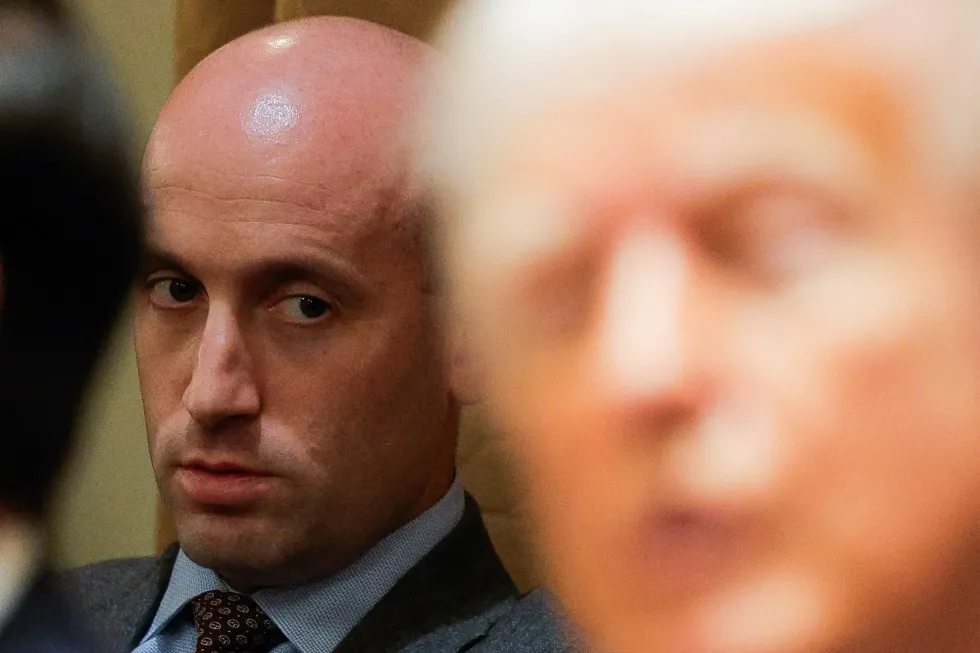
White House deputy chief of staff Stephen Miller kept up his attacks on birthright citizenship with a far-fetched hypothetical on Friday, and critics lined up to ridicule it.Days after the Supreme Court upheld birthright citizenship in a 6-3 ruling that struck down President Donald Trump's executive order, Miller posted on X that if you believe a foreign government could sail a hospital ship to the edge of US waters, "deliver a hundred babies to foreign moms, then promptly sail back," and that each child "is American for life, you don't believe in nationhood at all." The rant echoed the birth-tourism case he made on Fox News, where he floated a "hard look" at barring pregnant women from the country.Miller's post predictably led to quick backlash. Former Rep. Adam Kinzinger asked sarcastically, "What about our hospital ship that we sent to Greenland? It happened right?" Bulwark journalist Sam Stein quipped, "Well. When you put it that way." Internet personality Damin Toell pointed out that under the 1898 Wong Kim Ark precedent, and still after this week's ruling, babies born aboard foreign government ships in US waters are already exempt from birthright citizenship.Others flipped Miller's logic back on him.National security journalist Marcy Wheeler called his "perverted little fantasy" no more real "than it was for the century and a half since birthright citizenship was codified." Academic Alonso Gurmendi argued that "any citizenship rule can be made to sound absurd like this." And journalist Zaid Jilani went furthest, sarcastically asking: "What if a mom catapults over the US Mexico border and from 500 feet in the air pops a baby out, ties a parachute to it and lets it fall gently to the ground. Does that baby deserve citizenship, lib?"The administration has vowed to keep fighting, though some analysts say the ruling nearly went the other way. Independent estimates put actual birth tourism at a tiny fraction of U.S. births.
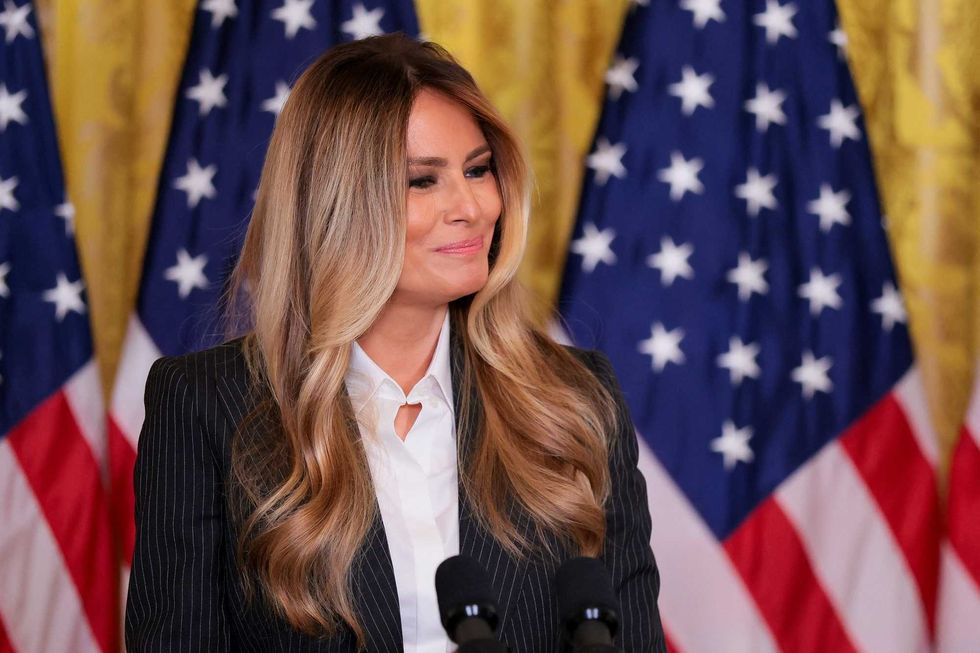
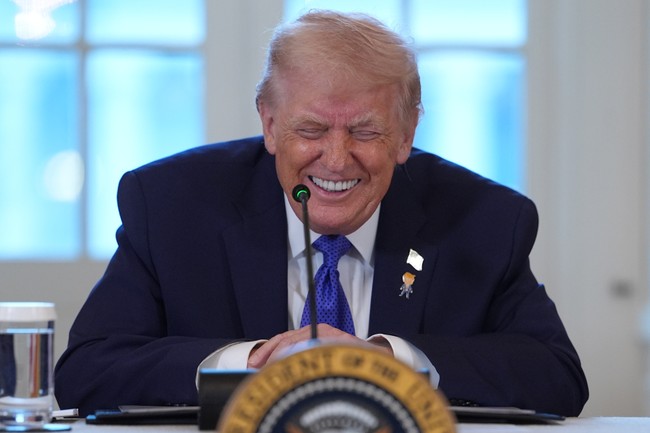
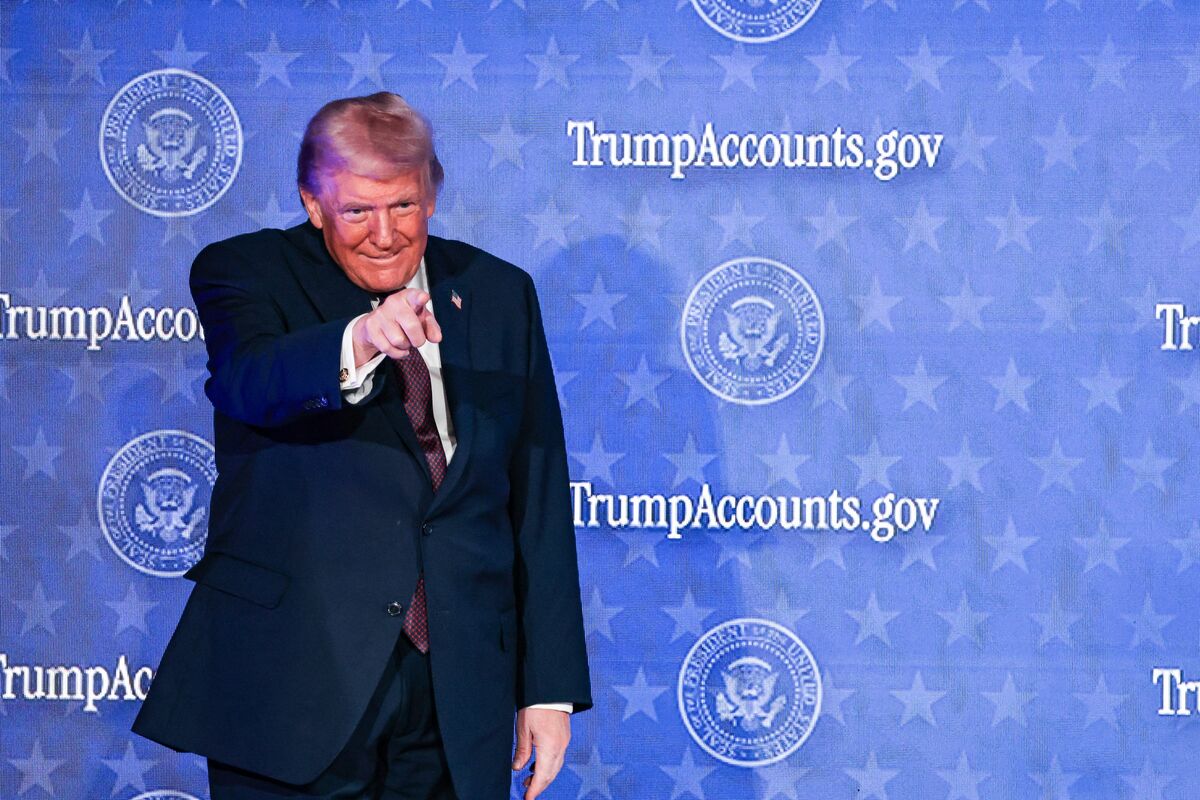
First lady Melania Trump gave Congress a private deadline to pass her signature foster care bill, and she is pursuing it largely outside the usual White House channels, according to a new report in Politico. At a bipartisan roundtable with the House Ways and Means Committee in April, the first lady publicly called foster care legislation a "moral imperative." Then, behind closed doors, she set a target, Rep. Jason Smith (R-MO) told the outlet: "I want this on Donald's desk by the August recess." The Fostering the Future Act, which expands housing, education and workforce help for young people aging out of foster care, passed the House unanimously.The Senate has not moved it out of committee, and lawmakers are set to leave Washington around Aug. 10. At a White House picnic the day the House passed the bill, both Trumps urged the Senate to hurry. "Hopefully, it will quickly pass in the Senate," the president said. He has not publicly pressed senators since.The deadline reflects a first lady who increasingly operates on her own track. Her office, not the State Department, has led her effort to reunite children displaced by the Russia-Ukraine war, negotiating directly with Moscow and Kyiv, the White House said. She has also shown a willingness to diverge from the administration's message. She broke with the White House on Epstein, calling for survivors to testify as the president's team tried to move past the scandal, and last week put her own spin on a Supreme Court ruling her husband celebrated, voicing support for the LGBTQIA+ community.A recent book recounted how she resisted Trump's overhaul of the White House grounds and lost.
Not only is the city of Alexandria, Virginia, apparently not celebrating America’s 250th anniversary on the Fourth of July, but the DC suburb is also encouraging residents […]
(Note: Thank you for supporting businesses like the one presenting a sponsored message below and working with them through the links below which benefits Gateway Pundit.
The post Freedom from Interest Payments Starts Now — 0% APR Until 2028 appeared first on The Gateway Pundit.
Vice President JD Vance predicts that Representative Alexandria Ocasio Cortez, best known as AOC, could be the front runner for the Democrats’ 2028 presidential nomination.
The Trump administration is asking a federal judge to quickly lift her recent ruling against major provisions of a presidential executive order on elections, arguing in an appeal that the court’s action will effectively prevent the government from putting new voting restrictions in place before the November election.This article was originally published by Votebeat, a nonprofit news organization covering local election administration and voting access.Last week, U.S. District Judge Indira Talwani halted President Donald Trump’s efforts to create centralized lists of adult citizens and give the U.S. Postal Service unprecedented authority over who can vote by mail. Her 37-page ruling concluded that the president did not have the constitutional authority to regulate state elections, as his March executive order tried to do.The executive order directed the U.S. Department of Homeland Security and Social Security Administration to create a nationwide list of verified U.S. citizens over 18, and thus presumably eligible to vote in federal elections. It also called on the U.S. Postal Service to create a system to handle and accept mail-in ballots only from voters on preapproved lists.Talwani’s order prevents the federal government from enforcing those provisions of the order against the 24 jurisdictions (23 states and the District of Columbia) whose attorneys general and governors brought the lawsuit in federal court in Massachusetts. The list includes most Democratic-led and swing states, including Arizona, California, Michigan, Nevada, New York, North Carolina, Pennsylvania, and Wisconsin.This week, the Trump administration appealed Talwani’s ruling to the First Circuit Court of Appeals and said it is still proceeding with its efforts to set up the new system for the rest of the states. But it warned that the judge’s order will make it impossible for the U.S. Postal Service to create a bifurcated system for the November election, even if the administration ultimately prevails on appeal. Government attorneys asked Talwani to lift her ban by Monday.The request for a quick decision suggests that the Trump administration may be trying to speed things up so the case reaches the U.S. Supreme Court as soon as possible.“Operationally, it would not be possible for us to put a two-tiered system in place where one set of rules apply to the ballot mail of the Plaintiff States, and another applies to the remaining states,” Steven Monteith, the Postal Service’s chief customer and marketing officer and executive vice president, said in a court filing. “Doing so would cause operational confusion and significantly increase the complexity and efficiency of implementing any final rule.”But the Trump administration’s nationwide efforts to use the Postal Service to regulate who gets ballots also hit a separate legal roadblock this week when another federal judge in Washington, D.C., ruled that the executive order violates a years-old agreement requiring the federal government to ensure voters who request mail-in ballots get them in time to ensure they can be counted.U.S. District Judge Emmet Sullivan concluded that the Trump administration’s plans to send ballots only to voters on preapproved lists breached a 2021 agreement between the Postal Service and the NAACP meant to ensure that the agency prioritized ballot delivery. In contrast to Talwani’s ruling, Sullivan’s decision applies nationwide.“These proposed rules directly undermine commitments that the Postal Service made to ensure mail-in ballots are delivered and counted,” said Anthony Ashton, senior associate general counsel for the NAACP, in a statement.The U.S. Postal Service and Department of Homeland Security did not respond to requests for comment.Dion Nissenbaum is Votebeat’s senior national reporter and is based in Houston. Contact Dion at dnissenbaum@votebeat.org. Votebeat is a nonprofit news organization covering local election integrity and voting access. Sign up for their newsletters here.