The Pentagon on Wednesday evening announced it carried out a fresh round of strikes against Iran after President Donald Trump committed to delivering the Middle Eastern country “a beating” for launching surprise attacks on U.S. troops in Jordan. U.S. Central Command said U.S. forces began launching strikes against Iran at 8 p.m. EDT on Wednesday. […]
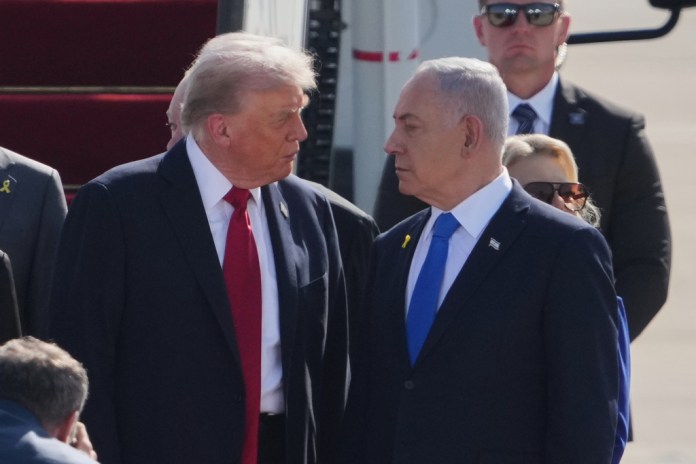
Israeli Prime Minister Benjamin Netanyahu reiterated Wednesday that he is playing a “junior” role to the United States in the Iran war after both countries started the conflict with joint strikes in February. The U.S.-Israeli attacks on Feb. 28 launched the war after Washington and Jerusalem said action was needed to prevent Iran from building […]
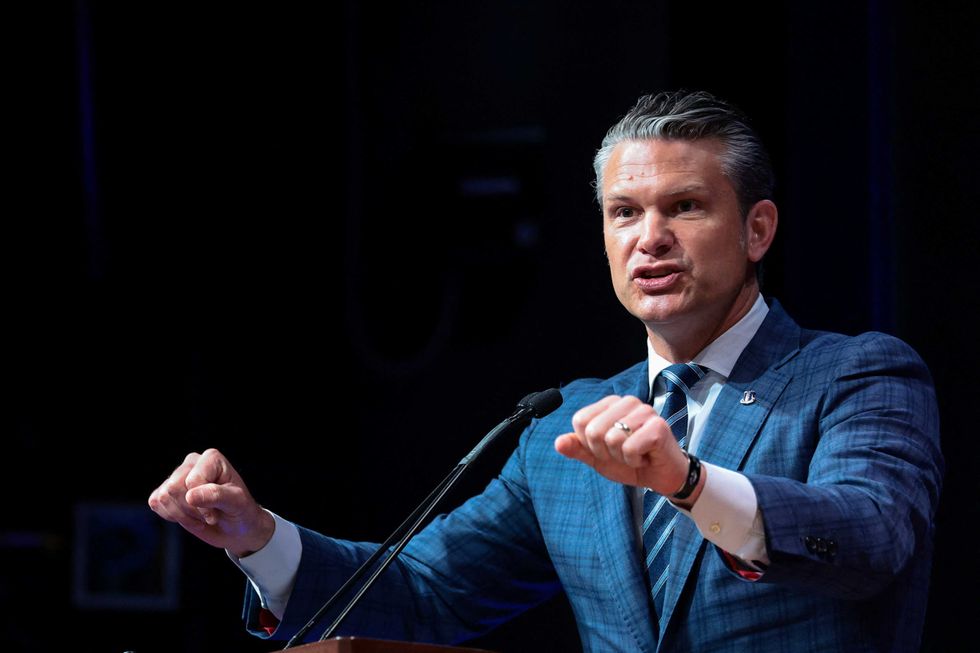
Defense Secretary Pete Hegseth is encountering significant resistance from U.S. allies as he seeks international support for a Strait of Hormuz patrol coalition, per reports. According to Politico, European officials have expressed deep frustration with the Trump administration's approach, particularly the February airstrike on Iran that occurred without consulting Congress or allied partners. Hegseth is urging the U.K. and France to lead the naval coalition but faces skepticism from four British officials and U.S. insiders, Politico reported. The U.K. Defense Minister Wes Streeting agreed cautiously to assist with maritime security but explicitly rejected offensive operations against Iran. Sen. Chris Coons (D-DE) explained the problem directly: Trump is frustrated that Congress, the American people, and core allies aren't supporting the war with Iran. Coons also noted the administration failed to build consensus before escalating, stating, "you can't be surprised when you throw a party and you don't invite anybody."Watch the video below. Your browser does not support the video tag.
Today, the Federal Reserve held the federal funds rate steady at 3.50% to 3.75%, its fifth straight meeting without a move. For working families, this means no relief on mortgages, credit cards, or car loans. Although inflation briefly cooled in June, that temporary relief was driven by cheaper gas during a ceasefire that Trump derailed. Since then, gas prices have again crossed $4 per gallon and Trump’s new tariffs have increased the risk that inflation will accelerate. Despite mounting signs of labor market weakness, the Fed’s decision today signals they believe that the inflation Trump reignited is not done yet.Groundwork’s Chief Economist Breyon Williams shared his reaction:“The president’s reckless economic policies have done irreparable harm to working families’ budgets. Inflation remains elevated, with no immediate relief in sight for Americans. Even Trump’s hand-picked Fed chair, Wall Street sweetheart Kevin Warsh, knows the president’s actions are driving up prices for consumers and creating an influx of uncertainty for the economy. Today’s decision to hold rates steady is a reflection of a stalled labor market and persistent inflation.”To speak with Breyon or any of Groundwork’s experts about Warsh’s first meeting, reply to this email or reach out to press@groundworkcollaborative.org.BACKGROUNDInflation remains above the Federal Reserve's target, and the latest energy price shock has yet to show up in the data. Tomorrow's Personal Consumption Expenditures (PCE) report is expected to show prices increased 3.7% in June from a year ago, and largely reflects inflation before Trump dismantled his own ceasefire. Since then, gas prices have climbed back above $4 per gallon, creating renewed inflationary pressure that will not show up in tomorrow’s report. The San Francisco Fed warned this month that inflation remains "elevated and uncertain," citing renewed volatility in energy markets and accelerating core inflation. Trump is determined to keep prices high using tariffs. After the Supreme Court struck down most of Trump’s Section 232 tariffs, the administration fell back on temporary Section 122 tariffs, which expired last week. Instead of giving working families some relief, the administration immediately imposed new Section 301 tariffs to keep taxing everyday goods that consumers buy. And more tariffs are already on the horizon: Trump has signed an additional 50% tariff on a wide range of Canadian goods, scheduled to take effect next month, and a 100% tariff on patented drugs are planned in 2028. Businesses’ costs are still climbing. The latest wholesale inflation data suggest businesses are still contending with persistent cost pressures that have yet to fully reach consumers. Wholesale inflation rose 5.5% in June from a year ago. The Federal Reserve's July Beige Book found that contacts in 9 of the 12 Federal Reserve Districts reported price increases, with businesses repeatedly citing higher energy costs from the conflict in the Middle East and tariffs as key drivers. The Federal Reserve meets amid growing evidence that the labor market is losing momentum. The job market is frozen. Hiring has stalled and layoffs sit near historic lows, a labor market environment that leaves workers feeling stuck and job seekers feeling shut out. Recent job gains were sluggish, with employers adding just 57,000 jobs in June. Payroll gains in April and May were revised down by a combined 74,000 jobs. More Americans are leaving the workforce. A total of 720,000 people exited the labor force in June, pushing participation to its lowest level since March 2021. Workers are spending longer searching for jobs, and millions of Americans still cannot find full-time work. More than one in four unemployed Americans (27.3%) have been out of work for at least six months, up from 23.3% one year ago. About 4.7 million Americans are working part-time because they cannot find full-time jobs, pushing the broad U-6 unemployment rate, which captures workers who are unemployed, marginally attached, and part-time but want full-time jobs, to 7.9%. The economy is expected to grow at a slower pace, with AI investment propping up the headline numbers. The Atlanta Fed's GDPNow model estimates the economy grew at a 1.6% annualized rate in the second quarter, well below the 2.1% pace recorded in 2025. Much of the expected growth reflects continued investment in AI infrastructure and data centers rather than broad-based strength across the economy.
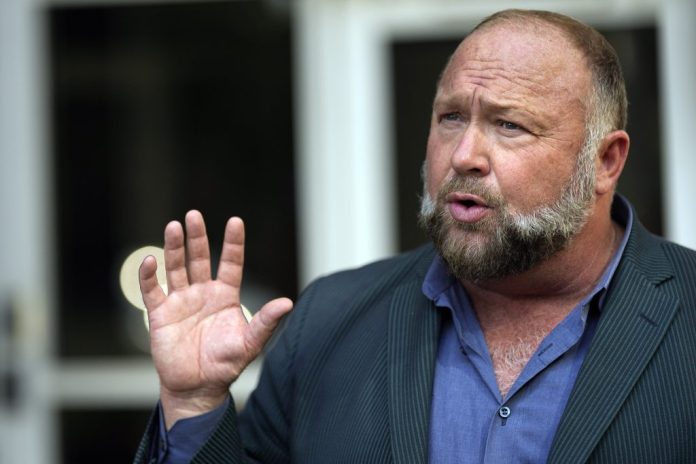
Conservative podcaster Alex Jones called for President Donald Trump‘s impeachment over the war in Iran and looming threat of a draft for the war. “This is a war. They’re getting the draft ready,” Jones said in a clip of his live show posted to X. “If this isn’t a war, nothing’s a war. I mean, […]
After President Donald Trump singled him out for possible impeachment, a Republican lawmaker is officially going to war against Judge James Boasberg with a new bill inspired by GOP grievances against him, per a report from Bloomberg.Boasberg is a Washington D.C., federal district judge appointed by former President Barack Obama, who first drew the ire of MAGA Republicans in 2025 when he ruled against Trump's attempt to use the Alien Enemies Act as a means to carry out his mass deportation agenda. Those same Republicans later accused him, with no evidence, that he had forced his way onto a case against the Trump administration for its use of the Signal messaging app for military communications, despite the court's repeated insistence that he had been randomly assigned to the case per its standard policy.In light of his frequent rulings against the administration, Trump has called for Boasberg to be impeached, which prompted pushback from Supreme Court Chief Justice John Roberts. Numerous other Republicans began to echo those calls, including Sen. Eric Schmitt, a Missouri Republican, who also this week unveiled a new proposed bill, the BOASBERG Act, that would target the unfounded allegations against the judge."A Republican senator has introduced legislation that would require random case assignment in federal district courts," Bloomberg's report explained, adding later, "If passed, Schmitt’s legislation would also require district courts to publicly share their practices when it comes to the assignment of civil cases, or to say why cases can’t be randomly assigned. Anyone who attempted to 'manipulate or evade the randomized case assignment system' would face penalties, according to the bill. District judges would also be removed from a case if the Supreme Court vacates, reverses, or stays their rulings. Appeals court judges would also lose their case assignments if the Supreme Court vacated or reversed a judgment that affirmed a lower court ruling."The report continued: "Under the bill, federal appeals courts would also be subject to random assignment procedures when it comes to creating the three-judge panels that hear cases, and cases could only be reassigned in limited circumstances. Judges would also be randomly assigned when it comes to the rare three-judge courts stood up to weigh challenges to district maps. And both district and appeals courts would have to share statistics annually on judicial assignments and reassignments."“The BOASBERG Act prevents Judges from forcing their way onto cases and is an important piece of court transparency legislation that will help restore the American people’s confidence in our judiciary,” Schmitt said in a statement about the new proposal.Bloomberg also noted a segment of Schmitt's proposal, which said that it was not meant "to prevent district courts from assigning cases filed within a division to 1 or more judges." The outlet interpreted this as an effort not to target the practice of "judge shopping," wherein litigants find a way to file their suits in smaller districts where they are "all but guaranteed" to land a judge friendly to their cause, which conservatives have been accused of doing frequently in recent years.


.jpg)