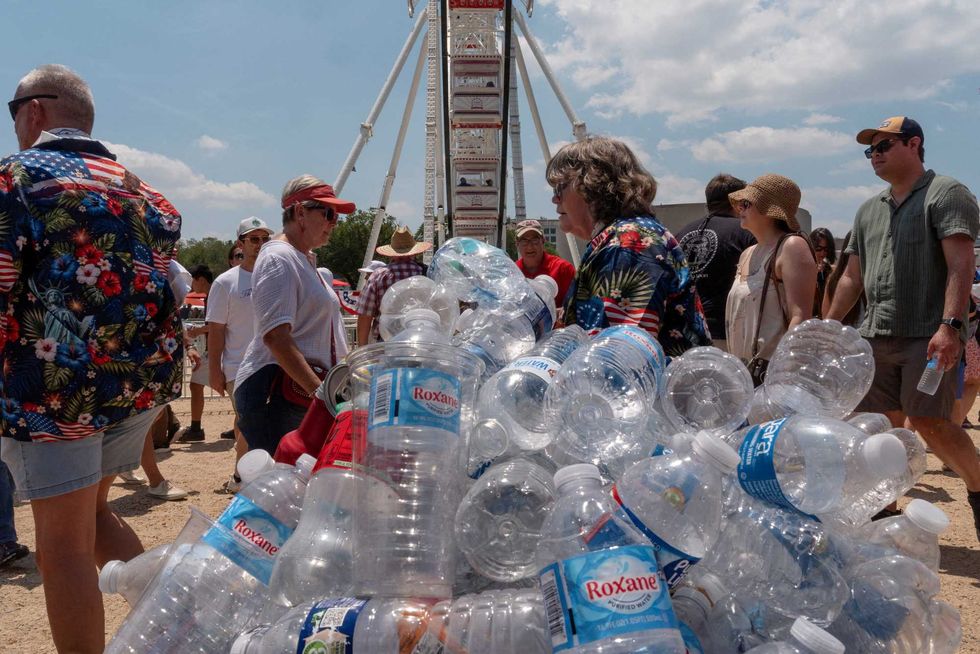
A reporter braving a blistering heat wave at President Donald Trump's Great American State Fair described chaos at the event as paramedics raced to save attendees, with seven said to be on "advanced life support" in the hospital.Julian Andreone of Drop Site News was on the ground Friday at the fair detailing what he called a "hectic" scene."It really is hectic. It's chaotic. It's a total disaster," Andreone said. "They haven't planned for this at all."As Andreone recorded the conditions, multiple people ran past carrying cold water to help their loved ones who had fainted. During one 71-second clip, Andreone recorded two people racing past him and an ambulance arriving separately with a siren blaring."People are profusely sweating and need water," he said.Andreone reported in an X update that "7 people are on advanced life support in the hospital."In another clip from the event, Andreone points to another person lying down in the back of an EMS truck making its way across the lawn. The event had already been temporarily shut down earlier in the day as the record heat gripped Washington, with organizers planning to reopen at 5 p.m.Washington Post meteorologist Ben Noll noted on X that Washington, D.C., would be warmer than "99 percent of the planet on Friday.""Only parts of Africa's Sahara Desert, the Middle East, China's Gobi Desert and a few spots in the Desert Southwest will be hotter," Noll noted.The conditions have driven attendees to desperate measures, with one Trump supporter earlier dunking herself in a baptismal pool to escape the heat.The post caught Andreone's eye."Great time for a poorly planned and shoddily constructed fair in a wide open field with no shade," he quipped.His account matched what reporters found on the ground: a largely deserted fairground baking in triple-digit heat.Update: 7 people are on advanced life support in the hospital. Here’s a brief snippet of some of our Drop Site reporting from the ground, showing medical staff rushing to get people water and EMS crews driving around, one with a patient in the back on a gurney. https://t.co/PWu358OlbW pic.twitter.com/ItPx4W6yqE— Julian Andreone (@JulianAndreone) July 3, 2026
Newly released body-camera footage shows the moment a Florida deputy arrived at the location where a woman had been mauled by an alligator. The woman, 31-year-old Orlando […]
Young people residing in urban areas helped propel Democratic Socialist candidate Melat Kiros to victory in Colorado’s 1st Congressional District primary Tuesday, a Daily Caller News Foundation […]
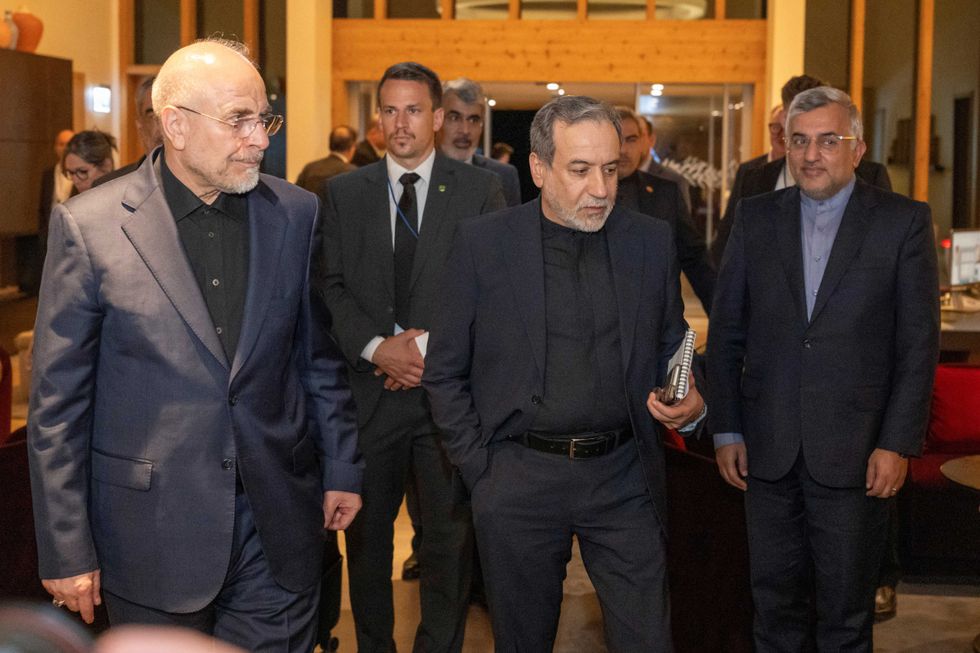
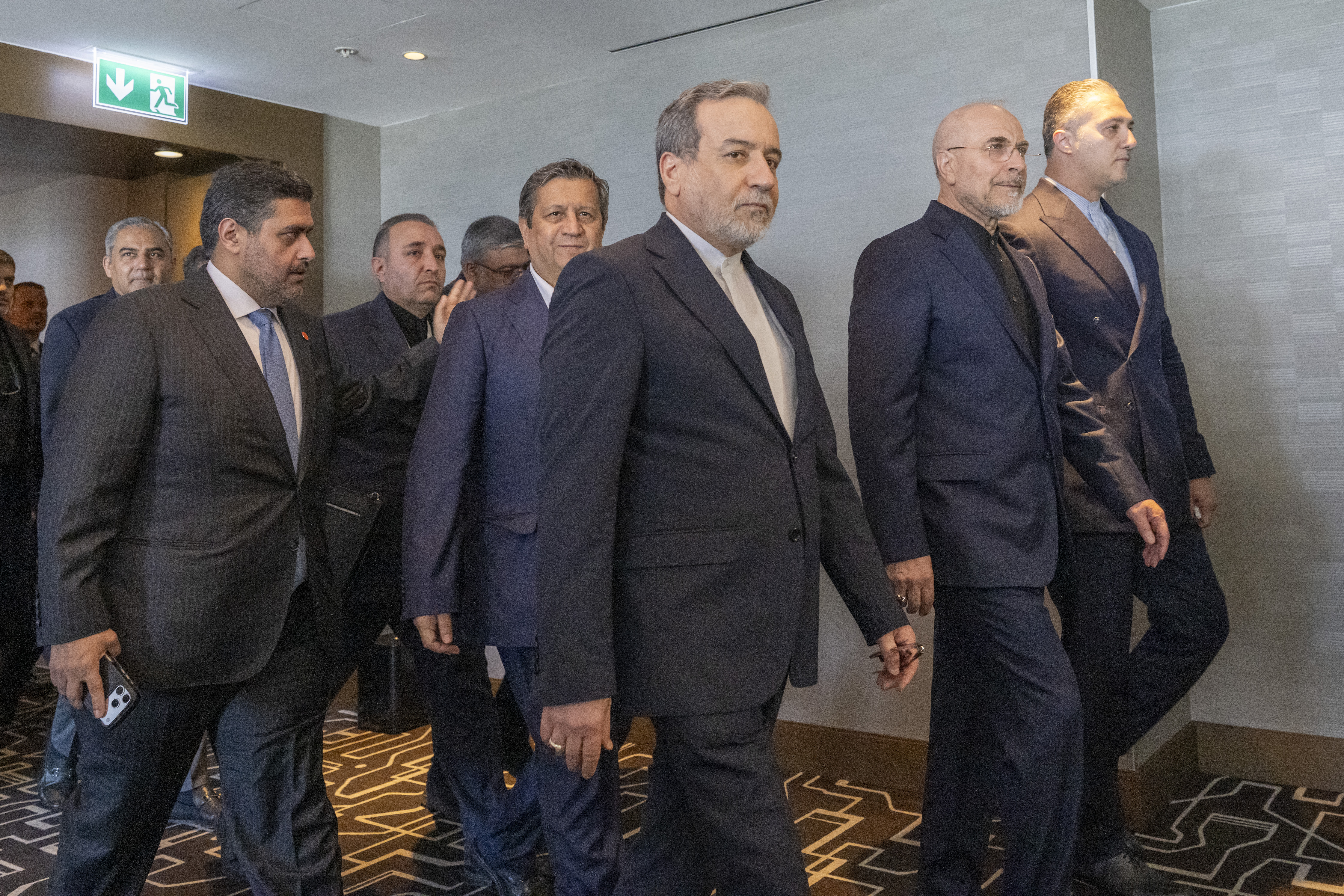
Trump administration officials reportedly believed that the Israeli government intended to assassinate Iran’s top negotiators—including the country’s foreign minister—during peace talks with the US in an effort to sabotage diplomatic progress.The New York Times reported Thursday that “American concerns about the targeting of two particular Iranian officials—Abbas Araghchi, Iran’s foreign minister, and Mohammad Bagher Ghalibaf, the speaker of the Parliament—spiked during delicate ceasefire negotiations that began in April.” In response, the US “went so far as to ask other countries in the region to warn Iran about the possibility Israel could target the two officials,” according to the Times, which cited unnamed current and former American officials.The US and Israel have killed dozens of top Iranian officials since launching their illegal joint war in late February. But the allied countries reportedly removed Araghchi and Ghalibaf from their target list in late March, opening the possibility of high-level negotiations to end the war.But Israel remained bent on targeting the negotiators, according to the Times, whose reporting was later corroborated by The Washington Post.The Times detailed one dramatic incident in April, when Ghalibaf was planning to travel to Pakistan’s capital to meet with US Vice President JD Vance:Pakistani fighter jets escorted the Iranian airplanes carrying a delegation of more than 70 Iranians from the border of Iran to Islamabad and back again when the session was over.But on the way back to Tehran, an Israeli security threat emerged.Iran’s security forces notified the plane carrying Mr. Ghalibaf back to Tehran that they had picked up intelligence that Israel planned to attack the plane and that two Israeli fighter jets had entered Iran’s airspace from its western border near Iraq, the two officials said.Mahdi Mohammadi, a senior adviser for Mr. Ghalibaf, who accompanied him to Islamabad, confirmed this account on his social media page. The plane made an emergency landing in the city of Mashhad, Iran’s closest airport to the Pakistani border, and the Iranian delegation traveled some eight hours by land back to Tehran, Mr. Mohammadi and the two officials said.The Post reported that “cracks emerged” between the US and Israeli approaches to the war following Israel’s assassination of top Iranian national security official Ali Larijani in March.“They’ve wiped out everybody,” Trump told reporters in late March, suggesting Israel’s assassination campaign was making it difficult to find potential negotiating partners.Trita Parsi, executive vice president of the Quincy Institute for Responsible Statecraft, wrote in response to the new reporting that “Israel is a state that, on paper, is a US partner, but in reality is so extreme in its obsession to undermine US diplomacy that it even tries to assassinate those the US engages with in crucial negotiations.”“I can’t recall a government as terrified of peace as the one running Israel,” Parsi added.At present, the Israeli government—led by Prime Minister Benjamin Netanyahu—is endangering tenuous US-Iran peace talks with its continued occupation of and assault on Lebanon, which Iran has highlighted as a key factor in the negotiations.Visiting occupied southern Lebanon earlier this week, Netanyahu declared to Israeli troops that “our insistence is that we will not leave... until the threat is removed.”Parsi wrote earlier this week that “beyond his long-standing desire to use American force to subjugate Iran to Israeli domination and achieve a regional balance favorable to Israel,” Netanyahu “now also has stark political and personal reasons to restart the war” with Iran.“The [US and Iran’s memorandum of understanding] has come at a steep political cost for Netanyahu,” wrote Parsi. “His prospects for reelection in October are weaker than they have been in months. Once seen as the Israeli leader uniquely capable of delivering President Trump, he now confronts the prospect that both the war and the ensuing diplomacy will leave Israel in a strategically weaker position—undermining the very case he has made for his leadership.”“And of course,” Parsi added, “if he loses the elections, he will likely spend the next few years in jail, as he will lose his immunity as prime minister and face trial over corruption charges.”The story was published in partnership with Common Dreams, read the original here.