In the Iran War, Trump’s Role Model Should Be Bismarck
President Trump has been criticized from both the Left and the Right for his conduct of the Iran War and...
Center Right

President Trump has been criticized from both the Left and the Right for his conduct of the Iran War and...
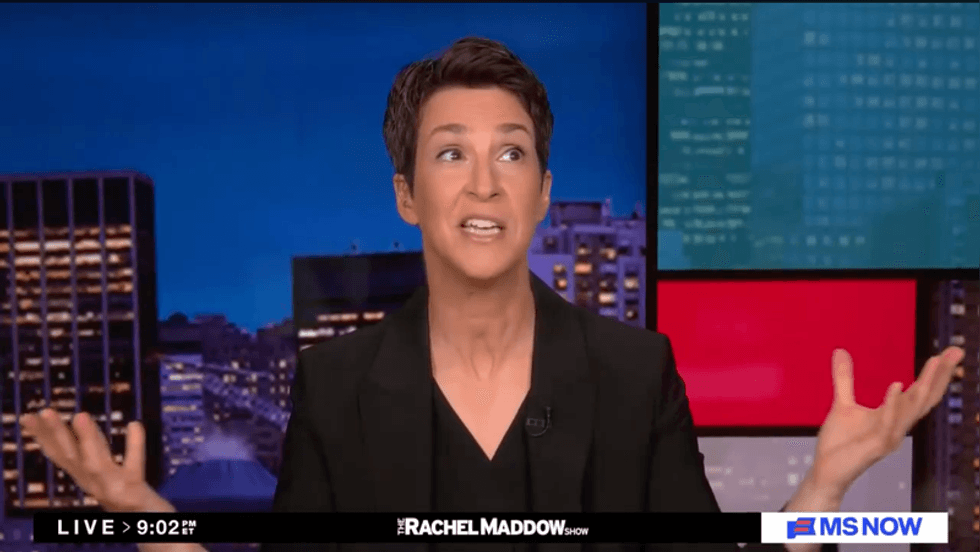
Rachel Maddow kicked off her MS NOW segment on Monday with a deep dive into one of the most bizarre and sketchy side sagas of the Trump administration's second term: his refusal to allow the Gordie Howe Bridge between Canada and the United States to open."The big, beautiful new bridge that Trump is not allowing us to use is that bridge that crosses the Detroit River ... to Windsor, Ontario, Canada," said Maddow, showing pictures of the completed but empty bridge and noting it is "fully financed and paid for" and will be "the biggest U.S. border crossing [with] Canada" and "one of the most important routes for trade in the entire world."Unfortunately, she said, "This is why we can't have nice things." Trump has refused to let the bridge open, and is arguing Canada must allow the U.S. to claim joint ownership of the structure.For their part, Maddow continued, "the White House insists that categorically, just because [Trump is] president, he can't have a conflict of interest. It's like dividing by zero. Doesn't make sense!"Nonetheless, she added, there is something in all of this that does look like a glaring conflict of interest."There is a competing bridge a little way down the river. A privately owned, very old, very congested toll bridge that will likely lose some of its traffic because of competition," said Maddow, referring to the Ambassador Bridge owned by the ultra-wealthy Maroun family and their trucking empire. And that family "earlier this year made a $1 million donation to Donald Trump's super PAC," said Maddow, after which they got a meeting with Commerce Secretary Howard Lutnick.Despite the White House and the super PAC both claiming this chain of events was a coincidence, Maddow said, "that night, Trump suddenly discovers new, supposedly trade-related reasons why he is now against this bridge, even though previously he had been for it.""That all happened in February. Now it's June," said Maddow — and the bridge is still closed. - YouTube youtu.be
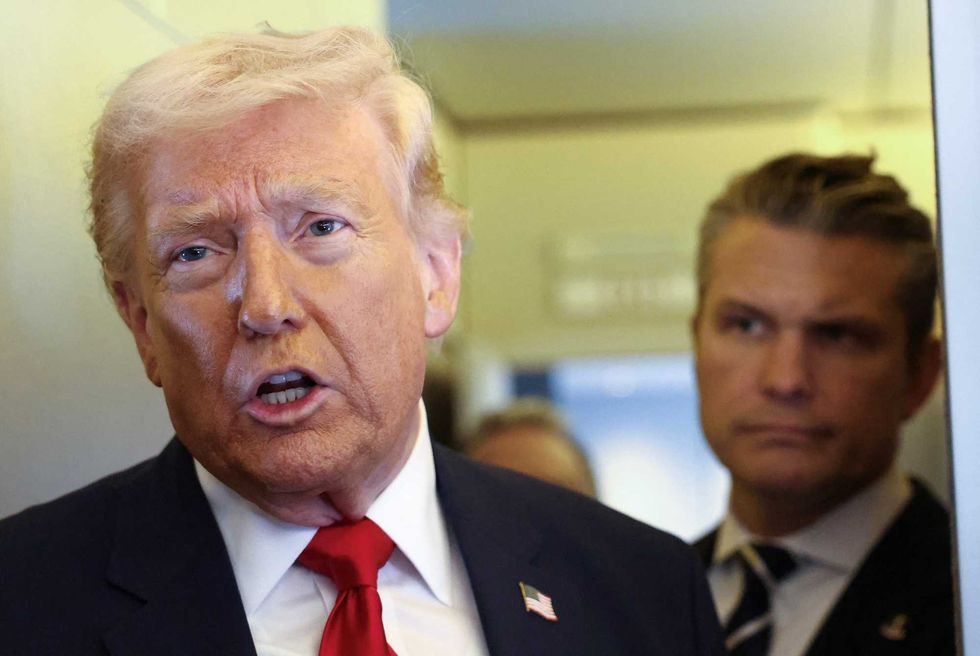
President Donald Trump was flattered by Middle East leaders into agreeing to a framework to end the war with Iran in a simple and very egotistical way, MS NOW's Chris Hayes agreed in a conversation with Iranian political analyst Trita Parsi.Specifically, Trump was persuaded into believing that he had persuaded Iran to take a deal better than the former Joint Comprehensive Plan of Action (JCPOA) — the multilateral nuclear deal brokered by former President Barack Obama — even though many aspects of the deal are considerably more conciliatory to Iran."I think the one thing that does seem the north star for him ... when the Omani foreign minister flew to the U.S. to appear on the Sunday shows in a last-ditch effort to stop this war from happening right when there were negotiations going on," said Hayes. "He understood it, too, because it's not a very complicated psychology. He's basically on TV the weekend before the war starts being like, it's better than Obama, it's better than Obama."The bottom line, said Hayes, is that "that benchmark [to end the war] can be whatever it means for the old man's ego," even if it's not a meaningful policy accomplishment.Parsi agreed, saying that Trump "will create his own reality here."Additionally, he said, it's not all a bad thing, as there are genuinely some parts of what Trump is pursuing that are stronger than JCPOA was."For instance, in the Obama deal, the Iranians would only have a stockpile of 300 kilos of low-enriched uranium on their soil. At any point," said Parsi. "You need 1,200 for a bomb. Whenever they reach the 300 level, it would be shipped out. That was a very good deal." By contrast, he said, in the February agreement Trump wants to base the current framework on, "they would have zero stockpile. Whatever they produce, they would immediately turn into fuel [rods]. They would never keep a stockpile at all."That said, he added, "Was it worth all of this? Absolutely not. In fact, that was already achieved before the war." - YouTube youtu.be
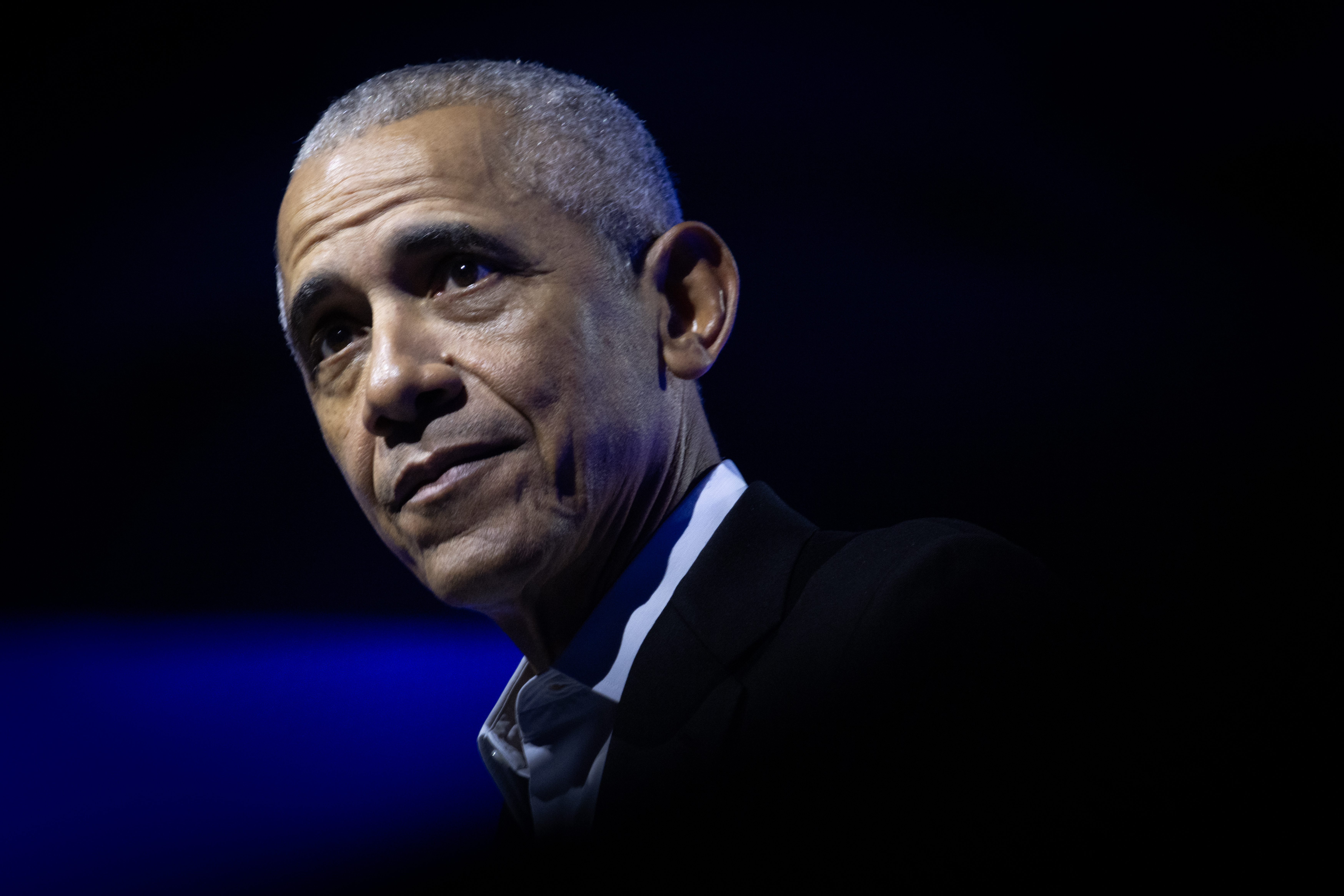
Obama also criticized Trump's foreign policy strategy of trying to “bully our way” to solutions.
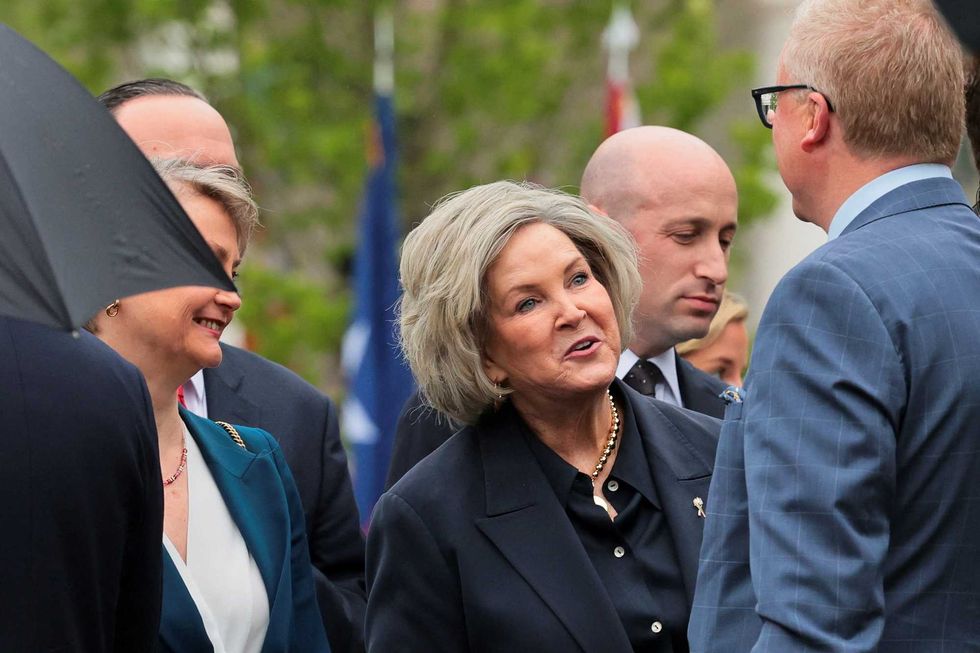
A legal expert was taken aback on Monday by reporting that revealed how Trump administration insiders pushed back on an extreme attempt to suspend habeas corpus. Joyce Vance, a former federal prosecutor, argued in a new Substack essay that new reporting from Jonathan Swan and Maggie Haberman of The New York Times about an administration lawyer named Will Scharf who drafted a confidential memo outlining reasons why suspending habeas corpus would be problematic provides "detailed support for understanding this administration as a threat to democratic ideals.""What follows is an outrageous attempt, even though it ultimately failed, at least for now, to shatter firmly established constitutional rights and protections," Vance wrote. On Monday, the NYT published a report about Scharf's memo to Susie Wiles, the White House chief of staff, warning that Deputy Chief of Staff Stephen Miller's attempt to suspend habeas corpus to speed up the Trump administration's deportation scheme would raise significant constitutional issues Vance explained in the essay that habeas corpus "prevents government from locking people up indefinitely without sufficient reason." "It’s a foundational protection against 'disappearing people.' Habeas is the heart of due process," she wrote. "And it is the law—something this administration and this president have shown casual disregard for at times, frequently with impunity, so the fact that this instance drew high-level concern signifies how truly shocking the ideas were."

President Donald Trump denied claims that the United States would pay Iran as part of a peace deal. The details of the peace agreement with Iran haven’t been made public, but one reported detail was a $300 billion reconstruction fund that would be paid for by the U.S. or its allies. Trump firmly shot the […]
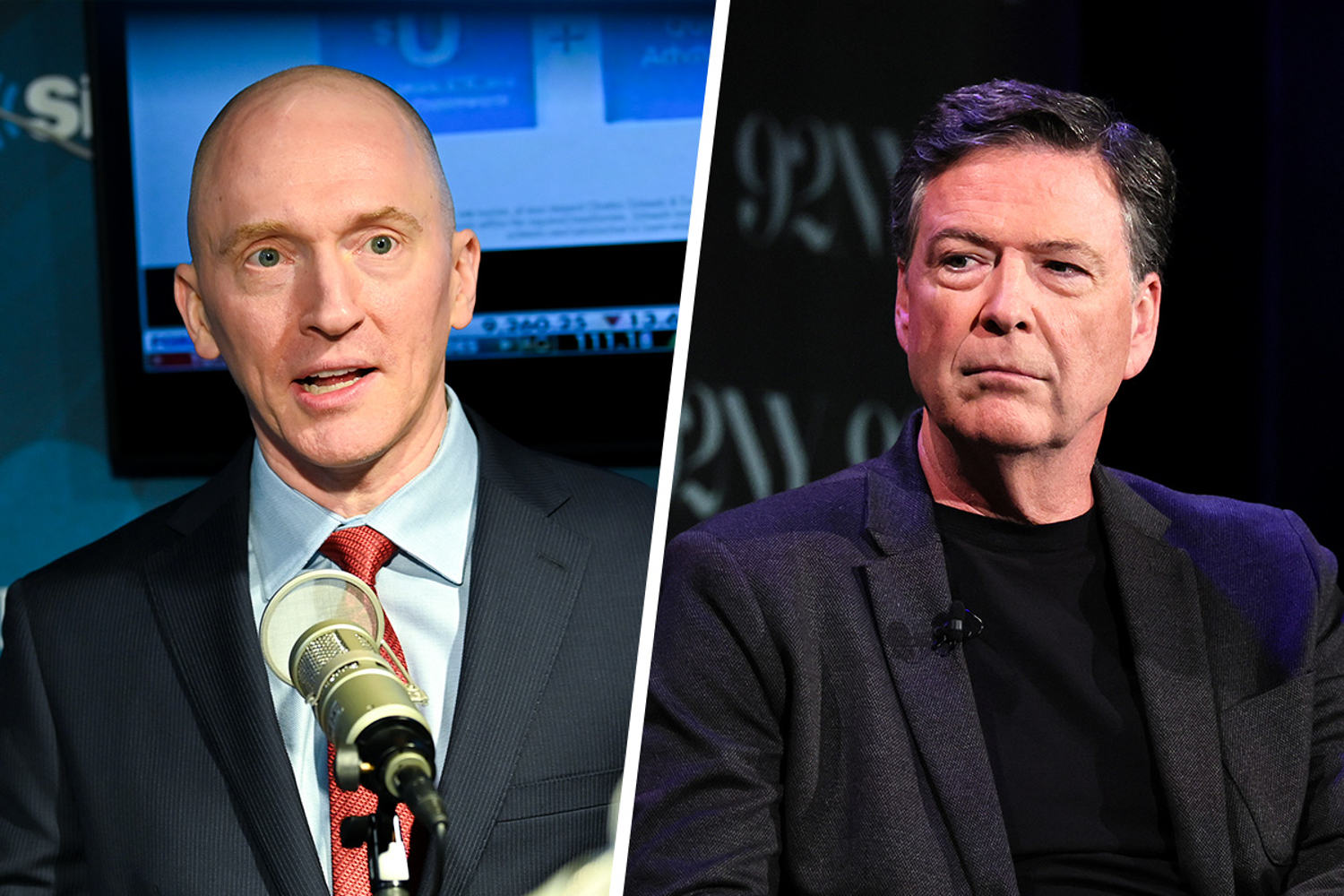
The Supreme Court rejected former Trump campaign adviser Carter Page’s attempt to revive a lawsuit against former FBI Director James Comey and others over their roles in a federal investigation into Russian interference in the 2016 election.
Boris Epshteyn is such a fixture in Donald Trump's White House that he's in Oval Office meetings when some attendees don't even know it.Epshteyn, the president's senior personal counsel, speaks with "the boss" so often that Trump sometimes puts him on speakerphone without telling others in the room, two people familiar with the routine tell Axios.Why it matters: In a White House where proximity to power is power itself, Epshteyn is one of the most influential people in D.C. — not just because he's listening in, but because Trump listens to him as well."He's like my psychiatrist," Trump has joked, referencing how frequently he talks to Epshteyn — who typically offers such enthusiastic support that it's like therapy for the president.In Trump's fractious political world, though, such presidential praise draws criticism, including from within."He's 100% hype man and cheering section for POTUS," one adviser said. "It's sometimes a bit much."Driving the news: Though Epshteyn operates out of the spotlight, he was seen on national TV Monday night, standing in the same shot as the president at Game 3 of the NBA Finals in Madison Square Garden.Last week, Epshteyn's role in the settlement that created the highly controversial $1.8 billion "anti-weaponization" fund was detailed in the New York Times and Wall Street Journal. The administration scrapped the idea amid a bipartisan outcry in Congress.Zoom in: As Trump's top personal attorney, Epshteyn has overseen a wave of unprecedented civil litigation from a president against the news media and social media companies. Trump has won or forced settlements with ABC ($16 million), CBS ($16 million, plus public service announcements), Meta ($25 million), Google ($22 million) and X ($10 million).Other Trump media targets still in litigation: BBC, CNN, The New York Times, The Wall Street Journal and even the Pulitzer Committee.The big picture: Epshteyn became a force in Trumpworld by assembling the legal team and charting the risky strategy that paid off during the 2024 election cycle, when Trump faced four criminal cases and two civil ones.Channeling his client, Epshteyn made brinksmanship the default tactic, fighting on every front, appealing everything possible (winning a landmark Supreme Court presidential immunity declaration) and raising the political pressure on judges and prosecutors as cases unfolded in the heat of an election."Boris delivered in the crucible of battle where either Trump was going to be in prison or be president," said Steve Bannon, influential MAGA podcaster and first-term Trump official. "Boris was the guy who got it done.""He's the president's fixer," said a frequent White House visitor.Between the lines: Epshteyn's role extends beyond the courtroom. In April, he was named chair of Trump Media. Donald Trump Jr. serves as director.Epshteyn has significant influence in the Justice Department, Trump advisers say, because of his close relationship with acting Attorney General Todd Blanche, who replaced Pam Bondi.Epshteyn is in the Oval Office about once a week, a White House official said, and is "constantly" on the phone with Trump in between.Pointing to the needless political distraction of the aborted anti-weaponization fund, a Trump political adviser was less effusive about Epshteyn:"He's the keeper of dog-sh*t ideas," the adviser said. "And he has only gotten more powerful, maybe one of the five most powerful people around the president."The intrigue: From custom-made suits to his Bentley to his penchant for taking meetings at a classic D.C. steakhouse, Epshteyn's wealth has been a constant source of speculation in Trump's circles.A friend of Epshteyn countered that he was successful before his current role, and bought his car six years ago. "Boris has lived the exact same lifestyle for the past decade. Any suggestion to the contrary is founded on baseless rumors and innuendo," he said."I've tried to cut him in on a side deal for pardon work. And Boris said no. He's ethical," said one Trump insider and attorney who successfully persuaded the president to grant his client clemency.During the transition, another team of Trump attorneys conducted an internal investigation to determine if Epshteyn had parlayed his connections to Trump, which Epshteyn denied.A Trump spokesman at the time characterized the inquiry as a "review" and said it had been settled internally. Trump kept Epshteyn.During the transition, Axios reported, Epshteyn also clashed with billionaire Elon Musk. Though Musk's star was ascendant in Trump's orbit, the president kept Epshteyn on, a sign of his staying power.The backstory: Epshteyn, a former adviser to John McCain's presidential campaign in 2008, entered Trump's operation a decade ago when the then-candidate saw Epshteyn voicing support for his campaign on cable TV.When Trump's top legal counsel, Michael Cohen, was indicted in 2017 and had a falling out with Trump, Epshteyn slowly began filling his shoes.