NewsNation
Trump-Iran deal: Questions loom as world leaders gather in France
Israel announced it would not withdraw from territory it seized in Lebanon despite the peace deal.
Center

A gun-control organization is taking aim at a major firearms dealer in California, seeking a probe over firearms traces that purport to show firearms it sells end […]
Israel announced it would not withdraw from territory it seized in Lebanon despite the peace deal.

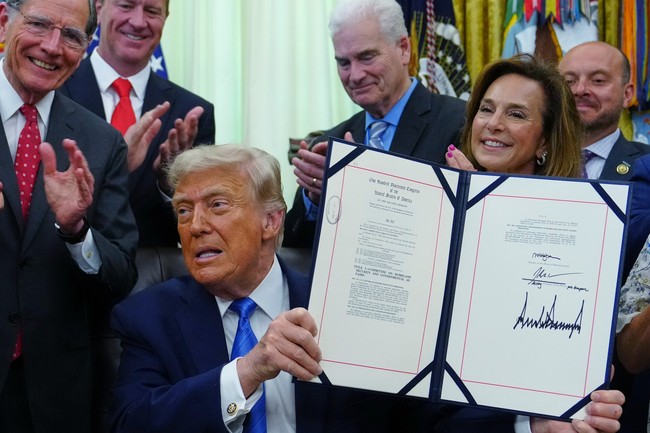
The announcement of an Iran deal was a welcome birthday gift for the president – but its success or failure may hinge on the details.
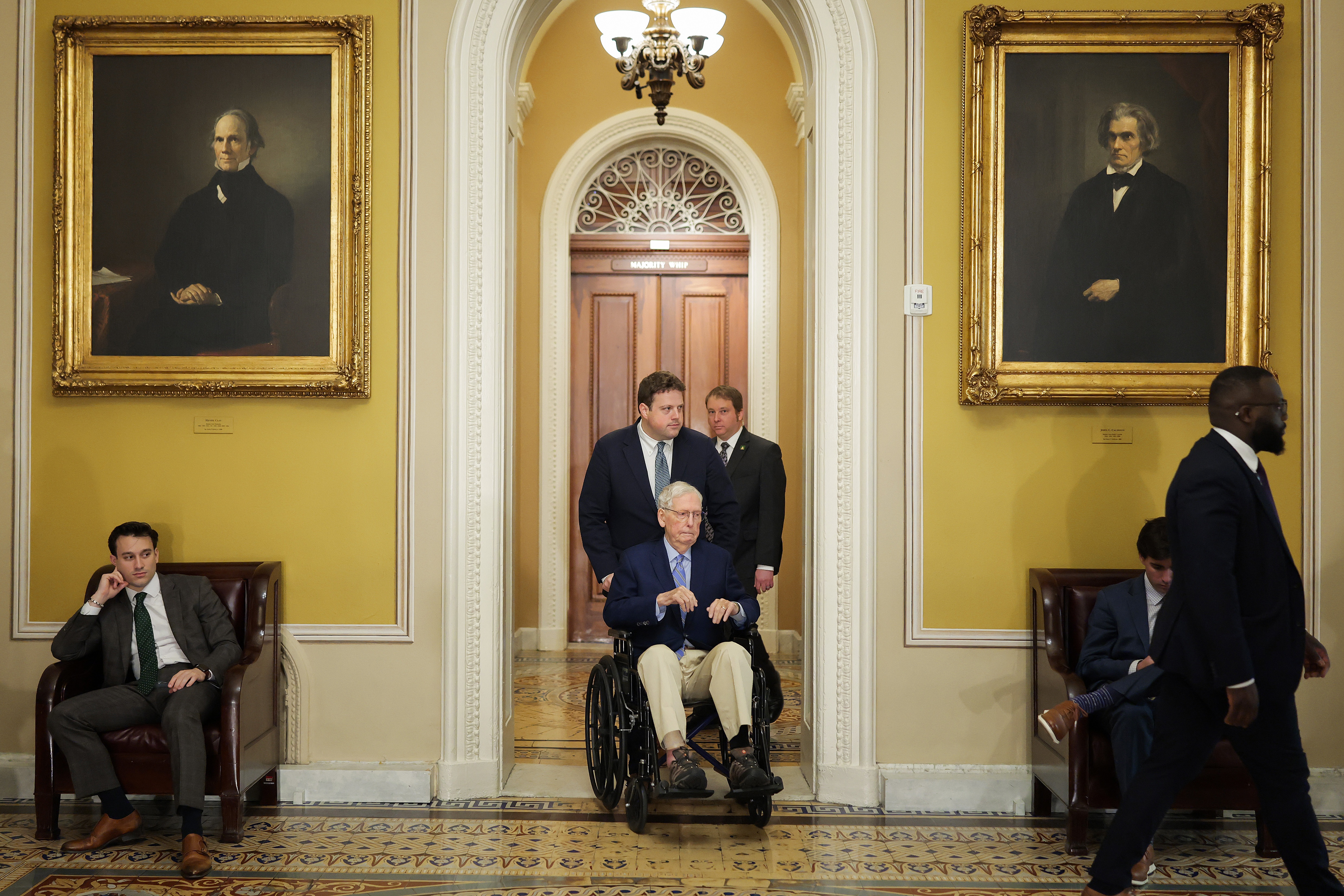
A spokesman for former Senate Majority Leader Mitch McConnell said the Kentucky republican was admitted to a hospital on Sunday.

The Knicks' championship celebration got cleared for takeoff.
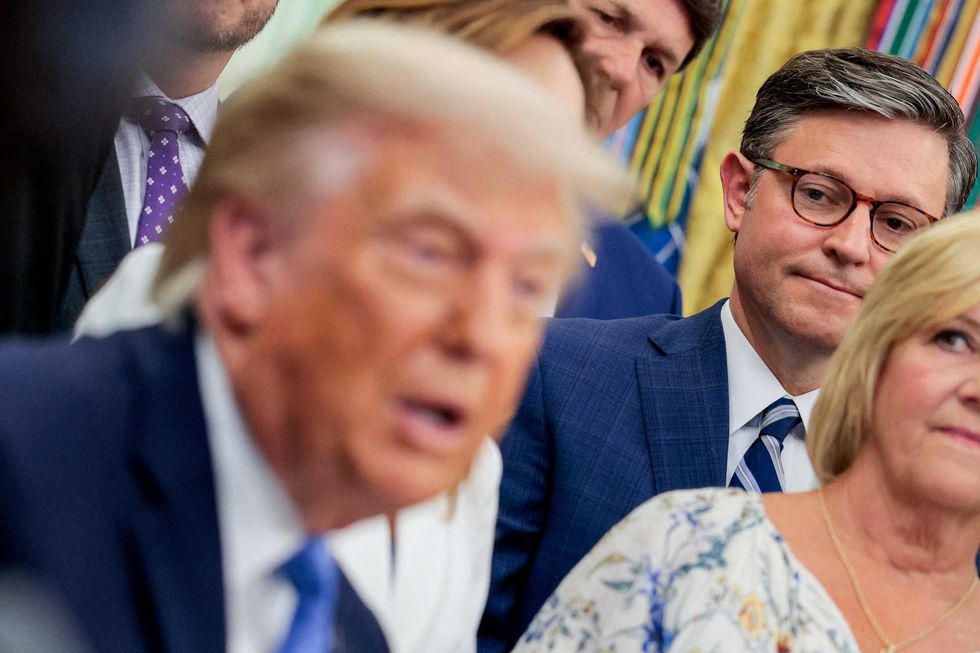
As Donald Trump becomes increasingly untethered to the reality that every regime can fall, that his followers are not necessarily forever in support such that he need not ever worry about a thing — from Epstein to insider trading — he now confidently takes his vanity to new levels in bringing a new stage and spectacle to the White House."Showmanship," more testosterone, "cool," ever more "I don't care what people think" nonchalance, betting that his loves and needs match the nation's, Trump is — wholly unknowingly — risking his entire presidency over a UFC fight on the South Lawn of the White House, far better known for its beauty and inherent importance, revered as civic sacred, but on this night risks desecration and disgust. A modern gladiator match looms, one in which you all but expect Trump to reserve the right to turn a thumb up or down over who survives, and yet it may be Trump who dies — symbolically, on this night. Really.The UFC fight planned for Sunday is a bet of breathless proportions with almost no upside for Trump and a wholly overlooked downside that should take everyone to the edge of their seat. While nearly every reader here desperately wants to see Trump gone, it had better come with a strong commitment to overcoming what a "desperate" Trump might do. Still, this part, at least, is coming, inevitable now, ground broken.Just to set the scene, the UFC brings the octagon for what will be a "pay per view" event, PAY per view, as an event supposedly celebrating America's 250th yet, like so much else, becomes fundamentally about him as set on his 80th birthday. And if the pay-per-view event is not enough to offend citizenry, there's also the fact that Paramount, the company streaming the fights, is in the midst of a regulatory battle to merge with Warner Brothers. As ever, the corruption is as in the open as the ring.But that's just the stage. There is real risk in all this pursuit of profit, personal political risk to all involved.First, it's worth noting that such risk comes without any chance Trump wins political capital on this; he's just showing off around the people whom he reveres as still somewhat cooler than him - show them their place. A president's environment, from helicopters to White Houses, can "out-cool" anyone, always.But everyone who loves a night of watching fighters commit what would otherwise be first-degree deadly assault is already a Trump supporter, nearly by definition, someone looking for a dopamine hit, incapable of caring about the implications for the people and society that sanctions such in-your-face brutality, symbolic of the arrogant "beat-your-face" corruption they associate with "winning." And even some Trump supporters will be shocked by the level of violence. This is less boxing, more voyeuristic brutality; it's fighting until the opponent is left indefensible, physically incapable of going on. Perhaps 10 percent of society loves such a potentially deadly spectacle, and yet perhaps the images are unique enough to land on 50% of screens worldwide. The risk is staggering. History is replete with examples of seemingly disproportionate moments that come to define a figure, stuff that really shouldn't matter in comparison to a life's work, yet dominate, as inextricable as unpredictable. Think George H.W. Bush throwing up in the Japanese Prime Minister's lap, something from which he never recovered, the Howard Dean primal scream, Romney's 47% comment, all rather stupid, some totally innocent and unplanned moments among many more important, all taking a person down, no hope of any comeback.Now picture the night. Trump sits beside the ring, smug — loving himself primarily, having a ball on his b-day. Above him, for one night, a fighting cage becomes the center of the world, used by people fully capable of actually killing another person in the ring, though there's very little risk of actual death. But there is a real risk that a fighter takes a savage blow so as to be out cold, falling "dead" visually at least, something seen in movies nearly by the hour, but absolutely gut-wrenching for most seen in real life. It would not be abnormal to see a leg literally break in half, and the NFL even gets squirmy over such moments, losing a few fans every time. Blood bursting from a face, gladiators all, a part of them dying in the ring, and a few all but disturbed people loving the moment, Trump being one. Even that extreme should be nothing. After all, Trump is obstructing an investigation into the world's most notorious child sex trafficker, and yet "moments" happen and, for reasons no one can accurately plan, never mind specifically explain, dominate from that point forward.There is a significant risk of something far more mundane, yet just as dangerous.

House Minority Leader Hakeem Jeffries (D-N.Y.) on Sunday poked at the prospect that the U.S. and Iran will soon make a deal, accusing President Trump of saying the two countries have been close to a deal “38 or 39 different times.” The Trump administration expects the U.S. and Iran to finalize a peace deal to…
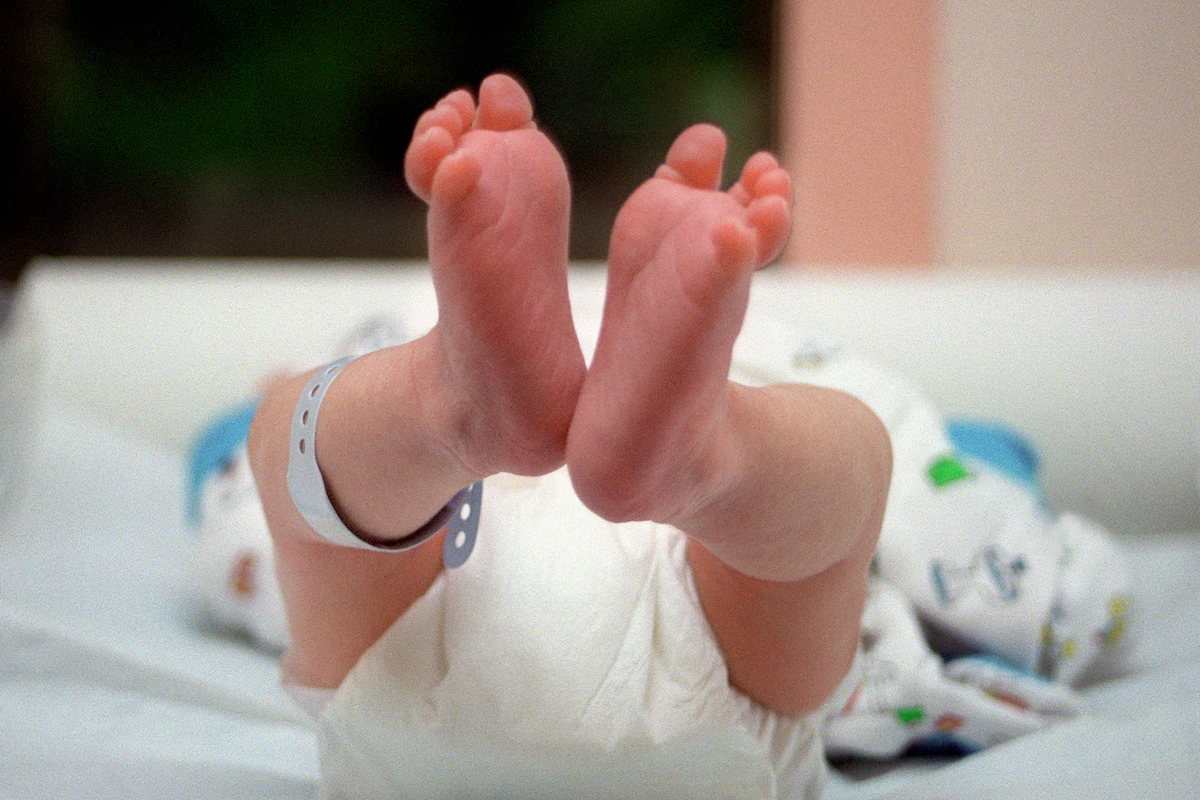
In the first two years of post-Dobbs America, 412 people were charged with “pregnancy-related” crimes, with 399 of these being related to substance use—including alcohol. These charges, which most frequently alleged either child abuse or neglect of the fetus, were made possible by politicians who have slow-dripped the language and ideology of fetal personhood into lawmaking for decades, a process that has only amplified since the overturning of Roe v. Wade. For years, anti-choice lawmakers have sought to lay down legal precedents for fetuses and embryos to be considered fully fledged persons in need of legal protections as part of a wider framework to criminalize abortion as murder. But this language and this broader approach to so-called public health have ramifications beyond abortion: If a fetus is a person, then consuming alcohol or narcotics while pregnant and putting the fetus at risk for fetal alcohol spectrum disorder, or FASD, and other substance-related birth defects is a form of child endangerment.Not only does this result in the criminalizing of pregnant people, it also hinders the prevention, research, and treatment for both the FASD and substance use disorders being weaponized to advance this anti-abortion agenda. What’s more, this ideology has proven to be wholly ineffective in the effort to “protect fetuses.” Laws around “pregnancy-related crimes” have only prevented mothers from seeking support, while simultaneously creating legal frameworks for restricting abortion access, creating a climate where pregnant patients are increasingly policed and where public health policies around prenatal substance exposure, FASD, and reproductive justice movements are increasingly linked.Dr. Sarah Roberts is a professor and legal epidemiologist at the Advancing New Standards in Reproductive Health initiative at the University of California at San Francisco, and one of the only researchers in the United States working on the intersections of health care practices and policies around abortion and the criminalization of behaviors while pregnant. “Singling out drinking while pregnant isn’t effective,” she explains, noting that none of the punitive or so-called “supportive” FASD prevention policies that she’s analyzed actually prevented FASD.The only policies that actually prevented FASD and offered support to mothers and babies with FASD were those that addressed alcohol consumption across the board. “People who are drinking while pregnant were drinking before they got pregnant and are in families and communities where people are drinking as well, so by reducing drinking at a population level, that also relates to improved outcomes during pregnancy,” Dr. Roberts explains.In her research, Dr. Roberts has found that the states that criminalize pregnant people consuming alcohol largely overlap with states restricting abortion.“Anti-abortion laws have always opened up the potential for greater surveillance, policing, and punishment of pregnant people. We see that in the way that miscarriage is policed, the way that substance use during pregnancy is increasingly policed, in the way that people have been punished for this, under a range of laws that have nothing to do with abortion,” explains Dr. Gretchen Sisson, sociologist at the University of California at San Francisco, and the author of Relinquished: The Politics of Adoption and the Privilege of American Motherhood.As Roberts explains, many of the policies that target pregnant people who drink also target those who consume other substances. These policies have deep roots, often dating back to the “war on drugs,” and, more specifically, the racist “crack baby” scare in the 1980s and 1990s. Media outlets of that era often presented sensationalist narratives that babies born to mothers using crack cocaine would be born with brain damage and overwhelm welfare systems, leading to a widespread targeting and policing of Black pregnant people, in particular. These policies were often ignored or brushed aside by mainstream pro-choice, often white-led organizing groups at the time, without the foresight of recognizing that this very same positioning of fetuses as people would be used to dismantle abortion access in the years to come. “There is a racist history to this, an ableist history to this, and a classist history to this, that these issues weren’t considered ‘mainstream’ abortion rights or reproductive rights issues,” explains Dana Sussman, the vice president of Pregnancy Justice.Today, Roberts’s research has found that Black mothers are still excessively targeted by “total welfare reporting,” or laws that require physicians to report pregnant patients to Child Protective Services if alcohol consumption is suspected. This reporting is linked to an increase in adverse effects for Black women and babies, despite the “pro-family” rhetoric behind them.