China and Russia Issue New World Order Declaration: All Talk, No Action
Far Right
Russia and China just released two documents outlining how they want to remake the world order and displace the United States as the leader of the global system.
The post China and Russia Issue New World Order Declaration: All Talk, No Action appeared first on The Gateway Pundit.
Radical leftist commentator Hasan Piker just dropped a massive truth bomb that confirms what conservatives have warned about for years: foreign-aligned communist wealth is actively weaponizing American nonprofits to subvert our country from within.
The post Far-Left Twitch Marxist Hasan Piker Accidentally Admits Pro-China Billionaire Neville Roy Singham Is Bankrolling a Massive “Political Movement” in America appeared first on The Gateway Pundit.
Iran on Tuesday accused the U.S. of violating a ceasefire put in place on April 8 following fresh military strikes carried out by the American military, which described the strikes as defensive actions. The accusation runs the risk of triggering a new round of Iranian strikes against U.S. bases and allies in the region as…
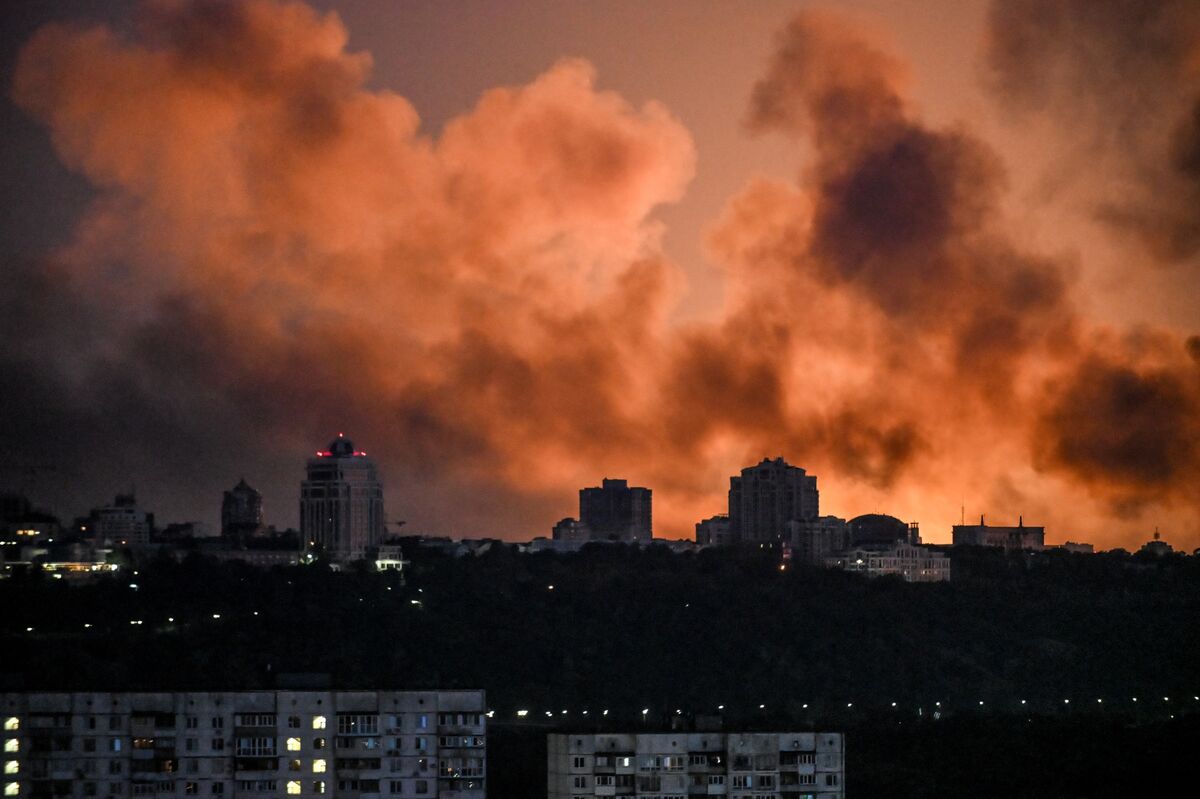
With the battlefield largely at a stalemate, Russia is ramping up ballistic missile attacks on Ukraine to try to regain the strategic initiative by overwhelming air defenses and demoralizing its population.
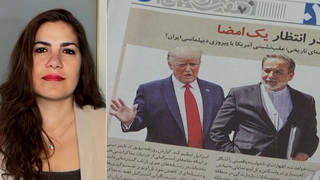
We get an update on the U.S.-Israeli war on Iran from journalist Negar Mortazavi, following the Pentagon’s so-called self-defense strikes on two Iranian ships in the Strait of Hormuz Monday despite an official ceasefire and ongoing peace negotiations. The “chaotic” ceasefire “has been violated from day one,” says Mortazavi, who notes that Israel’s continuous attacks on southern Lebanon are delaying attempts to end the war — and that this is exactly the intention of the Israeli government. “Clearly, Netanyahu doesn’t want this war with Iran to end,” she says. “Every step of escalation is definitely going to harm the final outcome and narrow the path to a final agreement.” Mortazavi also comments on the new political reality for Iran’s Gulf neighbors in the aftermath of Iranian strikes on U.S. military bases hosted in the region. “The Iranian message is: If war comes to us, it will not stay inside our borders.”
After President Donald Trump announced Saturday that an Iran peace deal was within reach, “hawkish Republicans” targeted the president with a campaign designed to convince him he would "look foolish and weak" for pursuing it – a pressure campaign that appears to have worked following fresh U.S. strikes on Iran Monday, Zeteo reported Tuesday.“Two sources with knowledge of the situation told [Zeteo] that hawkish Republicans flagged for the White House media coverage, social media posts, and other material arguing that reported peace terms would hand the Iranians victory and make Trump look foolish and weak,” Zeteo’s Martin Pengelly wrote in the outlet’s report. “And then came the apparently inevitable news: reports of renewed violence. And so, Trump’s Iran fiasco continues.”Trump’s announcement on Saturday was met with a wave of criticism from right-wing figures, with the president lashing out at said critics on Sunday as “losers” who knew “nothing” about the ongoing negotiations. Whether motivated by the “extreme internal pressure” he’s reportedly under or other factors, Trump did ultimately authorize strikes on targets in southern Iran on Monday, sinking two boats and attacking a missile launch site.Bloomberg has previously reported that the president has also been under extreme “outside” pressure to resume the Iran war as well, notably from Israeli Prime Minister Benjamin Netanyahu and billionaire media mogul Rupert Murdoch.
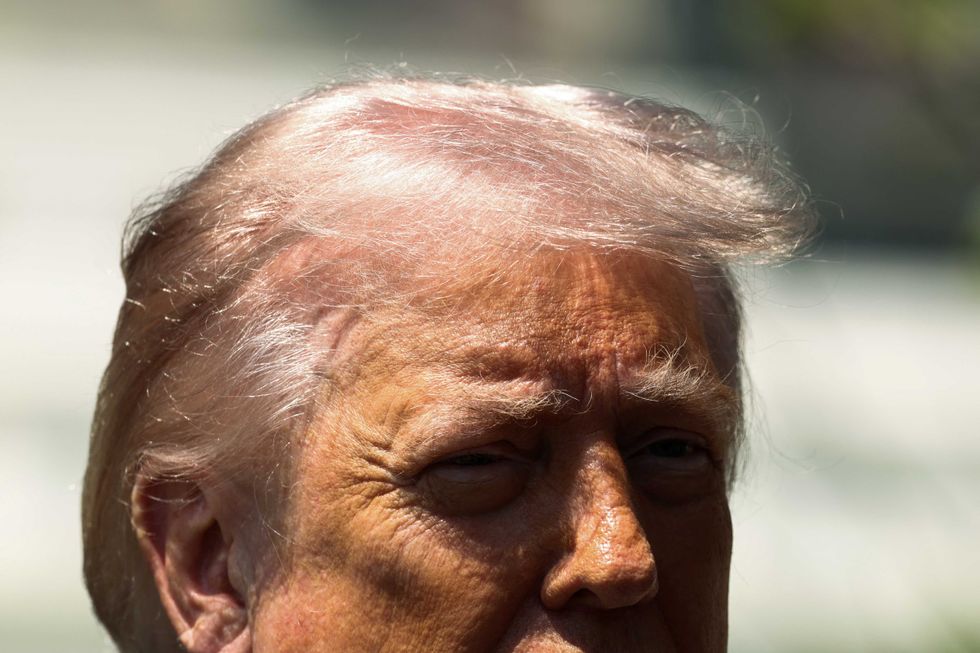
US president, who turns 80 next month, frequently casts himself as fit but recent photos have added to questions about his healthSign up for the Breaking News US newsletter emailDonald Trump, who turns 80 next month, will undergo his routine annual physical on Tuesday at Walter Reed National Military Medical Center, after a year of public attention on apparently minor health issues.The US president frequently casts himself as more energetic and fitter than Joe Biden, his Democratic predecessor who left office last year at age 82 after facing questions about his fitness for the job. Continue reading...
With a U.S.-Iran deal (maybe?) taking shape in coming days, the oil market that follows will look different than what preceded the war.Why it matters: The emerging deal — which would re-open the Strait of Hormuz while nuclear talks proceed — could return large amounts of barrels to the market.It's not a moment too soon as global oil stockpiles, which have somewhat tempered the crisis, are drawn down at record pace.Reality check: Things won't be normal for a long time, and the postwar definition of normal is fluid, too.A few near-term and long-term things to watch...😨 Confidence: In the near term, "It's all about whether vessel owners and crews feel safe transiting the Strait of Hormuz," said oil analyst Ben Cahill of UT-Austin.He notes confusion about whether Iran will imposes some kind of fees, safety, insurance rates and more."It could be a stop-and-start process as risk-averse shippers work through these uncertainties," he tells me via email.🕰️ Timelines: "Following the clearance of any mines, a minimum of two to three months will likely be required to re‑establish steady export operations," the International Energy Agency said in its mid-May oil market report.And Persian Gulf countries need time to resume production that declined after the main export route was cut off.📜 Definitions: What "open" means for the world's most important energy shipping lane is unsettled.Iran may not call it a toll, but Iranian officials are floating new fees on tankers.This could be a boon to Iran even if the fee is relatively small, said Edward Fishman, a former State Department aide now with the Council on Foreign Relations.Fishman — speaking on oil analyst Rory Johnston's essential Oil Ground Up podcast — sees vessels paying tens of billions of dollars per year, even $100 billion."If you look at it from the perspective of market participants, whether it's oil traders or shippers, even if you're paying $2 million a pop for a VLCC [Very Large Crude Carrier], that's $1 a barrel, that's actually not that economically significant," he said."I think that the private sector, if this is the cost of getting ships through the Strait, is going to pay the toll," he said.⚠️ Vibes and market risk: Before the crisis that throttled supplies, there was debate in oil circles about whether markets were blasé about threats to infrastructure or shipping.Even once the current crisis is in the rearview, watch the level of "geopolitical risk premium" — the market's willingness to preemptively price in risk — that elevates prices.It could be higher now, especially with Iran's newly assertive posture in the Strait."There will be a permanent price premium attached to a permanently more risky operating environment," Clayton Seigle, an oil analyst withe Center for Strategic and International Studies, said via email.🚧 Pipeline infrastructure: There are already efforts to at least somewhat ease the Strait's importance by building pipelines to bypass it.The United Arab Emirates said in mid-May that it's speeding construction of a major pipeline that will double its export capacity through the port of Fujairah. CNBC has more.🇺🇸 U.S. oil production: Higher prices are likely to encourage producers to boost their output as they see opportunities from a market that went from soft to tight.Before the war, the U.S. Energy Information Administration projected domestic production dipping from 13.6 million barrels per day this year to 13.3 million barrels per day in 2027.Its latest outlook, in mid-May, now sees production rising to 14.1 million next year.Publicly listed U.S. shale producers have increased 2026 capital spending plans by $490 million compared to pre-war guidance, the energy research and consulting firm Enverus tells the FT.