Ryan Clark’s firing by ESPN last week took the sports media world by storm. Clark was fired in the middle of “NFL Live” last Monday, and he later grew emotional addressing his departure on his “The Pivot” podcast.
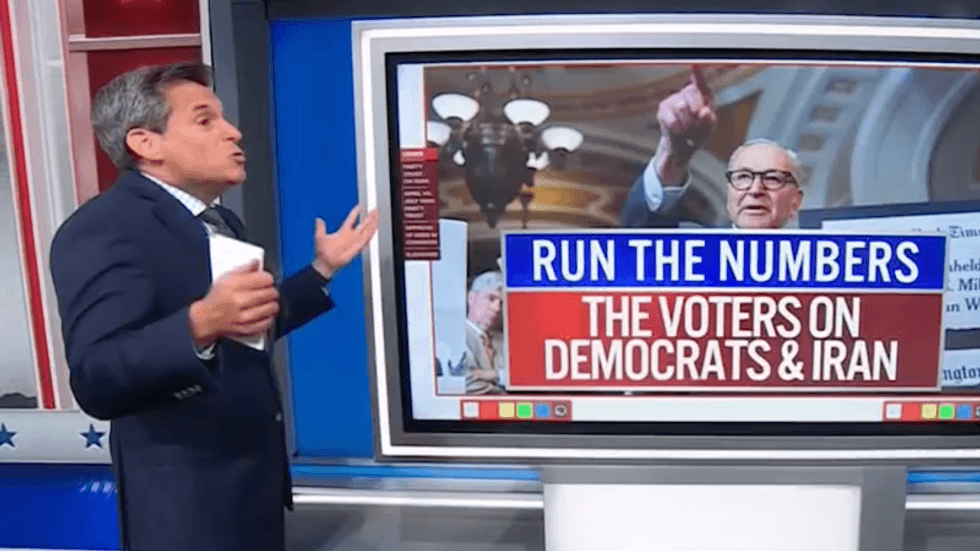
CNN's John Berman was left momentarily speechless by new polling data on President Donald Trump's war in Iran.New polling data presented by the network's Harry Enten suggests Democrats have failed to capitalize on public unease over the 80-year-old president's handling of the Iran conflict, and Berman expressed surprise by the findings."The president's approval rating is sagging, the war in Iran is widely unpopular, so you'd think that Democrats, you might think that Democrats in Congress could see some kind of boost in the polls on this subject," Berman said. "You might think that, but you'd be wrong ... Man, I'm tongue-tied because actually these numbers surprise me. I was looking at them, and I am surprised that they are like this."Two separate polls released this month found Republicans holding a narrow edge over Democrats on the question of who is more trusted to handle Iran policy, Enten said. A CNBC poll found Republicans ahead by two points, and a CBS News poll released just a day later showed the identical two-point advantage."Now, one poll is one thing, but you put the two of them together, and you can see that the American people, simply put, are not buying what Democrats are selling on Iran," Enten said. "They still trust Republicans more. Even if you look at President Trump's approval ratings on the subject, and they're negative, too, but yet Republicans and Trump still more trusted than Democrats are."More striking, Enten said, is the direction of movement over time. A Washington Post-Ipsos poll from April had shown Democrats slightly ahead on Iran trust, by two points. Since then, the numbers have flipped in Republicans' favor — suggesting that as the war has dragged on, public trust has shifted toward the GOP rather than eroded, defying expectations that prolonged conflict would benefit the opposition party."The Democratic Party in the minds of the American public are weak, weak, weak," Enten said.Net approval ratings for Democrats in Congress hovered around negative 40 points in late February, among the lowest levels ever recorded for the party. That unpopularity, Enten suggested, may be undercutting Democrats' ability to convert dissatisfaction with Trump into political trust for themselves, even among some Democratic-leaning voters who remain unhappy with their own party's direction heading into the fall elections. - YouTube youtu.be
Israeli Prime Minister Benjamin Netanyahu said New York City Mayor Zohran Mamdani (D) is “fomenting hate” after the mayor accused the prime minister of being a war criminal. “Look at what he’s doing. He’s fomenting hate. He’s supposed to be the mayor of all New Yorkers, Jews, Christians, Muslims, everyone,” Netanyahu told Fox News’s Maria…
NYC Mayor Zohran Mamdani’s bogus threat against Israel’s prime minister revealed something essential about his political career — and even more about his sycophants. When Mamdani promised to arrest Benjamin Netanyahu should he set foot in the United States, only to admit that this would be both impossible and illegal just days later, his fan […]
With gas prices back above $4 a gallon and the midterms approaching, Republicans are choosing to defend President Donald Trump's Iran policy rather than distance themselves from it — a bet that could backfire as voters feel the pinch at the pump.Some GOP lawmakers acknowledge the political risk, but few are willing to blame the 80-year-old president for the higher prices or criticize his decision to launch a war against Iran as they make their case to voters heading into the midterm elections, reported MS NOW.“It’s certainly something we’re concerned about,” said Rep. Richard Hudson (R-NC), chair of the National Republican Congressional Committee. “President Trump did the right thing ... We need to support what he’s doing. If that means we have to go to the voters and explain it, so be it.”Hudson insisted the issue had not yet shown up in NRCC polling, but Republicans seem aware that voters are skeptical of the war and its impact on fuel costs.“We’ve got to explain to people that, you know, unfortunately until we get some new leadership in Iran, we’re going to continue to see conflict, which is going to see higher gas prices,” said Sen. Rick Scott, who previously chaired the Senate GOP’s campaign arm.That message may not hold. Some Republicans not seeking reelection were more candid about the risk. Rep. Thomas Massie (R-KY) suggested voters would eventually stop trusting favorable media coverage and start reacting to what they're paying at the pump.“Eventually, I think people’s pocketbooks are going to impose reality on them, and they’re going to quit watching Fox and pay more attention to the gas prices,” Massie said. Rep. Bill Cassidy (R-LA), who like Massie was ousted by a Trump-endorsed primary challenger, was more measured, arguing that solving the affordability problem is good politics.Many rank-and-file Republicans dismissed the price increases as temporary, deflecting blame toward local regulations, alleged corporate price gouging, or the previous administration. Rep. Ted Budd (R-NC) invoked Biden-era gas prices while defending the Iran strikes as necessary. Reps. Tim Moore (R-NC) and Tim Burchett (R-TN) both pointed fingers at oil companies rather than the war.Rep. Troy Nehls (R-TX) dismissed the entire issue as election-season noise. “The only reason you’re talking about gas prices is because we’re a few months away from a general election, and you’re just trying to get people irritated,” he told MS NOW. “That’s what you do.”“We knew it was going to go up," Nehls added, "but it is really temporary.”Vulnerable incumbents took a different tack. Reps. David Valadao (R-CA), Mike Lawler (R-NY) and Brian Fitzpatrick (R-PA) each tried to shift blame toward Democratic energy policy rather than directly defend the war's economic fallout.The polling suggests the political ground is shifting under them. Oil prices jumped roughly 10 percent last week as hostilities continued, and gains Trump had made in approval ratings after an earlier ceasefire have largely disappeared. A Gallup poll found two-thirds of Americans reporting financial hardship from rising gas prices, with majorities saying they're driving less or altering summer travel plans. A Politico poll found most Americans, including a majority of MAGA voters, blame the war for the price spike — and nearly half of those MAGA respondents said it could push them to vote outside their party.Democrats are moving quickly to capitalize. House Democratic Leader Hakeem Jeffries (D-NY) has directly tied the price surge to the war, while Rep. Pat Ryan (D-NY) argued the administration has failed on both of its major promises — lowering costs and avoiding new wars.
NBA star Kyle Kuzma blasted New York City Mayor Zohran Mamdani for “cosplaying” as president over his empty threat to arrest Israel Prime Minister Benjamin Netanyahu.
City Council Speaker Julie Menin says she’s far more responsible than Mayor Zohran Mamdani; here’s his chance to prove her wrong on at least one front: the council’s obscene bid to shower $10,000 bonuses on public-school teaching assistants. NYC Mayor Mamdani speaking at Assembly Speaker Heastie’s annual BBQ. United Federation of Teachers boss Mike Mulgrew...
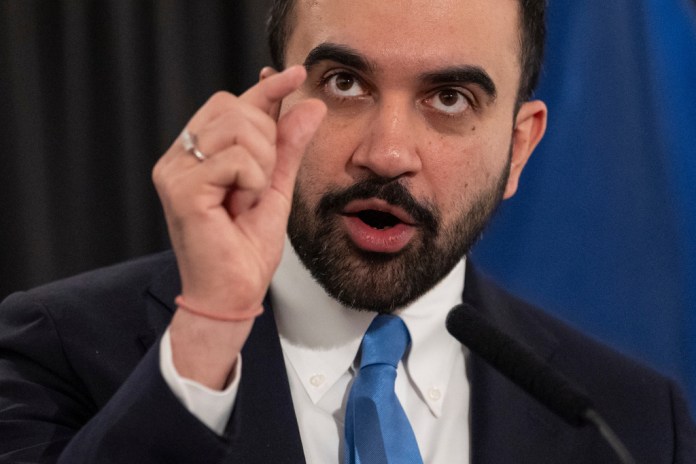
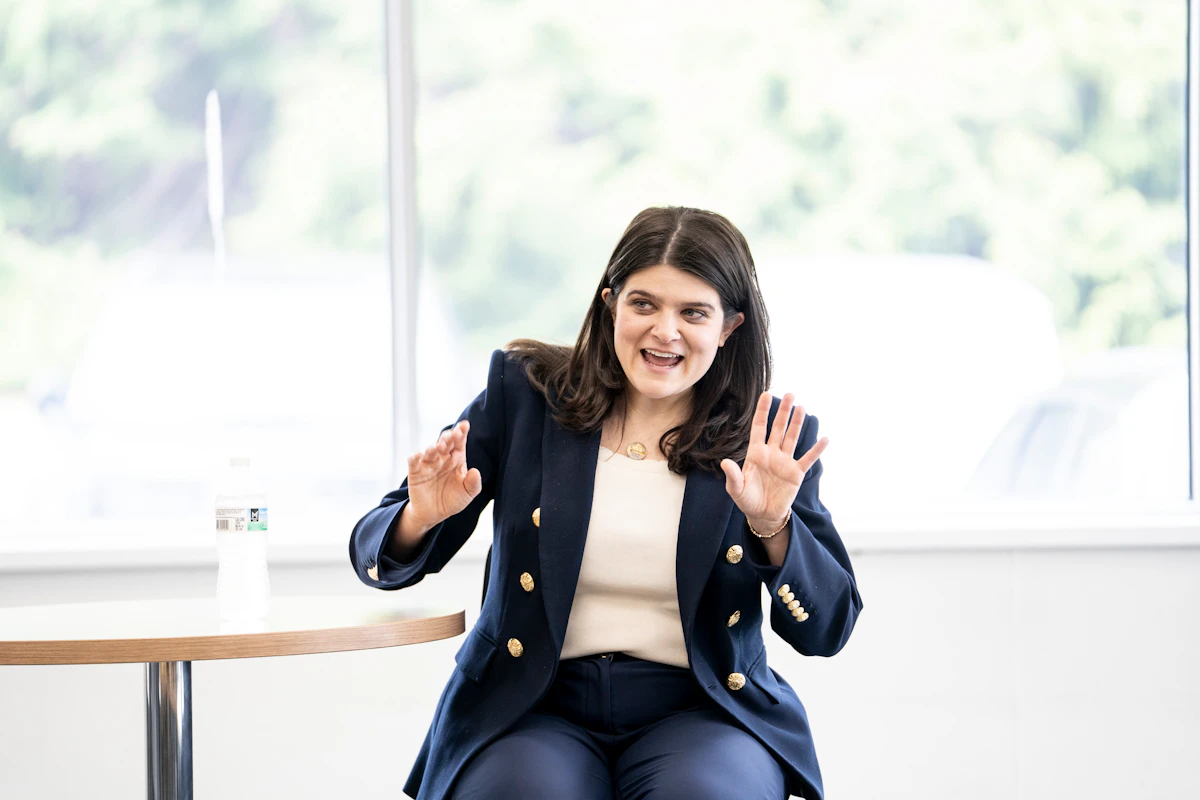
No primary—especially a Senate primary—should go on this long. But Michigan’s Democratic Senate primary, having dragged on for months, has turned into an interminably vicious grudge fest—one that’s not likely to subside until voters finally go to the polls on August 4 and choose between Haley Stevens and Abdul El-Sayed.But the Michigan primary is also so bitter for the same reason that it has been so interesting. Of all of the 2026 races, this is the one that best captures the current fissures in the Democratic Party—and which seems to best predict where the fault lines of the 2028 presidential primary might lie. The biggest reason is that this race features the cleanest factional divides. Stevens, who currently represents the northern Detroit suburbs in Congress, is an establishment stalwart, backed by both party leaders and tens of millions in AIPAC money. El-Sayed—a former state public health official who ran a failed campaign for governor in 2018—is a progressive and longtime ally of Bernie Sanders and has made criticizing America’s backing of Israel’s genocide in Gaza a key plank in his campaign. Briefly adding to the intrigue was the race’s third leading candidate, Mallory McMorrow, a young member of Michigan’s state Senate, who attempted to triangulate between these positions but dropped out earlier this month without endorsing either candidate. If you want a race that captures the expected “lanes” of the 2028 primary—establishment, insurgent, middle—look to Michigan.In recent weeks, particularly after McMorrow’s exit, that race has also been fractious, bitter, and personal. Stevens’s surrogates and backers have argued El-Sayed is too radical and risks alienating swing voters needed to win a seat that is essential for Democratic hopes of taking the Senate. Multiple Stevens backers, including the centrist group Third Way and Hillary Scholten, who also represents Michigan in the House, have attacked El-Sayed for campaigning with Hasan Piker, the popular leftist streamer who has made controversial comments about September 11 and October 7. On Wednesday, Scholten also attempted to tie El-Sayed to Graham Platner, who dropped out of the Senate race in Maine amid multiple controversies, including allegations of rape and sexual assault. “Abdul El-Sayed and Graham Platner campaigned together. They fundraised together,” she said on CNN. That’s not actually true—they never campaigned together and only sent out two joint fundraising emails—but it gets at the increasingly vicious nature of the campaign and the personal nature of the attacks, which often avoid policy and instead focus on character. El-Sayed has attempted to force a focus on policy disagreements, but his backers, particularly his online allies, have ridiculed Stevens’s often awkward campaign appearances. After Stevens had a Howard Dean–ish moment of forced enthusiasm—“You better believe I’m gonna be doing it with a little bit of joy, a little bit of enthusiasm, a little bit of energy, and a little bit of stick it to ’em! Because that’s the Michigan way!”—the mockery grew so intense that El-Sayed released a video asking his supporters to quit making personal attacks on his opponent—and, more importantly, to keep the focus on policy. There are real policy disagreements between Stevens and El-Sayed, particularly over Israel. Stevens is a longtime backer, who once said, “Israel comes to me in my dreams.” El-Sayed, meanwhile, has made U.S. support for Israel a focal point of his campaign and a key point of distinction between himself and Stevens. That issue does have extra resonance in Michigan, given its sizable Muslim population, but the fight between El-Sayed and Stevens is one that Democrats will be having on a national stage very soon. That fight mirrors some of the contretemps of past Democratic campaigns—particularly the race between Bernie Sanders and Hillary Clinton in 2016, and the race between Sanders, Elizabeth Warren, and Joe Biden in 2020. As in those contests, a populist outsider is taking on an establishment figure by arguing that the Democratic Party needs to adopt more progressive positions. The schism over support for Israel obviously mirrors debates that dogged both Joe Biden and Kamala Harris after October 7, 2023. But what is most interesting about the Michigan race is how little policy has factored into the race, particularly in Stevens’s attacks on El-Sayed. At a debate earlier this month, Stevens essentially accused El-Sayed of being a prima donna—someone primarily running to get attention for himself. “I am not trying to sell a book or a podcast,” Stevens said in her opening remarks. “I’m the only one on this stage who doesn’t have a talent agent trying to pitch me for paid speeches.