
New York Post
Trump brushes off major inflation spike as consumer prices skyrocket: ‘I love the inflation’
The president added: "You know why? Because as soon as this war is over... it's going to come down like a rock."
Right

Already indicted for mishandling legal documents related to investigation of president
The president added: "You know why? Because as soon as this war is over... it's going to come down like a rock."

President Trump signed a bill funding immigration enforcement agencies through the end of his term, bringing an end to a monthslong feud that exposed deep divisions on Capitol Hill.
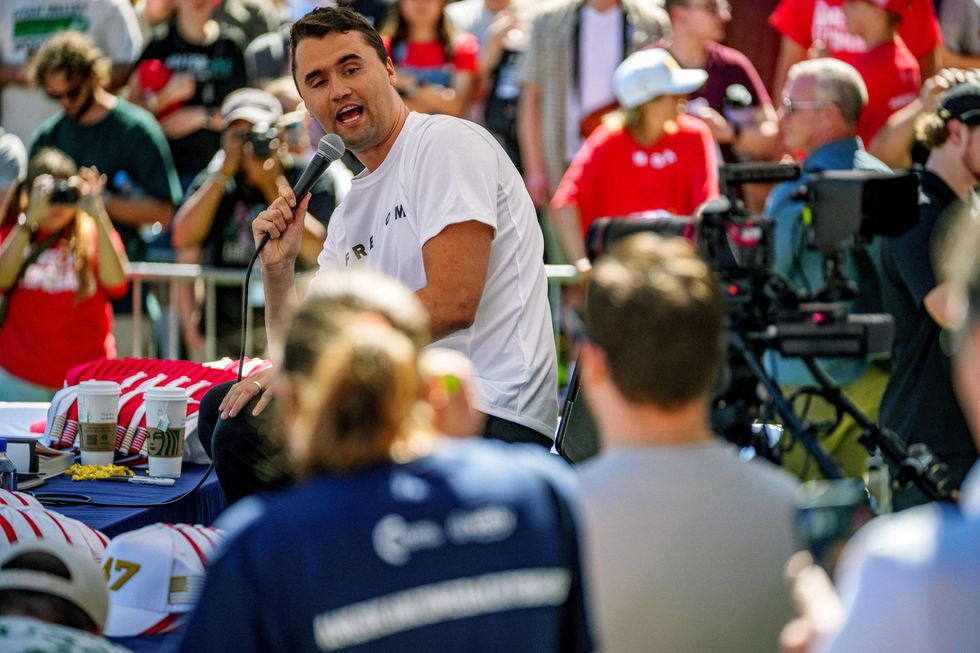
Donald Trump called up the late conservative gadfly Charlie Kirk last July and berated him for letting one of his Turning Point rallies spiral into anger and conspiracy rumors about the Jeffrey Epstein files, reports the New York Times.According to reporting from Maggie Haberman and Jonathan Swan, from their forthcoming book, “Regime Change: Inside the Imperial Presidency of Donald Trump,” at the same time that Trump was trying to take heat off of Attorney General Pam Bondi for her handling of the Epstein Files, Kirk was on the road holding rallies that were roiled by the revelations trickling out of the FBI.The confrontation reflected deepening fractures within Trump's coalition as the Epstein controversy spiraled beyond the administration's control, Haberman and Swan wrote before adding that, while Trump was doing damage control on Truth Social, Kirk was holding court at his rallies where the Epstein Files were becoming a primary focus.Central to the fury was former Deputy FBI Director Dan Bongino's war with Bondi over the files. Bongino reportedly told White House Chief of Staff Susie Wiles: "She was the one on TV saying over and over they had all this stuff. There was never anything. We were always clear about that. But now everyone thinks we did something wrong. And I gave up everything."Bongino described the personal costs of the debacle. He had walked away from his high-rated podcast and millions of dollars, "and now it's all disappeared, because people think we screwed something up with Epstein.""This is going to be President Trump's Iran-contra," he reportedly lamented at the time.On July 12, Trump took to Truth Social to defend Bondi and urge his supporters to stop wasting "Time and Energy on Jeffrey Epstein, somebody that nobody cares about." The post was a transparent attempt to quash the controversy—and it failed.Trump told aides he was furious with some of his most influential supporters, including Kirk, and former Fox News personalities Tucker Carlso and Megyn Kelly, all of whom were publicly demanding the administration "come clean on the files."Kirk's Turning Point USA event the day before had turned into an Epstein "grievance session," the Times is reporting, with speaker after speaker attacking Bondi's handling of the situation. Trump called Kirk directly and "scolded him."According to the Times, Kirk was "more attuned to the younger MAGA base" than perhaps anyone in Trump's orbit, and recognized that the Epstein cover-up—as it was now widely viewed—was capturing alarm among his constituency to a dangerous degree.Donald Trump Jr. and Vice President JD Vance, both deeply embedded in the hyper-online younger faction of the base through their X activity, shared Kirk's concerns. They urged the White House to reverse course and pressure the Justice Department to release more Epstein files, Haberman and Swan are reporting.

House Oversight and Reform Committee Chairman James Comer said he wants Acting Attorney General Todd Blanche to appear before lawmakers in July.

President Trump asked Congress for a short-term extension of Section 702 of the Foreign Intelligence Surveillance Act (FISA), an effort to give time to nominate and confirm a permanent director of national intelligence amid threats from Democrats to not renew the act if Bill Pulte remains acting director of the agency. In a TruthSocial post…
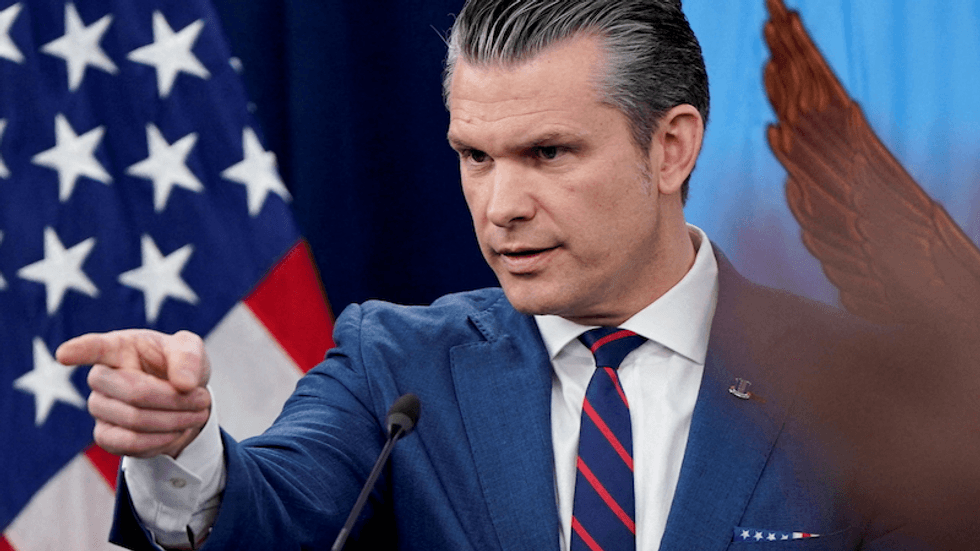
White evangelicals are just 13% of the American population. But according to one columnist, Defense Secretary Pete Hegseth is building a Pentagon that looks a lot like their church — and writer Amanda Marcotte says that's no accident.When the Pentagon cut its official list of military religious designations from 211 to 31 earlier this month, it left out one group that expected to be included: Latter-day Saints. The Church of Jesus Christ of Latter-day Saints wasn't classified as Christian at all.Meanwhile, atheists, Wiccans, and pagans were removed entirely. Muslims and Jews were folded into single catch-all entries. Christians got 21 subcategories.That's "extremely concerning," said Matthew D. Taylor, a visiting scholar at Georgetown University's Berkley Center for Religion, Peace and World Affairs. "The ideological consolidation of the military is something that we have historically not wanted."For Salon'a Marcotte, the Mormon exclusion wasn't a bureaucratic mistake — she contends it was a glimpse of the endgame.To build the "Christian nation" they envision, Marcotte writes, white evangelicals need votes from the other 87% — Black Protestants, Hispanic Catholics, white mainline Protestants, Mormons, and non-churchgoing conservatives who reliably pull the lever for President Donald Trump. That means, she argues, making all of them believe they're insiders."In playing these games," Marcotte writes, "Hegseth gave the whole thing away."Robert Jeffress — the Southern Baptist megachurch pastor and Trump ally who has repeatedly called Mormonism a "cult" — spoke in person at the administration-backed Rededicate 250 rally on the National Mall last month. Hegseth addressed the crowd by video. The speaker list was overwhelmingly white and evangelical. No Mormon leaders were invited. No Black church leaders. A few Catholics appeared on the program.Marcotte contends that the rally was the public showcase of a longer project. Since taking the Pentagon, Hegseth has hosted monthly worship services in the building's auditorium — every invited preacher a white evangelical, every sermon evangelical in character.Pastor Douglas Wilson, a leader of the Communion of Reformed Evangelical Churches, told troops that bearing the name of Jesus Christ is "no armor greater than that." Evangelist Franklin Graham asked uniformed service members whether they knew God is "a god of war," then quoted scripture ordering enemies killed without mercy — women, children, livestock.At a March prayer service tied to the Iran war, Hegseth himself prayed for "overwhelming violence of action against those who deserve no mercy."A February 2026 PRRI survey of more than 22,000 adults found white evangelical Protestants are the only religious group with majority support for Christian nationalist views — 67% qualify as adherents or sympathizers.Among the groups being courted for their votes, the numbers drop sharply: just 43% of Black Protestants, 35% of white Catholics, and 31% of Hispanic Catholics qualify as supporters. More than two-thirds of Hispanic Catholics reject Christian nationalism outright.Black Protestants, Hispanic Catholics, Hispanic Protestants, and other Christians of color together make up roughly a quarter of the U.S. population. White mainline Protestants and white Catholics account for another quarter."Once the principle of religious discrimination against non-Christians is established in American law," Marcotte writes, "the next step was always going to be reclassifying huge swathes of Christians as non-Christians, so they can be marginalized, too."Tensions are also emerging regarding Catholics. Pope Leo XIV's Vatican has repeatedly condemned the Iran war — putting it in direct conflict with what Taylor has called Hegseth's religiously charged war rhetoric. Evangelicals, Marcotte points out, "would love to push the Catholics out over this, and will, the second it's politically viable."Sen. Mike Lee (R-UT) called the Mormon exclusion "repugnant," phoned Trump, and got a reversal within days.Lee welcomed the fix — but the reversal reportedly dropped the "Christian" label from several groupings rather than extend it to Mormons. Marcotte asserts the evangelical in-group held regardless."They're coming for other Christians, too," Marcotte writes.
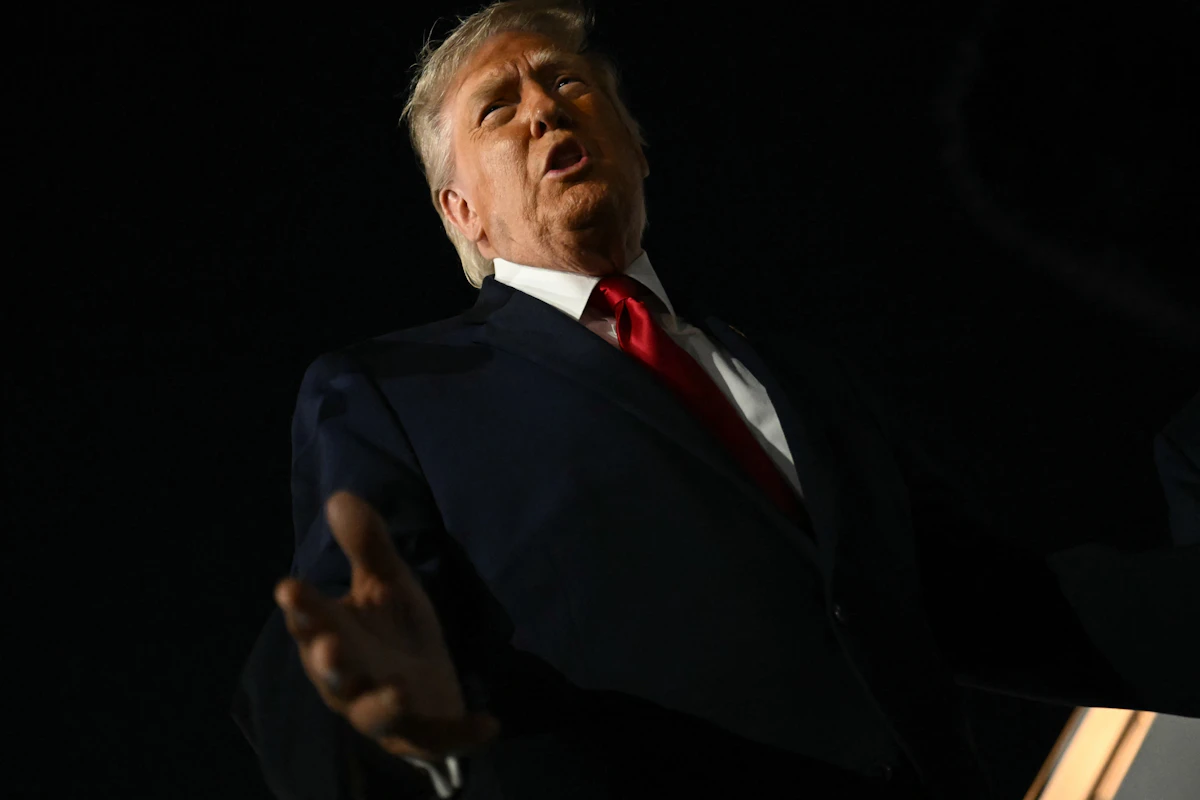
President Trump is losing his mind over a New York Times report detailing how the White House panicked over Jeffrey Epstein in multiple instances.Early Wednesday morning, MS NOW host Joe Scarborough mentioned the report on his show, Morning Joe. Less than an hour later, Trump attacked Scarborough on Truth Social, calling him “one of the most inaccurate detailers of truthful facts on television.”“His serious case on Trump Derangement Syndrome, often referred to as TDS, has made him a laughing stock among those who know what is going on in the ‘Wonderful World of Television,’’’ Trump posted.Scarborough’s show was still going on after Trump dropped his post, and the hosts called him out for basically confirming the Times’ reporting that mentioning Epstein triggers the White House.“Sometimes I go talk to you in the White House, and we disagree on things, but nothing deranged here, sir, unless you’re deranged,” Scarborough said to Trump. “If there’s any derangement, it would have to be on your side of the relationship, because I’m not deranged. Not about you. I just state the facts, and maybe that makes you deranged.“Ohhhh, that actually sort of affirms the reporting that this is something you cannot mention around the president of the United States,” Scarborough added. “We just read what Maggie and Jonathan wrote about Epstein. Is that what that was?”The Times article is a detailed look at how Trump’s inner circle met in the Situation Room to handle each development regarding Epstein and the government’s files on the billionaire sex offender. Shouting matches, arguments, efforts to get different officials fired, and clashing strategies are all outlined in the article, which is based on reporting from the forthcoming book Regime Change: Inside the Imperial Presidency of Donald Trump, by reporters Maggie Haberman and Jonathan Swan. The main thesis of the article is that Trump could not make the public forget about Epstein, no matter what he did, and he continued to prove that Wednesday morning.
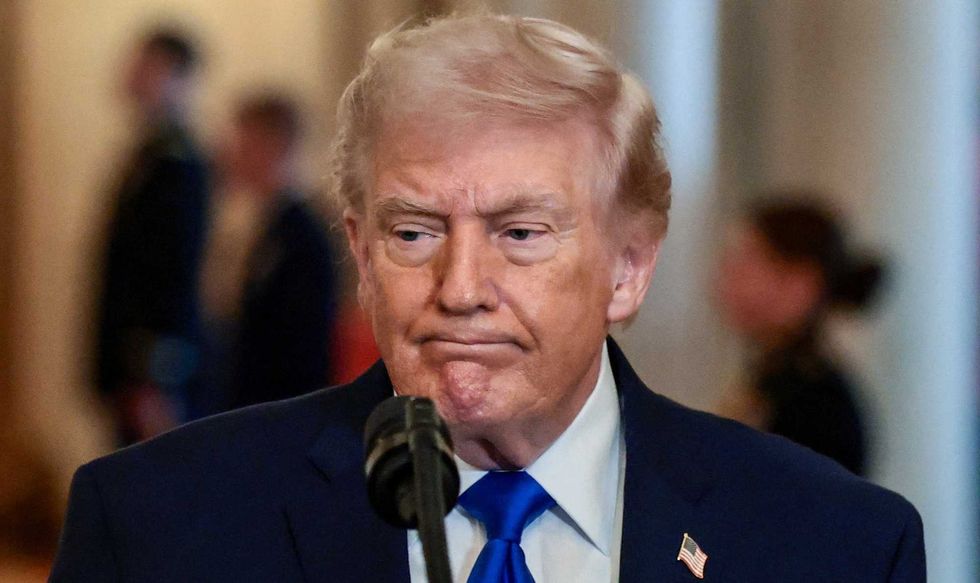
As the future President Donald Trump's slush fund remains uncertain, a new report from Politico revealed that one of his top Justice Department officials plotted to cash in on it.The DOJ first announced the "anti-weaponization" fund as part of a settlement for Trump's lawsuit against the IRS, claiming that it would pay out to people who were supposedly targeted by the government for their political beliefs. Following a wave of bipartisan backlash to the fund, particularly over the possibility that it could pay out to Jan. 6 rioters, a federal judge in Virginia issued a temporary ruling to block its implementation, though it remains a possibility that it could be revived, even after reports that the administration was moving away from it due to the backlash.According to a Wednesday report from Politico, while the fund was still an active concern, a top official with the DOJ was planning to claim a payment from it, based on his time as a congressional staffer. The situation raised alarms at the agency, as he was set to be involved in the communication strategy surrounding the fund."The official, Patrick Davis, raised his plan to file a claim with others at the DOJ in May because he viewed it as a conflict," Politico revealed. "DOJ officials were concerned by Davis’ recusal request in part because he was responsible for communicating the department’s reasons for setting up the fund to lawmakers. Davis works as the assistant attorney general for legislative affairs, a Senate-confirmed position, and previously served as a top aide to Republican Sen. Chuck Grassley of Iowa."The outlet continued: "His plan to make a claim from the fund stems from his time as a congressional staffer. He had his phone and email records subpoenaed when he was investigating 'Russiagate,' the yearslong probe into Russia’s efforts to influence the 2016 presidential election and Trump’s alleged ties to Moscow. It’s unclear how much money Davis would have sought from the halted fund, if any, but the proposed fund would have also offered formal apologies."“[Davis] has relationships with the senators, and it was a very tough time for him to back out,” one anonymous official close to the situation told Politico. “In a very fraught moment, with legislative affairs and stuff with the Hill, DOJ needed to have the head of [lega] affairs involved.”When reached for comment, the DOJ told Politico that "out of an abundance of caution, Davis temporarily recused himself on a precautionary basis and after internal consultation, it was decided that recusal was not necessary for a number of reasons," while also taking the opportunity to once again smear the Russian collusion investigation as a "hoax."