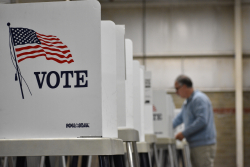
Matt Dunlap Wins Democratic House Primary in Maine’s Swing District
Matt Dunlap defeated a candidate backed by the House Democratic campaign arm and is set to face former Gov. Paul LePage, a Republican, in a competitive general election.

This year, for the first time since 1994, the United States will host the 2026 FIFA world cup, with an estimated 1.24 million international tourists visiting during the tournament.BlazeTV’s Sara Gonzales calls it “a weird time.”“As we're talking about libs just hating this country, hating Donald Trump … you have all of these tourists coming here for the World Cup, and they are, like, beside themselves. … They can't believe how awesome this country is,” she chuckles.To illustrate her point, she then plays a video that has gone viral on social media capturing Japanese tourists in Texas. “What do you think of America, of Texas?” the reporter asks the group.“Texas is good! Everything is big!” one tourist excitedly shouted.Sara loves the unabashed excitement about America. “It’s so sweet. It's so humbling to see all of these people come in here, and it's just, like, the little things that you just don't even realize are a novelty or a big deal to other countries,” she says.Sara then displays numerous social media posts from tourists visiting America delighting in the funniest things — like school buses, “wild squirrels,” cardboard drink coasters, Waffle House, Taco Bell, Raising Cane’s, and, of course, the phenomenon that is Buc-ee's convenience stores.One tourist’s mind was blown when he visited a Bass Pro Shop. “That’s how we do it in the South, Freddy,” laughs Sara.Freddy is a German tourist who has gone mega-viral for posting his route through the United States, lavishing praise on America and Americans. “As wholesome and adorable and heartwarming it is to see these people just come in and love everything that America has and does and stands for … CNN, actually, they're about to, I don't know, ‘America-splain’ why Freddy is wrong and this country sucks or something,” scoffs Sara.She plays a recent CNN clip from “The Situation Room with Wolf Blitzer and Pamela Brown” in which Christine Brennan says, “I saw some conversation, Wolf and Pamela, about how the rest of the world is looking at the United States and feeling that we are — it's a foreboding image and that we are inhospitable, and here is a German tourist, and others as well now on social media, saying no, no, no, the Americans are great, so what a shame that that's the image that the world has — many have of us.”“Do they? ... It sounds like everyone's having the time of their lives coming here,” says Sara.To see more tourist reactions to the U.S., watch the video above.Want more from Sara Gonzales?To enjoy more of Sara's no-holds-barred takes on news and culture, subscribe to BlazeTV — the largest multi-platform network of voices who love America, defend the Constitution, and live the American dream.

Matt Dunlap defeated a candidate backed by the House Democratic campaign arm and is set to face former Gov. Paul LePage, a Republican, in a competitive general election.
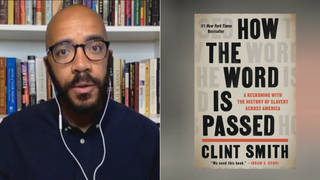
We feature a special broadcast marking the Juneteenth federal holiday that commemorates the day in 1865 when enslaved people in Galveston, Texas, learned of their freedom more than two years after the Emancipation Proclamation. We begin with our 2021 interview with historian Clint Smith, originally aired a day after President Biden signed legislation to make Juneteenth the first new federal holiday since Dr. Martin Luther King Jr. Day. Smith is the author of How the Word Is Passed: A Reckoning with the History of Slavery Across America. “When I think of Juneteenth, part of what I think about is the both/andedness of it,” Smith says, “that it is this moment in which we mourn the fact that freedom was kept from hundreds of thousands of enslaved people for years and for months after it had been attained by them, and then, at the same time, celebrating the end of one of the most egregious things that this country has ever done.” Smith says he recognizes the federal holiday marking Juneteenth as a symbol, “but it is clearly not enough.”
Folarin Balogun scored two goals on his World Cup debut, but he is the type of person President Trump is trying to ban under birthright citizenship.
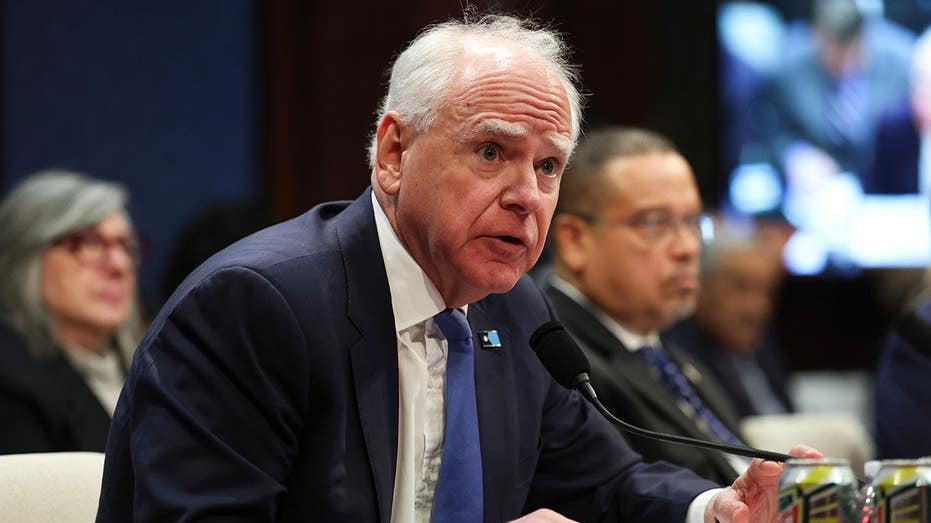
Minnesota Gov. Tim Walz's approval rating drops to 39%, falling below President Trump's 42% in the state amid a massive fraud scandal under his watch.
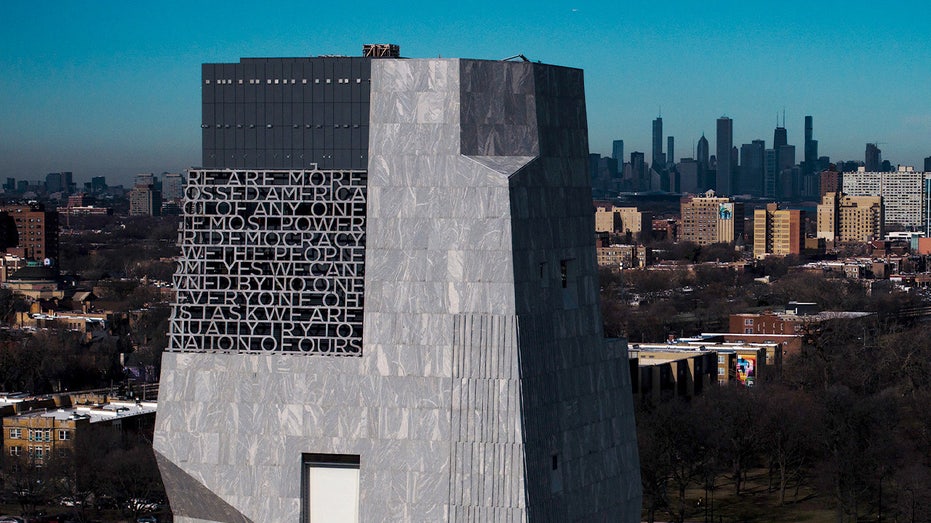
The Obama Presidential Center opened Friday after controversies including costs ballooning to $850 million, unpaid contractors, and displacement concerns.
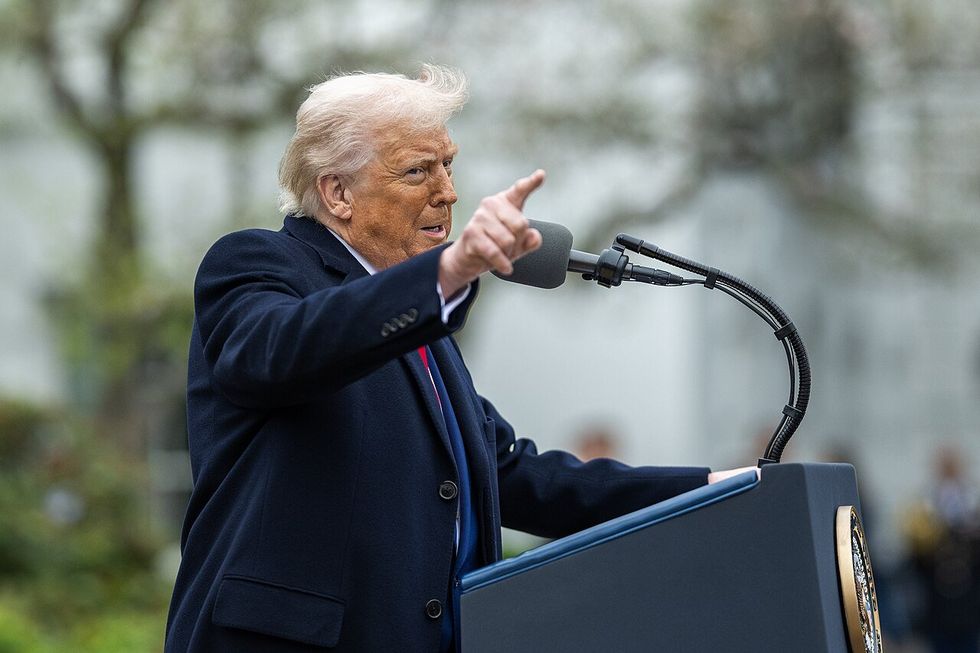
In his first term of office Donald Trump achieved the lowest average job approval ratings (41%) among Americans since the end of the second world war. In his second term he has fallen well below that with an approval rating of only 35% in a recent Economist/YouGov poll.Much of this can be explained by voter perceptions of the state of the US economy. The chart below shows the relationship between the percentage of Americans who approve of the president’s handling of his job and consumer confidence. It covers almost 50 years of monthly data with the consumer confidence data coming from surveys conducted at the University of Michigan.The two series track each other closely and so demonstrate a moderately strong relationship with a correlation of 0.44 (If they were unrelated the correlation would be 0 and if they were exactly the same it would be 1). In both cases higher scores denote greater approval and increasing consumer confidence. This confirms the well-known fact that the state of the economy is a big driver of presidential approval. If we look closely at the consumer confidence index, the average score over the entire period was 84. In the late 1970s Jimmy Carter had low and falling approval ratings and consumer confidence scores. This goes a long way to explaining why he was a one-term president who lost to Ronald Reagan in the 1980 election. A decade later, when Republican George HW Bush was president between 1989 and 1993, consumer confidence plummeted as an official recession in the US economy was declared in July 1990, leading to declining growth and rising unemployment. The Federal Reserve, which is responsible for US monetary policy, exacerbated a weak financial situation by raising interest rates in order to combat inflation. The result was that Bush senior became another one-term president and lost the 1992 election to his Democrat rival, Bill Clinton (whose campaign motto was famously: “It’s the economy, stupid.”). However, the largest fall in consumer confidence over this period occurred after the financial crash of 2007-2008, which in turn produced a serious recession and rapidly declining consumer confidence. On this occasion George W Bush was in his second term as US president and his collapsing approval ratings paved the way for the victory of Barack Obama in the 2008 presidential contest.Finally, when Donald Trump won the presidential election in November 2016, consumer confidence was relatively high. In January 2017 at the time of his inauguration the consumer confidence index stood at 99. Four years later in January 2021 when Joe Biden was inaugurated as president the index was at 79, a dramatic decline in historical terms.The midterm elections for the House and the Senate take place in November this year and currently things do not look good for the Republicans. Pollsters have been asking what is called a “generic” question in their surveys about who respondents would vote for if the midterm elections took place today. They are virtually unanimous in their agreement that the Democrats will win control of the House of Representatives. In addition, it is possible, though less likely, that the Democrats will win control of the Senate.A thought experimentAn interesting thought experiment is to suppose that we were looking at a presidential election in November rather than the midterms. What light does the current consumer confidence data throw on such a hypothetical election? The second chart shows the relationship between voting for the incumbent’s party in the 19 presidential elections since 1978 and consumer confidence in the month of these elections.Once again, the relationship is moderately strong between the two series with a correlation of 0.43. Voters reward or punish the incumbent president or his party’s candidate depending on how they feel about the economy. As we observed in the first chart, the consumer confidence score was at its lowest at 55 in the 2008 election which Obama won. But the score on the index in June 2026 was 49, so – if consumer confidence continues to fall – then in a hypothetical presidential election in November Trump would lose very badly. This is a thought experiment rather than a prediction of what is likely to happen in the presidential election of 2028. But when the war in the Middle East launched by the US and Israel threatens to produce a global recession it seems unlikely that consumer confidence in the US will improve any time soon.Trump will not be on the ballot in 2028. But the Republican candidate in that election is likely to take a historical beating if the US and world economies do not improve in the meantime. Paul Whiteley, Professor, Department of Government, University of Essex This article is republished from The Conversation under a Creative Commons license. Read the original article.
Both emerged from the state’s ranked choice voting process early Friday morning.
For several years, I've been debating with a close friend (who happens to be a pre-Trump Republican) about whether the Democrats habitually cheat in elections.