WSJ.com : U.S. News
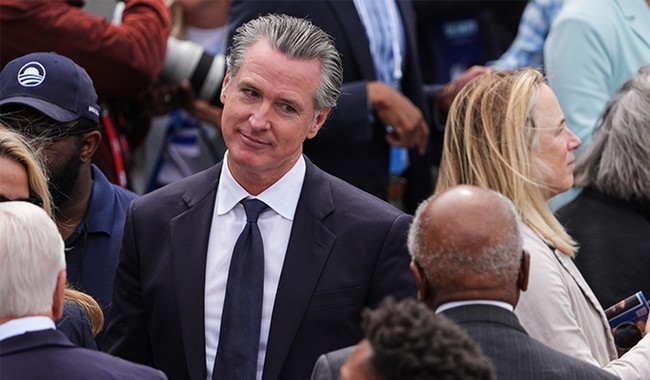
John Brennan Sues Trump Administration Over Investigation Records
The former CIA director argues that he needs the materials to challenge any potential indictment.
Center

The Supreme Court just issued the ruling on birthright citizenship that we all expected. This is a decision that could have been a historic victory for this country if Republicans were anywhere near as effective and as ruthless as the Left is when it comes to selecting Supreme Court justices. Democrats pick judges who return ...
The former CIA director argues that he needs the materials to challenge any potential indictment.
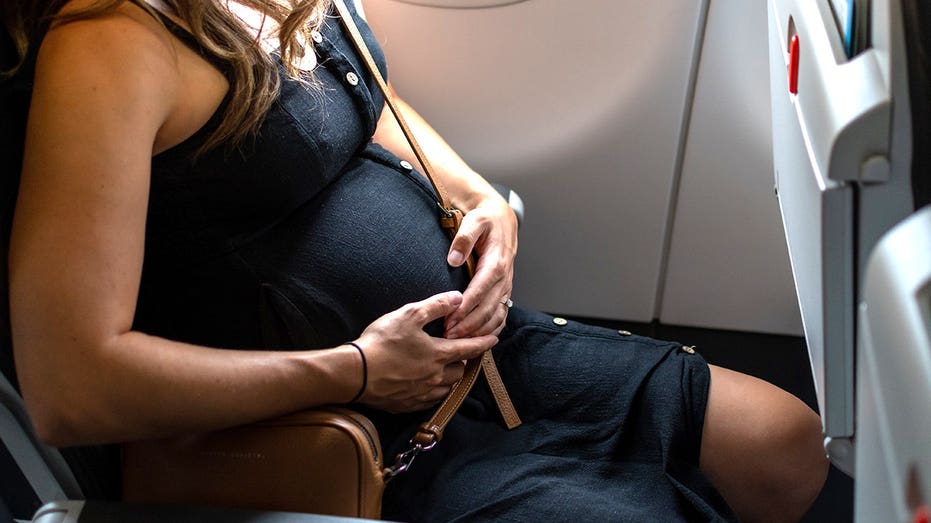
Sen. Tim Scott's bill targets birth tourism by denying birthright citizenship to children born to women on tourist visas in the United States.
Speaker Mike Johnson and other Republicans in the US House of Representatives are asking President Donald Trump to allow a waiver of a century-old shipping law granted in March to tame fuel prices to expire.
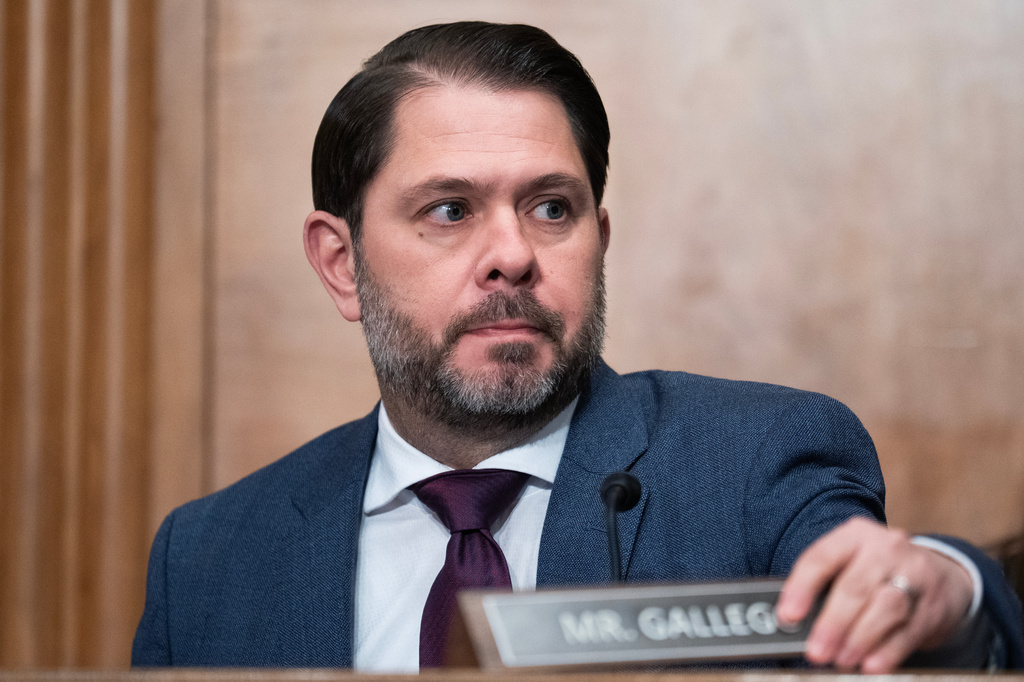
A spokesperson for the Arizona Democrat has said that President Trump is “targeting” him with the probe.

House Speaker Mike Johnson (R-LA) let out a growling sound when a reporter told him in real-time that the Supreme Court had rejected President Donald Trump's birthright citizenship executive order. Johnson was attending a House Republican Caucus meeting and spoke to reporters when he was told about the high court's decision to uphold birthright citizenship."Oh dear, what'd they rule?" Johnson asked.A reporter read the high court's decision — and Johnson let out an audible groaning sound."I need to read the opinion, OK. But you can say that's a textualist, originalist view," Johnson said."I do think this has been grossly abused in recent years," he added. an unhappy Mike Johnson growls when informed in real time by a reporter that the Supreme Court ruled to uphold birthright citizenship pic.twitter.com/VYMw0krto6— Aaron Rupar (@atrupar) June 30, 2026
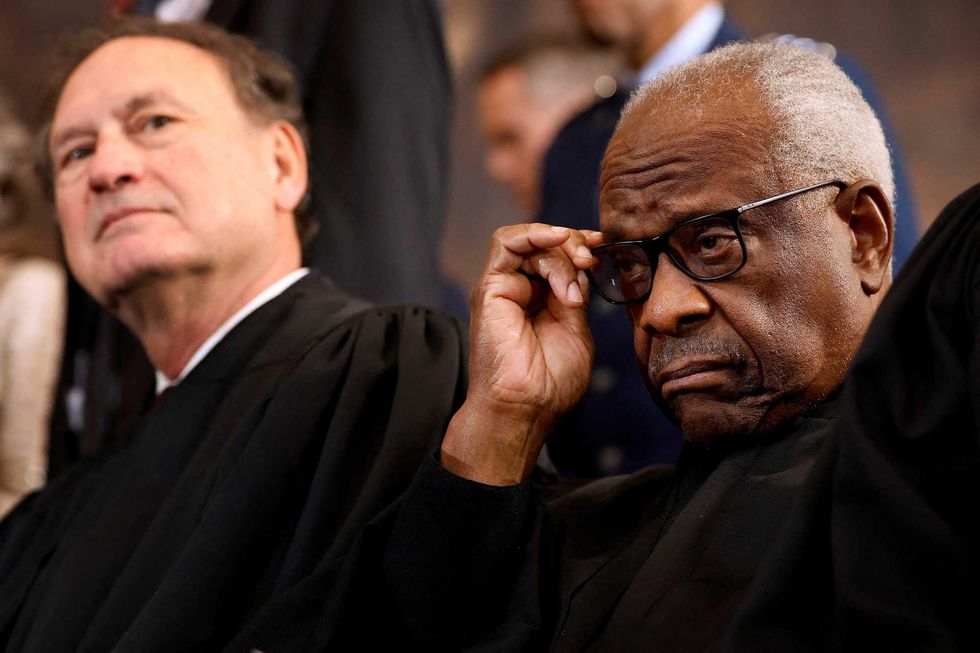
Today, the Supreme Court struck down Trump’s Day One executive order canceling the right to birthright citizenship. Good. That executive order declared that children born in the U.S. would not be considered citizens if their parents were living in the country illegally or were visiting the country on temporary visas.The executive order never took effect. It was quickly blocked by multiple lower courts because it appeared to directly conflict with the 14th Amendment, which states that “all persons born or naturalized in the United States, and subject to the jurisdiction thereof, are citizens of the United States.”The Trump regime appealed the lower-court rulings, contending that the 14th Amendment’s citizenship provision had been misunderstood for more than a century. The administration argued that the drafters of the amendment were focused on guaranteeing citizenship for the children of former slaves—and that the amendment was never intended to extend citizenship to the children of people who weren’t living in the country legally.Trump and his Solicitor General, who argued this case before the Court, also said that narrowing birthright citizenship was necessary to prevent “birth tourism” — the practice of immigrants coming to the U.S. to give birth here and obtain citizenship for their child.Trump has been vowing to try to change the law since entering politics in 2015, arguing the 14th Amendment was written specifically to enshrine the rights of freed slaves. His critics have countered that it was always designed to apply to the children of immigrants too. An 1898 Supreme Court decision confirmed that U.S.-born children of immigrant parents are entitled to American citizenship.Today, Chief Justice John Roberts wrote that the deeply-rooted understanding that virtually everyone born on American soil is automatically a U.S. citizen was enshrined in the Constitution with the passage of the 14th Amendment in 1868: “Citizenship, then and now, was the right to have rights — to freely participate in our political community,” Roberts wrote. “The Framers of the Fourteenth Amendment extended that promise to every free-born person in this land. We keep that promise today.”In another era, this would have been a no-brainer. No constitutional lawyer I know thought the Court would decide otherwise. The lower federal courts had consistently and unanimously ruled against Trump.Had Trump won, it would have probably caused panic among recent immigrants and their families. Although Trump has insisted his policy would apply only to future births, it was far from clear that the logic of any win for Trump wouldn’t apply retrospectively if a future president (JD Vance? perish the thought) wanted to go there.What I find troubling is that the decision was 5 to 4 rather than unanimous or nearly so, as it should have been.Only five of the nine justices ruled against Trump on constitutional grounds. Brett Kavanaugh dissented on statutory grounds; while agreeing that Trump’s executive order was unlawful, he argued that the court should have resolved the case under federal immigration law rather than the Constitution.The Court’s three most conservative justices — Clarence Thomas, Neil Gorsuch, and Samuel Alito — dissented. Thomas wrote for the group: “The Court adds to the sad history of the Fourteenth Amendment, which was designed and understood to secure equal rights for the freed Blacks but has instead been repurposed for political projects that the Reconstruction Congress did not support.”Pure and utter claptrap.Thomas, Gorsuch, and Alito are so far to the right of America that their views on this case and other matters should be presumed bonkers. Yet what’s particularly sobering is that Trump is only one justice away from having a Supreme Court majority that would have gone his way on this absurd reading of the 14th Amendment.Clearly, the Supreme Court must be changed — either by expanding the number of justices or by invoking term limits on Supreme Court justices. The Constitution would permit both remedies.Perhaps the best thing about today’s majority decision is that it’s such a direct repudiation of Trump, who has long taken a personal interest in the issue. During his 2024 campaign, he made curtailing birthright citizenship a key element of his immigration platform.When the high court heard arguments on the case in April, Trump took the unprecedented step of showing up in person for the hearing, making him the first sitting president ever to attend a Supreme Court argument. For the Court to so directly reject his position today is surely a humiliation for Trump.Robert Reich is an emeritus professor of public policy at Berkeley and former secretary of labor. His writings can be found at https://robertreich.substack.com/. His new memoir, Coming Up Short, can be found wherever you buy books. You can also support local bookstores nationally by ordering the book at bookshop.org

The Supreme Court has always insisted that the justices are good friends and get along well, despite the bitter partisan nature of many of the issues they decide. But with many of the justices sniping at each other over concurrences and dissents in Tuesday's landmark decision blocking President Donald Trump from revoking birthright citizenship, that has never been deeper in doubt, court observer Dahlia Lithwick told MS NOW's Nicolle Wallace on "Deadline: White House."Wallace called Lithwick's attention to the "personal nature" of what some justices were saying. "I mean, Justice Ketanji Brown Jackson, making no secret about how she sees the dissent. Samuel Alito is calling the majority, quote, 'wrong.' What stands out to you?"Jackson, said Lithwick, put on "a clinic on how to do constitutional text and history and originalism and how to do it right ... but she's very clear, this is a direct response to what she thinks Justice Thomas has just gotten woefully wrong in his dissent, and in a sense, that feeling that she has to take him on on his own terms."This sort of exchange spilling out in public is not unheard of, Lithwick continued, "but I think you're right to say, aggregated over the last few weeks ... there just seems to be a sense that trust is broken among the justices, and that there is a feeling that the skin is very thin and that everything is personal and everything is expressed personally."Wallace then noted a passage from Jackson's concurrence, specifically calling out Thomas' double-talk in claiming the 14th Amendment was a race-conscious reparation as an argument for why it doesn't confer birthright citizenship, after he spent years tearing down every race-conscious program for minorities he could get his hands on, from voting rights to college admissions."She seems to be getting at something that kind of hovered over the voting rights decision as well," said Wallace. "What is this about?"Jackson, replied Lithwick, is the closest thing the court has to a "progressive originalist" and is "very committed to the principle that if you are going to say you're a textualist, an originalist, that the meaning of the drafters of the Reconstruction amendments matters, then be true to that.""I think that for her again, the only word I can keep using is gaslighting," she added. "That this very cramped, very forced, utterly ahistoric, utterly indefensible reading of the Reconstruction Amendments — to her, she experiences it like a wound." - YouTube www.youtube.com