
Salon.com
Trump’s big beautiful income tax dodge
The president's settlement with the Justice Department means he could never face IRS audits again
Left

As Americans fire up their grills for Memorial Day, Wahlburgers executive chef Paul Wahlberg said the best burgers are still the simplest ones.
The president's settlement with the Justice Department means he could never face IRS audits again
The contest between the incumbent John Cornyn and his challenger Ken Paxton will culminate in a Tuesday runoff. Here are the developments that shaped the campaign.

The heroic Army veteran at the center of a nasty controversy involving Maine Senate hopeful Graham Platner is now speaking out, and he says the Democrats still backing Platner owe his children an explanation. According to the New York Post, Purple Heart recipient Ted Daniels blasted top Democrats for continuing to support Platner after resurfaced ...

We know the Trump Department of Justice has threatened individuals it considers political opponents. Echoing authoritarian regimes worldwide, they’ve now indicted the Southern Poverty Law Center (SPLC). In response, major Donor-Advised Funds (DAFs), including Vanguard, Fidelity, and Schwab, have prevented clients from donating to SPLC, cutting the organization off from funding without even a shred of due process. If the DAFs follow this precedent, it could eliminate a key source of funding for any nonprofits this—or any future—administration chooses to attack.The funds claim their action is necessary because, according to the administration, it constituted fraud for SPLC to have paid hate group informants. But federal and state law enforcement agencies have known about the infiltrations for years, using information they provided to help secure indictments and convictions. So the charges are spurious.Fidelity justified its actions by citing a policy of pausing DAF giving if an organization “is being investigated for alleged illegal activities…such as terrorism, money laundering, hate crimes or fraud,” or if “state and federal agencies” are investigating a charitable organization. Schwab’s fund quietly removed SPLC from its list of eligible nonprofits, and a representative read me similar boilerplate, saying the fund was deciding on next steps. The danger is far larger than the SPLC case. The listed criteria would let federal or state authorities cripple any nonprofit they choose, simply by launching an investigation. The organization doesn’t have to be convicted, or even indicted. They just have to be investigated, which makes this a perfect way to target political opponents. The administration has already issued a memorandum promising investigations of groups that promote “anti-fascism,” “anti-Christianity,” or “hostility” toward “traditional American views on family, religion, and morality.” It’s threatened Wikipedia, the Vera Institute for Justice and the governmental watchdog Citizens for Responsibility in Ethics in Washington, not to mention major universities. All the federal government, or even a state government, would need to do to launch a DAF freeze is to open an official public investigation. And these major DAFs would then block the targeted organization from receiving funding. The implications aren’t confined to the Trump administration. Under this precedent, Democrats holding power could do the same to disfavored nonprofits. Just launching an investigation would cut off a significant part of a targeted organization’s money flow. The defunding or banning of targeted NGOs is exactly what Vladimir Putin did in Russia, Viktor Orbán in Hungary, Recep Tayyip Erdoğan in Turkey, and Nicolás Maduro in Venezuela. It’s a classic way to eliminate opposition and consolidate power. And the anticipatory compliance of Vanguard, Fidelity, and Schwab is the exact kind of response that empowers would-be dictatorships, whatever their politics.If a nonprofit is convicted of fraud or money laundering, it’s of course legitimate to remove or suspend their 501(c)(3) nonprofit status. But SPLC has neither been tried nor convicted, so the DAFs are letting a hostile administration’s mere accusation of wrongdoing become an excuse to block funding. The $326 billion of money that DAFs hold is part of the lifeblood of nonprofits. The actions of these DAFs directly undermine democracy by excluding a group the administration has targeted and potentially denying funding to other targeted groups. That’s true whatever you think of SPLC.If there’s a nonprofit that could weather this, it’s SPLC, with its $786 million endowment. I don’t give to them because I think other groups are more impactful for the money they spend. But if the Trump administration and its enablers can do this to SPLC, they can do it to far smaller and more vulnerable nonprofits. For instance, they could target nonpartisan voter engagement groups, drying up funding (including pledged contributions) at the point when these groups need it the most to engage citizens in democracy. Damaging attacks on nonprofit funding also don’t have to come from the federal Department of Justice. Under Fidelity’s criteria, attacks could come from state governments as well, with potential targets including either conservative or liberal groups depending on which party runs a particular state. But ordinary citizens have the power to change this. The campaigns that got ABC to reinstate Jimmy Kimmel offer a model. This issue has less visibility, but for the nonprofits it could affect is equally critical. If we have money in a DAF, our calls or emails could well make the difference. Schwab told me that they’d been getting lots of critical responses. But even if we don’t have a DAF, nearly 60% of us have retirement or other investment accounts, with most housed at the major affiliated brokerages.
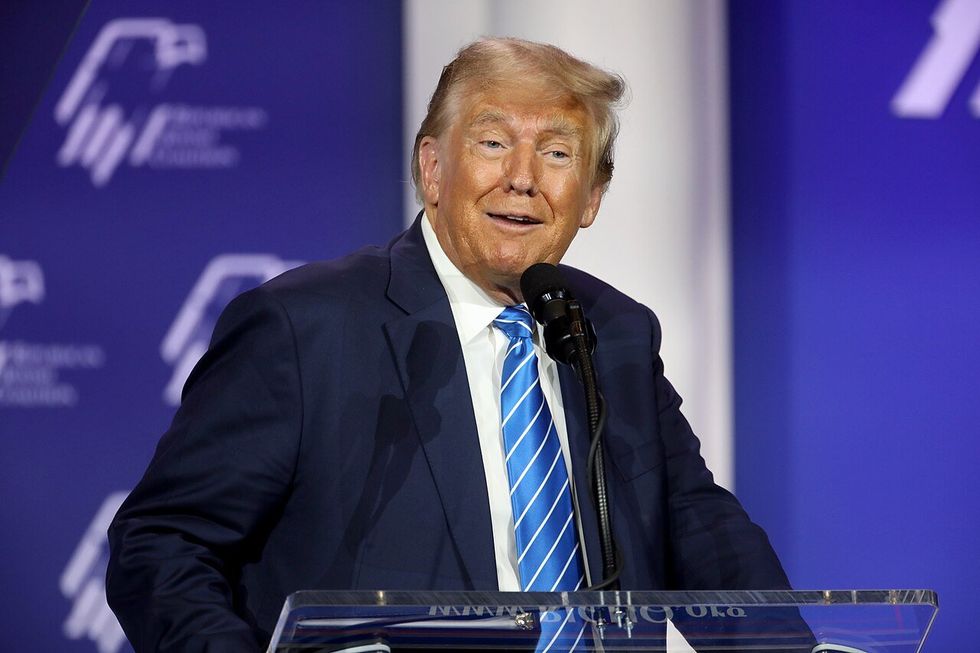
Pondering our nation’s upcoming Memorial Day, it’s hard not to get emotional. I still get a lump in my throat when we stand for the national anthem at Bears home games. I fidget, look down, or look away so people don’t see my tears and think I’m loopy. But when I hear ‘perilous fight,’ and ‘proof through the night’ I really do see the old yellowed flag: 15 stars and stripes, tattered and frayed, still standing against all odds for a new freedom the world had never heard of. We were founded on a novel concept of liberty never before articulated: an intangible, deeply profound declaration that all men were created equal, endowed with the same right to pursue happiness. Not because those rights were bestowed by a king, but because people were born with them. They were inalienable. Five hundred days into this administration, sensing the precarity of those rights, seeing the momentum of attempts to erase them, guts me. Not because we’re exceptional, not because we reached our goals. We never did, and we’ve recently begun marching so determinedly backward it’s easy to feel helpless, despondent, even. Then suddenly, and unexpectedly, I hear the song sung from an unexpected voice, and there’s that tattered flag again, still standing. A light through the night from the rightOn May 12, 2026, South Carolina State Senator Shane Massey made a singularly impassioned argument about why we are, and what we stand for. He is a Republican.Massey took to the floor to reject Trump’s demand that South Carolina gerrymander itself so that, despite being having a statewide population that is 26% black, no black member of Congress can ever get elected again. South Carolina, a slaveholding state, has sent only one Black Democratic representative to Congress since 1897: James Clyburn. Massey spoke of the evils of permanently silencing Clyburn, the citizens who elected him, and an entire opposing political party just because an ethically compromised Supreme Court, with a wink to their corporate backers, says you can. In a 45-minute address at the state’s capital, Massey rejected Trump’s redraw of SC’s congressional map and instead embraced American pluralism, now all but forgotten as Republicans do an about face on states rights to serve an unschooled master. A Republican sees the peril of uni-party ruleFirst, Massey reminded his colleagues that our system was designed to divide power not only between the three branches of the federal government, but also, crucially, between the federal government and sovereign states. Massey said Trump should not try to dominate the federal government to the exclusion of the judicial and legislative branches, and should respect the federal/state division of power as well. “The separation of powers may actually be the most important governmental doctrine that has been created in the history of man,” Massey said, astutely. “It is that important. And what the Congress has done to relinquish their authority to the executive is terrible. And we all see the results of that.” He didn’t say “abuse of power,” “despot,” or “corruption,” because he didn’t have to.Instead, Massey stressed the founders’ “brilliant creation of federalism and the sovereignty of the states,” and said he didn’t want to participate in eroding federalism or diminishing the essential role of states. It’s obvious that Trump is destroying the federal government, but no republican before Massey has publicly acknowledged that he’s also trying to erase state boundaries and state authority, the very basis of federalism.Healthy opponents make us strongerMassey also recognized a fundamental human dynamic, a principle self-evident in free markets, commerce, education, scientific achievement, sports, and most realms of human performance: competition makes us stronger. He argued that Republicans should not seek to destroy Democrats just because they can, because the Democratic party makes Republicans stronger. In a truth rarely spoken by any politician, Massey declared, “I will tell my Republican friends: Republicans are stronger when the Democrat Party is vibrant and viable. We are. Competition makes you better, y’all.”It’s a message for all factions. Healthy political parties make each other better. Without an effective opponent, they turn on each other. They infight. They lose the incentive to address what they were elected to address, to fix what they came to fix, and instead focus on how best to stay in power. Specifically, Massey said, when facing criticism and accountability from democrats, republicans rise to the challenge because they have to. He boldly suggested that Republicans should stop and assess why they can’t now win a popular election without first rigging it.

"Magnifica Humanitas" tackles the social, economic and political challenges associated with artificial intelligence.
Welcome to Wednesday’s edition of Washington Secrets. We take a look at the smartest way to ensure a warm phone call with Donald Trump, examine the campaign to discredit Joe Kent as his resignation from the administration threatens to rip the MAGA movement wide open, and we have the latest skirmish in the race for […]
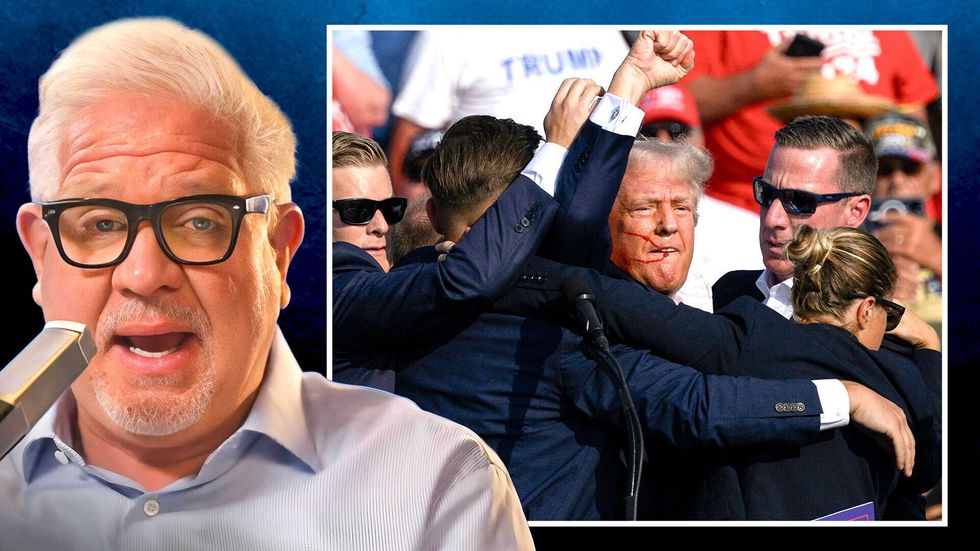
In the past, assassination attempts against a president were fairly simple, Glenn Beck says.“It looked like one guy, one gun.”But those days, he argues, are “absolutely gone.”Today, assassination attempts — especially those against President Trump — look “really different.”On this episode of “The Glenn Beck program,” Glenn exposes a terrifying pattern behind the numerous attempts on Donald Trump’s life. The first attempt to assassinate Trump occurred in 2016 at a rally in Las Vegas when a young man tried to grab a police officer’s gun with the stated intention of shooting and killing Trump.“That’s the old model,” Glenn says.But in 2017, things began to take a darker turn.In September of that year, during President Trump’s visit to a refinery in Mandan, North Dakota, a man stole a forklift and tried to enter the presidential motorcade route with the intent to flip Trump’s limousine and kill him.“To me, this is the difference between planting a bomb in the basement of the World Trade Center and then that not working, and then trying to fly airplanes into the side of the building five years later,” Glenn says, highlighting the growing desire for “spectacle.”In 2020, things progressed again when a Canadian woman mailed a letter containing homemade ricin (a highly toxic poison) addressed to then-President Trump at the White House.“Distance now is entering the picture,” Glenn says. “You don’t need access; you just need to find a way to get proximity.”Then came the closest attempt in 2024, when at a campaign rally in Butler, Pennsylvania, 20-year-old Thomas Matthew Crooks opened fire from a rooftop with an AR-15-style rifle, grazing President Trump in the ear.“This is no longer chaotic. This is ... well-planned and calculated,” Glenn says, drawing attention to all the “warnings” leading up to Crooks’ attempt, most notably the numerous sightings of Crooks on a strangely unguarded rooftop.Two months later at Trump International Golf Club in West Palm Beach, Florida, 58-year-old Ryan Wesley Routh hid in bushes along the course with an AK-47-style rifle and a scope, lying in wait to shoot President Trump while he was golfing, but was spotted by Secret Service agents before Trump arrived at that hole.“This is not anger anymore. Now they’re stalking him,” Glenn says.“Behind the scenes, federal prosecutors uncover a plot tied to individuals linked to the Iranian Revolutionary Guard. ... Not just Trump, but several U.S. leaders are targeted,” he continues. “Now, that’s a different category. ... That’s geopolitical; that’s foreign terrorism.”And finally, the latest attempt on President Trump’s life occurred just last month when armed gunman Cole Tomas Allen allegedly tried to storm the security perimeter at the Washington Hilton where President Trump was hosting the White House Correspondents’ Dinner. He allegedly fired multiple shots in an attempt to kill Trump and other Cabinet officials, but Secret Service tackled and arrested him, preventing any casualties.“I want you to think about the target. It’s not a rally; it’s not a golf course. It’s a room full of the leadership of the United States,” Glenn says. “That’s not an assassination. That’s destabilization. ... That is the constitutional order being disrupted.”Why have these assassination attempts become more organized and common?Glenn answers that question by recapping three stories just from this month:During a CNN interview, Democratic U.S. Senate candidate Mallory McMorrow (Mich.) drew parallels between Nazi Germany and what’s happening under the Trump administration, citing an “authoritarian slide.” Democratic U.S. Senate candidate Raymond Chandler (Penn.) was arrested after allegedly leaving voicemails threatening to slit the throats of a Republican congressman and his young daughter, and making threats against President Trump.Mohamed Abdou, a former Columbia University professor who was fired in 2024 after publicly praising Hamas, Hezbollah, and the October 7 attacks, spoke at Virginia Tech as part of his “Death to the Akademy” tour. During the event, he openly declared support for Hamas/“Palestinian resistance”and explained the slogan “Death to America” as meaning a total end to the U.S. empire and the destruction of America as a “settler-colonial” project.“What’s happening here, America? What’s changed?” Glenn asks.“Everything,” he answers.“It used to be one guy walking in behind President Lincoln and shooting him. ... Now it’s layered. You have the lone actors; you also have the ideological extremists; you have the distance attacks, the mail, the surveillance, the infiltration,” he explains.“But you also have something else. You have the failure points; you have the security gaps; you have the missed warnings; you have systems that don’t seem to be adapting, or at least not fast enough.