US company will use Chinese humanoid robots at Michigan data center
Right
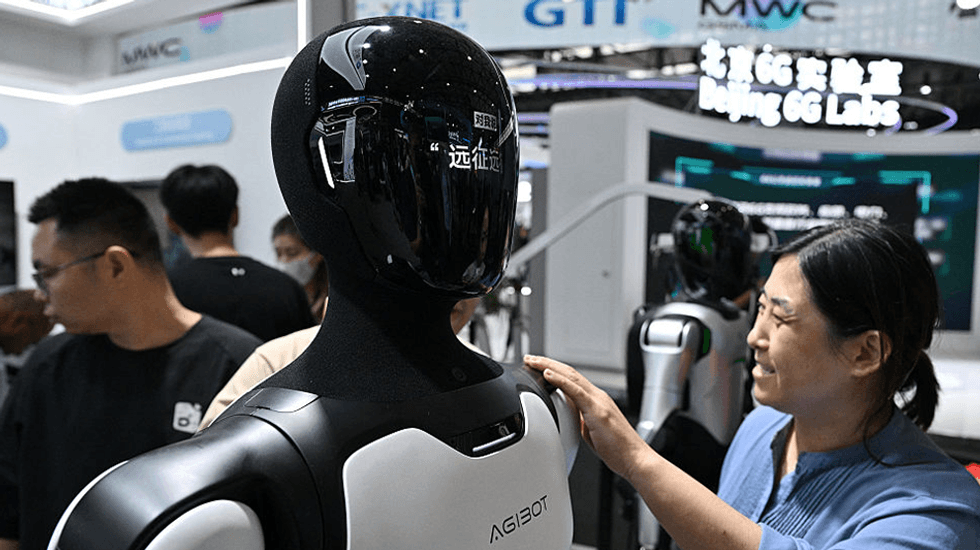
A data center already under attack from locals has announced a move that probably will only make residents more upset.American company Hyperscale Data Inc. has a data center in Dowagiac, Michigan, that residents say is too loud. A class action lawsuit filed in May says a constant hum from the facility is overwhelming.'... create a unique environment for developing and evaluating next-generation AI systems.'Neighbors said that they can hear the data center's cooling systems and fans from inside their home, limiting whatever they want to do on their property."I'm walking [my son] more than a mile away to get away from the noise," one man said, per WSBT.Piling onto this already (allegedly) burdensome data center is a recent announcement that Hyperscale Data will employ Chinese robots at the facility.Hyperscale and its subsidiary company Omnipresent Robotics are reportedly partnering with Chinese robotics firm Agibot PTE Ltd to get components for 30 OPR-R2 humanoid robots, Data Center Dynamics reported.Set for deployment in Q3 2026, the bots are intended to support the "development of embodied artificial intelligence applications, autonomous workflows, and advanced robotics systems."RELATED: The KIDS Act would turn web browsing into a TSA line Mustafa Yalcin/Anadolu/Getty Images While the OPR-R2 bots are not listed on Agibot's website, their top model of humanoid bot (the Agibot A2 Ultra) is about five-and-a-half feet tall and just over 150 pounds. It comes with three cameras — head, chest, and waist — a microphone and a speaker. The bots are described as a "rising star" in the entertainment industry, as well, and are recommended for brand ambassadors and performances.As workers, the machines will reportedly be assigned to the Omnipresent Robotics' Model Training Laboratory, where they will work "side-by-side" with data center employees to mimic their movements, also described as real-world training."The company believes the integration of humanoid robots with high-performance AI computing infrastructure will create a unique environment for developing and evaluating next-generation AI systems capable of operating in real-world environments," Hyperscale said, per DCD.RELATED: GOP bill aims to gut online censorship funds — and where the money is going will shock you Jason Alden/Bloomberg/Getty Images Hyperscale's chairman said that the company believes "physical AI" is the future of AI, with "tomorrow's AI systems" needing to be capable of understanding and interacting in the physical world.As for the data center itself, it sits at approximately 617,000 square feet and takes about 28 megawatts of power. According to DataCenters.com, there are 12 other data centers within 50 miles of the facility.Hyperscale Data is currently trading at around 17 cents per share at the time of this writing.Like Blaze News? Bypass the censors, sign up for our newsletters, and get stories like this direct to your inbox. Sign up here!
US President Donald Trump said peace talks with Iran are set to resume Tuesday in Doha, after both sides agreed to halt a series of tit-for-tat attacks over the Strait of Hormuz.
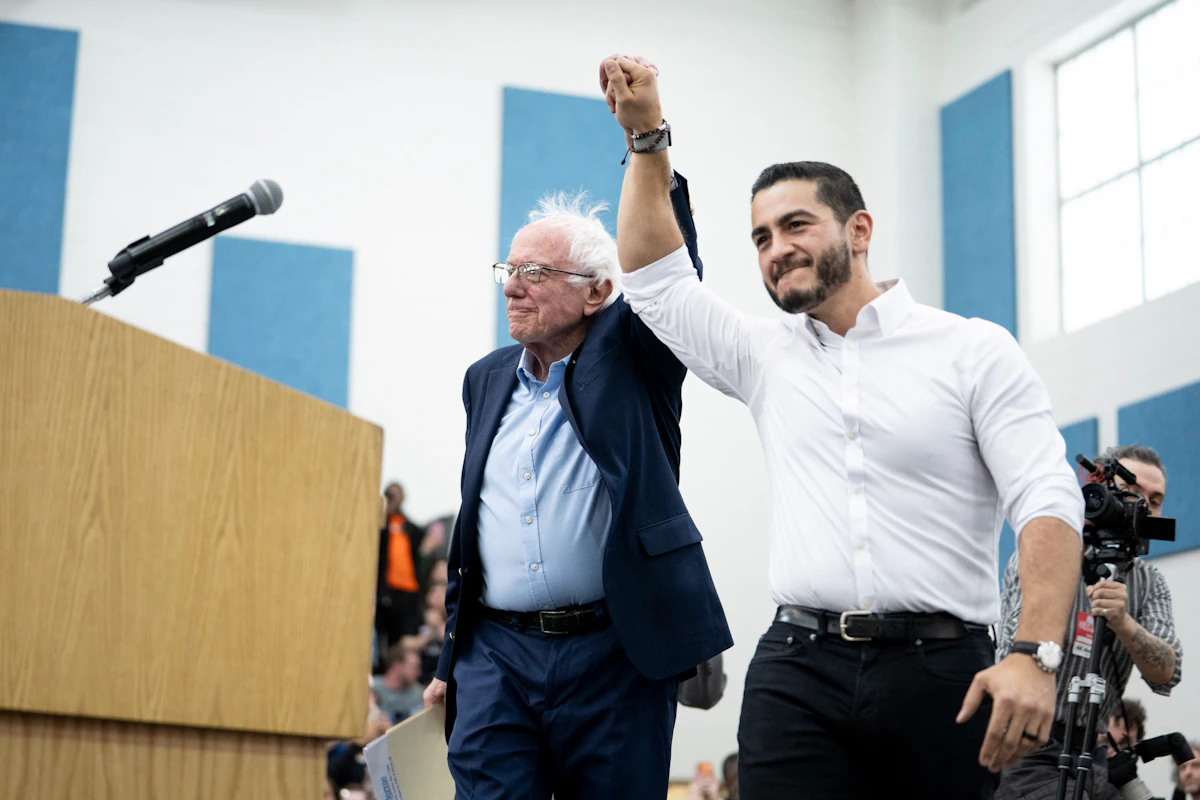
Abdul El-Sayed, a primary candidate for U.S. Senate in Michigan, released an ambitious AI policy platform Monday, joining other progressives like Senator Bernie Sanders in a push for regulation and public ownership. But El-Sayed’s proposal also goes a step further: not just public ownership, but also public governance. Earlier this month, an AI super PAC spent millions to ensure that Alex Bores, the author of a comparatively weak New York state AI accountability law, wouldn’t make it to Congress. El-Sayed’s proposed changes to the AI industry go far further than Bores’s legislation. When asked whether he was worried about industry political action committees targeting his campaign over his new proposals, El-Sayed shrugged it off. “I’m just not afraid of them or AIPAC or any of the others. What’s another hundred-million-dollar super PAC, I guess?”El-Sayed’s policy proposal, which he shared exclusively with The New Republic ahead of its release, has three key components: democratic governance of AI, public ownership of AI companies, and safety requirements. His proposal takes inspiration from Sanders’s American AI Sovereign Wealth Fund bill, proposed earlier this month—and like Sanders’s bill, calls for the creation of a sovereign wealth fund to distribute AI companies’ cash into Americans’ pockets. Sanders envisions establishing that via a one-time 50 percent tax on the country’s biggest AI companies, generating an estimated $7 trillion for social safety net programs, plus a yearly dividend for Americans. El-Sayed proposes using that money to fund education and job training, increase unemployment benefits, and boost small business loans.“I love the senator’s point that we need to own the outcomes of this, in part because it is our data and our knowledge that went into creating it,” El-Sayed said about Bernie’s proposal. They both reason that, since AI has been trained on human writing, research, and collective knowledge, it is a good that belongs to all Americans. “But I think the ownership part needs to go a step further, because we also need some control,” El-Sayed added.To get that control, he proposes democratic governance of AI companies. He proposes that frontier AI labs be chartered as public benefit corporations, legally mandating them to balance public interest with profit margins. Additionally, he suggests that a majority of board seats at these companies should be democratically elected or publicly appointed, rather than selected by shareholders. And, importantly, he calls for major tech companies like Amazon, Microsoft, Google, and Meta to divest from frontier AI companies. El-Sayed also recommends the establishment of a Food and Drug Administration–style agency to evaluate models before they’re deployed, a ban on AI-generated political media, and requiring companies to work with the Centers for Disease Control and Prevention, National Institutes of Health, and Federal Emergency Management Agency to protect against biosecurity breaches.El-Sayed’s breezy response to TNR’s question about possible industry retaliation—“What’s another hundred-million-dollar super PAC, I guess?”—references the unrelated money that the American Israel Public Affairs Committee, or AIPAC, has already spent on the race. Through United Democracy Project PAC, AIPAC has spent over $2 million to support one of El-Sayed’s opponents, Representative Haley Stevens, who is the Democratic establishment’s favored candidate. El-Sayed has repeatedly criticized both the Israeli government and AIPAC’s influence in politics. El-Sayed is also facing State Senator Mallory McMorrow, though polls suggest the race is largely between El-Sayed and Stevens. McMorrow released an AI policy proposal last month that focuses on creating a professional apprenticeship program funded by a token tax, which would charge by the number of tokens used (tokens are the basic units of data that AI models use). Stevens has not released an AI policy plan.Despite a broad consensus among voters that politicians should regulate the AI industry, few bills have actually been passed. Following AI industry super PACs’ massive spending to defeat Alex Bores in retaliation for the RAISE Act, some feared politicians might become even more reluctant to try.El-Sayed is hopeful that American voters are ready to push back against money in politics. “We live in an era right now where people are really smart to the old system of money coming in to buy elections. They see the wool being pulled over their eyes and they don’t like it,” he said.He also doesn’t think politicians have the luxury of time when it comes to regulating AI. “We need to act yesterday,” he said, “and at best, we can act tomorrow.”
The United States and Iran appear to have paused hostilities following a weekend of escalating attacks that rocked the Middle East, less than a week after Vice President JD Vance announced both sides had set a foundation for a lasting peace deal. Now, a new round of peace talks appears to be on the table as the war enters its fifth month. NBC’s Keir Simmons reports for TODAY.
Court expected to hand down decisions on several outstanding cases, wrapping up term that has focussed on Trump’s expansive claims of presidential powerTyler HicksFollowing a brutal Republican primary runoff in which Islamophobia took center stage, anti-Muslim hatred continues spilling into public life in Texas. Continue reading...
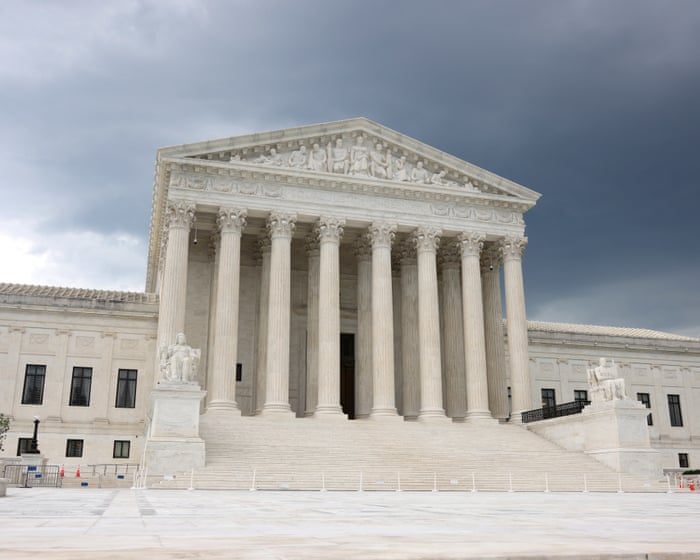
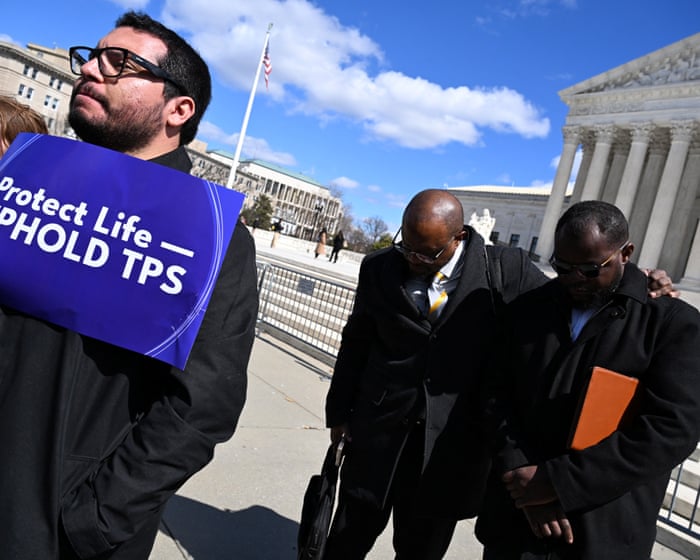
The court’s TPS decision is devastating for those whose countries of origin are deemed unsafe. Congress must actOn Thursday, the US supreme court authorized the Trump administration to end Temporary Protected Status (TPS), facilitating the largest single assault on immigrants in contemporary United States history.While the case concerned the 350,000 Haitian and 6,000 Syrian holders of this status, the decision could expose more than 1.3 million people to potential deportation to countries that the United States has recognized as unsafe.Heba Gowayed is an associate professor of sociology at Cuny Hunter College and Cuny Graduate Center and author of the book Refuge: How the State Shapes Human Potential Continue reading...
About 20 U.S. airports rely on private security companies rather than the Transportation Security Administration to ensure that passengers and cargo comply with federal aviation safety standards.
Iran resumed scheduled flights to Dubai for the first time since the start of the war with the US and Israel in late February, after both sides agreed to halt a series of attacks over the Strait of Hormuz.