Trump makes a deal with Iran’s third set of leaders partially opening the Strait of Hormuz: ‘Very smart’
Right
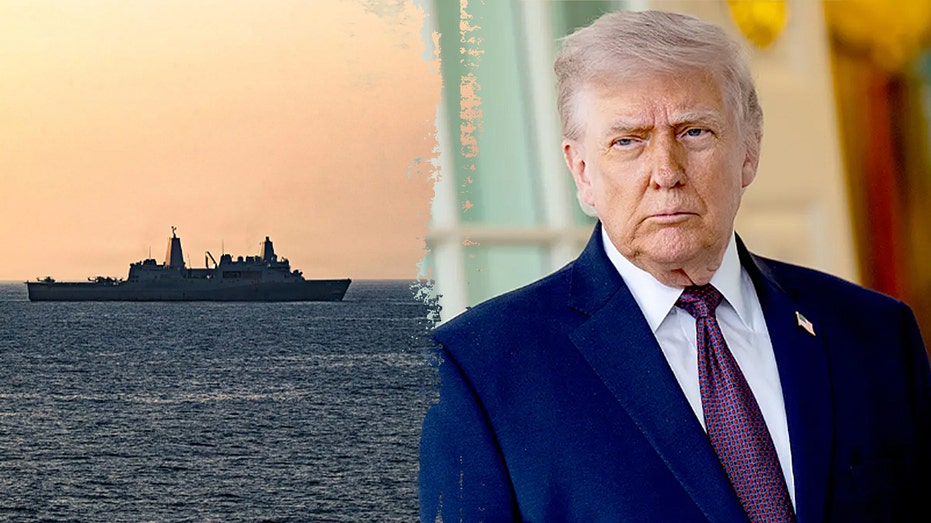
On Monday, June 15th, President Trump had a bilateral meeting with President Macron in Evian, France. Where he discussed the deal between the United States and Iran’s third set of leaders. Trump also said that “the Strait is already partially opened.”
Former Trump administration White House attorney Ty Cobb was not at all shocked on Monday to hear reports that California Gov. Gavin Newsom is under federal investigation — but was saddened at the state of the Justice Department."I'm not surprised that [Newsom] would announce it," Cobb told MS NOW's Katy Tur, responding to the official video announcement from his office. "I think that's a smart move. There's no reason to hide it."Cobb added that the fact that the investigation exists at all is predictable, too, noting that Secretary of Defense Pete Hegseth opened a probe into Sen. Mark Kelly (D-AZ) — also frequently discussed as a presidential candidate — over his participation in a video reminding troops they can refuse illegal orders. "Newsom's a potential presidential candidate. I think most presidential candidates, just like most presidential candidates, should expect that they will be met with abuses of this sort."Tur soon followed up by asking Cobb how acting Attorney General Todd Blanche has achieved such a political stranglehold over the rank and file in federal law enforcement. "Why do they go along with what appeared to be political, the political retribution that Donald Trump desires?""That's an excellent question," said Cobb. "I think it's sad, obviously."The issue, he argued, happened with Blanche's predecessor, Pam Bondi, who "made it clear early on in the Great Hall of Justice that she was dedicating her role and her office and her entire department to serving Trump, not the Constitution." And Blanche has continued this on, said Cobb, from his prosecution of former FBI Director James Comey to his involvement in the $1.776 billion "Anti-Weaponization" slush fund to pay out Trump's allies who were criminally charged in the past."I think this is really a tragedy that we have such a lack of character among public servants these days," Cobb added. "And hopefully some will come forward with courage and with integrity." - YouTube youtu.be
The Trump administration has opened a criminal probe into California Gov. Gavin Newsom and his wife, the governor announced on Monday.According to The New York Times, a source close to the probe "said there were multiple federal investigations underway related to the governor, including one looking at his wife’s finances," and that federal law enforcement officials in California, rather than Trump appointees in D.C., opened the investigation "based on government witnesses offering information there."Newsom's office has said that "several people" linked to their family were contacted by federal agents, and they also believe "the agents have ... subpoenaed banking records, but said they had seen no written evidence of that."In a video statement released on Monday, Newsom, who has become notorious for his social media postings mocking the president, attacked the probe as a politically motivated fishing expedition to try to gin up charges against a political rival, noting that he has often been floated as a presidential contender for 2028."Donald Trump isn’t just coming after me because of my mean Tweets," said Newsom. "He’s coming after me because I am considering running for President. Because he hates that I’ve consistently called him out – over and over again – for his lies and deceit. Donald Trump is simply the most corrupt President in American history."Newsom also listed several more cases in which the Trump administration launched various controversial investigations into various people perceived as rivals or figures who wronged him."His personal attorney [Todd Blanche] now runs the Department of Justice, which has repeatedly gone after his political enemies," Newsom said. "Ask Jerome Powell. He sent them after James Comey. Tish James. Adam Schiff. He sent them after Tim Walz. And a woman that a jury found Donald Trump had sexually abused.""One by one, anyone who has challenged Donald Trump has ended up on his hit list," he added. "And today, I proudly join that list."
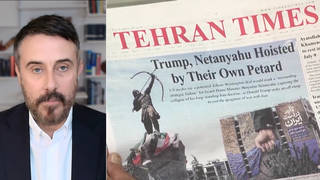
One of President Donald Trump’s most outspoken supporters is turning on him over his deal to end the Iran war.“I have asked for days, why can't we, the people, see the damn [memorandum of understanding]?” radio host Mark Levin, who traditionally supports the president, commented on Monday. “Not through people briefed by an anonymous person. Honestly, I've never seen anything like this. If it is a great outcome for peace, then release it.”In a separate post, Levin commented on how Trump has shifted in his characterization of America’s relationship with Israel.“In a period of two-months, Israel has gone from a great ally and partner in war, fighting by our side against a horrible enemy that has killed thousands of our people, killed tens of thousands of their own people, and was a dire nuclear threat intent on attacking us, to Israeli PM Netanyahu being a difficult person who should be thanking us for saving his country from Iran and should get our permission if he wants to defend his people from Hezbollah and Iran, and stand down when his country is attacked,” Levin wrote.He added, “And just yesterday, Israel's [prime minister] avenged the execution of 5 American soldiers by taking out a Hezbollah commander/terrorist. And only Israel has been killing Hezbollah leaders who murdered our Marines, soldiers, embassy staff, and more. It seems to me a kind word is in order. How does this make any sense?”Despite Trump attempting to convince Israel to no longer attack either Iran or Iran’s proxy militia in Lebanon, Hezbollah, the three parties continue to engage in hostilities against each other.“Iran has conditioned that deal on an end to the fighting in Lebanon between Israel and its militia ally, Hezbollah,” The Wall Street Journal reported. “Tehran upped the ante overnight by firing waves of missiles at Israel after Israel attacked Hezbollah’s stronghold in the southern suburbs of Beirut. Despite Trump’s effort to calm the growing tensions, Israel retaliated against targets in Iran including an important petrochemical facility, extending an exchange of fire that Iran warned could pull in energy facilities across the region.”Trump responded by posting on social media that Israel and Iran need to stop attacking each other, prompting both nations to cease their violence against each other while saying they may resume later. The president has been particularly focused on Israel, describing Prime Minister Benjamin Netanyahu as “crazy” for attacking Lebanon and adding that “everybody hates you now. Everybody hates Israel because of this.” He also claimed Netanyahu would have been in prison for corruption if not for Trump’s intervention.Since Netanyahu’s war against Gaza, American opinion has noticeably shifted toward Israel, with Netanyahu appearing unconcerned with the problem. Along with the increase in criticism of Israel, there has also been an increase in bigotry against Jews in general. Speaking with AlterNet in March about the issue of American anti-Semitism, Brandeis University historian Jonathan Sarna pointed out that people have often struggled to distinguish between criticizing the Israeli government and hating Jews in general.“If you go back to ‘The Protocols of the Elders of Zion’ — the great antisemitic forgery of the turn of the last century — that really began this sense that Jews are all-powerful, that they operate behind the scenes, and that whatever happens is ultimately their fault,” Sarna said. “Before then, for centuries, the prevailing view was that Jews were persecuted and lowly because they had killed Christ, and that was what they deserved — they were powerless. That was their punishment. But ‘The Protocols’ flipped that.”Sarna continued that “especially as Jews in modernity have begun to succeed economically, it doesn't much matter what the issue is — whether it is 9/11, which some blame on the Jews, or the crash of 2008, or now the war with Iran. You can predict before it happens that people will blame Jews, because as The Protocols taught people, it's always the Jews. It's the great conspiracy theory. And even many people who have never read The Protocols believe many of the things in it — just as many people have never read Darwin, but they know the word ‘evolution.’ This is simply the latest iteration.”Sarna ultimately concluded, “I can be critical of President Trump without being un-American. Most people who criticize President Trump or the Republicans would assure you how much they love America and hold a fundamentally positive view of it. It seems to me that it's deeply important for us to do the same with Israel — that is, to make clear that there is a huge difference between disliking the policies of the Prime Minister of Israel and hating Israel itself. If you wouldn't equate criticism of the President with hating America, there is no reason — and indeed it is wrong and wicked — to do so with regard to Israel.”
Vice President JD Vance confirmed in a CBS interview, Iran could access a $300 billion reconstruction fund as part of the U.S. and Iran peace agreement, funded by the Gulf Cooperation Council Coalition. Vance argued, Tehran hard-liners would emphasize benefits while downplaying required concessions on nuclear programs and oversight. The revelation sparked immediate criticism on social media. University of Wisconsin-Madison statistics professor Karl Rohe noted, "Can we talk about the scale of problems that are going to arise from spending 300 billion? This is 500%-600% larger than the entire annual budget of the Iranian govt. It is one year of Iranian GDP *of the ENTIRE COUNTRY.* This is insane."Analysts highlighted the contradiction with President Donald Trump's earlier claims that Iran would receive no money. "We are going to pay Iran $300 billion to rebuild from the war we started. Wrap your head around that when they claim that Trump is a master negotiator," Fred Wellman, a U.S. Army veteran and Lincoln Project communications strategist, wrote on X.Critics characterized the reconstruction fund as significantly exceeding Obama-era concessions to Iran.Watch the video below. Your browser does not support the video tag.
President Donald Trump’s demand that Congress attach a voter identification bill to an extension of a government spy program will complicate efforts to pass reauthorization of the intelligence authority. Over the weekend, the president urged Congress to tie the SAVE America Act to a renewal of Section 702 of the Foreign Intelligence Surveillance Act, warning […]
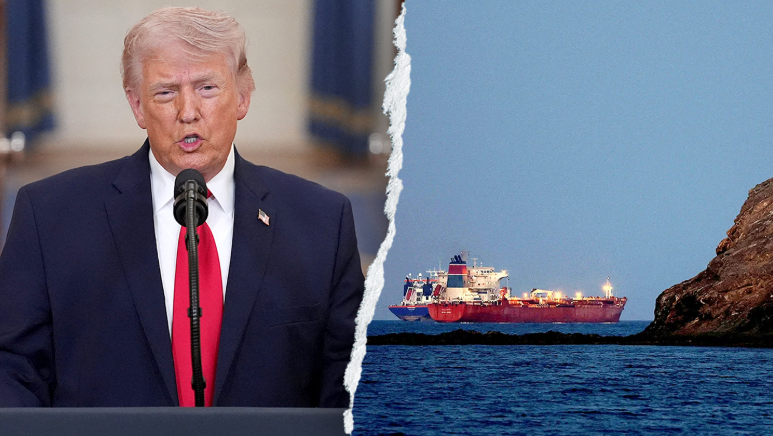
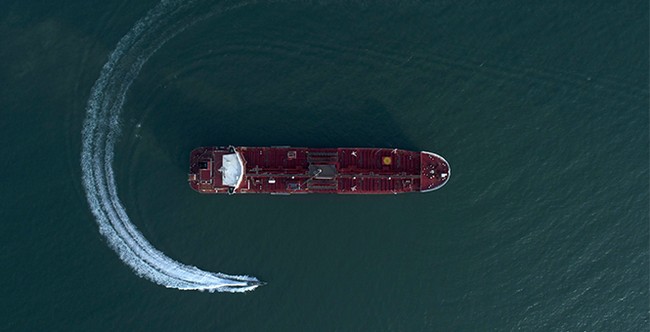
The U.S.-Iran deal was signed electronically on Sunday by President Trump, Vice President Vance and Iranian parliamentary speaker Mohammad-Bagher Ghalibaf, senior administration officials told reporters on Monday. Why it matters: The deal is already testing whether Washington and Tehran can turn a battlefield pause into a broader settlement — starting with the Strait of Hormuz, and then moving to the far thornier question of Iran's nuclear program.State of play: A 60-day ceasefire extension is in effect, U.S. officials say, including in Lebanon. But the Strait of Hormuz is not expected to begin reopening until after a formal signing ceremony Friday in Geneva.Vance, U.S. envoys Steve Witkoff and Jared Kushner, Ghalibaf and Iranian Foreign Minister Abbas Araghchi are expected to meet Friday with Pakistani and Qatari mediators to discuss the next phase.U.S. officials say the full text of the memorandum of understanding (MOU) will be released in the next 24-48 hours, though Trump said it might not be published until after it's signed.The big picture: Washington and Tehran are racing to shape the narrative around a deal that few people have actually read, but which markets, world leaders and ordinary citizens are already reacting to.The U.S. says relief for Iran will be tied to performance. Iranian state media has described a more generous package.Shipping companies say they're waiting for clearer guarantees from Tehran before sending cargo through the Strait of Hormuz.Hawks in Washington and Israel are pressing the White House to explain exactly what Iran is getting — and what happens if nuclear talks fail.Breaking it down: Here are eight key questions that are still swirling around the deal.The White House did not respond to the questions when asked by Axios.1. Is the deal actually in effect?The MOU was signed electronically on Sunday, with a more formal signing ceremony to be held on Friday in Switzerland.The 60-day extension of the ceasefire took immediate effect, but the strait is not yet fully open.While Trump announced the "immediate" lifting of the U.S. blockade and opening of the strait on Sunday, he later said it would open on Friday once the ceremony takes place.A U.S. defense official said the military was ordered to prepare to lift the blockade Friday.Trump claimed Monday that ships were already moving, though Iranian state media said the status of the strait was unchanged.2. Will the strait be truly "open"?The U.S. side has consistently said the deal would open the strait without "tolls" or any other restrictions. A regional diplomat involved in the mediation told Axios last week that the deal called for shipping volumes through the strait to return to prewar levels within 30 days. But Iranian officials have told state media the strait won't simply return to "pre-war status," and that Iran will retain some level of control.The Fars news agency reported that Iran had agreed not to impose tolls during the 60 days, but would begin charging safety and environmental fees after that.The intrigue: A senior administration official said there would be a "regional dialogue" on the future of the strait and how to ensure it will never be closed again.State of play: Shipping companies are moving cautiously. Maersk and others have said they're waiting for more clarity and guarantees of safety, and some analysts doubt volumes will actually return to the pre-war norm any time soon.A senior administration official told reporters the U.S. expects volumes to increase significantly over the next two weeks, though probably not to return to normal."Some crews want to see a little bit more stability for the next couple of days, maybe the next couple of weeks," the official said.3. What does Iran get?Both sides agree that Iran gets two big things: an end to the fighting, and sanctions waivers to allow oil exports. That alone would generate much-needed revenue for Tehran, but Iranian state media has claimed the government is also getting billions of dollars in frozen funds just for signing.A senior U.S. official adamantly denied that, saying Iran would only get access to those funds based on a "pay for performance model." The full economic benefits of the deal, the U.S. side says, depend on signing a more detailed nuclear accord.Some skeptics of the deal have raised concerns there might be side agreements that give Iran access to cash immediately, though the White House calls that "misinformation."Yes, but: The senior administration official said the U.S. was prepared to make some "small gestures" early in the process on frozen funds and sanctions relief if Iran made similar "gestures" reflecting their willingness to comply with the deal.4. Do they agree about what's been agreed?The U.S.
Celebrities including Bette Midler and Robert De Niro faced widespread online mockery for their anti-Trump concert meant to counter-program his UFC event.
President Donald Trump and French President Emmanuel Macron avoided any public tussles over foreign policy at the opening events of the G7 summit in Evian, France, on Monday. The two leaders have had a complicated relationship during Trump’s second term as the United States imposed “Liberation Day” tariffs on most trade partners, pressured the NATO […]