Son of Nigerian immigrants credits parents for instilling American dream in him: ‘I absolutely believe’
Right
"The American Dream is intrinsic and fundamental to the founding of this country, it’s enshrined in the Declaration of Independence," said Chinweze Ahaghotu, Head of Portfolio Management at Galderma.
President Donald Trump vowed back in January that his administration’s takeover of Venezuela would “benefit” Americans, and yet, just over six months later, that promise appears to be imploding after key players have reportedly gotten cold feet, The Washington Post reported Sunday.In the immediate aftermath of the unprecedented U.S. attack on Venezuela earlier this year, the Trump administration took control of the nation’s oil revenue, which Trump claimed at the time would be “used to benefit the people of Venezuela and the United States.” The Trump administration had hoped U.S. companies would invest $100 billion into the South American nation’s energy infrastructure.“But businesses don’t want to spend big on capital-intensive projects to extract heavy crude, which take decades to pay off, if there’s a high chance the government will backslide,” the Post’s report reads.“ConocoPhillips CEO Ryan Lance said recently that Venezuela has ‘a lot more work to do on their side of the equation.’ He said the overhaul of the hydrocarbon law was insufficient ‘to attract a whole lot of investment’ because it could amount to a ‘95 percent government take.’ Chevron CEO Mike Wirth has expressed similar sentiments.”The Trump administration was recently in hot water over its handling of Venezuela’s oil revenue. Rep. Sydney Kamlager-Dove (D-CA) pressed Secretary of State Marco Rubio last week during a congressional hearing on whether the administration was concealing lucrative private contracts related to Venezuela’s oil.“The Venezuelan government’s illegitimacy raises the risk of investing capital,” the Post’s report reads. “Once real elections are held, U.S. companies will gain a clearer sense of whether it’s worth pouring in money.”
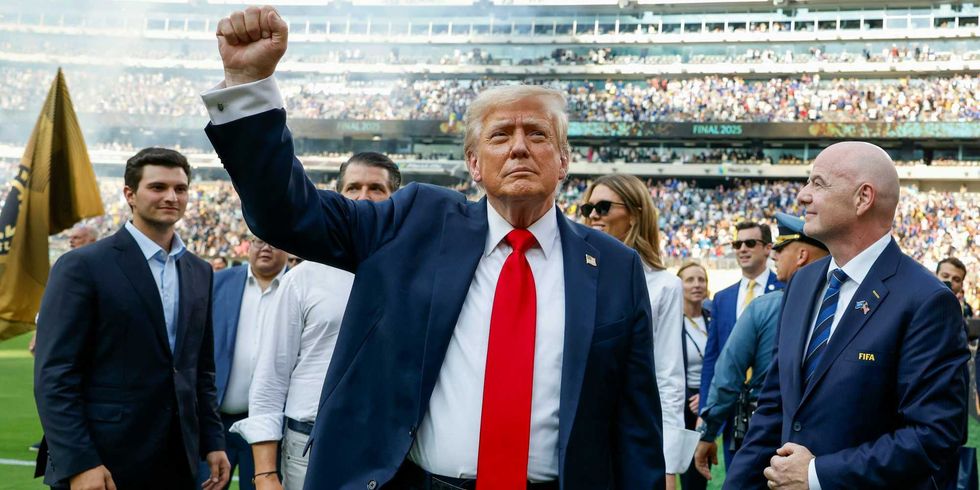
The 2026 World Cup promises to be the planet’s most-watched sporting event. It’s also poised to generate its fair share of controversy.Taking into account the history of corruption in FIFA, the sport’s governing body, it would be hard to blame anyone who decided to ignore this year’s competition.However, some viewers of this summer’s tournament may face an additional dilemma. Political tensions are high in the U.S., where most of the tournament’s matches will be played. The Trump administration is historically unpopular, and its critics are already concerned about sportswashing: when governments use the spectacle of athletic competition to burnish their image and distract the public.As I point out in my 2022 book, “The Ethics of Sports Fandom,” fans who are critical of their country’s behavior sometimes feel ambivalent about rooting for their national sports teams – and may even feel compelled to root against them. After all, it’s one thing to pull for your national team when patriotism feels uncomplicated. It’s quite another when you aren’t feeling very proud to be an American. The Cold War made it easy for many Americans to rally behind the 1980 U.S men’s hockey team in its victory over the Soviet Union in the “Miracle on Ice.” But what do you do when you don’t see your country as the “good guys”?Patriotism doesn’t mean blind loyaltySome fans might double down on their patriotic commitments during the tournament. They’ll use the occasion to champion America in all things, whether it’s the country’s battles in the Middle East or its national team taking on Paraguay at SoFi Stadium in Los Angeles. Sports have a way of fueling nationalistic passions, and I fully expect plenty of people who don’t care much about soccer to channel their patriotic sentiments into the tournament.However, rooting for your country’s national soccer team doesn’t mean that you endorse everything your country does, any more than wanting a friend to get a promotion at work requires you to support all of their behavior. As the philosopher Eamonn Callan has argued, a proper love of country requires citizens to be clear-eyed about its faults. The true patriot highlights problems and works to correct them, independent of how much they want the national team to win their next match.By the same token, I think a deep love of country can coexist with ambivalent feelings about how the national team performs on the field. If patriots can disapprove of their country’s military adventurism – either because they see it as flatly unjust or because it casts their country in an unfavorable light on the international stage – there is nothing fundamentally unpatriotic about not wanting the U.S. to do well in the World Cup. Other fans might invoke the mantra that it’s important to simply keep politics out of sports – that the games should be a refuge from the controversies that plague so many other aspects of civic life.But as I argue in my book, fully separating politics and sports is almost impossible. It requires fans to view athletes as nothing more than bodies who exist to perform on the field. It means team executives and owners do little more than sign paychecks. And it ignores the reality that sports are woven into the social, economic and political life of communities.Outcomes don’t change a thingFor fans who choose to watch, then, my suggestion is to view the action on the field as you would any other sporting event. Root for whomever you want to win, for more or less any reason that moves you. Because for all the political significance attached to the World Cup, the winner or loser of any given contest has essentially no broader political significance. The problems that existed before the tournament will still demand attention when it is over, no matter who happens to win. Success or failure on the pitch isn’t likely to bring about meaningful political change. After all, whether a government has the right legislative agenda or approach to foreign policy is totally divorced from its national soccer team’s ability to score goals.Viewed in this way, rooting for your country’s national soccer team doesn’t imply blind loyalty to your country or ignorance of its flaws. It simply means that you want the athletes who represent your country to win the game they are playing on that particular day.Athletes have long been able to navigate this ambivalence. You’ll regularly hear them trying to separate a love of their country and its people from support of problematic regimes. When Iranian soccer player Mehdi Taremi refused to celebrate a goal in a January 2026 Greek Super League match, he embraced precisely such a position. Thousands of people had been killed during protests of the Iranian regime, and the moment called for a different reaction.“There are problems between the people and the government,” he said.
Three US citizens, including two in California and one in Kansas, have been arrested and charged with conspiring to provide material support to the Islamic State of Iraq and al-Sham (ISIS). The suspects, Bisaam Ghafoor, 21, of Leawood, Kansas; Elias Shamsaldeen, 21, of Porterville, California; and Bereen Dzayee, 25, of Lakeside, California, are accused of "conspiring to provide material support to terrorism after collectively providing over $2,000 to an individual they understood to be a member of ISIS," according to the DOJ.
The post JUST IN: Three Arrested in Kansas and California for Providing Support to ISIS – Suspects Expressed Desire to “Behead” Female Soldiers, “Kill 300,000,000 Americans” (VIDEO) appeared first on The Gateway Pundit.
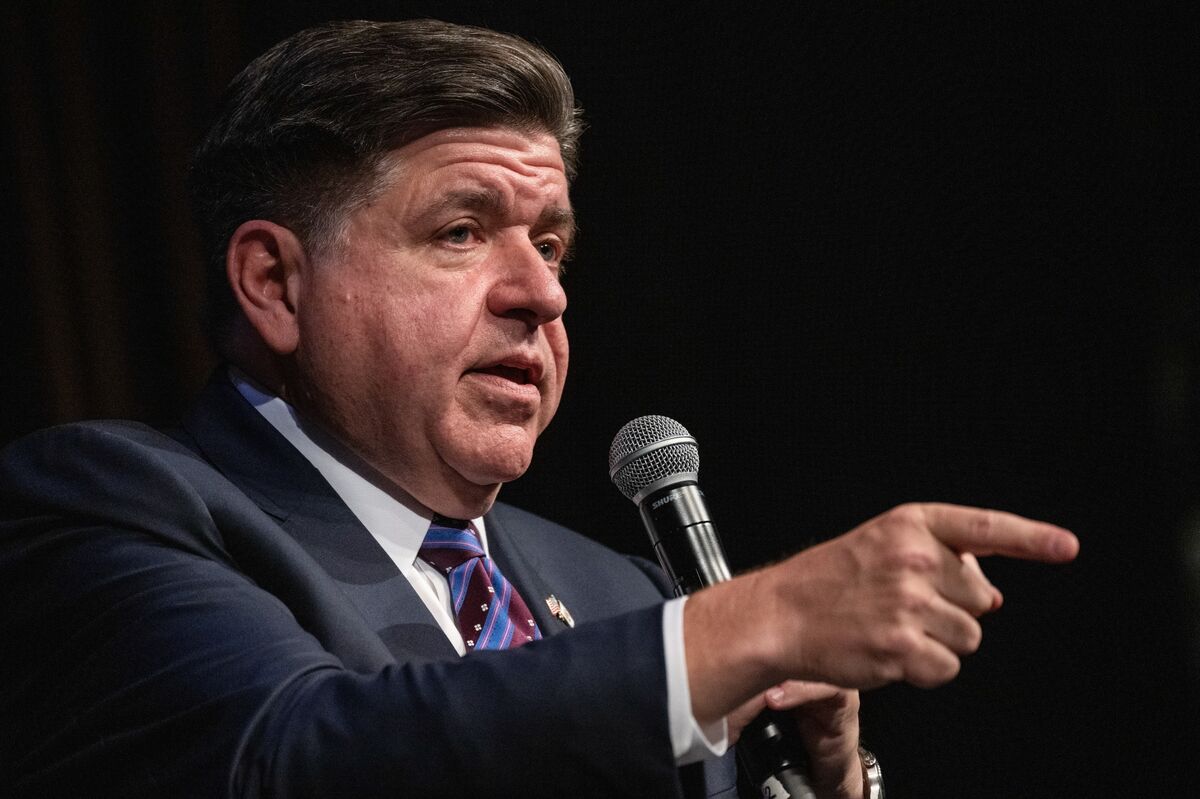
Governor JB Pritzker issued an order pausing state tax incentives for data centers in Illinois after the state legislature stalled his plan to keep data-center energy costs from affecting local residents’ bills.
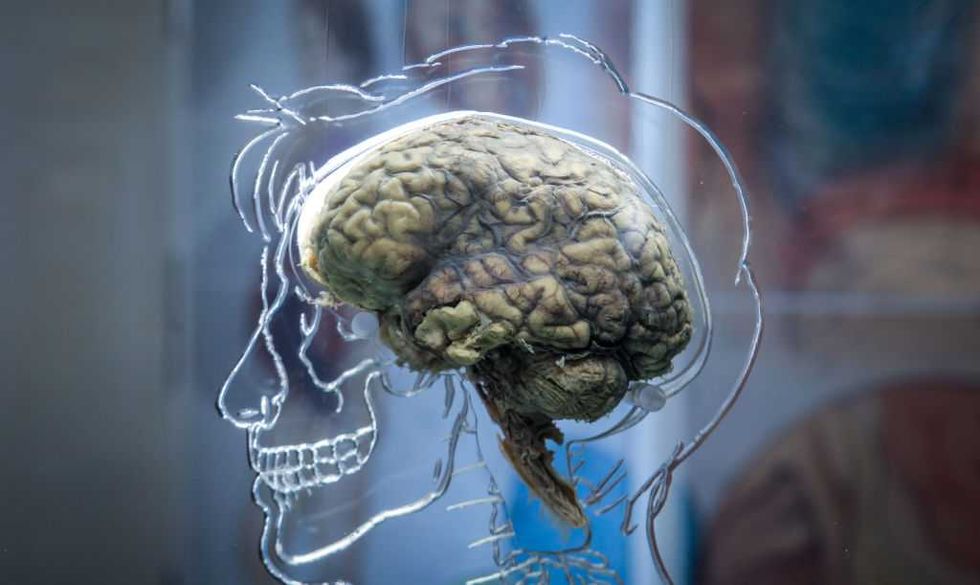
Several years ago, a team of researchers obtained numerous pig brains from a slaughterhouse and revived them off-site for experimentation purposes. That team has since moved up the food chain. Now it obtains human donors' brains, restores their functions, and uses them to test experimental drugs.Bexorg, a Connecticut-based biotech startup spun out of Yale University, boasts about having created a "platform that leverages the untouched potential of nature's most complex and enduring mystery: the human brain."'It’s a remarkable brain bank.'Whereas other researchers might be limited to experimenting on lab-grown, human pseudo-brains or cell cultures, the team at Bexorg meddles with "full mature, intact, and isolated brains for days on end" with the stated aim of advancing brain disease therapies.Unlike the company's slick pitch, the reality appears to be something of a horror show. After all, the over 700 brains that have been subjected to experimentation at Bexorg so far were apparently far from inert.Bexorg takes human brains from their newly deceased donors' bodies, places them in what are effectively vats, and feeds them liters of blood substitute and other fluids that provide oxygen from an artificial lung and carry away waste to a fake kidney. The tubes that carry the sustaining fluids are connected to blood vessels in the brain via four plastic ports.RELATED: Famed neuroscientist claims he's disproven free will — but his peers say he failed miserably RDB/Dukas/Universal Images Group/Getty ImagesAccording to the peer-reviewed academic journal Science, the company's proprietary life-support system BrainEx keeps the disembodied brains alive and preserves their key functions so that they can metabolize experimental drugs and react to other stimuli.After roughly 24 hours in a state of drugged limbo, donors' brains are cut up into hundreds of pieces for further study.Although the brains are alive and reactive for the benefit of "drug discovery," Bexorg CEO Zvonimir Vrselja has stated that "higher-level brain functions are not restored."According to a 2019 study in which Vrselja and other members of what became the Bexorg team used their technology to revive pig brains obtained from a food processing facility, "The observed restoration of molecular and cellular processes following 4h of global anoxia/ischemia should not be extrapolated to signify resurgence of normal brain function. Indeed, quite the opposite: at no point did we observe the kind of organized global electrical activity associated with awareness, perception, or other higher-order brain functions."To ensure against the re-emergence of consciousness among the subjects of their "wet-lab" experiments, researchers suppress the human brains' electrical activity with anesthetics, specifically the drug propofol.Propofol apparently causes brain activity to become unstable until the brain loses consciousness."The brains are already almost devoid of the coordinated neural firing necessary even for minimal consciousness," Brenand Parent, a bioethicist from New York University Langone Health who sits on Bexorg's board, told Science.Despite the company's reassurances and use of multiple measures to block neuronal activity, some have raised serious ethical concerns about Bexorg's technology, which initially developed with the help of funding through the National Institutes of Health BRAIN Initiative. A source familiar told Blaze News that the company is not presently receiving NIH funding."This is brand-new, and there's no kind of institutional oversight," Yale bioethicist Stephen Latham told ScienceAlert in 2019 regarding the earlier experiments on pig brains."This is not animal research, because the brain comes to the researchers from an already dead animal," continued Latham. "But if consciousness were somehow induced in the brain, we don't have ethics committees … that are constituted to even think about how to do the kinds of trade-offs you do when you do research on human subjects or on animals."Vrselja claimed in a December 2025 study published in the Alzheimer's Association's journal, Alzheimer's and Dementia, that the 5-year-old startup's "perfusion‐based postmortem brain model can recapitulate the complexity of the brain at the cellular and systems level."The December study claimed further that "utilizing human disease brains as a preclinical model promises to substantially increase the probability of success in developing new therapies for AD."Bexorg did not respond to a request for comment from Blaze News.Bruna Bellaver, a research assistant professor of psychiatry at the University of Pittsburgh, told Science that BrainEx is "a huge step up from mouse models."Bruce Car, the chief science officer at Biohaven, one of Bexorg's collaborators, has used roughly 130 of the Bexorg-sustained brains to test drugs.
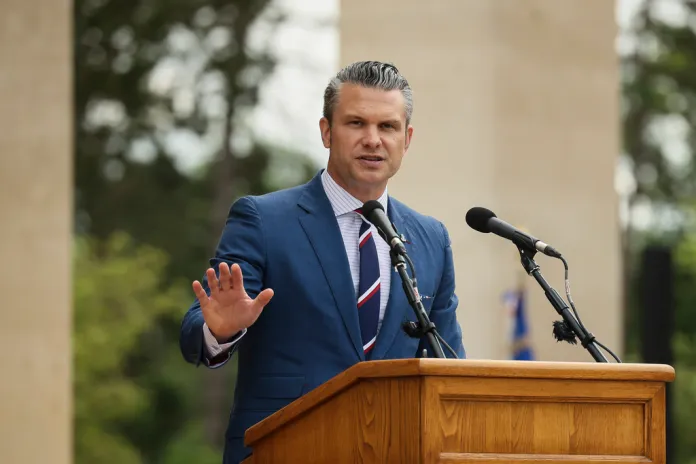
Secretary of War Pete Hegseth linked the Allied invasion of Normandy during World War II to modern immigration challenges facing Europe in a speech Saturday marking the 82nd anniversary of D-Day. “Sadly, today, different European beaches are stormed by different, dangerous ideologies,” Hegseth said during remarks at the Normandy American Cemetery in Colleville-sur-Mer, France. “Beaches […]
All the familiar faces who took uncorroborated allegations against Brett Kavanaugh at their face are now attacking or dismissing the multitude of allegations against Graham Platner.