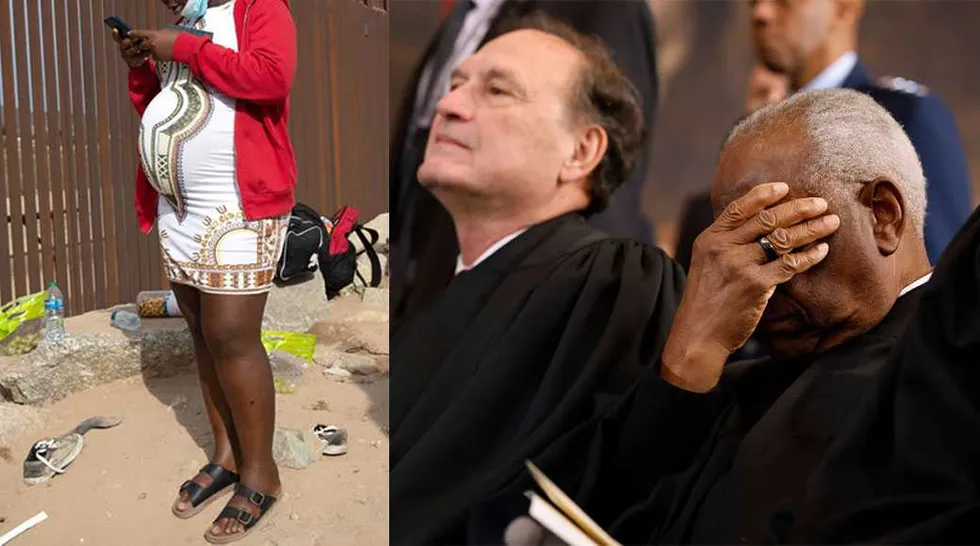
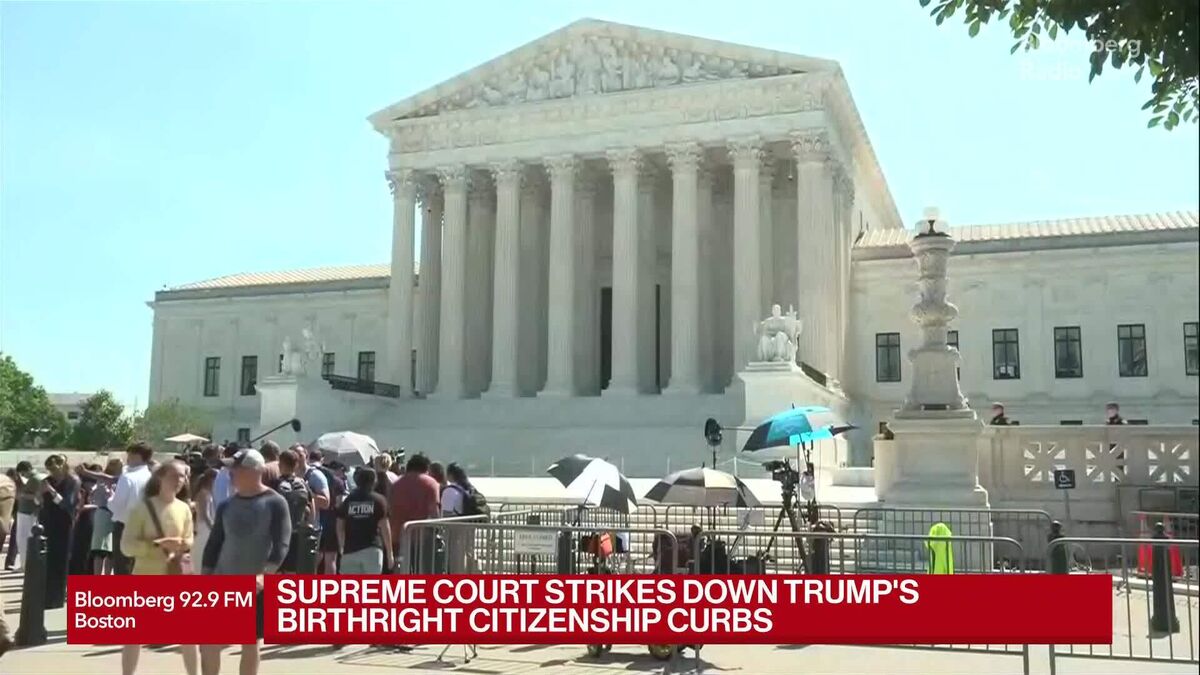
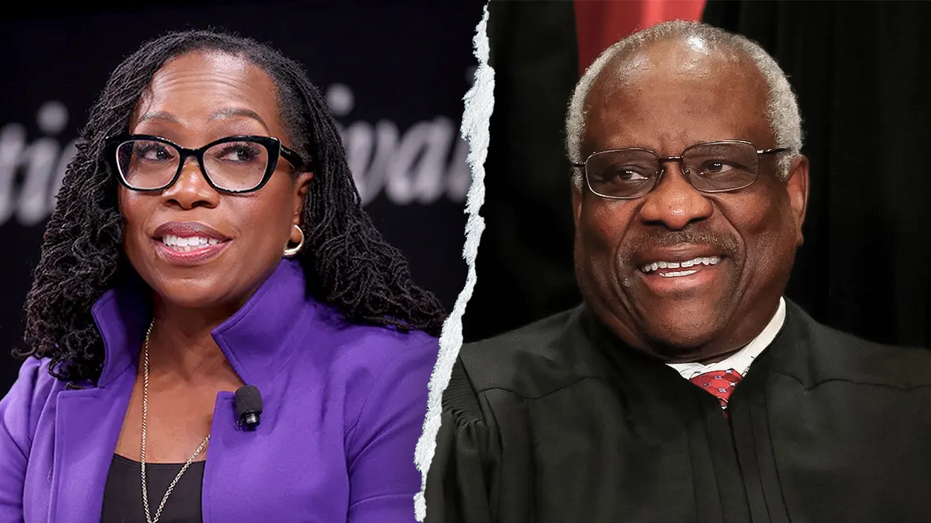
The U.S. Supreme Court delivered on Tuesday its highly anticipated ruling in Trump v. Barbara — the contentious case concerning whether President Donald Trump's Jan. 20 executive order ending birthright citizenship for children of illegal aliens is constitutional.The court held that "children born in the United States to parents unlawfully or temporarily present are 'subject to the jurisdiction' of the United States and are citizens at birth under the Fourteenth Amendment's Citizenship Clause."'Today's opinion devalues that citizenship.'In the majority opinion joined by Justices Sonia Sotomayor, Elena Kagan, Amy Coney Barrett, and Ketanji Brown Jackson, Chief Justice John Roberts began with a history lesson and concluded by writing that "citizenship, then and now, was the right to have rights — to freely participate in our political community. The Framers of the Fourteenth Amendment extended that promise to 'every free-born person in this land.' ... We keep that promise today."The court found that the arguments for limiting birthright citizenship to those legally living in the United States erred "in their definition of 'allegiance,' contending that natural allegiance was no longer sufficient for citizenship and that some greater quantum of allegiance (based on domicile) was required."According to the high court, there was "scant evidence for this dramatically revisionist view."RELATED: Alito torches SCOTUS ruling in mail-in ballot case, warns of voter fraud Swim ink 2/Corbis/Getty Images (L); John Moore/Getty Images (R) In the opinion for the court, Roberts wrote that "if Congress intended to limit American citizenship to the children of those domiciled in the United States, nothing in the succinct language of the Citizenship Clause conveyed that design."Roberts noted further that words that appeared in Trump's executive order — including "mother," "father," "lawful," and "temporary" — were also absent from the language of the clause."And while the Clause does ensure state citizenship attaches for U.S. citizens in 'the State wherein they reside,' ... the explicit invocation of residence for state citizenship only highlights its absence from the criteria for U.S. citizenship," Roberts added.Justice Clarence Thomas suggested in a 91-page dissent joined by Justice Neil Gorsuch that the majority diverged from historic American interpretations of the citizenship clause and that its account of how American citizenship came to be understood is "not historically accurate.""The Court today takes the extraordinary step of holding facially unconstitutional the President's Order excluding from citizenship the children of foreign temporary visitors and illegal aliens," Thomas wrote. "In doing so, the Court adds to the sad history of the Fourteenth Amendment, which was designed and understood to secure equal rights for the freed blacks but has instead been repurposed for political projects that the Reconstruction Congress did not support."In addition to stating that Trump's order had many potential applications which were "consistent with the original public meaning of the Citizenship Clause," Thomas expressed uncertainty that "today's opinion will stand the test of time."In closing, he wrote, "The Citizenship Clause 'added greatly to the dignity and glory of American citizenship.' ... Today's opinion devalues that citizenship."Justice Samuel Alito echoed Thomas' sense of gravity and disappointment in his dissent, writing, "This is one of the most important decisions in the history of the Court, and in my judgment, the Court has made a serious mistake.""As interpreted by the Court today, the Fourteenth Amendment confers citizenship on virtually everyone who happens to be born in this country, including the children of 'birth tourists,' women who come here solely for the purpose of giving birth to a child and then promptly return home," Alito wrote. "Careful analysis of the text of the Fourteenth Amendment and the process that led to its adoption shows that it does not degrade the concept of United States citizenship in this way."Like Blaze News? Bypass the censors, sign up for our newsletters, and get stories like this direct to your inbox. Sign up here!