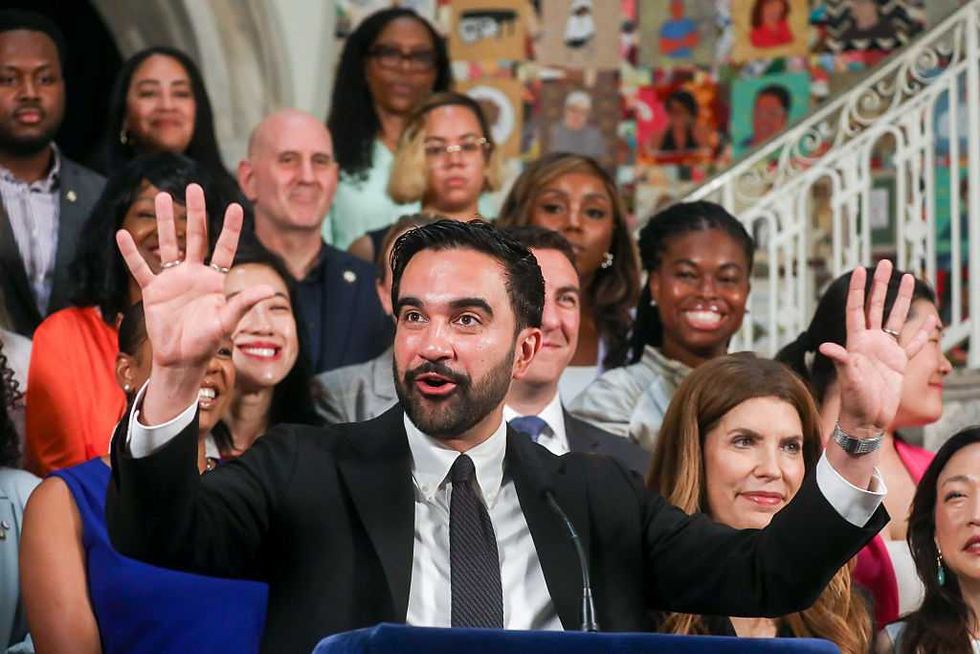
"Have you ever been to the U.S.-Mexico border?” “No.”One word. That may have been the most revealing moment of New York City Democratic Mayor Zohran Mamdani’s recent interview with the New York Times.Sanctuary policies are easy to defend from a podium at New York City Hall. They are much harder to defend before communities that have already paid the price.Mamdani defended his city’s sanctuary policies, which he reinforced after taking office by signing an executive order reaffirming them.The problem is not so much that Mamdani has never visited the border. It is that he seems unwilling to understand why communities that lived through the border crisis reached a very different conclusion.That lesson is visible far beyond the Rio Grande.Consider Goliad County in South Texas. The rural county has about 7,000 residents and sits roughly 160 miles from the U.S.-Mexico border.Testifying before the Senate Judiciary Committee last year, Sheriff Roy Boyd described how the crisis transformed the community he serves.Boyd’s office averaged 77 arrests a year during the five years before 2021. From 2021 through 2024, that average jumped to 413. Deputies discovered 16 cartel stash houses, and pursuits involving suspected human smugglers became routine.Residents began hearing voices and movement on remote properties after dark. Many no longer felt safe alone in their own homes.Those facts expose what Mamdani’s answer overlooks. The border crisis did not remain at the border. Cartel activity and illegal immigration reached inland communities that lacked the personnel and equipment to confront them. Former Border Patrol agent and Texas Public Policy Foundation senior fellow Ammon Blair calls cartels “hybrid threats.”As Blair puts it, “Cartels don’t just smuggle. They destabilize.” Boyd has described them as “contractors and subcontractors” in a network moving migrants and drugs from the border into Texas’ largest cities.That reality changed Texas’ response. In 2021, as illegal crossings surged under President Joe Biden, Goliad became one of the first inland counties to declare a local disaster. Boyd suggested giving local law-enforcement agencies flexible grants for overtime, new officers, patrol vehicles, and other equipment.Those grants became part of Operation Lone Star.According to Texas Republican Gov. Greg Abbott’s office, Operation Lone Star has produced more than 535,700 apprehensions and referrals, 57,400 criminal arrests, and 47,500 felony charges. Texas law enforcement has also intercepted more than 779 million lethal doses of fentanyl.RELATED: The revolution will not be televised — it will be livestreamed in 4K Andrew Lichtenstein/Corbis/Getty ImagesBoyd later launched the Operation Lone Star Task Force, which allows local agencies to share deputies, intelligence, and resources across jurisdictional lines while targeting human smuggling, cartel activity, and organized crime.New York has felt the downstream effects too. Former Mayor Eric Adams warned that the migrant crisis would “destroy New York City.” Mamdani nevertheless continues to defend sanctuary policies that impede cooperation with federal immigration authorities.Goliad’s experience carries a national lesson. Criminal organizations do not recognize state boundaries. The same networks that move people across the border traffic drugs, weapons, and money into communities nationwide. They exploit ports of entry, the northern border, and weaknesses far from either frontier.The farther those networks spread, the more Americans discover that border security is not someone else’s problem.Mamdani may be proud of New York City’s sanctuary stance.His one-word answer showed more than where he has never been. It revealed what he refuses to see.Sanctuary policies are easy to defend from a podium at city hall. They are much harder to defend before communities that have already paid the price.
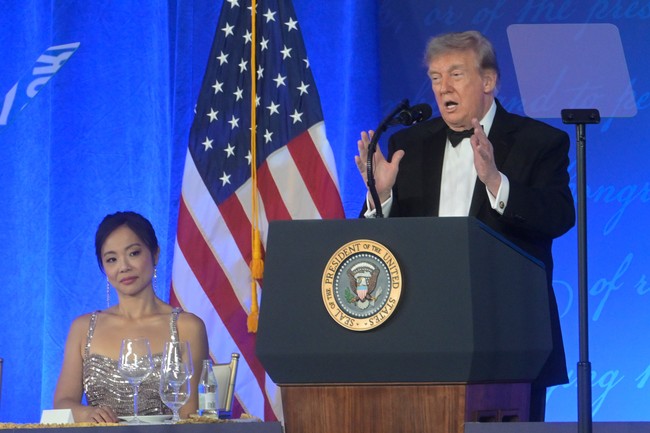
The president came, he saw, he joked, he insulted and talked too long. And yet, Donald Trump’s presence was the major reason why the White House Correspondents’ dinner was such a smashing success.
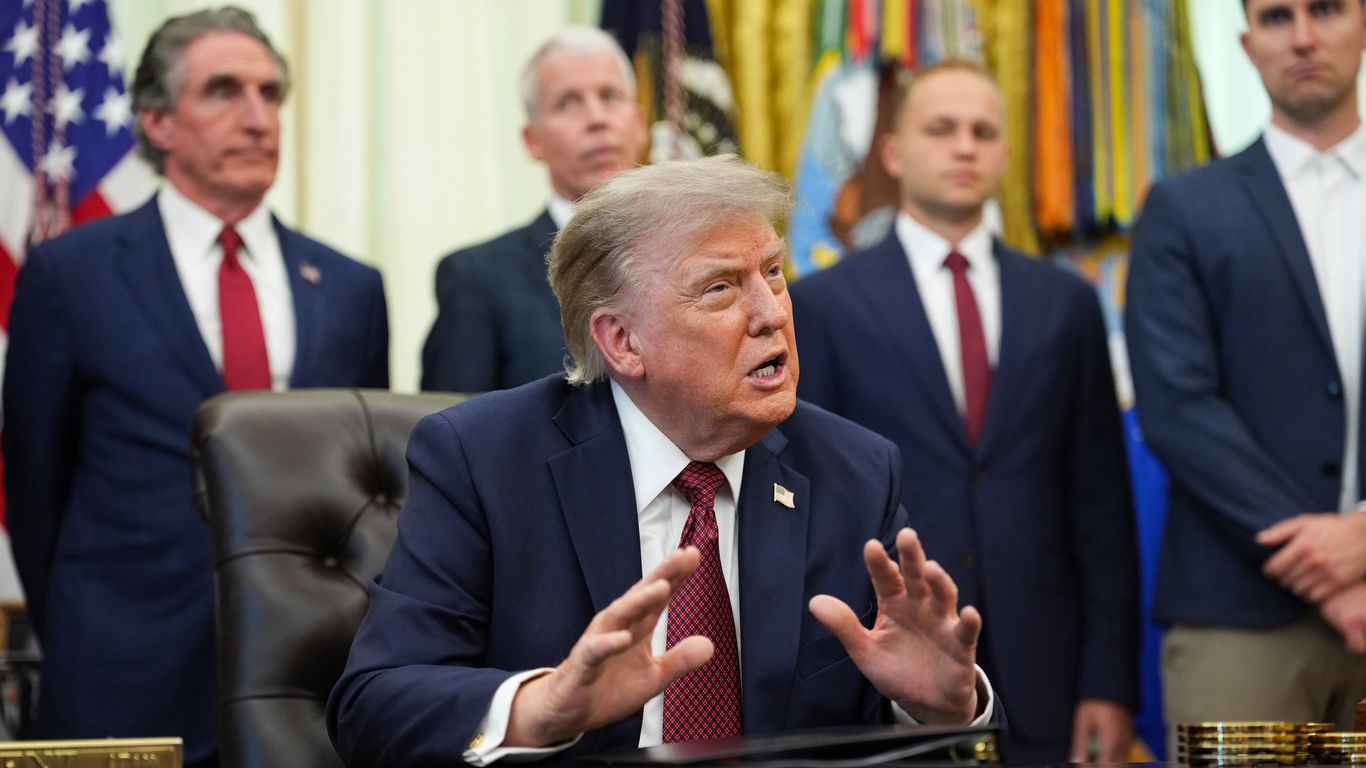
President Trump directed the U.S. military not to conduct new strikes in Iran on Friday, breaking a nearly two-week streak of daily attacks, two sources with knowledge of the decision said.Why it matters: The president's directive came after he approved daily strikes over the previous 13 days. It is unclear if Trump's order on Friday was a one-off or whether the lull will continue. Trump's decision reflects both his willingness to provide more space for diplomacy and a recognition that — short of a return to major combat operations — the current level of U.S. strikes has reached the limit of its effectiveness. If Trump orders a return to strikes, the U.S. military can mobilize on relatively short notice. The U.S. military is still preparing plans for a possible return to major combat operations, but Trump hasn't given orders to move in that direction, the sources said. The White House did not respond to a request for comment.Driving the news: Every afternoon for the last two weeks, Trump has approved strike plans submitted by the military. They were conducted within hours.On Friday, Trump received a similar plan but did not give a green light. Instead, he directed the military not to conduct strikes, the sources said. Shortly after he gave the Friday directive, Trump told reporters at the White House that he has the option of continuing strikes or even escalating them, including "knocking out everything they have." But he made clear that he thinks the "smarter strategy" is to "make a deal" with Iran. "We're talking to [the Iranians] right now. I think they're getting more and more serious as the days go by. We're locked and loaded and ready to go, but we're talking to them," Trump said. Later on Friday, during his remarks at the White House Correspondents Association dinner, Trump said he didn't think Iran is ready to make a deal at the moment, "but I'm willing to listen." State of play: Trump's order to hold fire was given several hours after an Omani delegation arrived in Tehran Friday for talks on a new arrangement to reopen the Strait of Hormuz.Two regional sources with knowledge of the negotiations said progress has been made in the talks and that an agreement between Oman and Iran could be reached over the weekend. President Trump would then have to decide whether to accept the proposed deal.
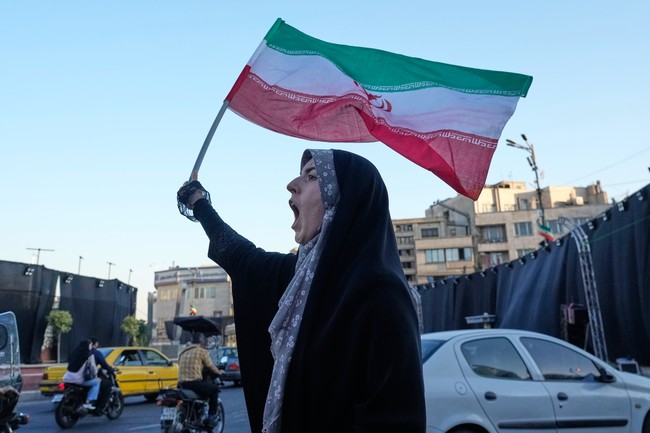
Iran's leaders are fighting each other almost as much as they're fighting the West, with some senior politicians scrambling to save US talks while the powerful Islamic Revolutionary Guard Corps leans into the renewed war, regional sources told The Post.


.jpg)