Alito warns Supreme Court made 'serious mistake' that could have national security consequences
Justice Alito warns the Supreme Court's birthright citizenship ruling threatens national security by extending citizenship to children of birth tourists.

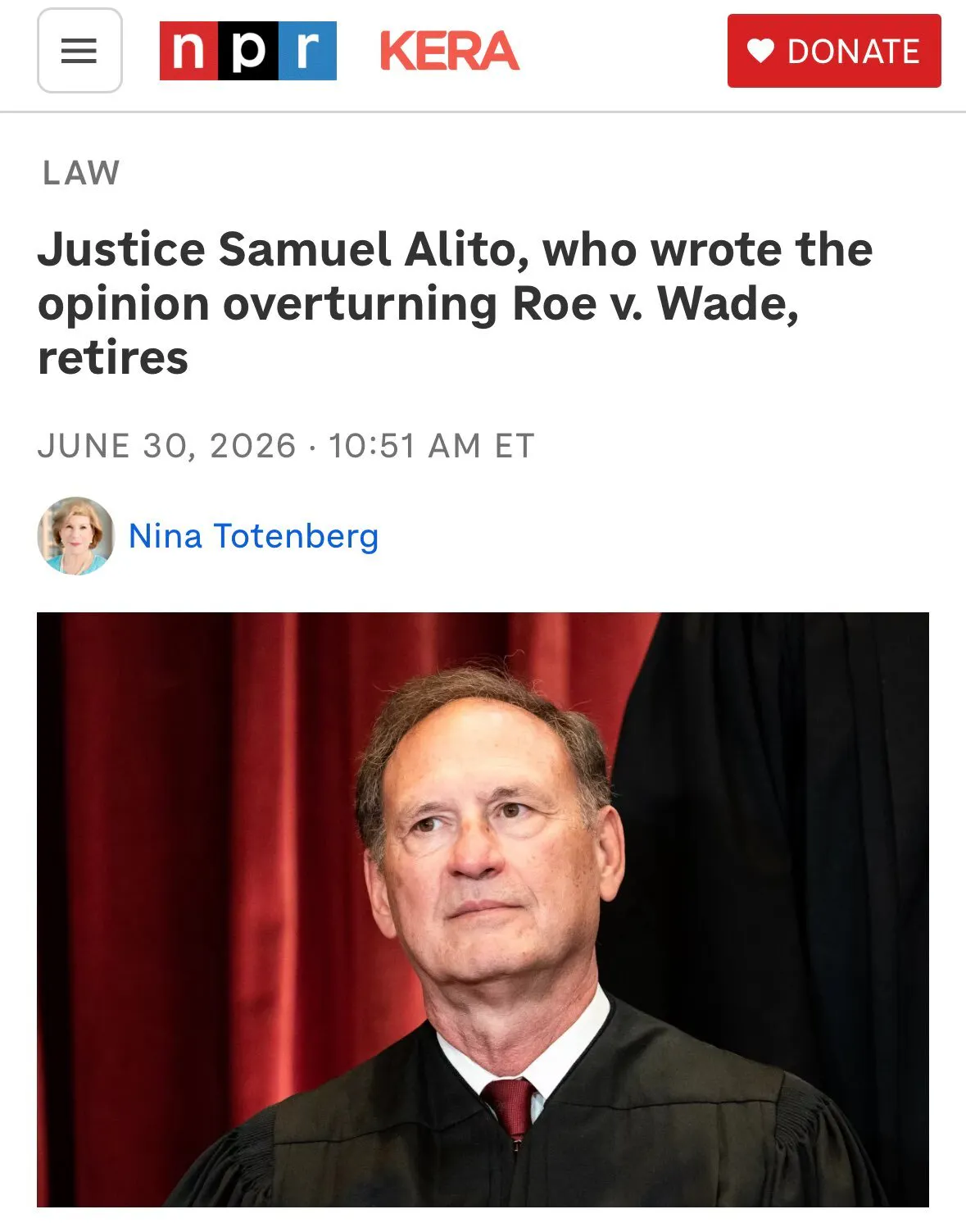
NPR published and then retracted a fake story on Tuesday claiming conservative Supreme Court Justice Samuel Alito is retiring. The piece from the Left-leaning outlet, authored by longtime SCOTUS reporter Nina Totenberg, 82, claimed Alito was leaving the court right after justices handed down landmark cases on transgender athletes and birthright citizenship. Published at 10:51 ...
Justice Alito warns the Supreme Court's birthright citizenship ruling threatens national security by extending citizenship to children of birth tourists.
Men have higher 401(k) balances, but women save more of their pay at comparable income levels, new research shows.
All Things Considered host Scott Detrow speaks with NPR's editor-in-chief Thomas Evans and Nina Totenberg about her reporting on the final day of the Supreme Court term.
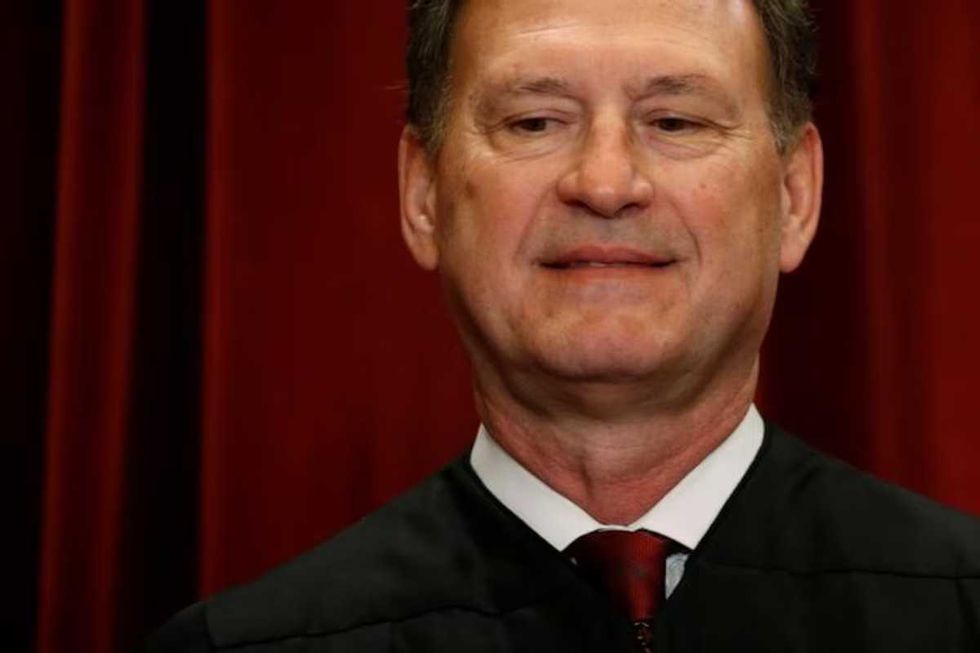
On Tuesday morning, amidst the release of several consequential Supreme Court rulings, NPR ran a story stating that Justice Samuel Alito had just announced his retirement — but he hadn’t. The news outlet quickly retracted the story, issuing an apology. But according to one DC insider, this minor media incident may have in fact revealed Alito’s impending retirement, which would have major implications for the future of the court and country. “Given that the Speaker had a statement ready to go, and that Nina Totenberg is the dean of the SCOTUS press corps, who is a logical recipient of this big retirement story, this looks like an embargo broken to me,” posted Douglas Farrar, Former Director of Public Affairs at the Federal Trade Commission. “I expect we'll see Alito announce his retirement soon.”Farrar was referring to three key points. First, the retracted NPR story by Nina Totenberg. Second, the rumor that House Speaker Mike Johnson (R-LA) had sent an email to staff and stakeholders with the subject “Thank you, Justice Alito.” And finally, the concept of a “media embargo,” in which a piece of news is shared with select media outlets with the understanding that it won’t be revealed until an agreed-upon time, allowing journalists to prepare their stories. As Farrar suggests, the NPR story and Johnson email could both be the result of a broken embargo, and Alito’s actual announcement is soon to come.If that is the case, it means two things. First, and less importantly, Totenberg and someone working in Johnson’s communications team have a lot of explaining to do, and they are unlikely to be trusted with scoops in the future. But more importantly, if Alito is in fact leaving, that means President Donald Trump will appoint his replacement — a move he would be eager to press with the midterms looming. If the Republican Party takes the losses that are projected and loses its majority, the Democrats will be significantly better positioned to oppose confirmation of his nominees. If Alito is indeed retiring, it would represent a strategic move on the part of conservatives, affording Trump the opportunity to select his fourth judge rather than leaving the possibility open to a Democratic successor were Alito to retire or die during a future term. This ensures that Republicans will shape the court for a generation and have a major impact on how the judiciary drives policy for decades to come. While this certainly represents a threat to the Democratic agenda, interestingly enough, rumors of Alito’s retirement came as the Supreme Court issued a consequential ruling in which three conservative justices — including two appointed by Trump — slapped down the president’s executive order attacking birthright citizenship.
Supreme Court Justice Samuel Alito may have planted the story of his resignation that was published then retracted by NPR on Tuesday in an attempt to uncover a leak in his staff. This so-called “canary trap,” says one advocate of the theory, is the only explanation for the news outlet’s mistake. This is according to conservative journalist Miranda Devine, who posted on Wednesday, “The only way the Totenberg-Alito story makes sense is that this veteran NPR legal reporter had a trusted and highly placed source inside SCOTUS who confirmed that Alito was retiring. No editor would publish such a story unless the reporter were reliable. A reliable reporter does not say 'oh I thought I heard something' without double-checking with a source to confirm. Ideally she would call Alito to confirm as well. But somehow Totenberg and her editors at NPR were satisfied that her sourcing was impeccable without official on the record confirmation.”In other words, Devine is saying that it is highly unlikely that such a story would be run based solely on what the NPR journalist who wrote the story, Nina Totenberg, claimed was something she misheard in the court halls. Typically a new organization requires a report to be confirmed, and as CNN noted, Totenberg’s explanation “didn’t fully explain why NPR published the report without additional confirmation.”With all this in mind, Devine suggests, it is more likely that Totenberg, in fact, did have a second source inside the court who had provided reliable information in the past. “That leaves a very small list of suspects,” writes Devine. “Someone close to Alito who was very confident that he was retiring. As people have speculated, Alito may have planted a false tale to catch out the leaker: a canary trap.”This theory appears to have been first raised by a conservative podcaster who on Tuesday posted, “Did Justice Alito just Canary Trap the Dobbs v Jackson leaker????”A canary trap is a leak‑sniffing tactic where one seeds slightly different versions of sensitive information to different people so the specific version that is revealed identifies the source. As the poster mentioned, in the lead-up to the Supreme Court’s highly consequential 2022 ruling regarding Dobbs vs. Jackson Women’s Health Organization, which ultimately overturned Roe vs. Wade, a draft of the opinion was leaked to Politico, and the source of the leak has remained a mystery ever since. The canary trap, then, could be an attempt to identify that person. This isn’t the only theory surrounding the resignation. According to Douglas Farrar, Former Director of Public Affairs at the Federal Trade Commission, “This looks like an embargo broken to me,” referring to the practice of providing sensitive information to reporters on the condition that they “embargo” it until a certain time. If that is the case, concludes Farrar, “I expect we'll see Alito announce his retirement soon.”
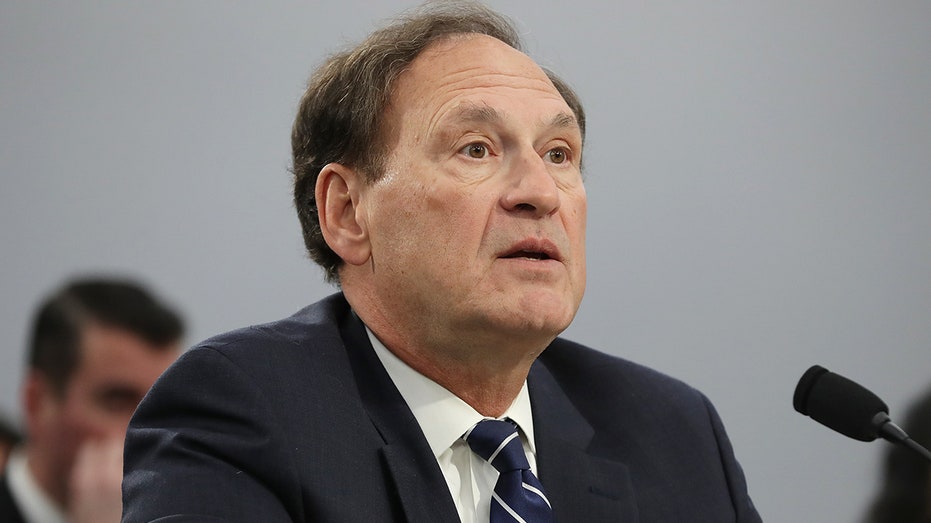
Justice Samuel Alito expressed discontent with the Supreme Court’s Tuesday decision to strike down the Trump administration’s restrictions on birthright citizenship, calling the ruling both “one of the most important decisions” in the court’s history and “a serious mistake” in a dissenting opinion. The high court ruled 6-3 that an executive order signed by President Trump on…
'Every step of this story is incorrect," Alito wrote. 'The Declaration of Independence repudiated the foundation on which the British rule was based.'