Mitch McConnell’s replacement might be chosen in court first
Source: Blaze Media · Bias: Right
Summary
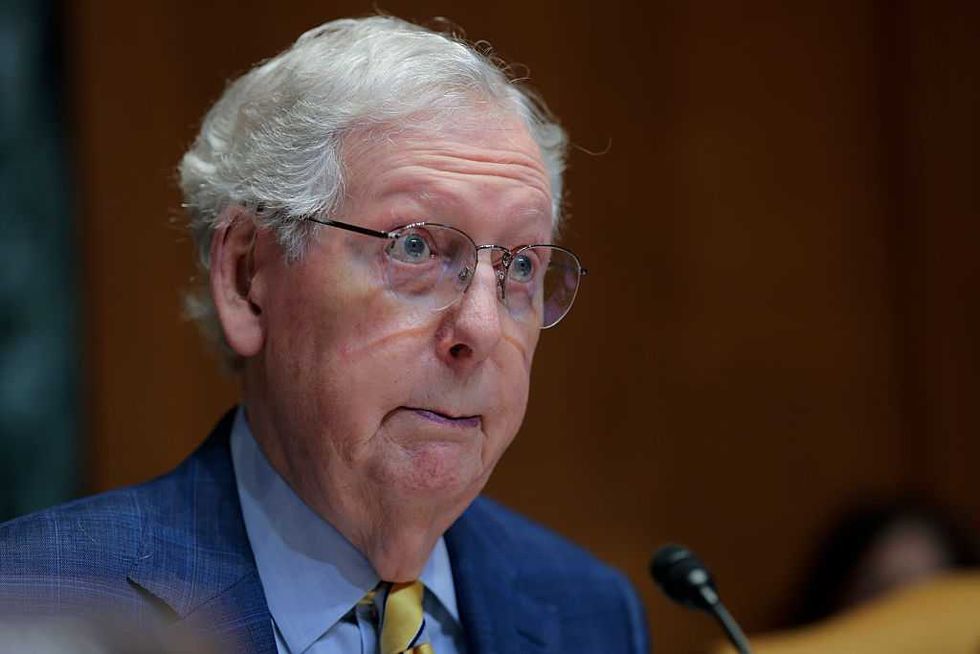
Senator Lindsey Graham (R-S.C.) died suddenly Saturday night. May he rest in peace, and prayers and condolences to his family.His death has understandably focused attention on the mechanics of filling vacancies in the U.S. Senate. That process is governed by state law, though authorized by the federal Constitution.The public deserves better than confident assertions resting on incomplete analysis.South Carolina law is clear, though somewhat complicated. Republican Governor Henry McMaster appoints an interim senator to serve until the end of the current term on January 3, 2027. But because Graham had already won the Republican nomination for the general election scheduled in November, a special primary will be held on a compressed timetable to choose a new nominee.Complicated, yes. But clear.Kentucky is another story.Attention has inevitably turned there because of lingering questions about Sen. Mitch McConnell’s health and his announcement that he will not seek re-election. That has prompted speculation about what would happen if his seat became vacant before his term expires.Unfortunately, much of the commentary has confidently asserted propositions that are, at best, only partially true.One widely repeated claim is that Kentucky’s governor would appoint a replacement, but only from a list of three names submitted by the departing senator’s political party. That was once accurate. It is no longer.Another confidently asserted claim is the opposite: that the governor has no appointment authority because the Kentucky legislature abolished it in 2024. That conclusion may ultimately prove correct as a statutory matter, but it is not nearly as obvious as many commentators suggest.Kentucky law is murkier than the headlines acknowledge.Until 2024, the answer was straightforward. Kentucky law expressly authorized the governor to appoint an interim U.S. senator while requiring him to choose from a list of three nominees submitted by the departing senator’s political party. That unusual compromise preserved partisan continuity while limiting gubernatorial discretion.RELATED: Kentucky governor makes unusual request as mystery deepens over Mitch McConnell’s health Nathan Posner/Anadolu/Getty ImagesBut in 2024, the Republican-majority General Assembly repealed that statute over Democrat Gov. Andy Beshear’s veto.That much is undisputed.From that repeal, however, many commentators have leaped to the conclusion that the governor now possesses no appointment authority at all. That does not necessarily follow.The 2024 legislation replaced the old Senate-specific appointment statute with provisions requiring a special election to fill the vacancy. That plainly reflects the legislature’s desire that the people — not the governor — ultimately choose the senator.But a special election does not answer a different question: Who, if anyone, occupies the office in the meantime?Here is where the analysis becomes more complicated.Kentucky still has a general vacancy provision stating that where “there is no other provision of law for the filling of a vacancy in any office,” the governor shall fill the vacancy by appointment.Does a statute requiring a future special election constitute “another provision of law” for filling the vacancy? Or does it merely prescribe how the office will ultimately be filled, leaving the temporary vacancy to the general appointment statute?Reasonable lawyers can disagree.Those insisting that the governor has no appointment authority argue that the legislature plainly intended to eliminate interim appointments altogether. They point to the purpose of the 2024 law and contend that allowing even a temporary appointment would frustrate that objective.That is a serious argument. But it is not the only one.The legislature repealed the Senate-specific appointment statute. It did not repeal the general vacancy statute. Courts ordinarily avoid finding repeals by implication and instead try to harmonize statutes whenever possible.One could therefore read the two provisions together: The general vacancy statute supplies temporary occupancy of the office, while the election statute governs the permanent replacement.Whether Kentucky courts would accept that interpretation is another question.Nor is the statutory question the only uncertainty. The Kentucky Constitution contains vacancy provisions that some commentators believe independently constrain the legislature’s ability to eliminate the governor’s appointment authority. No court has squarely resolved how those provisions interact with the 17th Amendment and the legislature’s 2024 revisions.In addition, the claim that the rule changes if a vacancy occurs before Aug. 3 rather than after is incorrect.
Related Coverage
- Appeals Court Upholds Blocks on Trump Order Restricting Mail Voting (Center Left — NYT > U.S. > Politics)
- Appeals court denies Trump’s bid to allow $100,000 fee on new H-1B visas (Center Left — US news | The Guardian)
- Appeals court rejects Trump bid to curb mail-in voting in 23 states (Center Left — US news | The Guardian)
- Onlookers rejoice as federal court slaps down Trump’s attack on mail-in ballots (Far Left — Raw Story)
- Court checks Pritzker as Trump administration scores another immigration win (Right — Latest Political News on Fox News)
- ‘Like Graham Platner but worse’: GOP group vows $42,000,000 campaign against last-minute replacement Democrat (Far Right — BizPac Review)
- Will Trump’s DOJ Regret Urging Appeals Court to Disclose Biden Tapes? (Center Right — National Review)
- Biden drops lawsuit seeking block of memoir tapes after court loss (Center Right — Washington Examiner)
Daily Analysis
Read the full Parallax Pulse for July 13, 2026 — an AI-powered analysis of how Left and Right media covered the biggest stories this day.
More Headlines From July 13, 2026
- Trump backs Lindsey Graham's sister to finish Senate term (Center)
- Graham’s five-day-old message is aging in a very unexpected way (Far Right)
- Mullin defends move to tie election security to counterterrorism funding (Center)
- Trump says U.S. reinstating Iran blockade in Strait of Hormuz (Center)
- The U.S.-Iran ceasefire grows more distant. And, Congress faces a consequential week (Center)