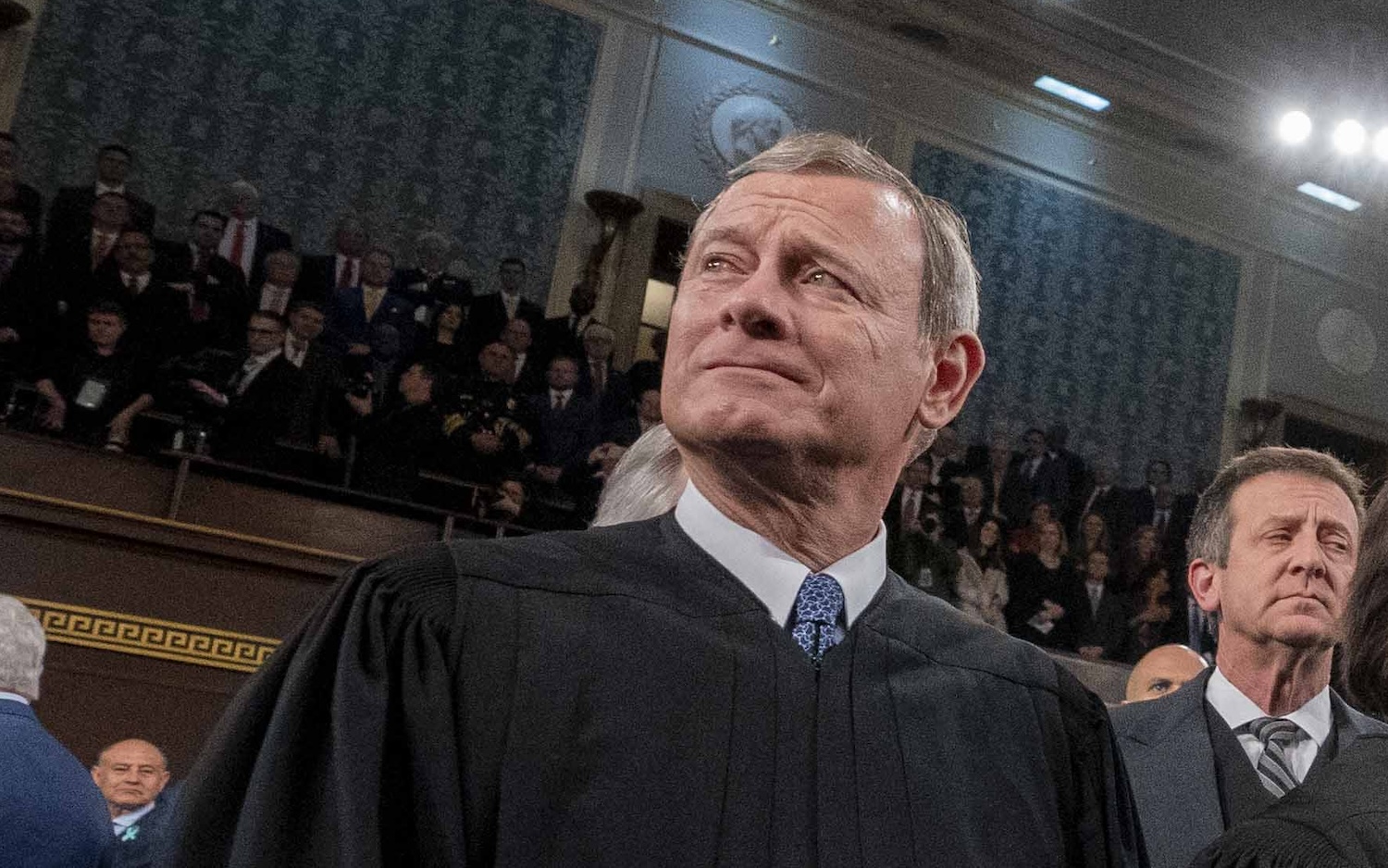
Trump v. Barbara may ultimately come to be remembered not as the final word on birthplace citizenship but as another constitutional detour waiting to be corrected.
Everyone knows the song.It’s a warm summer night, the top of the seventh inning has just concluded, and the organ begins to ring throughout the stadium. It’s time to whip out the singing voice for one of America’s most iconic tunes — "Take Me Out to the Ball Game." At a time when baseball fandom was overwhelmingly male-dominated, the character of Katie stands out as an unusual creation for the era.Yet few baseball fans, let alone Americans at large, know the true history behind the 118-year-old symbol of our country’s pastime.To get to the beginning, we must travel back to the time of President Theodore Roosevelt. The year is 1908: The Ford Model T makes its debut in the automobile market; New York City drops the very first New Year’s Eve ball in Times Square; and the Grand Canyon is declared a national monument.The story goes that Jack Norworth was riding a New York subway train when he was inspired by a sign he saw that read, “Baseball Today — Polo Grounds.” Norworth quickly developed the lyrics to the song, with Albert Von Tilzer composing the music.The irony? According to reports, neither of these men had ever been to a baseball game. Norworth did not attend a game until 32 years later in 1940.Norworth and his then-wife Nora Bayes would go on to debut the tune during a vaudeville act at the Amphion Theater in Brooklyn. The song was quickly recorded by multiple different groups, with both the Edward Meeker and the Haydn Quartet versions finding mass success. Although only the chorus is sung at baseball games today, the original song contains multiple verses that tell the story of Katie Casey (later changed to Nelly Kelly by Norworth) — a “baseball mad” fanatic who would rather have her boyfriend take her to the ballgame than to the theater. At a time when women did not even have the right to vote, let alone the fact that baseball fandom was overwhelmingly male-dominated, the character of Katie stands out as an unusual creation for the era.The earliest documented instance of "Take Me Out to the Ball Game" being played at a baseball game was during a Los Angeles high school game in 1934. The song made its Major League debut later that year during Game 4 of the 1934 World Series.Stadium bands began regularly performing the tune during games in the mid-20th century. However, the way baseball fans engage with the song today — singing it during the seventh-inning stretch — was popularized by Chicago White Sox announcer Harry Caray in the 1970s. Caray later brought the tradition to the Chicago Cubs when he became their announcer in 1982. In 2001, "Take Me Out to the Ball Game" was ranked #8 on the "Songs of the Century" list, and later in 2010, Edward Meeker's recording was inducted into the Library of Congress' National Recording Registry.So next time you find yourself indulging in America's pastime, remember to buy some "peanuts and Cracker Jack" so that you can "root, root, root for the home team" — but never forget: "For it's one, two, three strikes, you're out, at the old ball game."Like Blaze News? Bypass the censors, sign up for our newsletters, and get stories like this direct to your inbox. Sign up here!
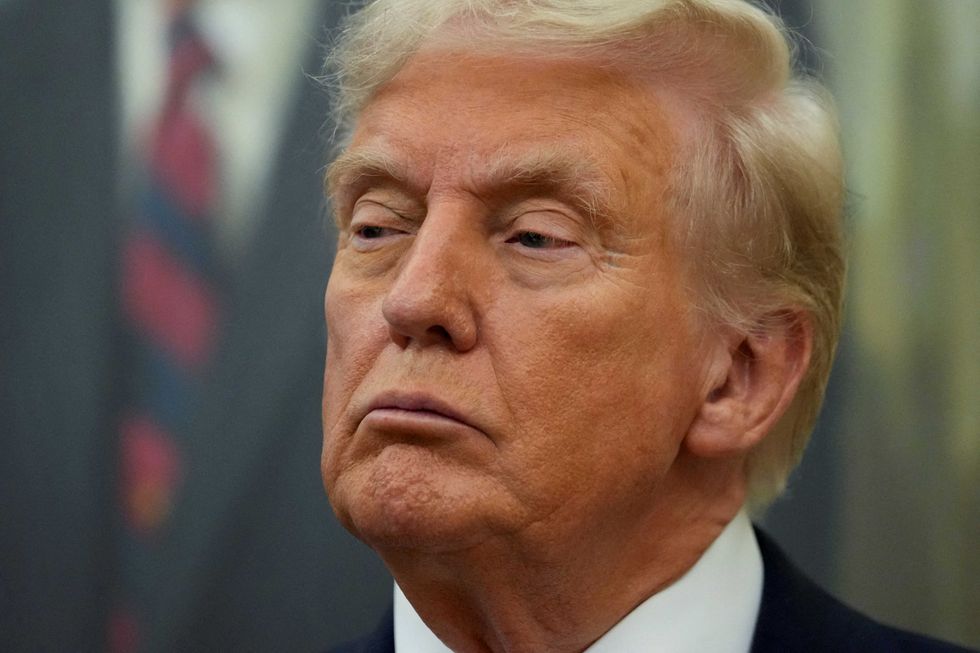
The president made $2.2bn last year, with plenty of help from his own political decisions. This is called corruption, folksPeople in the US: share your views on Trump’s earnings in his second termIn financial disclosures released on Tuesday, Trump reported earning more than $1bn last year from his several cryptocurrency ventures.All told – including other parts of his vast holdings, such as his real estate assets – Trump made at least $2.2bn last year, as opposed to the roughly $622m his businesses raked in in 2024, before he returned to the presidency. Continue reading...
Republican Party lawmakers, fed up with taking the blame for President Donald Trump's failures, are launching pre-emptive strikes ahead of the upcoming midterm election, according to a new report.In interviews with NBC News, GOP senators and operatives unloaded on the president, saying he's already setting the stage to blame Republicans if the party suffers losses in November. Trump has already latched onto the failure to pass the SAVE America Act as "his weapon of choice," they noted.A Republican senator, speaking anonymously to avoid Trump's wrath, laid it bare: if Republicans lose seats in November, Trump "will blame it on us and the fact that we didn't pass the SAVE Act, and nobody will believe it but him."For Trump, "everything is a zero-sum game," the lawmaker told NBC. "He likes to dominate people, and he's a bully, and he's f------ things up as fast as he can, and there's nothing anyone can do about it."Resentment is festering across Republican circles over Trump's quixotic fixation on rewriting the nation's election laws—a bill that GOP operatives view as "strategically misguided." A longtime Republican operative advising key Senate races bluntly observed that the president "blames Republicans for most of his problems. I'm sure he will try to blame the Senate."The operative added that Senate Majority Leader John Thune (R-SD), "cannot manufacture votes," and that Trump has himself to blame for for alienating outgoing Sens. Bill Cassidy of Louisiana, John Cornyn of Texas, and Thom Tillis of North Carolina. The operative argued those lawmakers have no longer have any incentive to bow to Trump's demands. "They will vote their conscience and not for Trump's wishes," the operative said. "Trump’s fixation on the voting bill baffles some Republican strategists, who believe his focus is misplaced," NBC News reported. "A savvier approach to the midterms would be for him to sign and celebrate measures aimed at reducing costs and making daily life more affordable for American families, such as the housing bill."“Poll after poll shows affordability is the top issue, and he’s got signature legislation on his desk that he won’t sign,” one strategist complained. "So that tells you where his head is on the midterms."
The Supreme Court upheld birthright citizenship this week. The Times said the decision "capped a more than decade-long effort by Mr. Trump to use the issue as a political tool." A relief, to be sure, but no cause for celebration. A plain reading of the 14th Amendment would bring anyone to the same decision. The court was split, however, with some justices unable to resist the temptation to dehumanize immigrants by calling them "foreign birth tourists." The majority didn't check the president, though that's how most people will see it. A more accurate interpretation would be that it encouraged him, or some future authoritarian, to try again. Change a few things, including who's on the court, and a plain reading of the 14th Amendment won't matter anymore. All it would take to destroy equal citizenship would be five rogue justices pretending that history didn't happen and words don't have meaning.The high court can't be allowed to continue in its present form, not when it profanes the Constitution, perverts the rule of law, and comes within a hair of transforming America into de jure apartheid state. It has already legalized corruption. It has already gutted the Voting Rights Act. Yesterday, it said that the US Congress (meaning we, the people) has no rights which a Republican president is bound to respect. All things being equal, it's only a matter of time before the current court finds a way to turn "white makes right" into law. The Republican won't stop it. Will the Democrats?I can't say I'm encouraged after reading Dana Milbank's latest. A former Post columnist who now writes for NOTUS, Milbank wanted to know if the unitary executive powers amassed by Trump and blessed by this court can be used to launch what he called "a new Progressive Era, in which a Democratic president imposes by executive fiat government run health care and many other ideas liberals have long dreamed about but lacked the votes to enact." Milbank interviewed "veterans of previous Democratic administrations and liberal policy wonks" to ask "what would it look like if the next Democratic president wielded power the way Trump does?" The answer, Milbank said, is like "an embryonic Project 2029," though no one called it that. "The advocacy arms of the Roosevelt Institute, the Center for American Progress and other influential groups on the left are already assembling lists of ways a Democratic president could use the breathtaking executive power Trump has seized."On that list are some golden nuggets. They include (and here I'm quoting Milbank almost verbatim): creating a government-run health insurer; seizing patents from drug makers that developed their products with government funding; establishing government-run grocery stores; cutting off funds for businesses that don’t significantly raise their wages; taking “golden shares” in, or other forms of government control over, frontier AI firms, banks, pharmaceutical firms and others; dismantling the Department of Homeland Security; and breaking up media monopolies like Paramount's merger with Warner Bros. Discovery. I'm sampling what is a truly mouth-watering list of progressive objectives, but two aspects stand out from the full list. One is that it's limited to policy. Two is that there's nothing on the list about reforming the Supreme Court. Indeed, there does not seem to be awareness among Milbank's sources that the Supreme Court will strike down every one of these policies if given a chance, no matter how good or popular they might become. Worse, a kind of magical thinking seems to be driving the debate. None other than Neera Tanden suggested what's good for a Republican is good for his Democratic successor in the eyes of the court. "Trump has discovered, or created, powers that no president has ever had that have been sanctioned by a rightwing Supreme Court,” said the head of the Center for American Progress. “Trump has widened the aperture of the powers the federal government has.” That aperture, Tanden said, can be used by a Democrat to "create a kind of new social contract.”Not if John Roberts has anything to say about it. It doesn't matter how much "Trump has widened the aperture of the powers the federal government has." The next Democratic president can't change America without changing the court. It is not politically neutral. It does not serve the law. It is profoundly corrupt. And only a fool would forget that what this court gives, this court can take away. It must be held accountable for its impunity for the law, same as everyone. So expand its number, impose term limits, strip its jurisdiction, throttle its budgets – whatever it takes, because there will be no new dawn as long as there's a rightwing supermajority that's prepared to veto it.
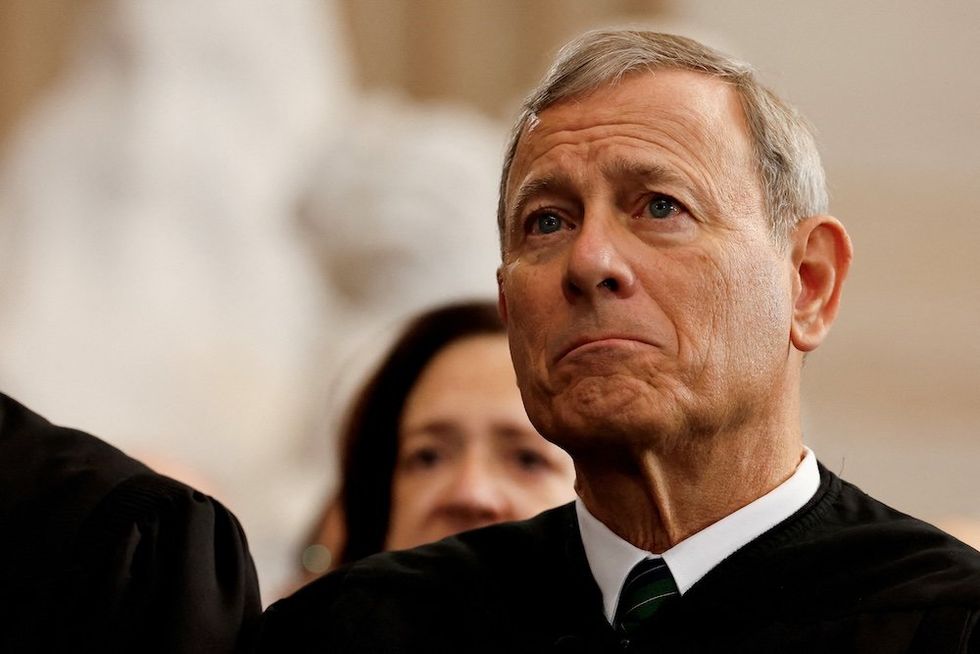
Roberts Slays Trump's Ludicrous Birthright Citizenship Order. While Thomas tries to justify caste, Jackson makes it clear the post-Civil War Amendments were not a mere spot treatment for the dark stain of slavery.