Sen. Chris Murphy (D-CT) said Sunday that the Democratic Party’s recent victories by socialist candidates in New York reflect a healthy debate within the party, pushing back on concerns from moderate Democrats who have warned against embracing socialism. Appearing on NBC’s Meet the Press, the senator was asked about last week’s New York primaries, where […]
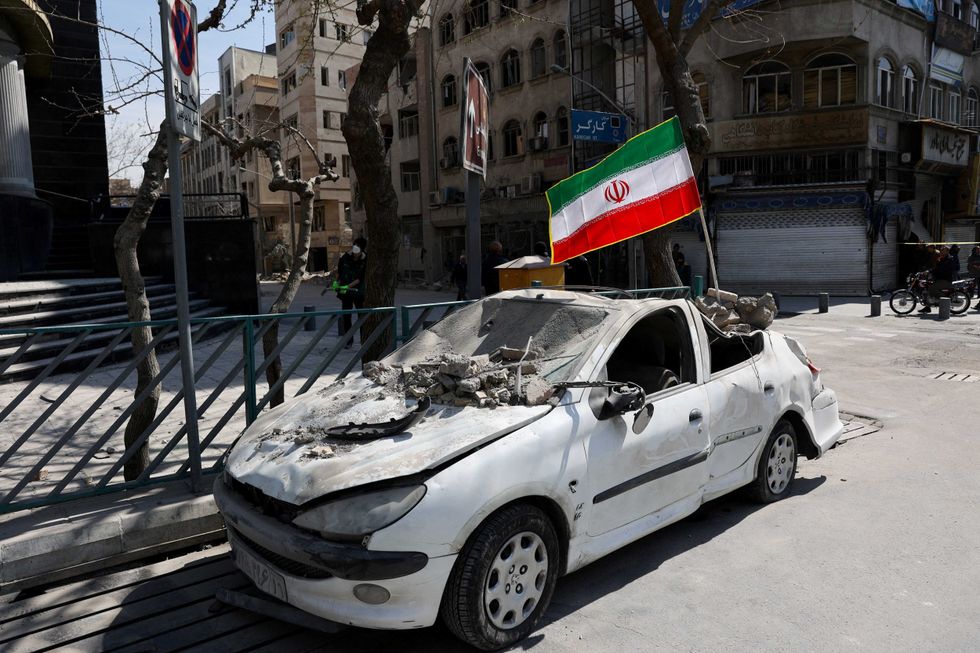
This is more fire than cease: Over the past few days, tension between the U.S. and Iran has been escalating with another exchange of strikes on Saturday. President Trump threatened on Truth Social to resume the war and "complete the job."Why it matters: The U.S. and Iran are bombing each other again, putting the tenuous ceasefire in doubt again.Between the lines: One reason for the renewed fighting seems to be different interpretations of the memorandum of understanding (MOU) to end the war that was signed 10 days ago — especially when it comes to the Strait of Hormuz.With the situation escalating by the day, it isn't clear if the next round of negotiations between the U.S. and Iranian technical teams planned for Tuesday in Switzerland will actually take place.Catch up quick: As part of the MOU, Iran committed to make its best efforts to allow safe passage of commercial vessels through the strait. In return, the U.S. lifted its blockade on Iranian ports.During negotiations in Switzerland last week, the U.S. delegation — headed by Vice President Vance — agreed with Iran to establish a "hotline" between the U.S. military and the IRGC (Islamic Revolutionary Guard Corps), Iran's military command, to coordinate traffic in the strait.As of Saturday, the "hotline" still wasn't operational. The situation has been escalating as Iran started claiming, again, that ships need to coordinate passage.On Saturday evening, the U.S. military struck Iranian targets in retaliation for an attack Saturday morning on a commercial tanker.It was the second wave of U.S. strikes in Iran in 24 hours.The latest: Iran responded with drone and missile attacks on U.S. bases in Kuwait and Bahrain, according to the IRGC.Iranian state media quoted the IRGC as threatening more forceful attacks on ships in the Strait of Hormuz, raising the prospect of the peace process coming to a halt.Earlier Saturday, the IRGC launched an attack drone at the Panama-flagged M/T Kiku tanker, which was passing through the strait with more than 2 million barrels of crude oil, U.S. Central Command (CENTCOM) said.The incident happened several hours after the U.S. struck Iranian targets, in retaliation for another attack on a commercial ship on Thursday. In addition to the tanker strike, Iran retaliated by attacking targets in Bahrain early Saturday.CENTCOM said in a statement that U.S. aircraft targeted Iranian military surveillance infrastructure, communication systems, air defense sites, drone storage facilities and minelaying capabilities.What they're saying: Trump, in a Truth Social post Saturday evening, confirmed the strikes and threatened more."There may come a point when we are no longer able to be reasonable, and will be forced to militarily complete the job that we very successfully started," he wrote. "If that happens, the Islamic Republic of Iran will no longer exist!"Go deeper: Trump's messy path to peace.
A senior U.S. defense official has explained why the American military keeps returning to bomb the same Iranian targets it has already struck repeatedly since the conflict began in late February, according to Fox News national security correspondent Jennifer Griffin.In a post on social media, Griffin said she pressed the official on why the U.S. has had to go back and restrike sites that have been hit multiple times since February 28, when the war began. The answer, she reported, was that Iran has rebuilt its air defense and missile systems along the Strait of Hormuz in the months since the U.S. bombing campaign wound down on April 7.That reconstitution, the source told Griffin, is why the military is now having to strike areas like Qeshm Island and Sirik that it had already targeted in the past."In the time since the cease fire on 7 April, Iran has reconstituted — thus the targets around the Strait of Hormuz," the official told Griffin.The official acknowledged the scale of the damage already inflicted on Iranian positions while making clear that Tehran has adapted."There is a LOT that is damaged… a LOT… but they moved things around," the source said.Griffin noted that roughly 10 weeks had passed since the April ceasefire was announced — a window during which, by the official's account, Iran was able to rebuild enough capability to draw fresh U.S. strikes.The reporting offers a window into the cyclical nature of the campaign, in which previously degraded Iranian systems are repaired and repositioned, prompting renewed American attacks. The post was amplified by conservative commentator Erick Erickson.I asked a senior defense official why the US has had to go back and restrike these sites that have been hit multiple times since February 28 when the war began. I was told Iran has reconstituted its air defense and missile systems along the Strait of Hormuz since the US bombing…— Jennifer Griffin (@JenGriffinFNC) June 27, 2026
EXCLUSIVE — Texas Attorney General and Republican Senate nominee Ken Paxton declined to take a position on recent comments that his opponent James Talarico is destined for eternal damnation, insisting instead that what happens to Talarico is “up to God.” Texas Lt. Gov. Dan Patrick insisted that he has “never seen so much blasphemy from […]
Yoane Wissa scored twice as DR Congo came from behind to beat Uzbekistan 3-1 and progress to the round of 32 of the World Cup3 min DR Congo fashion their first attack. Wissa, the goal-scorer against Portugal, drops deep to collect before trying his luck from range, but he drags his shot well wide.1 min After a moment of silence for the victims of the earthquakes in Venezuela, we’re off and running. Uzbekistan kick off and are attacking from left to right in their all-white kits, while DR Congo go from right to left in the all-red strips. Continue reading...