Steph Curry wanted LeBron James to join the Warriors, but his restrained reaction after James chose the 76ers suggested he never allowed himself to count on the partnership. “That’s why you don’t envision anything until it happens,” Curry said from Moses Moody’s youth camp. “There’s a lot of moving parts.” Curry’s public response contained no...
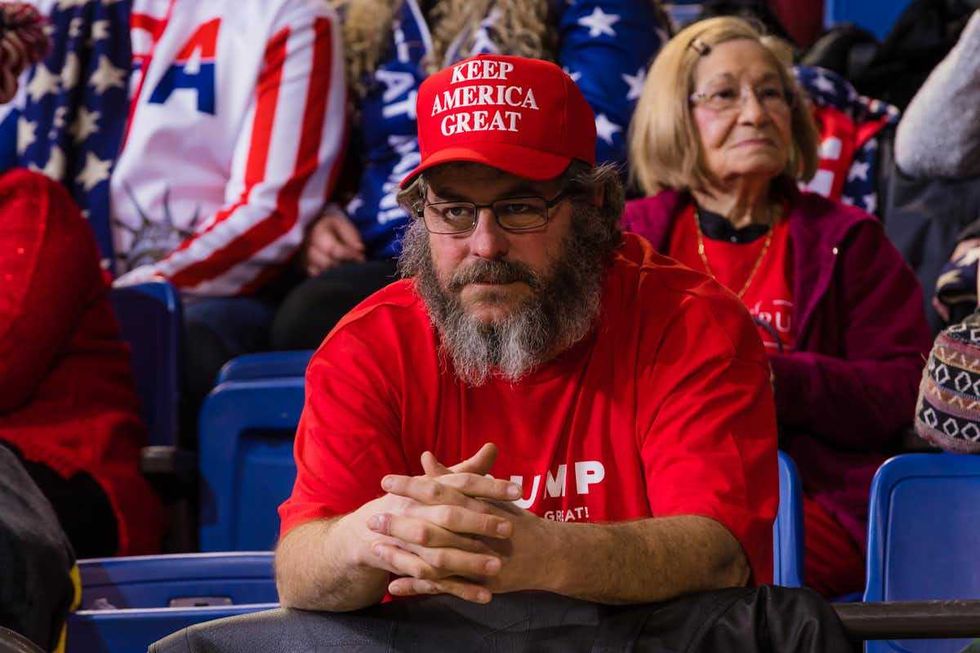
Republicans are once again in panic mode over the 2026 midterms, according to The Washington Post, as "scary" new data about their voters' enthusiasm gap shows that they might not care anymore.According to the Post's new report from Sunday morning, GOP pollsters and strategists "are raising the alarm" about the party's voters, warning that they are feeling "listless and demotivated" at a time when the party needs them to be energized for the midterms. This comes at a time when the GOP already had ample reason to worry about getting wiped out by Democrats."A raft of discouraging data from polling, door knocking and focus groups is unsettling Republicans as their party heads into a midterm election season that would be challenging no matter what, given President Donald Trump’s low standing in polls and the fact that the party in control in Washington almost always loses seats," the Post explained. "The lack of enthusiasm is reaching deep into Republicans’ loyal base, spreading to the party’s most consistent voters — who have shown up to vote in all of the past four primaries and general elections, according to an analysis done by Americans for Prosperity Action, a conservative super PAC that was founded by billionaire Charles Koch. This new issue with the base adds to the party’s more enduring problem of turning out less-frequent voters who support Trump but often skip midterm elections."The report continued: "About 1 in 5 reliable Republican base voters are at risk this November, according to Nathan Nascimento, executive director at AFP Action. Those voters in Iowa, Ohio, North Carolina, Montana, New Hampshire and Michigan are either saying they may stay home or are weighing voting for Democrats, according to their data, which is based on polling and extensive efforts to engage targeted Republican voters by knocking on their doors. The voters are primarily worried about inflation and the economy."“This is a big chunk,” Nascimento said. “This is a scary number.”Nascimento further noted that this issue appears to be separate from another problem the party has faced over the last decade: the significant chunk of "low-propensity" voters who only show up to vote Republican during presidential elections when Trump is on the ballot. The president's pull on these voters as a candidate has been described as "mythical" by some observers, but has created a major problem for the GOP during off-years and midterms, as well as a grave problem going forward, now that he is term-limited.“We have a high-propensity base problem,” Nascimento added.The Post's report also quoted Lance Sulentic, a 56-year-old three-time Trump voter from Iowa who called their past support of the president "the worst three mistakes I’ve ever made in my life," lamenting his failure to keep his 2024 campaign promises and the new pain he is feeling at the pump.“We voted for Trump, and he did the opposite of what he said he was going to do,” Sulentic said. “Gas prices were going to be two dollars, food was going to be cheaper, energy prices was going to be in half, we were going to get two rebate checks to the American people, and we weren’t going to have any new wars, and we were going to build a wall and deport 30 million illegal aliens, and he did none of it.”
Draymond Green created financial flexibility for the Warriors to chase LeBron James. Now that James is headed to Philadelphia, Green must decide whether Golden State still represents his best option.
New York State Attorney General Letitia James hammers conservative outfits over paperwork errors, but look how kind she is when the Council on American-Islamic Relations, a political ally, flouts state charity and elections law.
Things aren’t looking great for Steph Curry. The Warriors went all in on LeBron James. But the 41-year-old megastar chose Philadelphia, where he believes he has his best shot at winning his fifth ring. The Warriors’ Steph Curry (right) made a pitch for LeBron James on “Good Morning America,” but it didn’t sway The King. That...
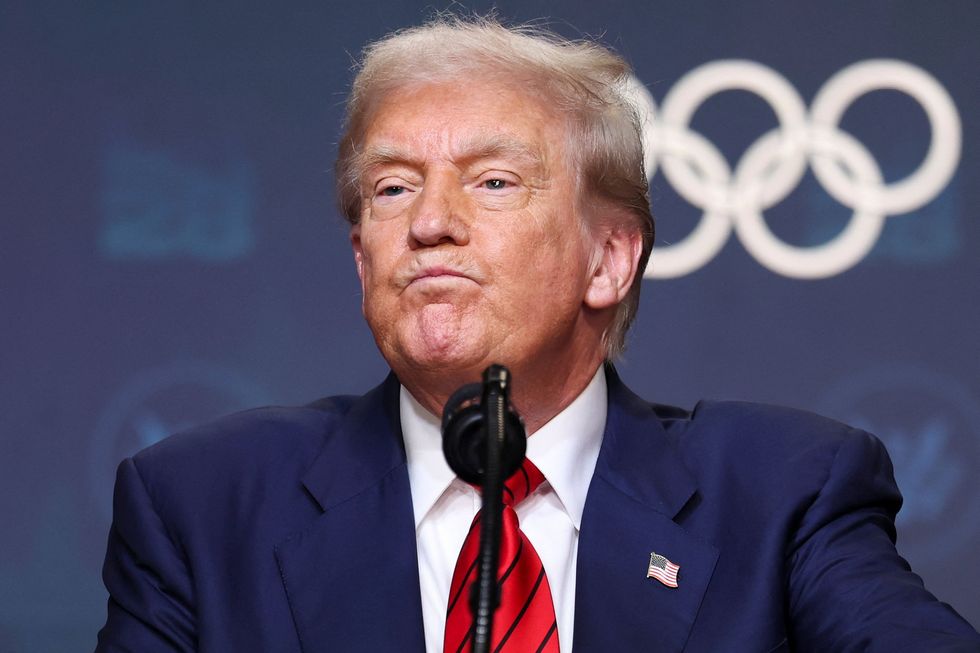
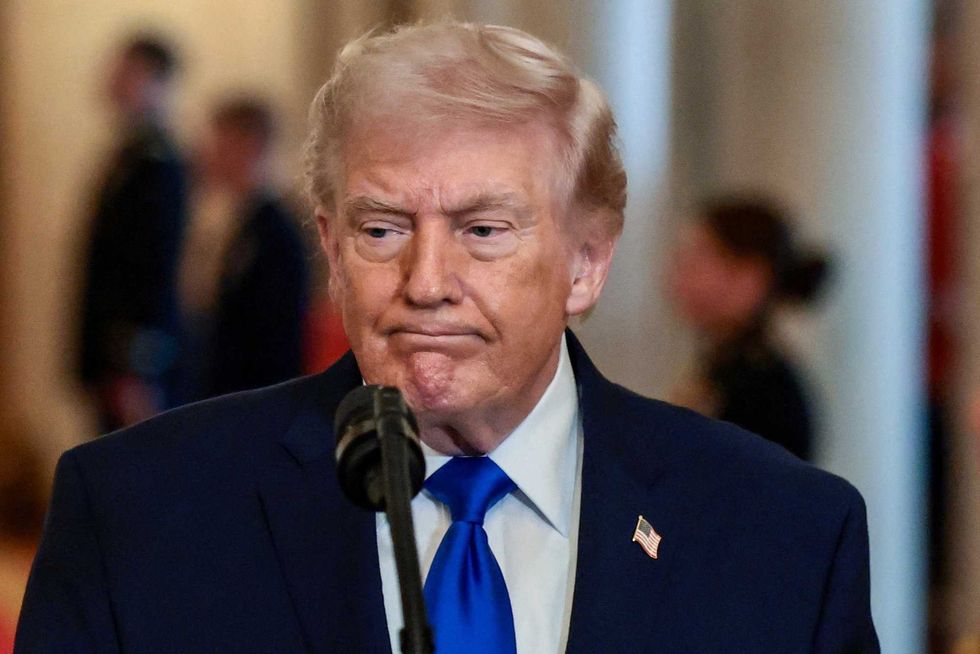
President Donald Trump's reactions at a recent awards ceremony were extremely telling about his true feelings, with one body language expert highlighting all the signs of his "anger and embarrassment" that got caught on live TV.Trump was in attendance during Friday evening's White House Correspondents' Dinner, which was rescheduled after an attempted shooting at the previous attempt to hold the annual event. During the event, CNN anchor Wolf Blitzer presented the Katharine Graham Award for Courage and Accountability to the team of Wall Street Journal reporters for their story relating to the late sex offender Jeffrey Epstein and his past connections to Trump, which included the bombshell revelations about the sexually suggestive birthday note the president sent to Epstein.Trump previously attempted to sue the outlet, owned by major conservative backer Rupert Murdoch, over the story, leading many to note his awkward and frustrated reactions during the presentation of the award.In a video shared Saturday, Dr. John Paul Garrison, a licensed clinical and forensic psychologist with expertise in body language, broke down the segment moment by moment in order to highlight all of the signs pointing to Trump's unease.Early on in the video, Garrison noted Trump's "classic look of disapproval" as Blitzer introduced the award, something he has pointed out in numerous other past examinations of the president's body language.A short time later, as Blitzer is discussing the "thousands of documents" contained in the Epstein files, Trump appeared to look away momentarily."It's because this is too intense. It's too anger-inducing," Garrison explained. "He cannot continue to look at Wolf Blitzer because it's making him mad. So, he looks away to try to get support from someone else. So, right now he's turning to face [White House Press Secretary] Karoline Leavitt."While he was looking away, Garrison noted that Trump then gave a "half smile," which appeared to reveal his "contempt, because contempt is the only emotion that's only on one side of the face." The psychologist suggested that Trump might have been attempting to hide his feelings of contempt with the smile, but it was still unmistakably there. The president then transitioned to a look of "fake confusion.""Now he's trying to appear confused. He's feeling awkward," Garrison explained. "He doesn't know how to react to something like this. So he's facing away. He's looking confused, although not really confused, but trying to feign confusion. So, at this point right here, this is everything he can do to disengage from what's going on right now because he absolutely does not want to have to sit and listen to this."Several more times, Garrison noted how Trump showed looks of disapproval as Blitzer continued to talk. When the address turned to Trump's $20 billion lawsuit against the Wall Street Journal, Trump then appeared to show a happy expression over something he felt "pride" about, but Garrison suggested that "he's not actually feeling happy right now, but he's willing to show a fake smile to draw attention to himself."When the reporters were finally brought on-stage, Trump showed various signs of faux-embarrassment and disbelief over the situations, which Garrison said were meant to convey "I can't believe this just happened to me," before he moved on to an expression of "tension.""What we saw was anger and embarrassment, but he tried to cover it by playing to the audience," Garrison concluded.
President Donald Trump came across as "raging, confused, and unraveling" during his recent speech on live television, according to one forensic psychologist, who spotlighted all the signs of his decline and "strange behavior" he showed during the "somewhat unusual" address.Dr. John Paul Garrison is a licensed clinical and forensic psychologist with a specialty in body language, who has also released numerous videos extensively documenting "President Trump's mental decline, his strange brain glitches [and] his odd behaviors," which he argued have been getting "progressively worse." All of this, he added, was on display during his speech at the recent White House Correspondents' Dinner.To start, Garrison showed a segment of the speech where Trump repeatedly attacked the intelligence of former CNN host Don Lemon, saying that he has "the lowest IQ on television." At one point during this bit, Trump said, "But I know what I'm saying," to which Garrison said he could not "figure out what on earth that's in reference to or what it's supposed to mean.""I think that we are hearing internal thoughts out loud. I think there's a lot of confusion," Garrison said. "So this is concerning on a couple of levels. One is that he's saying things that make no sense. And two, he seems unaware that he said it."Garrison then noted several instances of Trump struggling to speak clearly, including a rare instance where he appeared to correct himself after noticing that he slurred a certain word, which the psychologist said he "frequently does not" manage to do. He also noted instances where Trump showed obvious signs of struggling with his speech, despite having a teleprompter to work off of."He cannot get full sentences out. He gets distracted mid-sentence," he explained, later adding, "Now, Trump is someone who does tend to go off script a little bit, but he's rambling more. He's mumbling more to himself."The slurring of words only became more pronounced the longer Trump spoke, with Garrison noting that his stumbles were becoming more frequent at just the halfway point of the speech as he struggled "to keep his energy up."Later, during remarks about Democratic Sen. Adam Schiff, Garrison noted that Trump showed further signs of "agitation" and "anger, adding that "he's very mean-spirited throughout a lot of this." He also showed signs of struggling to "make sense" of what he needed to say, something he used to excel at during public addresses. "See, there was supposed to be a joke in there, but he couldn't get to the punchline. He's struggling to make sense of what he is supposed to say," Garrison explained. "And historically, he's somebody that could talk off the cuff a little bit. He might make a joke out of what they're talking about. And he does that a little bit here, but in general, he's getting lost and then just meandering. He understands it to a degree, but there is an underlying thread of confusion about the different lines he's delivering."He concluded later: "We saw someone who was raging, impulsive. His judgment was bad. There were so many problems throughout the speech. He was confused so many times. I do not think he knew half the time what he was reading. And unfortunately, I think that this is only going to get worse. I think in the next 6 to 8 months, we're going to see a dramatic change in the way that he presents based on everything that we saw today and everything we've been seeing for the past few months."